Have Begun Writing Submission to Regional Public Transport Plan
As mentioned in the ALL THINGS PUBLIC TRANSPORT, Auckland Transport has released the Regional Public Transport Plan for public submissions. I have read the 138 pages of the RPTP document and have begun writing my submission to the plan. My submission will be covering five main points on the RPTP which will be further reinforced in the subsequent hearings panel afterwards – the points being:
- Lack of direct Manukau to Papakura South Rail Link from Manukau Station
- Constructive Criticism and Praise to Chapter Five – Key Directions which looks at the proposed network (and services) through to 2022
- Chapter 6.4 – Fares and Ticketing. Especially my counter proposal around zone fares and pricing
- Chapter 6.5 – Infrastructure of the physical Public Transport network and facilities (building on from my submissions to The Auckland, and Long Term Plans)
- Chapter 6.6 – Customer Service Interface – and how best it can be used and improved for a clean,easy, efficient and “happy” portal for customer service interactions
I will endeavour to keep a running commentary as I write my submission and get it in by the deadline of Monday 4th November 2012. But in the mean time I will again show my (counter) proposal for zone based fares including this time MAPS and Graphics on my counter proposed zones. Also note that this RPTP submission will form the continuation of my comprehensive policy proposal package for my election campaign next year to the Papakura Local Board (in the Local Government 2013 elections).
BEN’S PROPOSALS FOR ZONE BASED FARES (Update Version 2.0)
Four Zones (maps of the first draft of the proposed zones are below)) with the Central Post Office (so Britomart Transport Centre) as the central focus point in which the zones are calculated:
- City Zone: (Orakei, Newmarket and Ian McKinnon Drive, the city side of the Harbour Bridge and Ponsonby Road form that boundary (so the CRL falls inside the City Zone))
- Isthmus Zone: (Basically marked by the traditional Otahuhu (Mangere Road and Savill Drives and New Lynn (including Rata and Ash Streets) fare boundaries, and Northcote Road on the North Shore)
- South and East Zone: (Manurewa, Mill Road (north end), Point View Drive)
- Mid West Zone: (Westgate (Brighams Creek) and Swanson, west side of the Waitemata Harbour)
- Mid North Shore Zone: east side of Waitemata Harbour, Albany and Long Bay)
- Outer South, North and West Zones: (all areas beyond the outer zone)
- Optional South and East Zones: ((so South and East mega zone split into two) State Highway One and Otara Locality)
These zones are like a target with a cross in the middle extending through the zones. From the very south to the very north of the zoned areas would mean travelling through seven zones one way. Four zones to get half way the journey and another four zones as you move through the centre to the other end of the city.
The fares for moving within or between the four zones (single trip – cash fare one way – flat fee regardless or adult or child)
- Within a single Zone: $2
- Between two Zones: $3
- Between three Zones:$5
- Between four Zones: $7
- Five or more Zones: four zone fare plus the price of the “extra zones” travelled to the daily fare cap of $15 (so travelling six zones would equal $7 + $3 = $10 one way)
I also propose a maximum fare cap of $15 per day for all travel on the integrated public transport system. However you would still be able to by a full day pass for unlimited travel on all modes across all zones from 9am Weekdays and all day weekends and public holidays for a discounted cap price of $13 if you know you are going to be travelling around all day.
The trusty Family Pass should also be made available at the same time as a full day pass for the flat fee of $25. Super Gold holders ride free per usual at their dedicated times.
Okay so we have the zones set (maps further down) and the fares organised for cash-single trips (no using an AT-HOP card), the day and family passes, Super Gold Holders and the maximum fare cap for any one day’s travel.
Now to using an AT-HOP card in place of cash.
Those who would use an AT-HOP card would be our current more frequent travellers who use the exiting ten-trip passes (being phased out) or monthly passes. Using an AT-HOP card should mean you get a discount when paying your fare compared to feeding money down a ticket machine or to the ticket office. Thus I propose the AT-HOP cards have a flat 20% discount regardless of child, adult or tertiary student on the cash fare otherwise charged for your journey. As for Monthly passes there would be four sets of “monthlies” available with prices reflecting discounts accordingly. The same conditions on your 31 days of use from the first day “used” with the existing monthly paper monthlies will transfer over to the AT-HOP Card loaded with Monthly profiles.
The Four Monthly Passes and fares (child in brackets)
- 1-Z – For travelling within one zone: $60 ($50)
- 2-Z – For travelling between two zones: $90 ($75)
- 3-Z – For travelling between three zones: $ $150 ($110)
- A-Z – Ultimate pass – travelling between four or more zones: $210 ($150)
The discount rate for adults with Monthly Passes is at minimum 25% compared to single-cash fare with child passes higher (there are no Tertiary discounts).
As for bikes – free travel but as per usual to on-board staff discretion depending on train loadings.
These are the maps of the proposed zones (first draft and subject to refinement)
Click for enlarged pictures

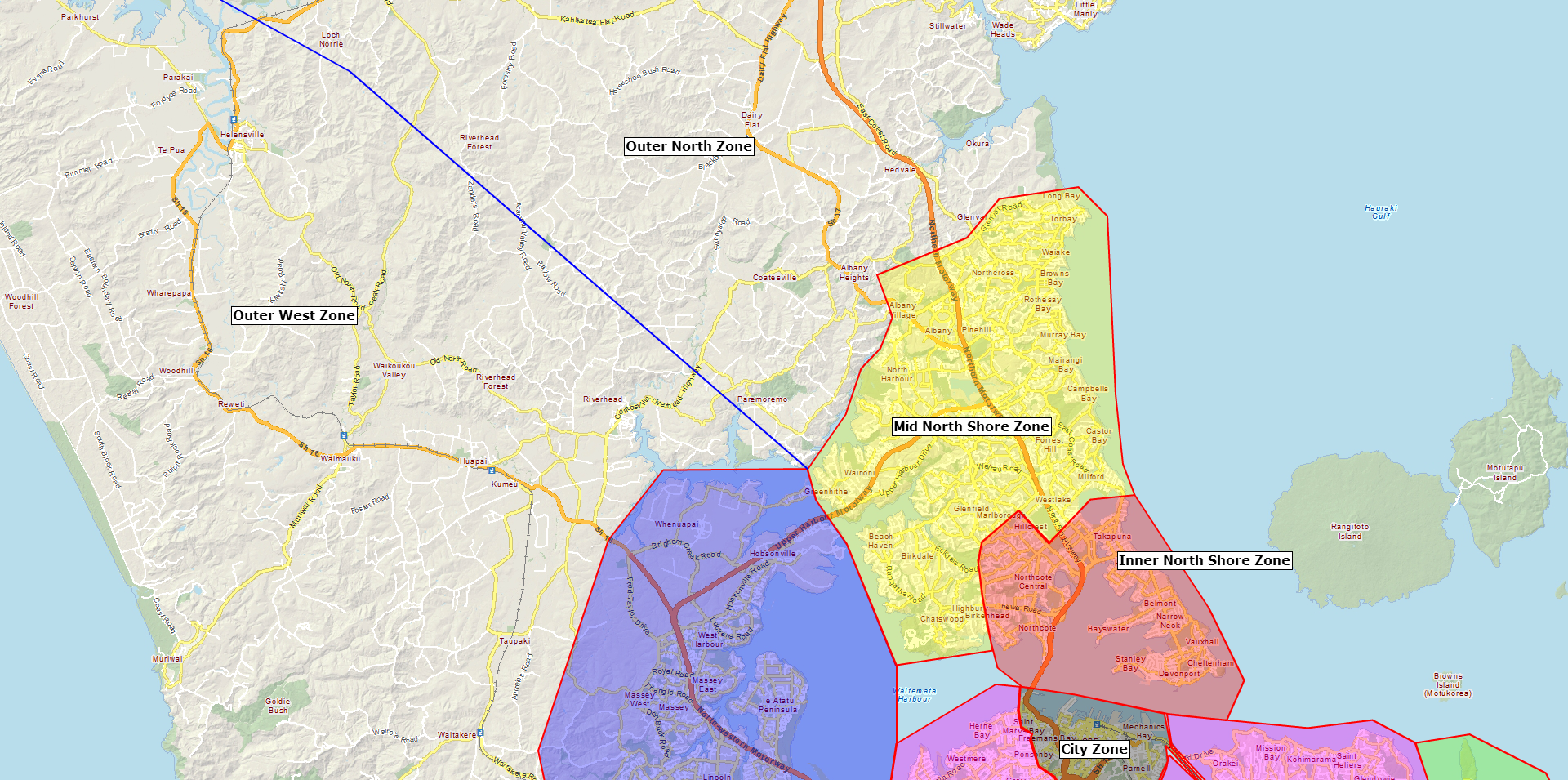


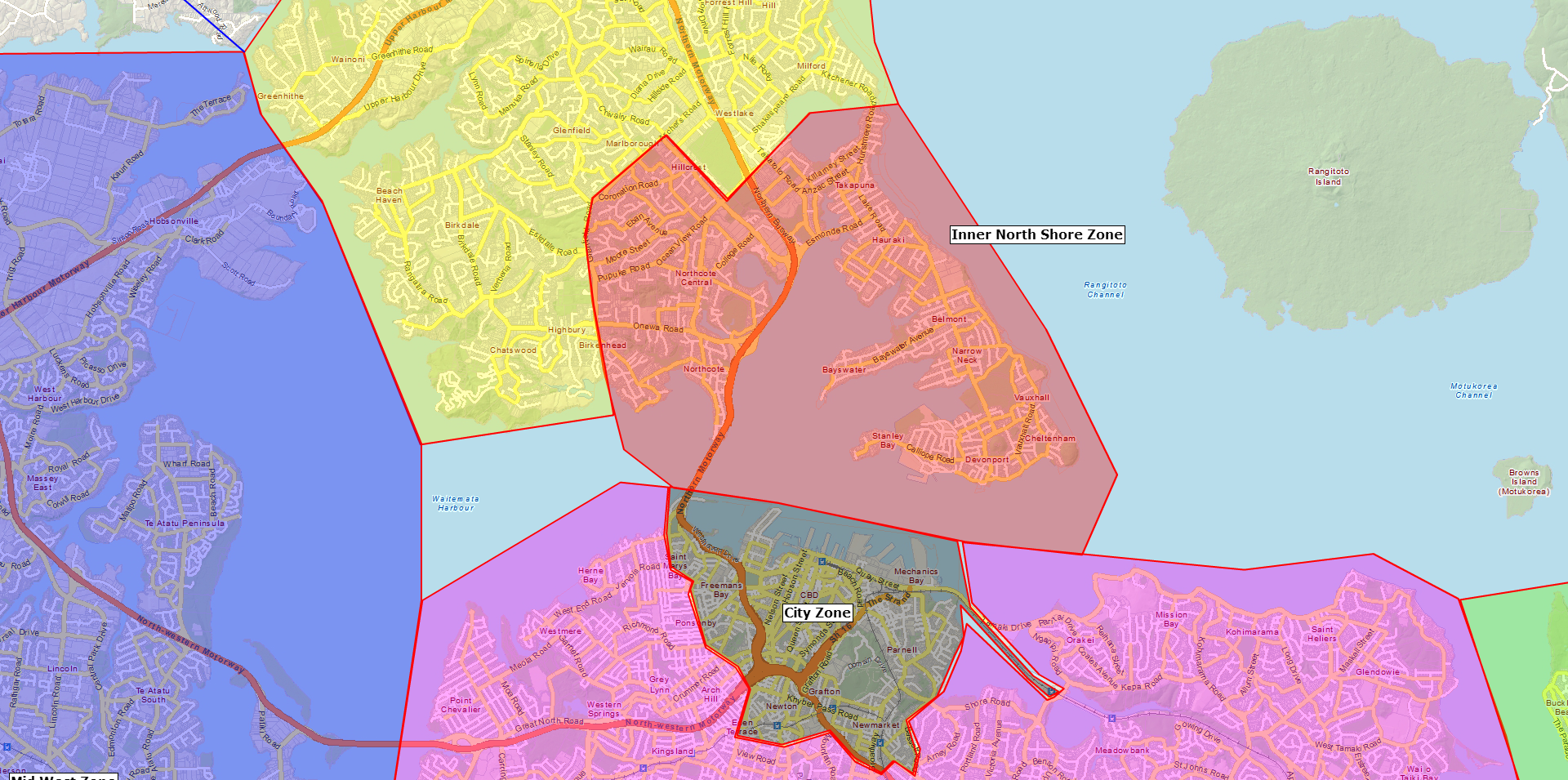

Balance, simplicity, fairness and minimisation of fare evasion was the methodology behind the zone fares, prices and boundaries stated above. Further refinement will be done as I continue the submission but constructive feedback in the comments department down below is welcome as always.
This submission is part of my “What Do I Stand For and Believe In – For a Better Auckland” fundamentals; the backbone in the formation of my comprehensive policy proposal package for my election campaign next year to the Papakura Local Board (in the Local Government 2013 elections). :
Part Three of the Better Auckland fundamentals: An Integrated Approach to Transport: None of this “all for one but not the other approach” we get from both roading and Green lobbyists. Road and Mass Transit both have their places here in Auckland – albeit more balanced like the Generation Zero 50:50 campaign. This integrated approach also applies to many other things out there – I call it The Best of Both Worlds.
BEN ROSS : AUCKLAND
Shining The Light –
To a Better Auckland
Auckland 2013: YOUR CITY – YOUR CALL

 Talking Southern Auckland