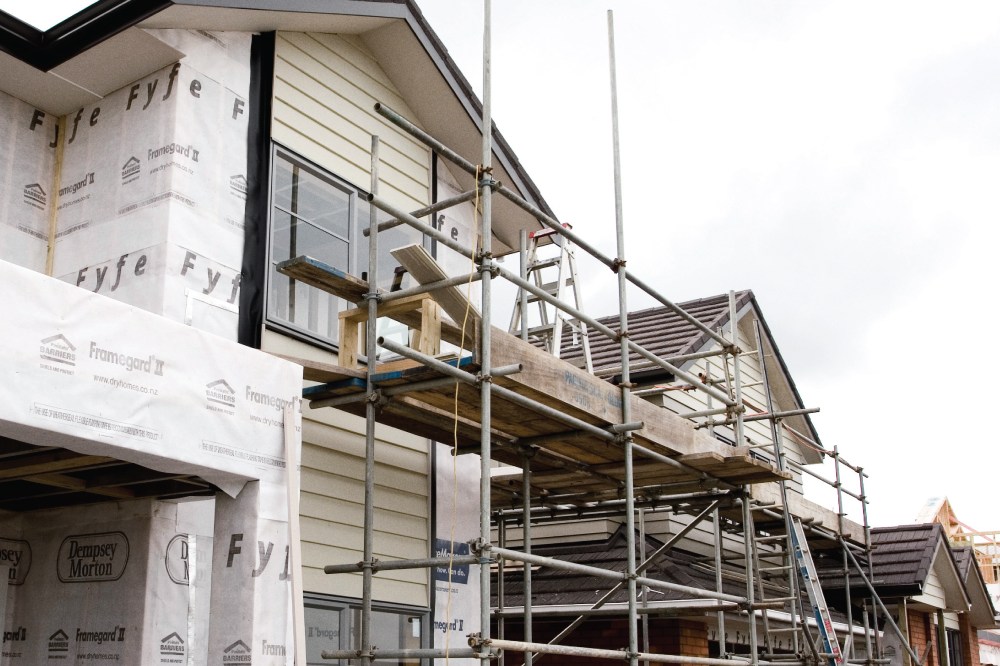
We have low quality homes in NZ – First Step to remedy this to be tested
From Auckland Council on Housing WoF Trial Scheme (includes a Q&A sheet)
Housing WOFs to be tested in five NZ cities
A nationwide project aimed at making rental housing safer to live in, especially for children and the elderly, will kick off next month with ‘warrant of fitness’ field tests in five New Zealand cities.
Home assessment experts will test 25 rental properties each in Auckland, Tauranga, Wellington, Christchurch and Dunedin against 28 measures. These will include criteria such as warmth (or ability to effectively heat), dryness, mould and dampness, injury risk, sanitation, basic state-of-repair and living needs.
Auckland Mayor Len Brown says it is widely known that much of New Zealand’s older housing stock is cold and damp and falls below the building standards of many other OECD countries.
“We are working with the government, not-for-profit and private sectors to tackle Auckland’s housing affordability and availability challenges, so it is only fitting we take a joint approach to improving housing quality, especially for the more vulnerable members of our community,” says Len Brown. “The dampness of many of our older homes is well documented as contributing to respiratory and allergic disorders such as asthma and rheumatic fever.”
The field tests will be an important step towards standardising methodologies and checklists between local government bodies to ensure the credibility of the WOF scheme. They’ll run throughout January and February 2014, with the results due to be published in March.
The rental housing WOF field test involves the Auckland, Tauranga, Wellington, Christchurch and Dunedin councils, the Accident Compensation Corporation (ACC), New Zealand Green Building Council and the University of Otago (Wellington).
The assessment tool was developed by the NZ Green Building Council and University of Otago (Wellington) with feedback and input from the five councils, ACC and other housing experts.
ACC’s Programme Manager for Home Safety, Megan Nagel, says: “ACC is supporting the warrant of fitness trial as part of our focus on reducing injuries in and around the home.
“Environmental factors such as poor lighting and maintenance, slippery surfaces and steps and stairs contribute to many home injuries. By helping to address factors such as these, a housing warrant of fitness will potentially support efforts to bring injury rates down.”
Leigh Featherstone, Homestar Director at the New Zealand Green Building Council, says the support of ACC and the cities involved shows a strong joint commitment to improving local housing and health.
“We hope that by the end of this project there’ll be a working tool to rate rental standards nationally. This will make sure rental housing isn’t endangering the health of the families living in it. The long-term payoff will be better health, particularly of our kids and elderly.”
—ends—
A Q&A sheet that was sent along as well:
Q&As
When will the field tests start?
The tests will start in January and run through to the end of February. The results will be published in March.
What will the assessment cover?
The assessment uses 31 criteria, an associated checklist and a technical manual to guide assessors. See Attachment 1 for the criteria and checklist.
How long will it take?
The assessment should take only about an hour from when the assessor enters the front door to when they leave.
What does the assessment aim to achieve?
The assessment aims to identify whether the rental property meets basic housing quality standards that impact on the following areas: warmth (or ability to effectively heat), dryness, mould and dampness, injury risk, sanitation, basic state-of-repair and basic living needs. These factors impact the health and safety of the occupants.
Why is a WOF being considered in the first place?
Housing is one of the key material determinants of health and well-being. New Zealand housing is of a lower quality than most OECD countries and several national surveys and research studies have shown that private rental housing is in poorer condition than either social housing, or houses that are owner occupied. Living in substandard housing is seriously damaging the health of New Zealanders with children from low-income families, Māori and Pacific peoples disproportionately affected. Over 70% of all children who are in poverty live in rental accommodation (20% in Housing New Zealand housing and 50% in private rentals).
The Children’s Commission’s Expert Working Group on Solutions to Child Poverty recommend the introduction of a Rental Housing Warrant of Fitness (WOF) as a means to addressing the health and safety of a large proportion of children living in poor quality private rental housing.
In addition, each year, ACC receives around 600,000 claims for injuries that happen in or around the home. It is estimated that around 30% of home injuries are caused by environmental factors such as poor maintenance, slippery surfaces, paths, steps and stairs as well as poor lighting.
The overall aims of this partnership group for a WOF is to improve the health, quality of life and energy bills for those in rental accommodation.
What is the Government doing?
The NZ Government signalled it wants to develop a WOF for use initially on its 69,000 Housing NZ properties with a potential wider roll-out to other areas http://www.beehive.govt.nz/release/housing-wof-be-developed-and-trialled
How does this field test relate to the Government’s project?
The parties in this agreement will share the assessment tool and the findings with the Government with a view to collaborate to create one WOF assessment tool that can be applied in the social and private rental markets.
Have other countries implemented a Warrant of Fitness?
Yes, in 2001 the United Kingdom established a ‘Decent Homes’ standard, which states that houses should be warm, weatherproof and have reasonably modern facilities. Rather than assessing against a fixed standard, the HHSRS employs a risk assessment approach to enable risks from hazards to health and safety in dwellings to be minimised. The system applies to all dwellings, regardless of ownership.
What type of properties will be involved?
There will be a mixture of private rental properties and Council social housing properties.
How will the homes be selected?
The individual councils involved in the field test will recruit landlords to volunteer to participate and the councils will also select a sample of their social housing portfolio for the field test.
Who will conduct the assessments?
Each council involved in the project will be responsible for identifying service providers to conduct the assessment. This may be Council staff (i.e. environmental health officers or eco design advisors) or independent contractors with experience in home assessments. All of the assessors will undergo training with the checklist and technical manual prior to the assessments beginning.
Will the homes be getting an actual “warrant of fitness” rating?
No, this project is just to test the draft assessment tool to see how practical and usable it is. The homes will not receive an actual WOF rating.
Landlords will be presented with the assessment findings to help them understand how their properties performed in the assessment. Landlords will also be provided with information such as insulation schemes, curtain banks and other informative material.
What are you predicting for pass/fail rates?
We are predicting a relatively high fail rate. New Zealand’s housing stock has well-documented quality problems (i.e. lack of insulation, dampness and inadequate heating) and there are some fundamental things that are missing in many homes to keep them warm, dry, healthy and safe.
What other objectives do you have?
We want to gather feedback from participating landlords on effective and transparent ways of engaging with the rental housing sector. We want to understand landlords’ experiences to having their house inspected, their feedback on the field test and their post-inspection intentions.
We want to understand what type of tenant-education material will be effective and useful to be delivered in conjunction with a housing WOF assessment to help address issues related to occupant behaviour (e.g. venting the home properly and the use of un-flued gas heaters causing moisture problems and health issues).
We want to understand tenants’ experiences towards having their homes inspected and their understanding of the benefits, or otherwise, of a WOF.
We want to share the results of the field test with the Government and collaborate with a view to producing one effective WOF tool for all of New Zealand.
—ends—

 Talking Southern Auckland