
Yes and No
I caught the particular long article over on the Herald on Sunday site yesterday and had a read through it. The article concerned was the “The case for small homes” and this was its opening lines:
Households are shrinking, property prices soaring and city land is running out — so why do our homes keep getting bigger? With Auckland set to house an extra million people in the next 30 years, Heather McCracken looks at an emerging trend towards compact living.
…
I am not going to quote the article at length as Transport Blog does that well enough here: “Small can be good.” Also Talking Auckland has covered the apartment and compact living debate extensively when feedback was last open for the Unitary Plan (March-May last year) and will be doing so again once my submission is in for the notified version of the Unitary Plan.
What I will take a look at is some comments over from the Whale Oil site (I can hear the collective gasping now) and his “COUNCIL SPIN MASQUERADING AS NEWS” post from yesterday. Now ignoring some of the more “interesting” comments (then again most blogs have comments in that department) we scroll down to where GazzW started his comment (although ex-Jafa made a good point as well).
From Whale Oil:
GazzW • 16 hours ago I call bull—- on the argument that land is running out. It might be if we all have to commute into the CBD which increasingly we don’t. If I worked in Manukau City I can commute easily from Pukekohe or Pokeno, if I worked in Albany I could commute from Warkworth. The same principle applies to entertainment & shopping – there is no longer any requirement to commute to the CBD. Working from home or from remote sites is an increasingly popular option. Auckland has a ton of land available, the council planners need to get their heads around the fact that urban sprawl is not necessarily bad.
…
GazzW is pretty much spot on especially in light of two pieces of commentary on the matter I wrote earlier: “Reading Material on Unchecked Urban Sprawl” and “Entering the City Building Phase – Well the Actual City Phase”
I replied to GazzW with the following:
You are correct GazzW and Auckland Council Property Limited would be inclined to agree (only for their quality advice to be rejected and we now lugged with a lemon of an Auckland Plan).
I run my own blog with often runs in countenance to what comes out from Council planning wise. I would also agree with you that “urban sprawl is not necessarily bad” however, unchecked sprawl is bad.
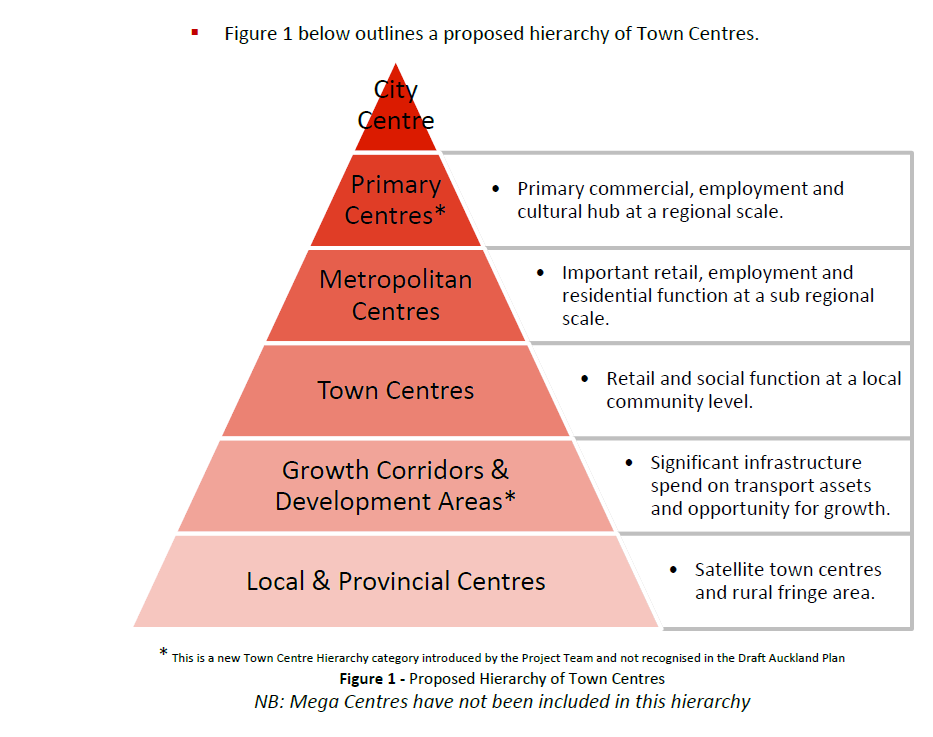
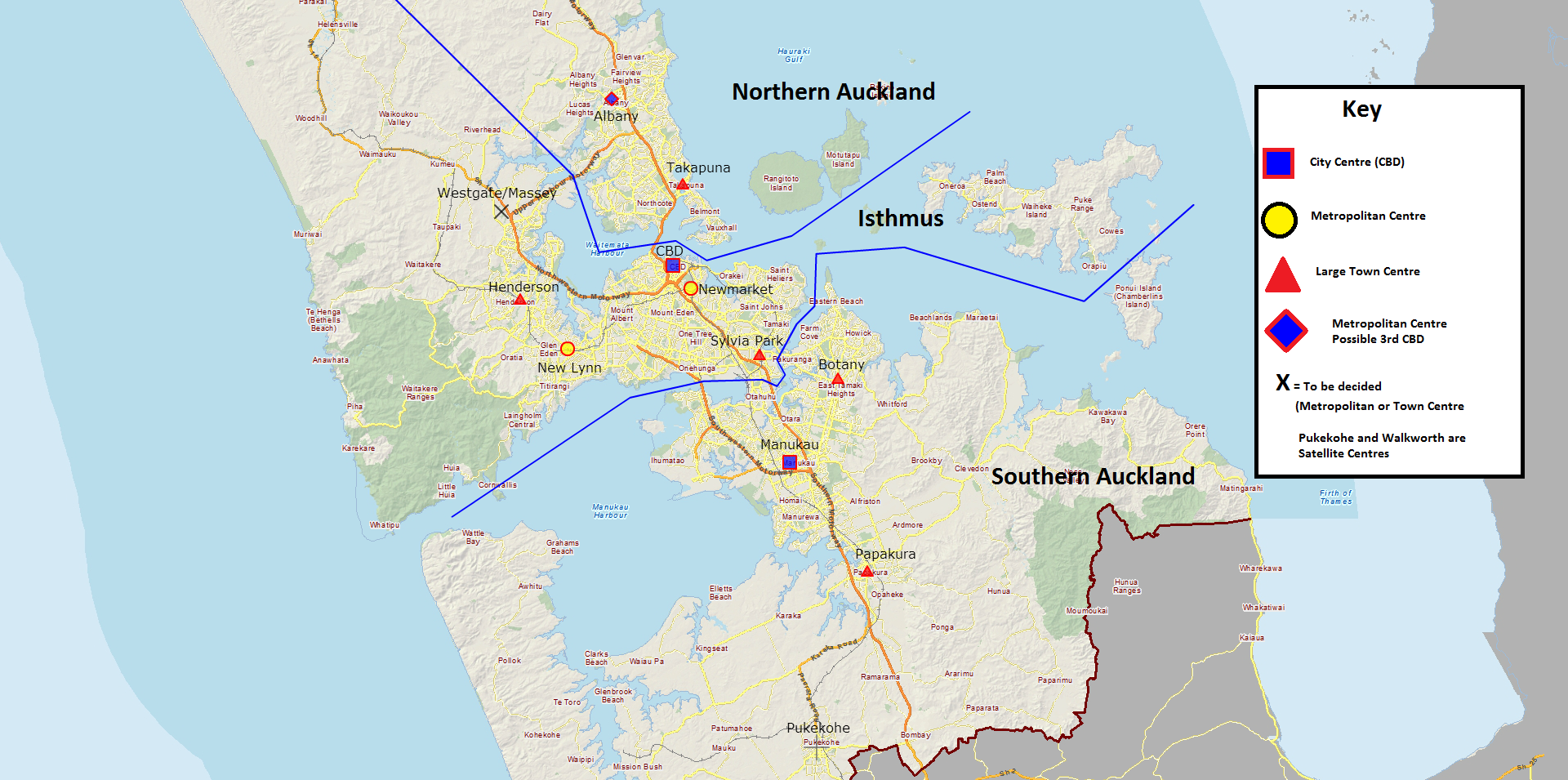
Auckland right now runs a two or dual centre City – the CBD and Manukau City Centre. We will be running three centres once Albany has developed a bit more but otherwise your comments again I agree with there (because I live Papakura and Manukau is where most of the business, shopping and entertainment is done)
Further more as I have written in my own blog posts (especially this one https://voakl.net/2014/01/03/en… ) Auckland will naturally drift to the three centre city model with connections to Hamilton and Tauranga being strengthened allowing the rise of satellite settlements in the northern Waikato connected either by State Highways One and Two plus the rail lines.
One of our civic leaders also tends to agree with this view as well which got me by surprise but made me smile none the less.
…
The link in my reply points back to one of my posts however, I recommend reading the Auckland Council Property Limited document from when the Auckland Plan was being written and their views on where Auckland was and actually is heading: http://www.scribd.com/doc/195060944/Auckland-Council-Property-Limited-Outline
So this asks the question “Is the Case for Small Homes Good?” My answer is yes and no. The premise of my split answer will always fall back to liberalised planning, NIMBY’s staying quiet, and people (the demanders) working with the developers (suppliers) on housing that is best suited for the resident at fair market price. That is the freer market working effectively – which in Auckland it does not at the moment. Look we have an apartment block being built in Manukau City Centre at the moment that sold out within weeks, we have another three in the pipeline in various design and planning stages that will come through soon, in the same regard the new Addison stages as well as the Cosgrove Road subdivision just down the road (both in Papakura) are selling pretty fast again after a hit from the Global Financial Crisis earlier this decade. With Manukau (M Central), Addison, and Cosgrove Road the size of the houses, units, or apartments vary from studio (in a mixed used building) all the way to five bedroom (stand alone or terraced) and guess what? They all sell at the moment like hot cakes.
People are wanting an apartment in the middle of Auckland’s second city centre while at the same time people are wanting also the big five bedroom houses in Addison (which is close to bus routes, rail stations, retail, industry (Takanini and Wiri) and Manukau City Centre). To me (all things equal and the Unitary Plan in the end turning out to being a liberalised planning document) the housing market doing its best to cater all sides and requirements of our residents. Again what we need to do to make sure the market is able to clear itself is the Unitary Plan being an enabling rather than a NIMBY document. That will be an interesting battle before the Commissioners later on in the year.
While writing this I was asked about Auckland CBD and the potential in over-playing the hand in its growth and benefits to Auckland. I remember this post: “A Perspective on the CBD and Waterfront” where Rod Oram drew the conclusion (using a PwC report as back up) on opportunities being already missed in the CBD, plus the reliance the CBD has on the activity of Port of Auckland to drive the place along. Oram in the end was making references back to this: On the Phenomenon of Bullshit Jobs (it goes white after a couple of minutes) and if you join the dots together how the CBD without mass subsidies (cue Wynyard Quarter) and Port of Auckland the place is in real trouble of stagnating.
This situation does have me casting a careful eye on the CBD and what is happening over there. I am already not a fan of Wynyard owing to the massive subsidies being sunk there to get development going. I am not going to be very amused if the CBD does end up stagnating as that has ripple effects through out Auckland including money not being able to be freed up and used else where. The ripple effect can also include another stage of flight away from the inner suburbs and CBD which has consequences in itself including housing provisions and pressure on those housing provisions.
Growth figures across Auckland


Areas defined:
- Rural Northwest – Rural areas and towns to the North and west outside the main Auckland Urban area. This includes the likes of Huapai and Warkworth.
- Hibiscus – The urban area of Orewa, Silverdale and the Whangaparaoa Peninsula.
- North Shore – The old North Shore City Council area.
- West Auckland – The urban parts of the old Waitakere City Council area.
- Central City – The CBD and neighbouring fringe suburbs like Freemans Bay, Ponsonby, Grey Lynn, Eden Terrace, Grafton, Newmarket and Parnell.
- Other Isthmus – The old Auckland City council area outside of the Central City.
- South Auckland – The urban areas of the old Manukau City and Papakura District council areas.
- Rural Southeast – The rural areas and towns in the South and East of Auckland including Pukekohe.
Source and Credit: Transport Blog (accessed 2013) http://transportblog.co.nz/2013/11/07/strong-employment-growth-in-the-central-city/
Main article: Strong Growth in Auckland
Concluding Remarks
In tying all this up there is a case for “small housing.” But as I have always said our planning needs to be liberalised to allow the freer market to decide what is best (of course subject to Build Act and Urban Design provisions). There are cases for small houses and apartments near the Centres (and we have two at the moment (I am not including Town Centres yet) and Metropolitan Centres (like New Lynn and Takapuna). There are cases for medium and large housing in the mid and outer suburbs as well. Right now for me (and my wife) we are in a medium house and will go to a large house (4 or 5 bedroom) in the mid or outer South Auckland suburbs as the family grows. When the kids leave home (ages away) then we would scale back down to a small terraced house or even an apartment in one of the Centres. As we move through the cycles of housing though both Rebekka and I are consciously aware (and factor in) of: closeness to major centres (so Manukau is ours thus we have no reason to move to the Isthmus), close to major road and public transport routes (we are two minutes away from Papakura Station and nine minutes from Takanini Interchange (Southern Motorway)), closeness to civic facilities, and closeness to local centres like Takanini Village.
What I particular watch for and do not want to see with Auckland is the pendulum swing from one extreme to the other with our planning. Getting it to the middle with some swinging either side is fine by me and would be better for the City. The dual soon to be tri – centre, 60:40 Brownfield:Greenfield liberalised approach to our planning and City Building would be about that “middle” that allows balanced and “natural” growth of Auckland (rather than pigeon holing it through one of the extremes).
Click for full resolution

 Talking Southern Auckland
I agree with your sentiments, but what seems to be continually overlooked by many is that because of higher than need be housing costs, it is a form before function exercise. That is, high cost of housing is meaning house size is shrinking to to make it more affordable, not because that is necessarily the form people want for function. Your advocacy of moving as your lifestyle changes is a function over form exercise, which is the way it should be, but where ever you join as a home owner it should be because of function. Ben, a question or two for you. The house you have purchased, if all property had been half that value at time of purchase, would you have bought a different form of property? If so what type? If not what would you have done with the money saved?
Computer crashed so lets try this again
1) If the other property forms were half the value at the time when we purchased the house that we are now in the answer would have been the same. That is still a three of four bedroom established house on wooden piles (Rebekka was quite adamant of that) in the outer Southern Auckland suburbs (Papakura, Takanini etc). We would have not chosen an apartment towards the Isthmus/CBD nor a five bedroom house or even lifestyle block (which are two minutes away from where we are currently). Amenities, transport, maintenance, the rates bill, and family planning would have still played a part in the decision thus staying with the decision as is.
2) Technically no money is saved as we are on a revolving mortgage. In saying that the mortgage would have been paid off faster if income levels stayed as they are now rather than drop 1:1 if the house purchase price was halved so in the long run the money is used else where such as investments, upgrades, renovations, preparations for next house which would be either a 5 bedroom or even (as it has been discussed) a property on the urban rural fringe.