
Preparing for post 2016
Yesterday the Herald reported on the latest updates of where first home buyers are purchasing in Auckland – post implementation of the Loan-Value Ratios otherwise known as LVR. Currently unless building new you must have a 20% deposit to the total value of the house you wish to buy and have a subsequent mortgage on.
I keep an eye on real estate movements (as well as movements in our key employment centres (the CBD, Metropolitan Centres, and our five large industrial complexes)) to see what existing trends change and what new ones arise. Keeping an eye on the trends (and external factors) influences future urban development “advocacy” and trying to pick out where I should advocate Auckland Council to dedicate its urban development resources.
In general since the LVR’s have come in I have noticed a previous underlying trend becoming more prominent thus noticeable, something the Herald illustrates although not explicitly pointing out.
From the NZ Herald
The new hot and cold spots for first homes
4:15 AM Monday Apr 21, 2014Reserve Bank’s tactics of limiting number of low-deposit loans is affecting first-home buyers, study shows, and is rapidly changing the landscape of the Auckland property market as some suburbs surge ahead.
Alanah Eriksen
…Some suburbs saw no sales to first-home buyers after the change, but they were areas which already had few sales because of high property prices, or were not typically favoured by young buyers because they are located further from the city. They were: Albany Heights, Eastern Beach, Farm Cove, Karaka, Omaha and Wellsford.
Nine suburbs had only one sale to a first-home buyer before the change, while one suburb had none (St Marys Bay).
The lowest number of overall buyers after the changes were Eastern Beach (10), Muriwai (10), Morningside (11) and Wellsford (11).
The proportion of sales to first-home buyers went up in 75 suburbs.
Suburbs with the highest rises were all in South Auckland: Red Hill (up 22.4 percentage points), Totara Heights (18.6) and Manukau (17.3), indicating the new-buyer market is looking for cheaper options further from the city. The highest number of first-home buyers after the changes were in Henderson (48), Massey (45) and Manurewa (42). Previously they were in Papatoetoe (81), Massey (77) and Henderson (74).
If calculating the percentage of first-home buyers out of total buyers, the top suburbs were Avondale (40.5 per cent), Red Hill (40 per cent) and Bayview (36.2 per cent). Before the LVR changes they were Sunnyvale (52.2 per cent), Lynfield (52 per cent) and Otahuhu (39.8 per cent).
The highest number of overall buyers before the changes were Auckland Central (747), Papatoetoe (299), Manurewa (297) and are now Auckland Central (430), Flat Bush (209) and Remuera (206).
…
Matt Yang, of Don Ha Real Estate, which sells in the Manukau region, said because loans for new builds were exempt from the LVR rules, Takanini, where there was mass housing development, was attracting more and more first-home buyers.
“We’ve sold so many housing packages … Takanini is going really hot because all those brand new houses are in the $500,000 to $550,000 bracket,” he said.
“In that area there’s more and more subdivisions coming up – there’s a Warehouse coming and it’s surrounded by retail shops, cafes and offices.”
People weren’t necessarily changing jobs, but accepting longer commutes, Mr Yang said. “They’re still working in town but they want their own house, their own land, not renting anymore.”
…
Two things we can see from the above (that have been trending for the last 12 months):
- General movement in real estate as pointed out in the last sentence is still shows Auckland Central leading the way with the rest of Auckland chopping and changing depending on where people are going
- First home buyers since I started watching the trends 12 months ago are tending to settle for Manukau and further south, and Avondale heading further west. The suburbs might chop and change but the South and West Auckland areas are remaining constant in being high on the list for first home buyers
So if I am looking at Auckland’s urban development over the next 30-odd years I have to ask myself which way will Auckland go.
Will the Unitary Plan in 2016 be liberalised and allow a freer market to work out housing provisions between the demander (the resident) and the supplier (the developer). If Auckland does go down that route it means we could see first home buyers returning to both the Isthmus and the lower North Shore rather that South and West Auckland (as we are currently seeing). This means our urban development resources will need to be dedicated (but not exclusively) towards the Isthmus and the lower North Shore as we undergo large-scale intensification.
The flip side is that the Unitary Plan will not be liberalised (on the Isthmus and North Shore) post 2016 and that (as we are seeing now) buyers will move out to South and West Auckland where developments are more able to happen (both Brownfield and Greenfield). If for some reason we go down this particular path (and it is certainly not impossible looking at what the NIMBY’s are up to (see below) then our urban development resources will need to be dedicated (again not exclusively) to the South and West seeming the Isthmus will not be taking as much growth as it otherwise could and should under a freer market regime.
This came from Facebook yesterday
Auckland 2040 message: 2040 will be working closely with the Character Coalition on the next stage of the Unitary Plan process – when the Council releases its summary of submissions and calls for further submissions either in support of or against the submissions it has received. We intend to do a major campaign to encourage groups and individuals to make use of this further submission process. The Council is still hoping to release the summary at the end of May. We will provide guidance on how to do this. Auckland 2040 will focus on the issue of protecting the character of our residential areas and the residential provisions of the Proposed Unitary Plan while the Character Coalition will focus on the heritage provisions.If any groups are not already part of the Character Coalition and cover areas with heritage issues we would recommend you join the Coalition so you are kept up to date with what is happening.
The pragmatist in me dictates that while I would like a liberalised Unitary Plan I must also be prepared for the latter and the Isthmus literally sealed off as a Snow Globe museum piece. To not recognise and prepare for either of the two situations would make me one very piss poor Geographer and an advocate for a better Auckland. I have blogged before on where and how Auckland could develop if we were to follow a Unitary Plan that was liberalised. My submissions are tied around the fact our development controls need to be liberalised to allow more affordable housing provisions where the people want it. That said in case we do face a bottling on the Isthmus I recently reviewed my submissions and Manukau Super Metropolitan Centre work to see if any adjustments were needed.
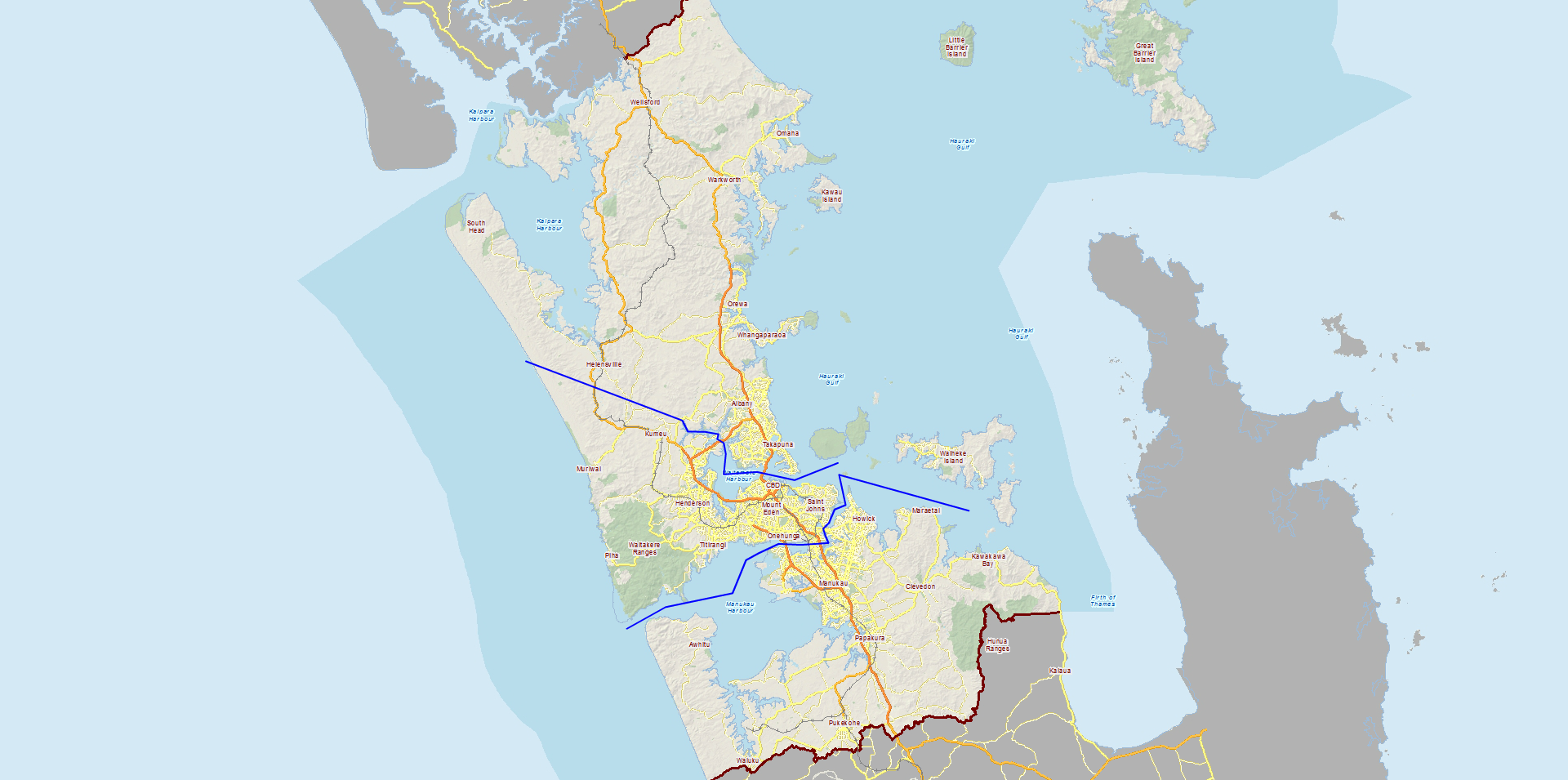
South and West Auckland can take the brunt in the event of the Isthmus becoming a Snow Globe
In my submissions to the Unitary Plan I have said that Southern Auckland currently houses 38% of Auckland’s population and is forecast to house 45% if the current zoning and developmental control restrictions remain in place on the Isthmus post 2016. The trends picked up from the NZ Herald with first home buyers would indicate that South Auckland is definitely growing population wise (as is the West). It is possible the Isthmus does become that Snow Globe so in drawing a natural conclusion your major developments are going to be out south and out west. Thus a very comprehensive strategy followed by robust coordination when the strategy is finally executed through Auckland Council.
I have already drawn up a strategy as such for the South which I presented to Council last November. If we are to dedicate our urban development resources to the South and West (owing to the Isthmus situation) then a separate strategy will be needed for West Auckland to coordinate its urban development.
My 21st Century Auckland Booklet which was presented last November:
So if the South does take up the brunt of the growth (and on current indications it will be through the life of the Unitary Plan unless we get some mass liberalisation on the Isthmus) and we (the South) go from 38% to 45% of Auckland’s population then we better make sure the following is lined up in a coordinated fashion:
- Where the housing is going and what type (detached, terrace, and/or apartments either in Greenfield or Brownfield areas)
- Where are the jobs going to go – that is what needs to be done to intensify our existing employment centres and what is needed to create new ones in Greenfield sites)
- Is our transport infrastructure going to be able to handle the South taking the brunt. Will the travel patterns be more local as people live and work in the south or will me have increased cross-city commuting like to the growing CBD (which will grow despite the restrictions on the wider Isthmus)
- Is our Civic Infrastructure (schools, parks, libraries) going to cope. Will existing facilities need upgrading? Do we need to set aside land for new facilities and if so where?
- Is our physical infrastructure up to scratch and what investment will we need to help it cope with growth in the South (remember the Southern waste water Interceptor is already at capacity)
- How will the South look urban design wise when all this growth happens
- Will our major service hub – Manukau City Centre be up to scratch and up to people’s expectations (remembering Southern Auckland sees Manukau as their CBD more than the main CBD)
- And how will our physical environment cope with the pressures
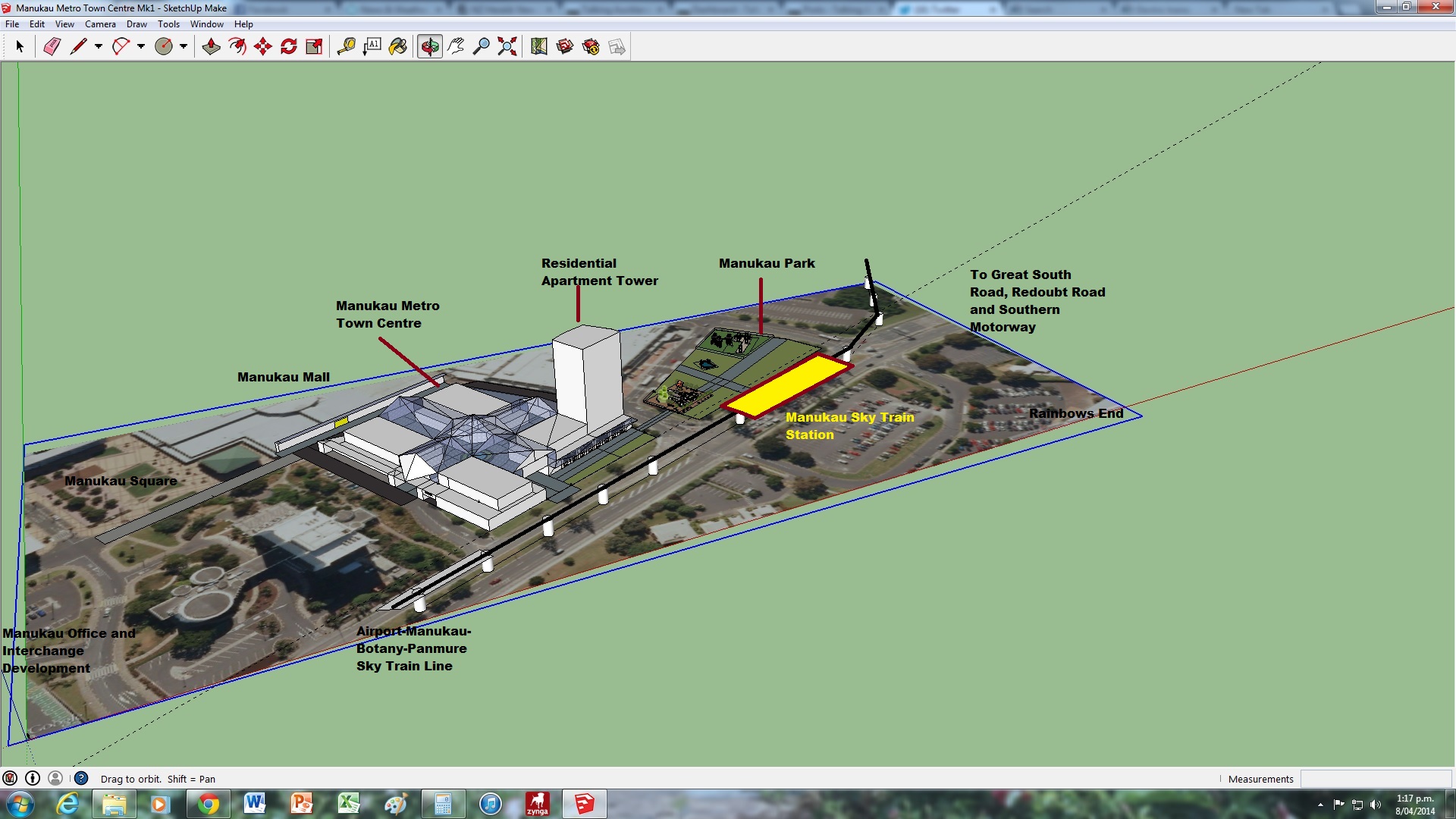
Parks and open spaces: something people are expecting more in their centres whether they be Town Centres or in this case the Manukau Super Metropolitan Centre. As South Auckland’s population grows, green and open spaces will be at a premium so we need to plan and coordinate now the reserving of land as well as the development of our future open spaces.


Attribution for the Athens Pocket Park that has been used in the Manukau Metro Town Centre Mock Up: http://land8.com/photo/athens-urban-park-exparking/next?context=user
All challenging questions the Auckland Development Committee will need to sort through over the coming years as Auckland continues its evolution and growth.


 Talking Southern Auckland