Local Board Member Michael Wood Replies This morning the Whale Oil Blog site published a post about an apparent attempt to install parking meters at Keith Hay Park. The Whale … Continue reading In Response About Parking at Keith Hay Park [UPDATED]
Local Board Member Michael Wood Replies This morning the Whale Oil Blog site published a post about an apparent attempt to install parking meters at Keith Hay Park. The Whale … Continue reading In Response About Parking at Keith Hay Park [UPDATED]
I caught this over at Streetblog USA earlier this morning in regards to what happens when NIMBY’s win. Pretty much a heart wrench to anyone who believes in a progressive city with progressive type infrastructure being built after near exhaustive studies were in support for the cycle lane.
An extract from Streetblog USA:
Score one for the NIMBY crowd in San Antonio.
City Council representatives have voted 10-1 to remove 2.3 miles of bike lanes on South Flores Street, which the local blog Bike San Antonio says is one of the few cases where the city put a bike lane “where one needs to be.” Council members apparently caved to nearby residents who claimed the bike lane caused traffic delays and complained about receiving insufficient notice of the changes.
The restriping of the two-way road, done during a resurfacing project, changed the configuration from four general traffic lanes to two, plus a center turn lane and bike lanes. City traffic studies found that the bike lanes caused no impediment to motor vehicle traffic, while crashes declined somewhat. But that apparently wasn’t good enough for the majority of council, including Rebecca Viagran, who represents most of the area with the bike lanes.
The San Antonio Express-News editorial board said the decision was shortsighted and disappointing:
What we’re looking at is a failure of leadership from council, particularly from Viagran.
Not only is it a monumental waste of money to appease a small group of overreactive residents, but it also flies in the face of stated city goals to improve bike infrastructure, the urban core and promote better health.
…
You can read the rest over at StreetBlog USA.
Not to worry we have similar issues with the Unitary Plan grinding its way through the next round (the Independent Hearings Panel) soon.

MIT, Manukau Station, Davis Avenue Boulevard looking good I was in Manukau City Centre this afternoon tending to some business. After that and in despite of our miserable weather … Continue reading Manukau Projects Nearing Completion
The Auckland Development Committee for June 12 is up and should prove to be a cracker of a meeting. The Committee is looking at discussing (or reviewing) the following:
No doubt the parking issue will be a lively debate. I can already take a good guess on which way the debate will fall and which of our more “vocal” Councillors will be at the “forefront” of any discussion around parking.
The Auckland Development Committee – June 2014 Agenda
The Auckland Development Committee – June 2014 Addendum Agenda
The Auckland Transport Draft Parking Discussion Document can be seen below
As always I will be at the Auckland Development Committee on Thursday with my usual blogging and Live Tweeting service.
Also my submission to the Draft Parking Discussion Document is currently under way.
We all know about housing affordability. It is literally shoved in our face by Central and Local Governments, the media, and social media. How do we address the issue of housing affordability is as vexed whether the chicken or egg came first. Below is an extract from ‘The Planning Report’ and its Housing Affordability post by Bill Witte.
From The Planning Report:

“You have a coastal California with a relatively expensive housing market, but you also have a significant percentage of the population whose incomes are below middle class, and with job growth concentrated either in ‘knowledge economy’ jobs that pay very well, or lower paying service jobs. There is a disconnect.” –Bill Witte
Bill, a recent study by Trulia found, after examining the range of affordability for a typical middle class home against median household income, that home ownership was increasingly out of reach of the middle class along the coasts, and specifically in Los Angeles County. Please share your thoughts on the meaning and significance of that finding.
Bill Witte: First of all, I think one of the reasons that’s true is that Los Angeles County has a very high percentage of low and very-low-income households. You have both a supply and a demand problem. You have a relatively expensive housing market and an often lengthy and expensive approval process for new development,
In the Bay Area, which might even be less affordable, housing prices are even more astronomic but incomes are generally higher. That’s fundamentally not the case in Los Angeles.
What are the implications of this phenomenon?
First of all, it is worth considering the context in LA County for middle class residential options, which is related to a whole basket of issues, including quality of schools and other quality of life concerns. A lot of the working and middle class moved out of inner city neighborhoods to distant suburban areas in the ‘90s where housing is more affordable. So, an obvious problem arises from commuting—the time, the effect on families, and transportation costs, which have risen as gas prices have risen. That’s one problem. Another problem is the City and the County find it increasingly difficulty to support or attract the middle class, and that impacts a city’s economic base. The net result: middle class jobs may be less likely to locate in urban LA and LA County.
…
You can read the rest of the article here: http://www.planningreport.com/2014/05/28/bill-witte-housing-affordability-supply-and-demand-problem
Your thoughts on the situation in California and any similar issues back here in Auckland?

CEO states this will be done through the 2015-2025 Long Term Plan processes This just in from Auckland Council Council returns cheque Auckland Council is returning a $7.5 million deposit … Continue reading Council Turns Down $75m Offer for AT’s Downtown Car Parking Building
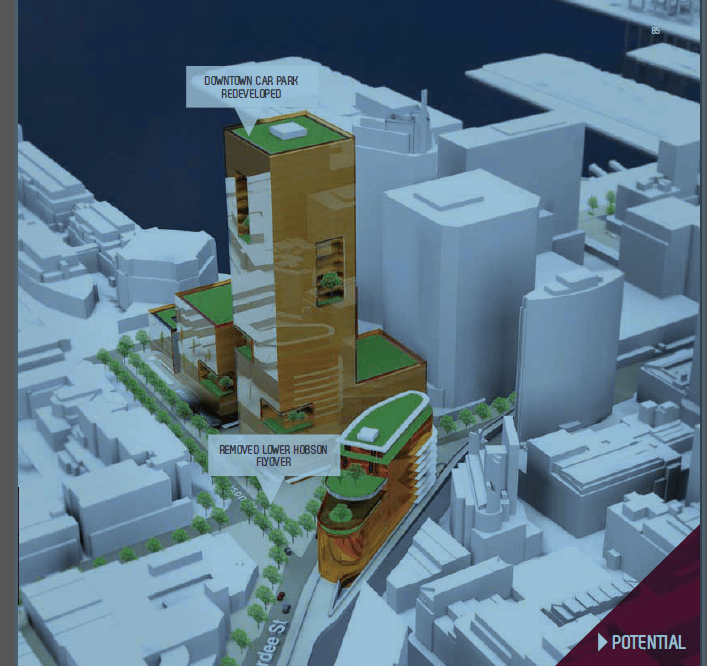
Question is do you want a Private Development, a Public-Private Partnership Development, or a case of Council-led Public Works? On Friday it was picked up that Tournament Parking … Continue reading Should Auckland Council (and Transport) Sell Off the AT Downtown Car-Park
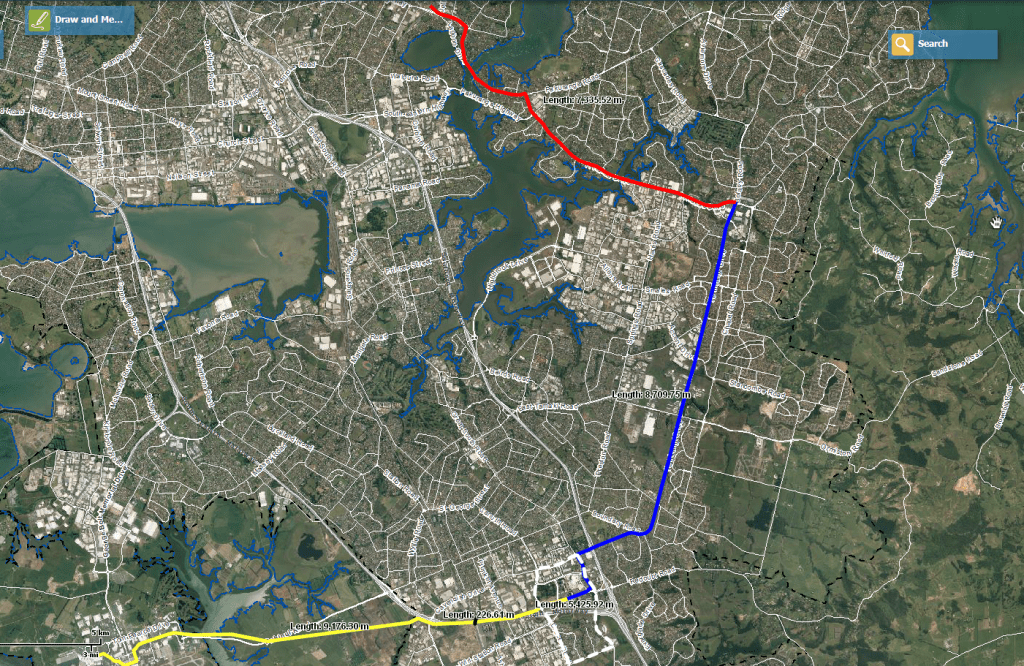
Lets try more proper and formal processes first for an idea – please Recently I had written a post about the Mayor “floating” an idea around light rail … Continue reading A Ratepayer’s ‘Suggestion’ to the Mayor
I have noticed quite strong and often knee-jerk reaction to what has become the “Ashes” debate here in Auckland. The debate has been in response to the “Proposed Cemeteries and Crematoria Bylaw” processes being currently working its way through Auckland Council.
A typical some-what knee-jerk response can be seen here (and the last place I expect it too):
Council told to think again on ash scattering
PHIL GOFF | 6 JUN 2014
Plans to make grieving families seek permission before scattering the ashes of loved ones and charge them for the privilege need to be reconsidered, Labour’s Ethnic Affairs spokesperson Phil Goff says.
“Auckland Council’s proposals seem heavy handed, unnecessary and bureaucratic.
“There has been insufficient consultation with the public and in particular with ethnic communities before proposing the restrictions. Nor has the council made a solid case for why the restrictions are necessary.
“There are no health considerations because cremations are carried out at 800 degree temperatures and families almost always conduct the scattering of their loved ones ashes with care and consideration.
“The last thing we want to impose on grieving families are bureaucratic procedures, long time delays and additional expenses.
“I understand that in former Council areas like Waitakere, Papakura and Frankton there were no restrictions imposed for the scattering of ashes and I have yet to see any evidence of this causing any widespread problem.
“The Council also seems unaware of Hindu customs about the importance of scattering ashes within a time period after cremation and the impact such restrictions would have on their community.
“I have also been made aware of another important and unnecessary restriction of preventing more than two people attending the placing of the casket in the cremator. This cuts across Indian Hindu cultural tradition where all the deceased’s male children are normally involved.
“I have written to the Mayor asking for the Council to think again. At the very least the Council should consult widely with the public, ethnic organisations and religious and cultural groups before they make any final decision. The present Council decision is more likely to create problems than resolve any,” Phil Goff says.
—ends—
Source: https://www.labour.org.nz/media/council-told-think-again-ash-scattering
I would like to remind Phil Goff on the following comment below I picked up from Councillor Cathy Casey’s thread about the ashes debate:
Might want to read what was put in Councillor Cathy Casey’s comments before knee jerk reacting in here.
Here I’ll copy paste the actual problem here:
Qiane Matata-Sipu: We have a problem with people scattering ashes in the sea by Ihumatao. It is mostly Hindu ceremonies when this occurs, not only is this an area for Kai gathering and so is an innapropriate place to scatter the ashes of a dead person where we would gather food, but there is also a significant amount of mess left behind, streamers, flowers, other foods (citrus foods) etc… That just causes extra problems. A non-resident of ihumatao once visited me after cleaning and filling 4 rubbish bags of ceremony “left-overs” from an area of the beach he often visits and takes overseas visitors. I was disgusted by the mess – not to mention the tapu nature/effect on our Moana and awa. I support the notion we must treat the deceased with respect an dignity but we also need to remember that we must treat the living with respect too, and the particular cases that happen in our area are very disrespectful to us.
Especially those rights and culturally sensitive areas of an indigenous population – which for our international readers is the Maori people.
A reminder that yes you can commit the ashes of your loved ones back to the Earth (and what your particular belief system is around committing those ashes) but let’s be fair and respective towards others – especially the indigenous people who live here. You would ask the same respect back in your ancestral lands so what was quoted above is fair and a very important reminder.
I will go back over the Council processes and see where this might have gone wrong. That said while Wellington already has a similar policy to what Auckland is proposing in place (which causes minimal fuss in Wellington) I hope Council is not causing extra grief from unnecessary bureaucracy and “fees.” It is the last thing anyone needs when saying their final good byes to a loved one or loved ones.
Note: Comments will be closely monitored and moderated as required

Where I found it though I could say is rather ironic You will have to forgive me if I find the following a bit ironic today. If … Continue reading Investigation: Some Information of The Southern Initiative
 Talking Southern Auckland