Or both

Source: pic.twitter.com/IUHNR2DboJ
North Shore Councillor George Wood stirred the pot again favouring bus over rail in his usual ‘Bus or Rail’ pieces often seen floating around Twitter and Facebook
The question usually asked is: ‘Should cities like Auckland invest in rail or bus for public transport needs?”
The answer is an actual auto fail to the point it is a lexicon in itself. Why?
Because bus and rail while being both public transport cater for different commuting requirements within a large City like Auckland. The same way roads, expressways and motorways cater for different transport requirements within a large city as well.
So the correct question is: “How to make best use in investing both in bus and rail as part of an integrated transport system.”
Brent Toderian who is here next week said: @BrentToderian — “the best transportation plan is a good land-use plan.” That would be entirely correct. Too often land use planning and transport planning have been done in silos producing some of the worst outcomes around (fragmentation and congestion). Recently though cities including Auckland have begun doing integrated land-use and transport planning to get better outcomes. Three best examples in Auckland would be:
- Britomart Station and the urban renewal above and around it
- New Lynn Station
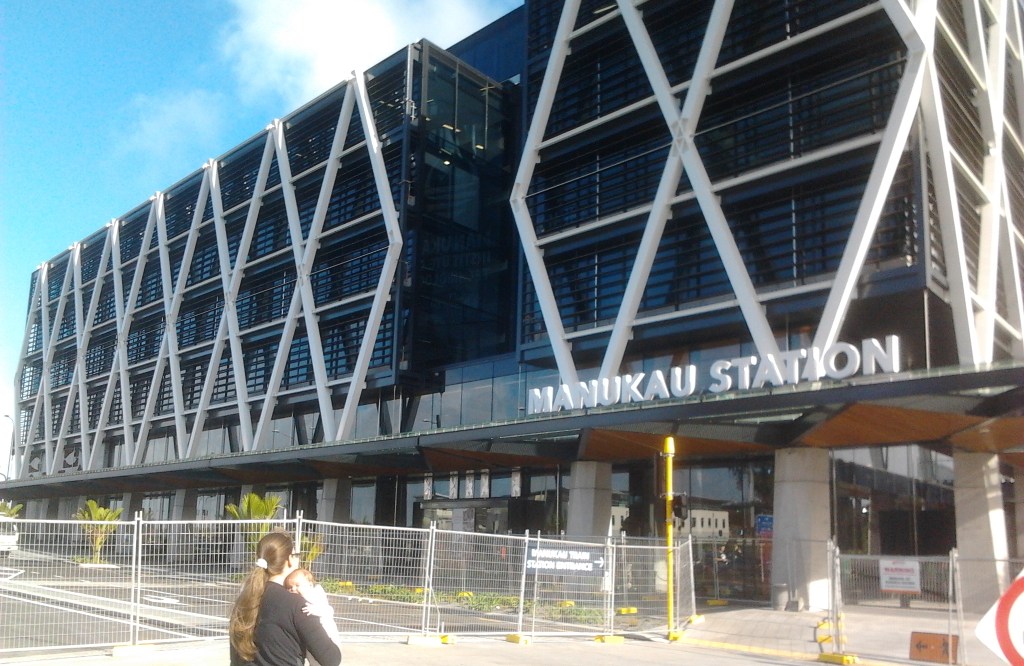
- Manukau Station with the MIT Manukau Campus on top of it.
All three stations are transport interchanges so they handle both bus and rail. Such interchanges are needed when larger amounts of people will be seeking out a transport mode change to continue their journeys else where in Auckland. This stems from and leads to both buses and trains being needed owing to their different “products” they offer in moving people around.

In short:
- Buses are good for short to medium distance trips where stops are frequent and relatively close together. If a bus is planning to do medium or even long distance trips than facilities such as interchanges and bus-ways will be needed to make the journey as efficient as possible. The Northern Busway is such an example. Buses are also good at “feeding” into multi-modal transport interchanges or rail/busway stations to allow people to be able to do long distance trips efficiently as possible. An example would be a feeder bus to say the proposed Glenora Station in Takanini followed by a train trip to Britomart if say the City Centre was my destination. Feeder buses mitigate the need for large expansive park and ride facilities.
- Heavy Rail is most efficient for medium to long distance trips with stops relatively further apart. Having heavy rail do stops at short distances increases total commute time and will make car travel more attractive. Over those long distances heavy rail is designed to get you to your destination more efficiently than a car should in both peak and for the most part off-peak as well. To make rail more efficient at medium and long distance travelling the following should be used as well:
- Express Trains for long distance trips especially in peak times
- Interchanges at regular intervals to allow people to feed to/from other lines, feeder buses and longer distance buses
- Short Lines that run parallel for some part of the main long distance line’s trip to help with interchanging or carrying the load in high demand periods. The Onehunga Line which runs parallel to the Southern Line from Penrose to Britomart is one example, the other example is the Manukau Line running parallel to the Eastern Line from Puhinui to Britomart.
- Light rail (which we do not have as of yet) would act in the same way as buses would on the length of trips and trip properties. That said light rail can incorporate some heavy rail properties as well such as express trains for some of the medium distance trips it could entail.
With roads we know they are best suited to short and medium distance trips within a city while motorways are best at medium to long distance trips. That is why it was said (on Twitter) “that a road is to a bus what a motorway is to rail.” That is each infrastructure type has its own properties that best serve a particular travelling requirement often owing to the efficiency of that infrastructure type. However, the ultimate is having an integrated transport system that is integrated with the land use of the City and its surrounds.
Something I would be touching on Thursday at the Auckland Development Committee.

 Talking Southern Auckland