Better Cities = Better Living
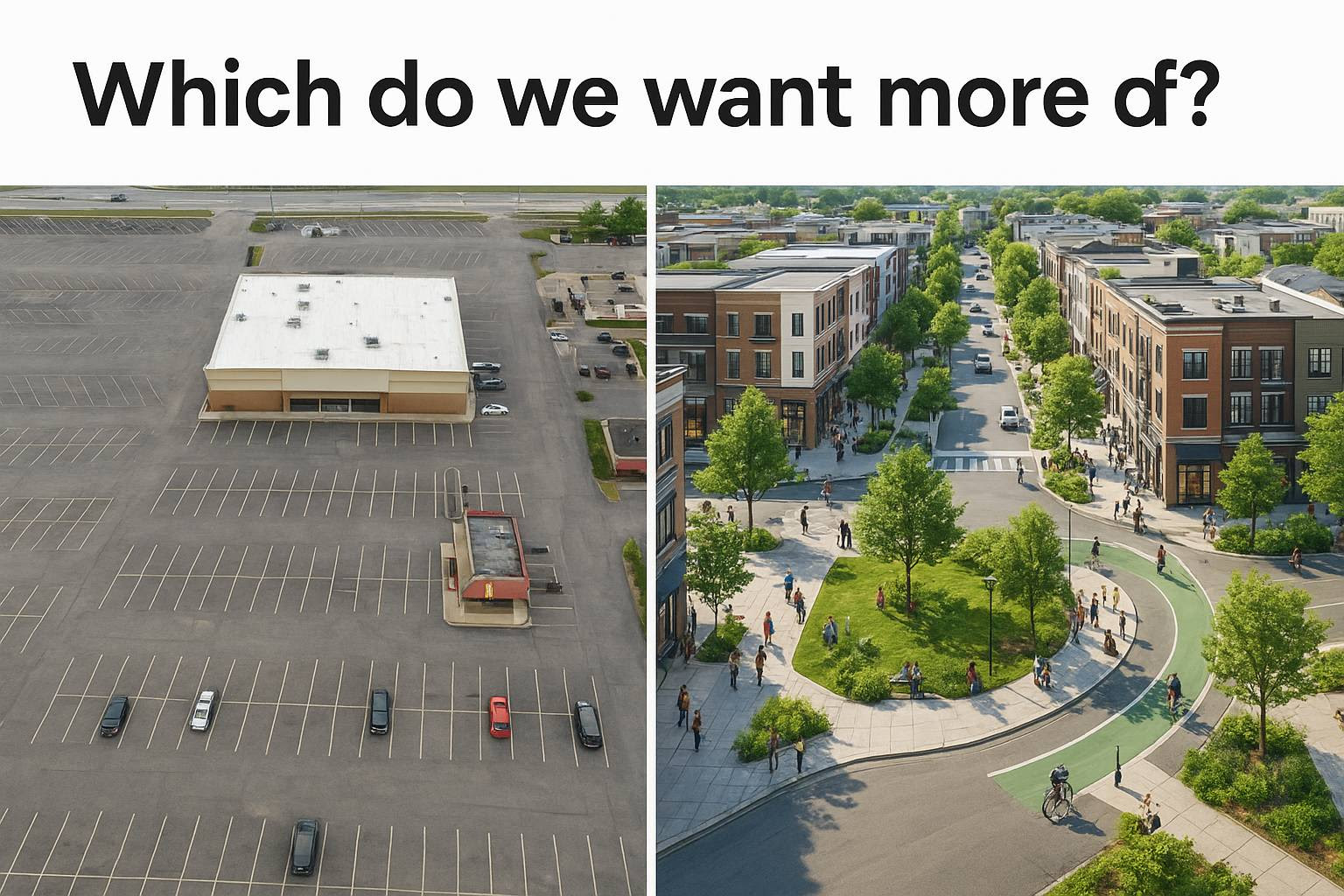
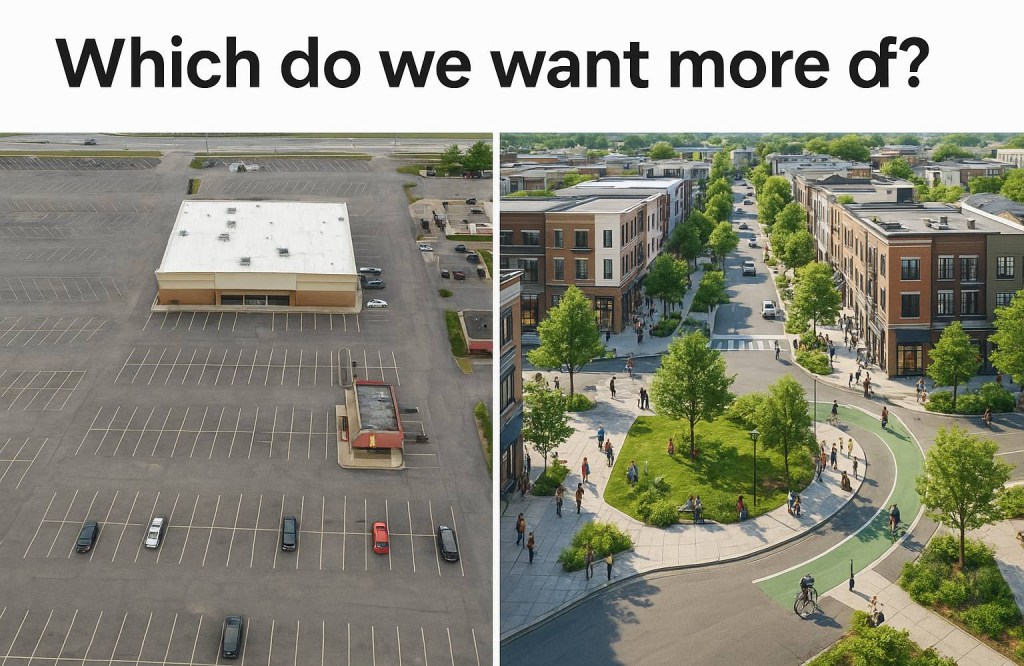
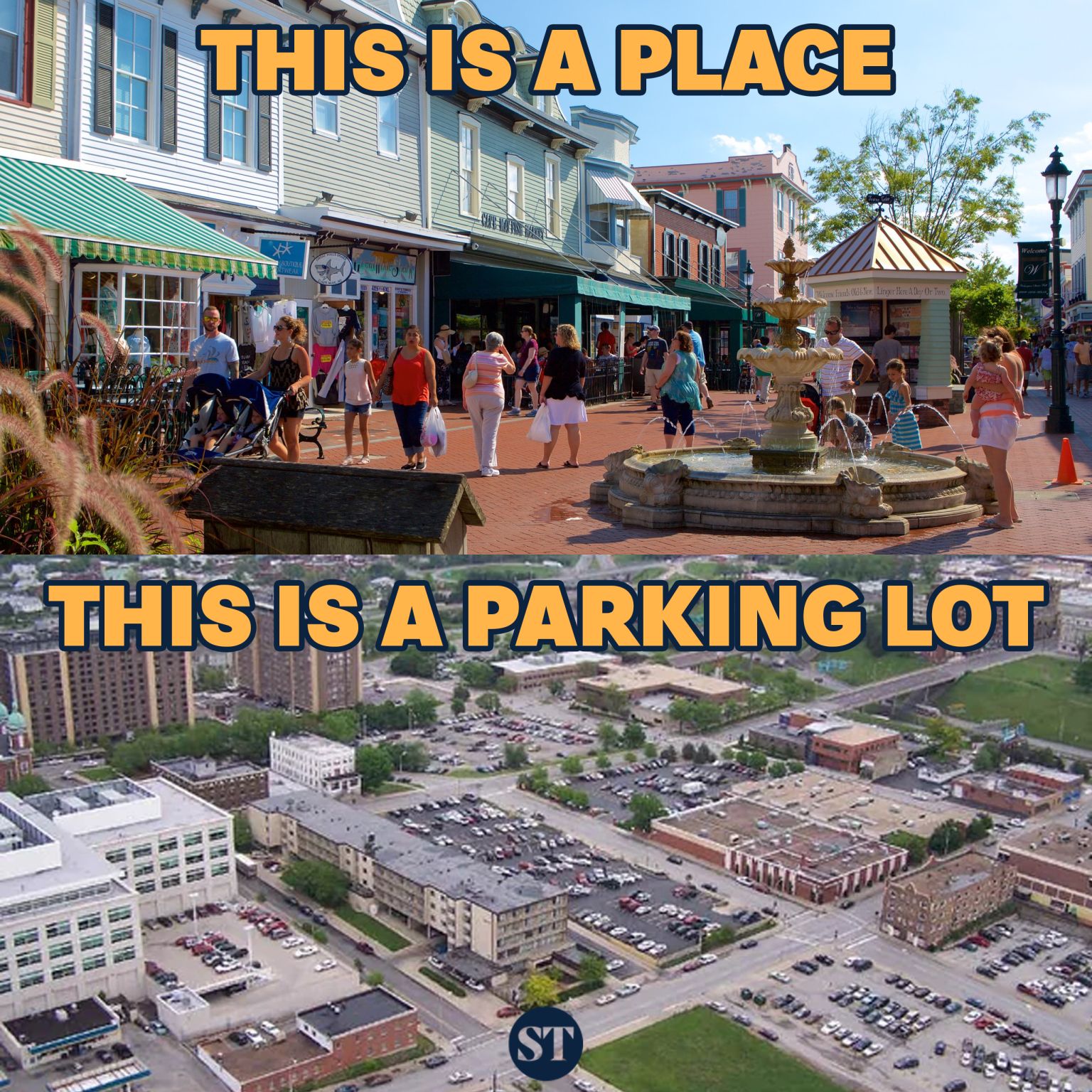
That is the question right? Which do you want more of; what is on the left or the right of the above picture.
This is what the recent journal article Pavement Buster’s Guide: Why and How to Reduce the Amount of Land Paved for Roads and Parking Facilities sets out to answer in both why, what and how!
Russell Ling with his Transport Leader newsletter succinctly broke down some key points from the journal. You can read these Key Takeaways below while you can check out Russell here.
Key Takeaways
- Paved area can often be significantly reduced in ways that are cost-effective and highly beneficial.
- Reducing the size of roads and parking facilities can provide many benefits, including more compact development, improved walking conditions, reduced stormwater management costs and heat island effects, more green space and habitat, and more liveable communities.
- Strategies to reduce road and parking area include:
- Use policies and planning practices that result in more compact, mixed-use, multi-modal communities, as opposed to sprawl.
- Favour Space-Efficient Travel Modes. Walking, cycling and public transit require less land for roads and parking than cars.
- Educate decision-makers concerning the full costs of excessive road and parking supply.
- Green Roofs – buildings that minimise stormwater runoff and heat island effects.
- Reduce Street Width Requirements
- Reduce or Eliminate Off-street Parking Mandates
- Stormwater management fees (a utility fee based on impervious surface area to fund stormwater management).
- Parking Management (various strategies that encourage more efficient use of parking facilities).
- Efficient Road and Parking Pricing
- Overflow Plans. Excessive parking requirements are often justified to meet occasional peak demands.
- Use Parking Facilities More Efficiently
- Parking Taxes
- Structured and Underground Parking instead of surface parking.
- Infill and Brownfield Redevelopment
- Complete Streets, Streetscaping and Road Space Reallocation
- Encourage shared right-of-way. There may be opportunities to share rights-of-way between roads and other utilities.
- Neighbourhood Parks
- Improve Facility Design – Various design features can reduce road and parking facility environmental impacts.
Pavement Buster’s Guide: Why and How to Reduce the Amount of Land Paved for Roads and Parking Facilities
In short graphic form you are basically doing the below.
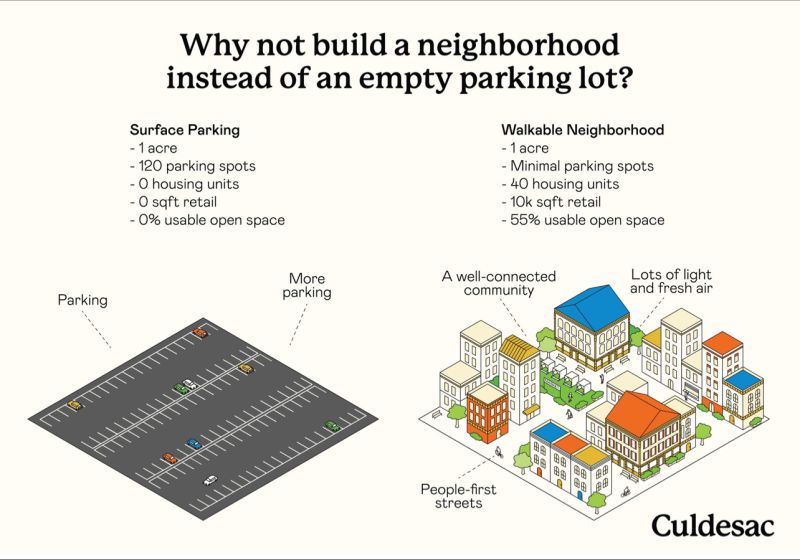
Where can we start? Pretty much anywhere although a certain City Centre (or large Metropolitan Centre) would be a very perfect candidate for such reclaiming!

Oceans of surface parking waiting for some Reclaiming treatment. Especially as Manukau sits on some major transport routes both road and transit, with Airport to Botany Rapid Transit not far off in the too distant future linking the south-east of Auckland all up.
When reclaiming those surface parking lots, we have to remember some basic fundamentals as most will be come perimeter mixed use blocks like the one below.
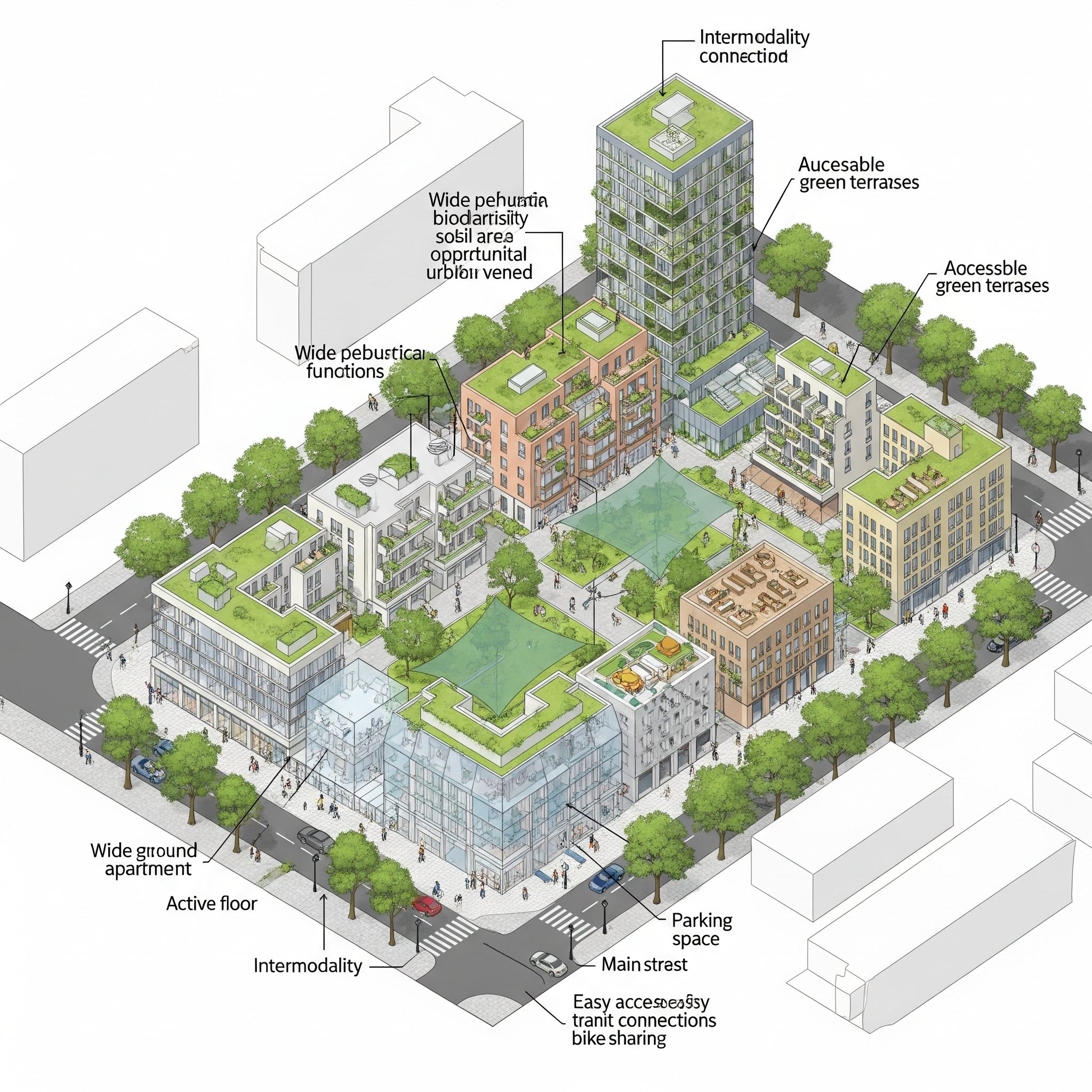
Another example from France although this is residential not mixed use. However, turning the corner sites of this block development into Mixed use would work as well.

In doing this reclaiming work you could let your imagination run wild as while there is a framework as we saw with the Perimeter block back above, how you interpret it on the ground is limited by said imagination!

 Talking Southern Auckland