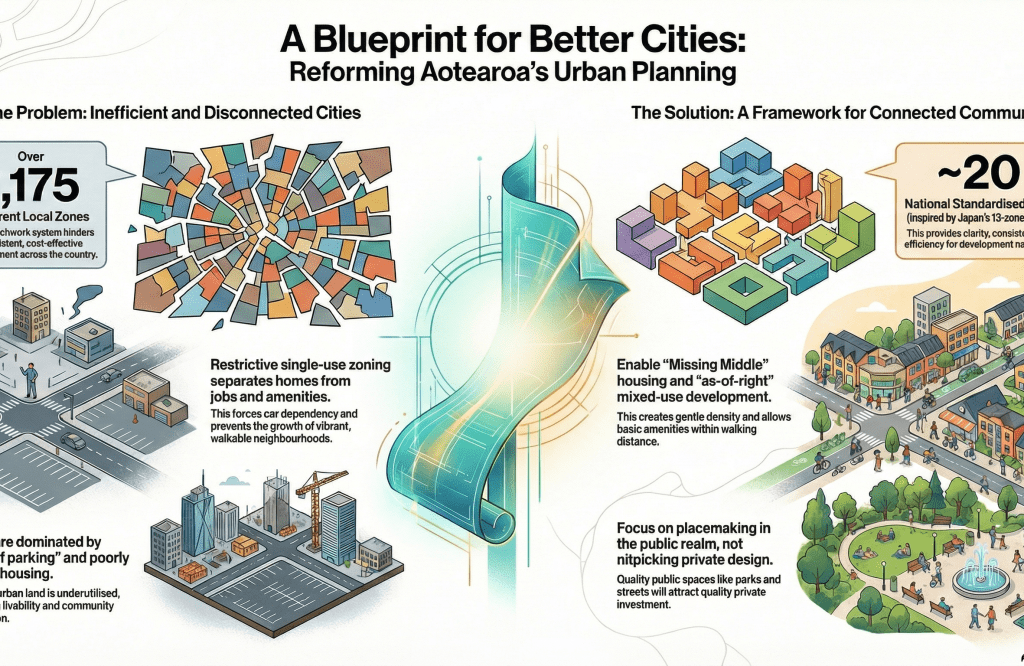
2026 = the pivotal moment for planning reform in Aotearoa
Over the course of the next two weeks (Monday to Friday) I will be republishing posts from 2025 that covered the lead up to the pivotal moment of the Aotearoa Planning Reforms in 2026. The posts will be republished at 8am sharp, GMT+13 aka New Zealand Daylight Savings Time.
As a preview, I ran the 10 posts that will be used, plus added two more through the Notebook LM to see what it would spit out in various summary forms. I must say I was quite impressed although reminded I need to still do the legwork of writing the content first before the AI can summarise in infographic, mind maps, videos and even a slide deck.
So, lets kick it off with an infographic and summary of what the next two weeks will be. And here is to that pivotal 2026 with Aotearoa’s planning forms!
A Blueprint for Better Cities: Reforming Aotearoa’s Urban Planning
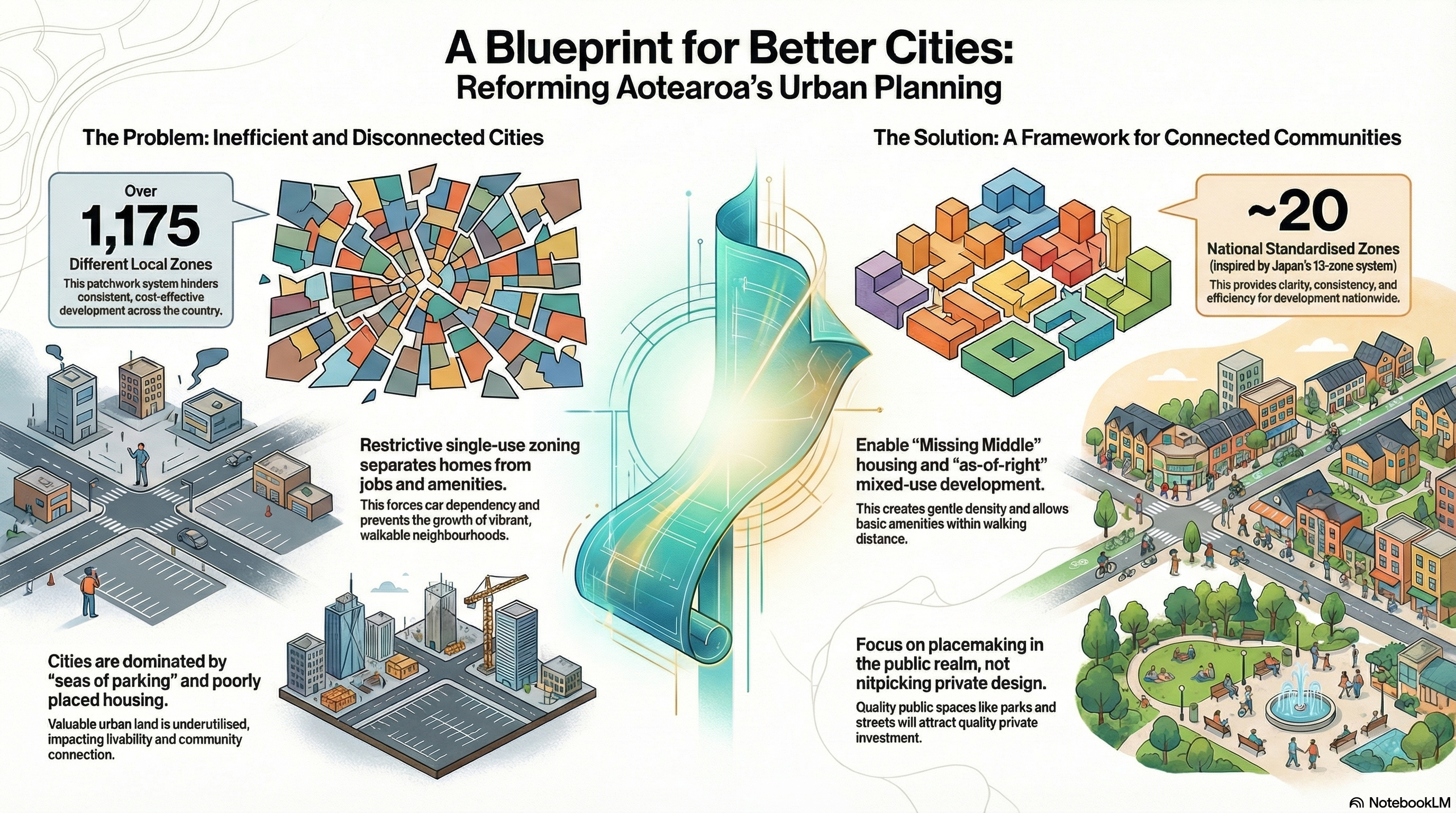
Aotearoa Planning Reform: Standardised Zones and Urban Transformation
A summary preview from Notebook LM, with some edits for context.
Talking Southern Auckland explores the transformation of urban planning in New Zealand, specifically through the lens of proposed national planning reforms and standardised zoning. These reforms should draw on the significant inspiration from Japanese land-use law, which utilizes a simplified system of thirteen zones to promote public welfare, mixed-use development, and balanced growth.
Ben advocates for “Missing Middle” housing and Transit Oriented Developments to create more walkable, humane communities while reducing the excessive land currently dedicated to surface parking.
Key proposals include making mixed-use activities a legal right in residential areas and establishing minimum intensification catchments around transit hubs to curb urban sprawl. Additionally, Talking Southern Auckland addresses the integration of Indigenous Māori worldviews through special purpose zones, such as the Hopuhopu zone, ensuring that national standards remain flexible enough to respect cultural heritage.
Ultimately, the collection argues for a shift away from auto-centric planning toward a more efficient, integrated spatial form that prioritizes public realm quality over private realm design nit-picking.

 Talking Southern Auckland