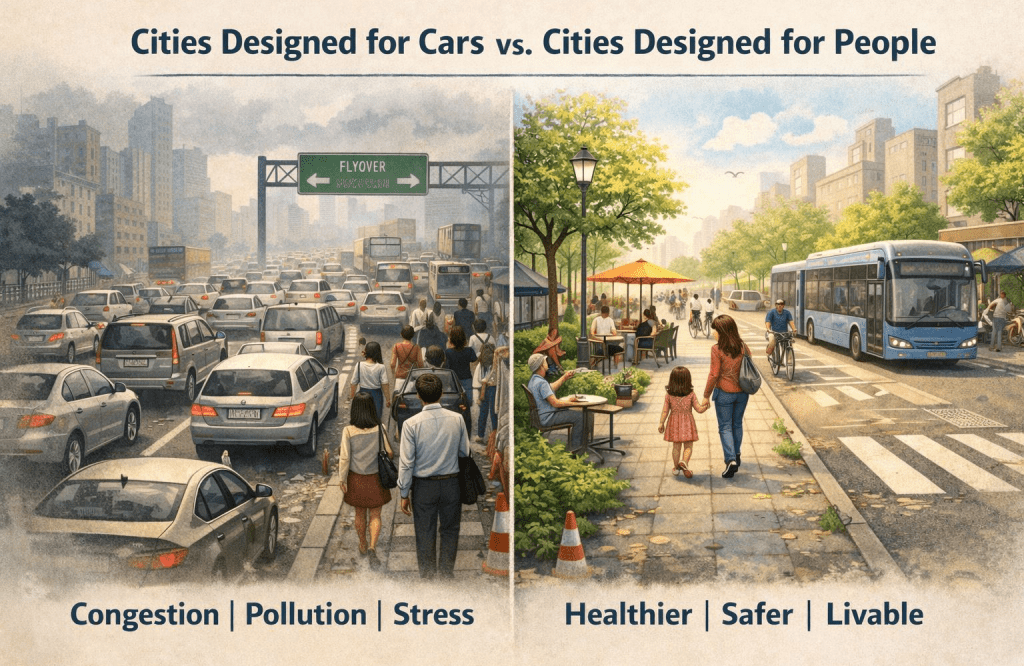
People first with Safer, Healthier, and More Prosperous Communities through Safe Speed by Design
1.0 Introduction: The Urgent Need for a New Approach to Urban Street Design
Our streets are experiencing a public health crisis. Decades of prioritizing vehicle speed over human safety have created an environment where preventable deaths and serious injuries are a daily reality. This traditional, vehicle-centric approach is a primary contributor to the global road safety crisis, and its consequences are too severe to ignore.
The scale of this issue is staggering. Globally, an estimated 1.19 million people were killed in traffic crashes in 2021 alone. These are not mere statistics; they represent lives cut short and families devastated. Road traffic crashes are now a leading cause of death for children and young adults aged 5-29. The burden falls disproportionately on our most vulnerable residents: pedestrians, cyclists, and motorcyclists, who consistently account for more than half of all traffic-related fatalities. These outcomes are not inevitable accidents; they are the predictable result of a design philosophy that has failed to protect human life.
The purpose of this proposal is to advocate for the formal adoption of Safe Speed by Design principles as the new standard for all urban planning and street reconstruction projects. This evidence-based framework is a proven strategy to reverse these tragic trends and create safer, healthier, and more economically vibrant public spaces for all residents. This document will define the core principles of this transformative approach and outline a clear, pragmatic path toward its implementation.
Reclaiming the Streets
2.0 Defining Safe Speed by Design: A Framework for People-First Streets
To achieve meaningful and lasting change, our city must adopt a formal, systematic design framework that shifts our priorities from moving cars to serving people. This is not a radical or experimental concept; it is a globally recognized approach, championed by leading institutions like the Global Designing Cities Initiative, that rebalances our most valuable public asset—our streets—to enhance the well-being of the entire community. It uses the physical design of the street itself to manage vehicle speeds, creating a self-enforcing environment that encourages active mobility such as walking and cycling.
The core philosophy of Safe Speed by Design is to build streets that are inherently safe, comfortable, and appealing for everyone, regardless of age, ability, or mode of travel. By redesigning the physical cues of our streetscape—from lane widths to intersection corners—we can naturally guide drivers to adopt safer speeds, reducing the need for heavy-handed enforcement and creating an environment where active transportation can flourish. This approach is built upon several fundamental tenets:
- Prioritizing Human Health and Safety: Designing streets to support active transportation is a direct investment in public health. By creating environments that make walking and cycling safe and intuitive choices, we can help reduce traffic injuries, improve air quality, and combat the chronic health issues linked to sedentary lifestyles.
- Creating Vibrant Public Spaces: Streets are not merely corridors for vehicle movement; they are our city’s most vital public spaces. This framework treats them as essential platforms for social interaction, cultural expression, and community life, transforming underutilized asphalt into places where people can gather, play, and connect.
- Ensuring Multimodal Equity: An equitable city provides a range of safe and reliable mobility choices for all its residents. This framework intentionally engineers streets to serve a variety of modes, with priority given to the most vulnerable users: pedestrians, cyclists, and transit riders. This focus ensures that our streets are accessible and safe for children, older adults, and those who rely on transportation options other than a private car.
By embracing these principles, we can move beyond a narrow, vehicle-centric view of our streets and toward a more holistic, people-first vision. The following section details the specific, evidence-based strategies used to bring this vision to life.
3.0 The Four Pillars of Safe Speed by Design Implementation
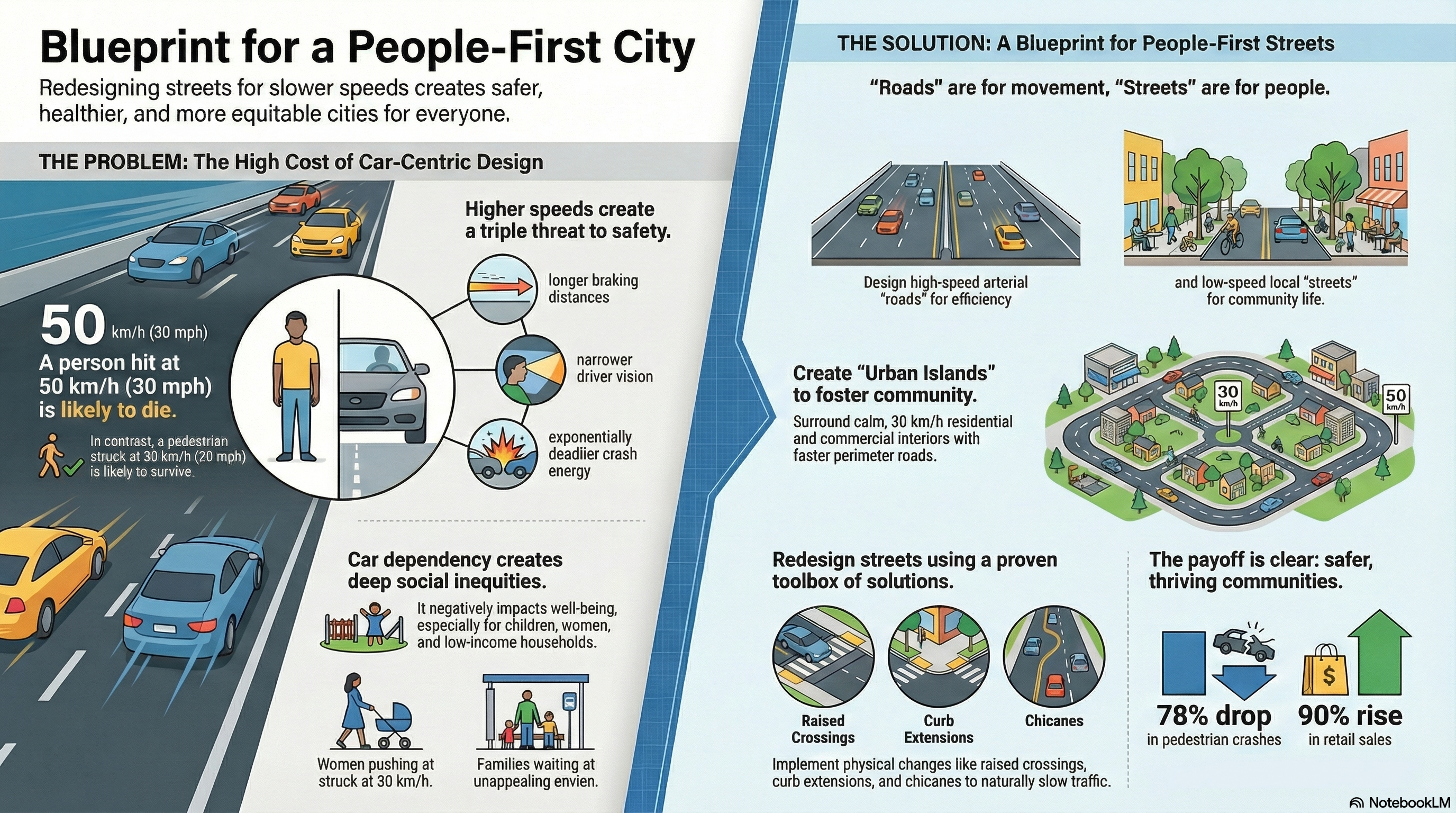
Safe Speed by Design is achieved through a set of practical, evidence-based, and interconnected design strategies. These pillars are not isolated interventions but work in concert to create a self-enforcing system of safer streets. By physically altering the street environment to prioritize human safety, we can make safe speeds the natural and intuitive choice for drivers, rather than relying solely on signage and enforcement.
3.1 Pillar 1: Strategic Speed Management as a Foundation for Safety
The single most effective factor in preventing traffic fatalities is managing vehicle speed. A person hit by a car traveling at 50 km/h is eight times more likely to die than a person hit at 30 km/h. This is an undeniable physical reality. By making strategic speed management the foundation of our street design, we directly address the root cause of severe and fatal crashes, creating a baseline of safety for all users.
3.2 Pillar 2: Rightsizing Streets to Reclaim Public Space
Decades of flawed assumptions held that wider lanes improved traffic flow. However, research refutes this claim, showing that oversized lanes (often 3.5m or 4m) provide no meaningful benefit to vehicle capacity while encouraging dangerous speeding and consuming valuable public space. “Rightsizing” is the practice of reconfiguring streets to appropriate dimensions. Adopting a standard urban lane width of 3m or less has been proven to calm traffic and improve safety without negatively impacting vehicle operations, while freeing up space for wider sidewalks, protected bike lanes, and green infrastructure.
3.3 Pillar 3: Re-engineering Intersections to Protect Vulnerable Users
Intersections are the primary sites of conflict between vehicles and vulnerable road users. Poorly designed intersections, characterized by oversized corner radii and high-speed slip lanes (dedicated lanes that allow cars to turn without stopping at an intersection), endanger pedestrians and cyclists. This framework addresses this by re-engineering intersections with compact geometry. By tightening corner radii and eliminating slip lanes, we can mandate slower, more cautious turns. Adopting a new standard with target turn speeds of 5-15 km/h will dramatically increase safety for everyone crossing the street.
3.4 Pillar 4: Implementing Area-Wide Network Strategies
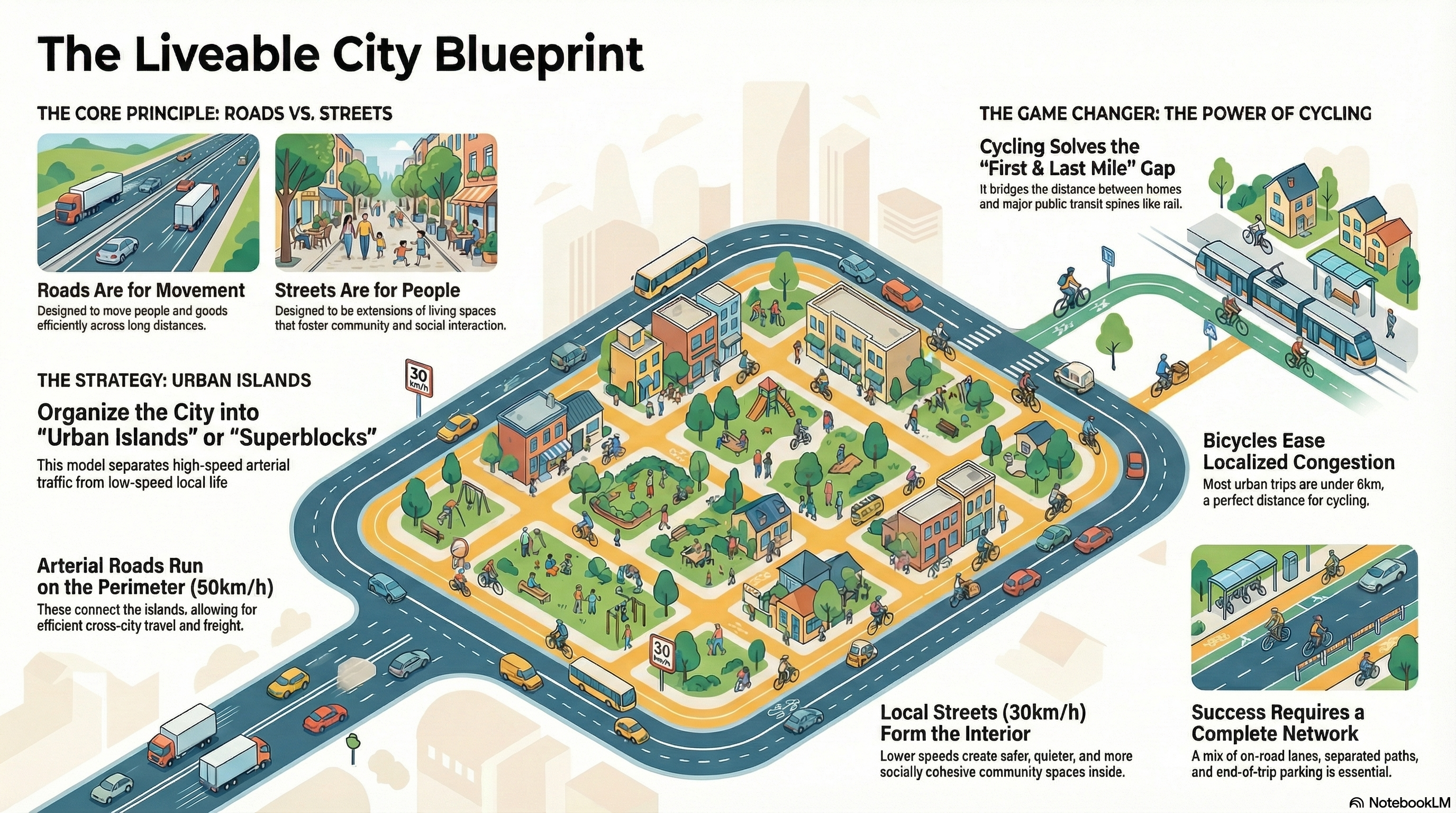
True safety cannot be achieved on a street-by-street basis alone; it requires a network-level approach. “Filtered permeability” is a key strategy that transforms entire neighborhoods. By using elements like planters or bollards to prevent through-traffic on local residential and commercial streets, this strategy ensures that these streets are used primarily for local access. This drastically reduces vehicle volumes and speeds, creating calm, quiet, and safe environments for residents to walk, cycle, and socialize, while keeping major thoroughfares available for necessary vehicle movement.
These four pillars form a comprehensive toolkit for transforming our city. As the next section will show, their application in cities worldwide has yielded remarkable results.
4.0 Evidence of Success: Global Case Studies in Transformation
Adopting Safe Speed by Design is not a leap into the unknown; it is a step toward proven, evidence-based policy. Cities across the globe have successfully implemented these principles, yielding measurable and often dramatic improvements in public safety, health, and livability. The evidence demonstrates that when cities prioritize people in their street design, the benefits are tangible and swift. The following case studies provide a compelling snapshot of what is possible.
| City & Initiative | Core Strategy | Quantifiable Impact |
| Bologna, Italy: 30 Policy | Implemented a city-wide default speed limit of 30 km/h. | In the first year: 50% reduction in fatalities, 30% reduction in serious injuries, and 13% reduction in all crashes. |
| London, UK: Low-Traffic Neighbourhoods (LTNs) | Used modal filters to restrict through-traffic in residential areas. | 56% traffic reduction inside LTNs, cycling increased by up to 57% on key routes, and air quality improved at 147 of 169 monitored locations. |
| Barcelona, Spain: Superblocks (Superilles) | Reordered the street grid to divert through-traffic and reclaim internal streets as public plazas. | Sidewalks were widened from 12.5 m to 17 m, and a 4 m-wide two-way bike lane was added in the central median, repurposing excess roadway for people. |
| New York City, USA: School Zone Speed Radars | Installed over 2,000 automated speed enforcement cameras in school zones. | Achieved a 73% average reduction in speeding in monitored areas, significantly improving safety for children. |
These cases prove a universal principle: when cities design for the safety of people, they unlock measurable gains in public health, active mobility, and quality of life. The demonstrated success of these initiatives provides a powerful argument for applying these principles to realize similar benefits within our own community.
5.0 The Return on Investment: Tangible Benefits for Our Community
The adoption of Safe Speed by Design should be viewed not as an expenditure, but as a high-return investment in our city’s future prosperity, health, and resilience. The benefits extend far beyond the curb, creating positive ripple effects across our entire community and strengthening our city’s long-term economic and social fabric.
5.1 Improved Public Health and Safety
The most immediate and critical return is the preservation of human life. This framework directly reduces traffic fatalities and severe injuries, lessening the immense emotional and financial burden on families, our emergency services, and our healthcare system. Furthermore, by creating environments that encourage daily walking and cycling, we actively combat chronic health issues like heart disease and diabetes, leading to a healthier, more active population.
5.2 Enhanced Economic Vitality
People-first streets are magnets for economic activity. Safer, more pleasant environments attract greater foot traffic, which directly supports local businesses, restaurants, and retail shops. This investment also has a profound macroeconomic impact. Studies have shown that a 10% reduction in traffic deaths can raise real GDP per capita by 3.6% over a 24-year period. By making our streets safer, we are not just saving lives—we are building a more prosperous and resilient local economy.
5.3 Greater Social Equity and Access
Safe and accessible streets are the bedrock of an equitable city. These design principles benefit everyone, but they provide a particularly vital lifeline to our most vulnerable residents. Children can travel to school and play more safely, older adults can navigate their neighborhoods with greater confidence, and people with disabilities gain improved access. This approach also ensures that residents who do not have access to a private vehicle have safe, dignified, and reliable options for getting around.
5.4 A More Sustainable and Resilient Environment
The co-benefits for our natural environment are significant. Shifting even a fraction of trips from private cars to walking and cycling leads to a direct reduction in carbon emissions and noise pollution. Moreover, the process of rightsizing streets reclaims space that can be used for street trees and bioswales. These elements not only beautify our city and improve air quality but also help manage stormwater, making our community more resilient to the impacts of climate change.
These interconnected benefits demonstrate that Safe Speed by Design is a powerful tool for achieving a wide range of civic goals. The next section proposes a practical plan for realizing this return on investment.

6.0 A Proposed Path Forward: A Phased Approach to Implementation
To ensure success and build broad support, we propose a pragmatic and fiscally responsible phased implementation strategy. This approach allows us to demonstrate the benefits of designing for safe speeds on the ground, gather community feedback and data, and build momentum for city-wide adoption without requiring a massive upfront capital investment.
- Phase 1: Pilot Projects using Quick-Build Materials. We recommend beginning with short-term, low-cost “interim transformations” in one or two high-priority areas, such as a street adjacent to a school or a small commercial district. By using quick-build materials like paint, planters, and temporary bollards, we can rapidly reconfigure a street to demonstrate these design principles. This approach allows the community and council to experience the benefits firsthand—safer crossings, calmer traffic, and more vibrant public space—and provides a crucial opportunity to collect data on performance and community satisfaction before committing to permanent construction.
- Phase 2: Policy Integration and Design Standards Update. Concurrently with pilot projects, we must embed people-first design into our city’s DNA. This requires formally integrating safe speed principles into all relevant public documents, including the official Street Design Guide, zoning codes, and capital project evaluation criteria, and crucially, coordinating with key stakeholders like our emergency services to update their standards and ensure their operational needs are met within a safer, more compact street geometry. By codifying these principles, we ensure that every future public and private project is aligned with our city’s new vision for safe and livable streets.
- Phase 3: Long-Term Capital Reconstruction. The ultimate goal is the permanent transformation of our city’s public realm. As pilot projects prove successful and policies are updated, we will proceed with long-term capital reconstruction. This phase involves making the designs from successful interim projects permanent using durable, high-quality materials like concrete curbs, raised crossings, and mature trees. This phase represents a lasting investment in our infrastructure, creating a legacy of safe, equitable, and beautiful streets for generations to come.
This measured, three-phase approach will enable us to transform our city thoughtfully and effectively, ensuring each step is informed by data, experience, and community engagement.
7.0 Conclusion: Building a Future-Ready City
The evidence is clear: our current approach to street design is failing to protect our residents and is holding our city back from its full potential. Continuing with the status quo is a choice to accept preventable deaths, persistent health crises, and economic underperformance as the cost of mobility. A shift toward Safe Speed by Design is not merely an alternative; it is a strategic imperative for securing a safer, healthier, more equitable, and more prosperous future for our community. By re-prioritizing our streets for people, we invest directly in the well-being of every resident and build a city that is truly ready for the challenges of the 21st century.
We respectfully urge the committee to formally endorse this proposal and direct staff to begin the crucial work of identifying and planning for Phase 1 pilot projects. Let us take the first step together toward building a city where everyone can move safely, live healthily, and thrive.
References

 Talking Southern Auckland