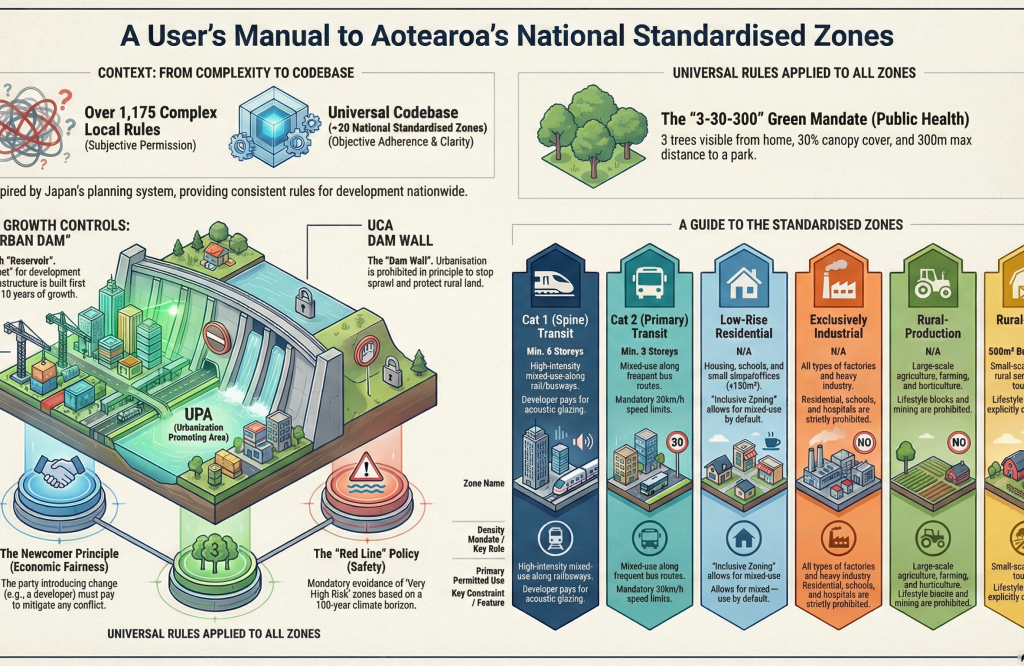
The National Policy Statement-Urban Development, and Standardised Zones might have the final say!
The celebration from certain quarters in regards to Minister Chris Bishop apparently downgrading Plan Change 120 could be deemed premature. Yes Bishop moved the needle from providing capacity for two million homes to 1.6, which is still more than the current Unitary Plan’s 1.2m but Planning under the Resource Management Act is not that clear cut. And for extra measure the Planning Bill which goes live next year turns everything back on its head. So, consequently ACT Leader David Seymour would be right to be cautious but he best be listening to Mayor Wayne Brown on how Auckland handles its intensification.
You see I think Howick and Epsom are going to get a interesting lesson on the difference between Permitted Activity and Restricted Discretionary and why three storeys are still coming for both suburbs (unless an area falls foul of the National Policy Statement – Natural Hazard). And this is under the outgoing RMA. Under the Planning Bill and the Standardised Zones three storeys would be a Permitted Activity again anyway across most of Auckland. Factor in the NPS-Urban Development, and NPS-Infrastructure regarding transit and the provision of transit (amongst other infrastructure) and three storeys is or would be definitely enabled through the Planning Bill. The very same Planning Bill that will have the Unitary Plan and Auckland Plan combined into a single Combined Plan to govern Auckland’s planning and development over the next 10-30 years.
As for places facing a downgrade from six to three storeys. Again the NPS-UD, the NPS-Infrastructure, and the Standardised Zones will be the final determination here. However, between those and the focus back on the Metropolitan Centres there could be rebalancing back towards the Metropolitan Centres. No qualms from me there as I conclude in this post. Again though and my graphic below highlights it well (and I also give context there) what might be going down now could be going back up again out the other side of the reforms with the Standardised Zones.
Permitted Activity vs Restricted Discretionary?
This brings me why three storeys will still be allowed in Howick (and Epsom). As much as the RMA get dissed it is still an enabling document that uses effects-based management when deciding on land use. Its successor the Planning Bill does the same with some parts more liberalised and other parts more strict than its predecessor. In short unless the activity is classed as Prohibited, that activity can be done. It will depend on how many hoops you need jump through first and yes you still need to jump through hoops in the Permitted Activity class if you do not want to fall foul of the Permitted Activity standards and trigger a consent in one of the other classes. Restricted Discretionary typically means you need (often a non notified) consent with matters of discretion restricted to what is listen specific for that zone. Traffic, Bulk, Geotechnical Engineering, and landscaping are often the matters of discretion listed for a Consenting Planner to consider a consent under RD. Tick those boxes, get your consent, and away you go! Under the Planning Bill it will be exactly the same unless it falls under the proposed Section 14. What shifts between Permitted and Restricted Discretionary will change depending on the how the Standardised Zones are written and whether the NPS-Natural Hazards applies (shifting a development to Prohibited as it was deemed Very High Risk).
In the end your 3 storey residential or mixed use is going to get developed in Howick and Epsom whether it is under PC120 or under the Planning Bill with its standardised zones. And this serves a reminder with a lot of activities shifting to Permitted under the Planning Bill, what might have been a victory today was one that really never existed.
Section 14 of the proposed Planning Bill
14. Effects outside the scope of this Act
- (1) A person exercising or performing a function, duty, or power under this Act who is considering the effects of an activity must disregard—
- (a) the internal and external layout of buildings on a site (for example, the provision of private open space):
- (b) negative effects of development on trade competitors, including on competing providers of input goods and services:
- (c) retail distribution effects:
- (d) the demand for or financial viability of a project unless it is a matter to which section 11(1)(b) or (d) relates:
- (e) the visual amenity of a use, development, or building in relation to its character, appearance, aesthetic qualities, or other physical feature:
- (f) the following matters:
- (i) the type of residential use; and
- (ii) the social and economic status of future residents of a new development:
- (g) views from private property:
- (h) the effect on landscape:
- (i) the effect of setting a precedent:
- (j) any matter where the land use effects of an activity are dealt with under other legislation.
- (2) This section does not restrict the management of—
- (a) areas of high natural character within the coastal environment, wetlands, lakes, rives, and their margins:
- (b) outstanding natural landscapes and features:
- (c) sites of significant historic heritage:
- (d) sites of significance to Māori:
- (e) the effects of natural hazards (the NPS Natural Hazards applies).
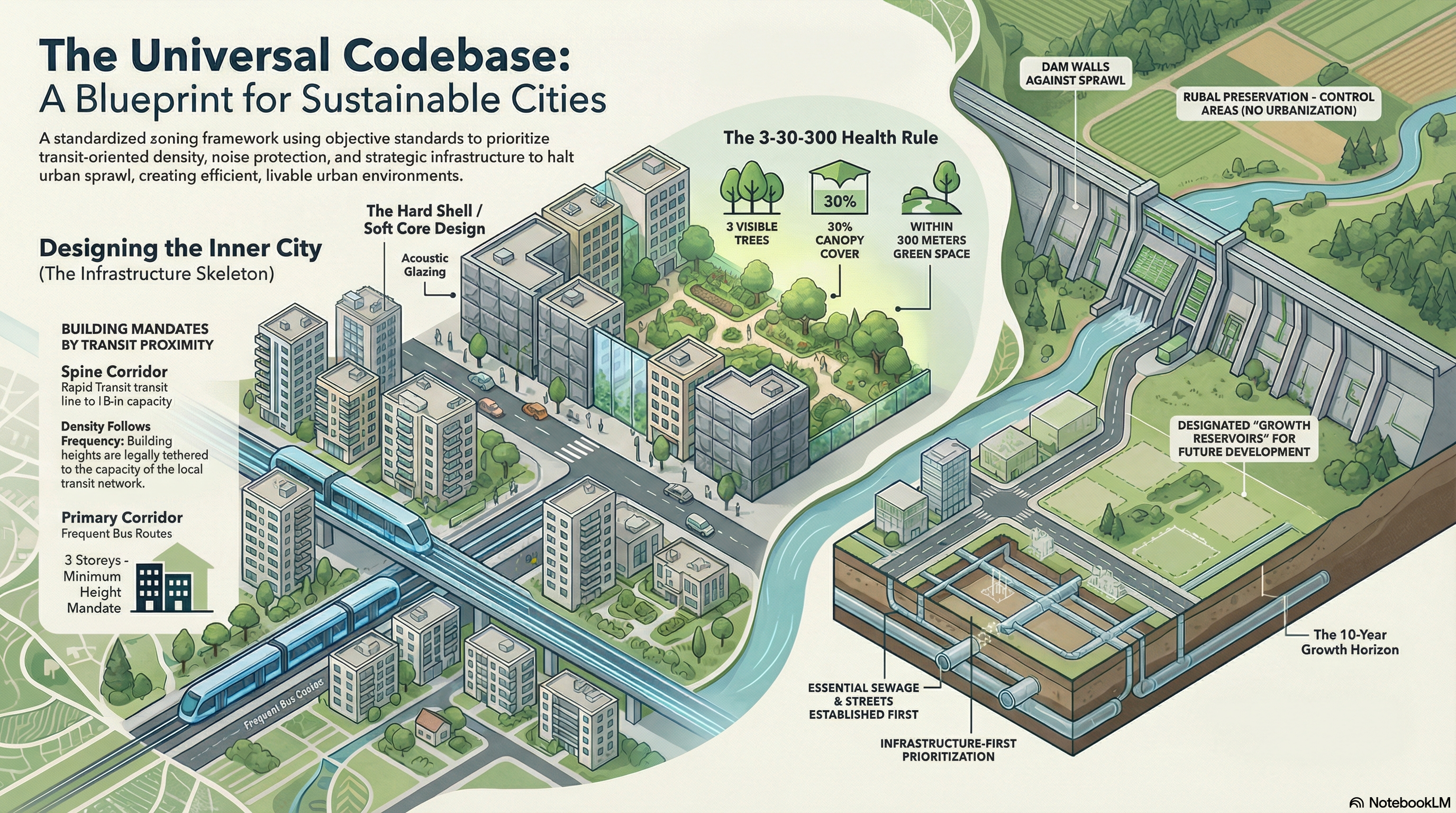
This graphic came from my submission to the Planning Bill that utilised Section 14, introduced Welfare Supreme but still allowed for Gentle Density through 75% of urban Auckland (the rest is either the City Centres, Metropolitan Centre, or Industrial complexes).
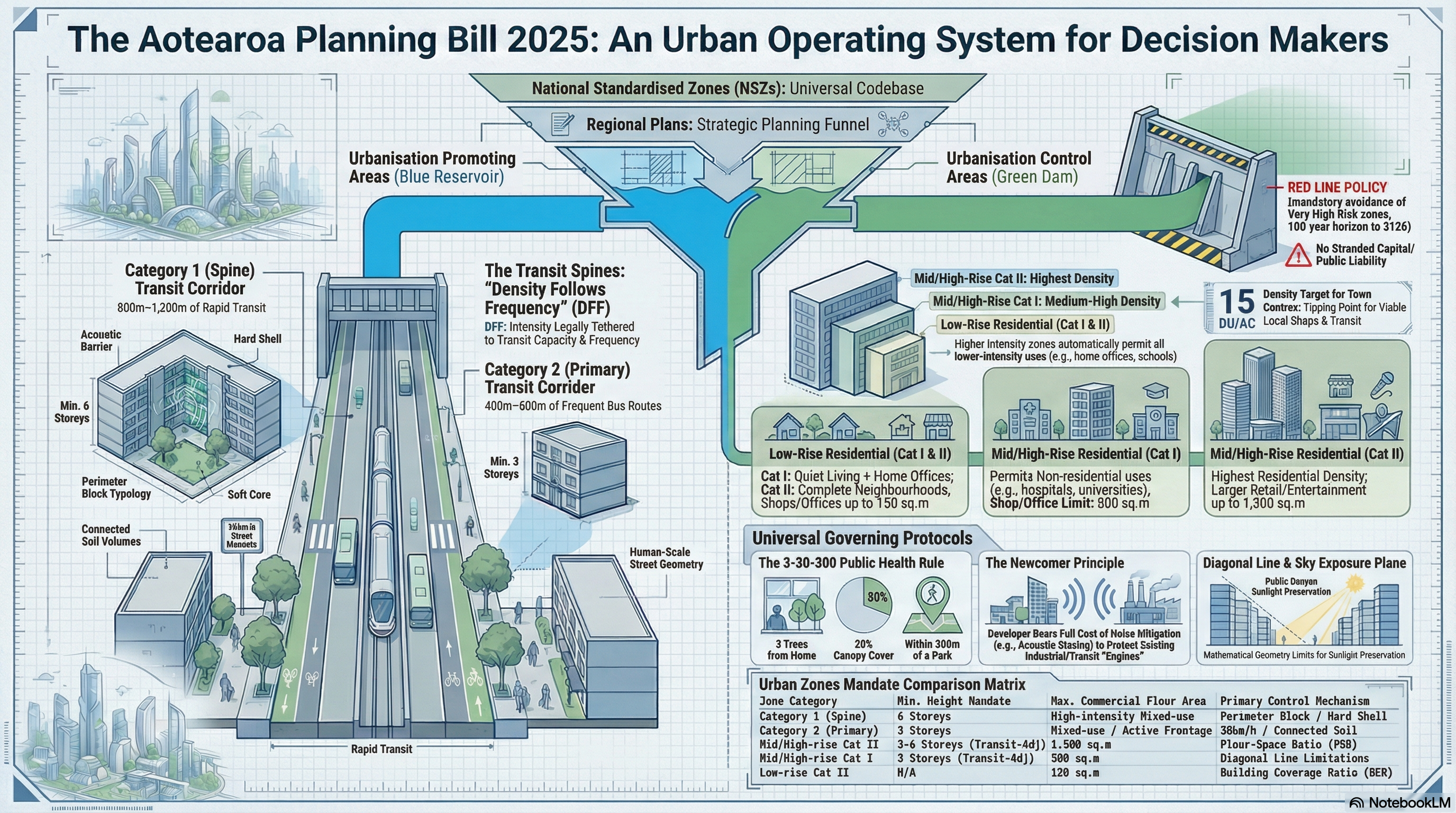
Ironically the Category 1 and 2 transit corridors were derived from the NPS-Urban Development (Going for Housing Growth) consultation last year that proposed intensification along transit corridors and routes. That concept was universally supported in submissions providing Government paid their share (something the Infrastructure Commission pointed in further irony this week). I have modified them for my submission to the Planning Bill, and adapted the Japanese Standardised Zones to further assist.
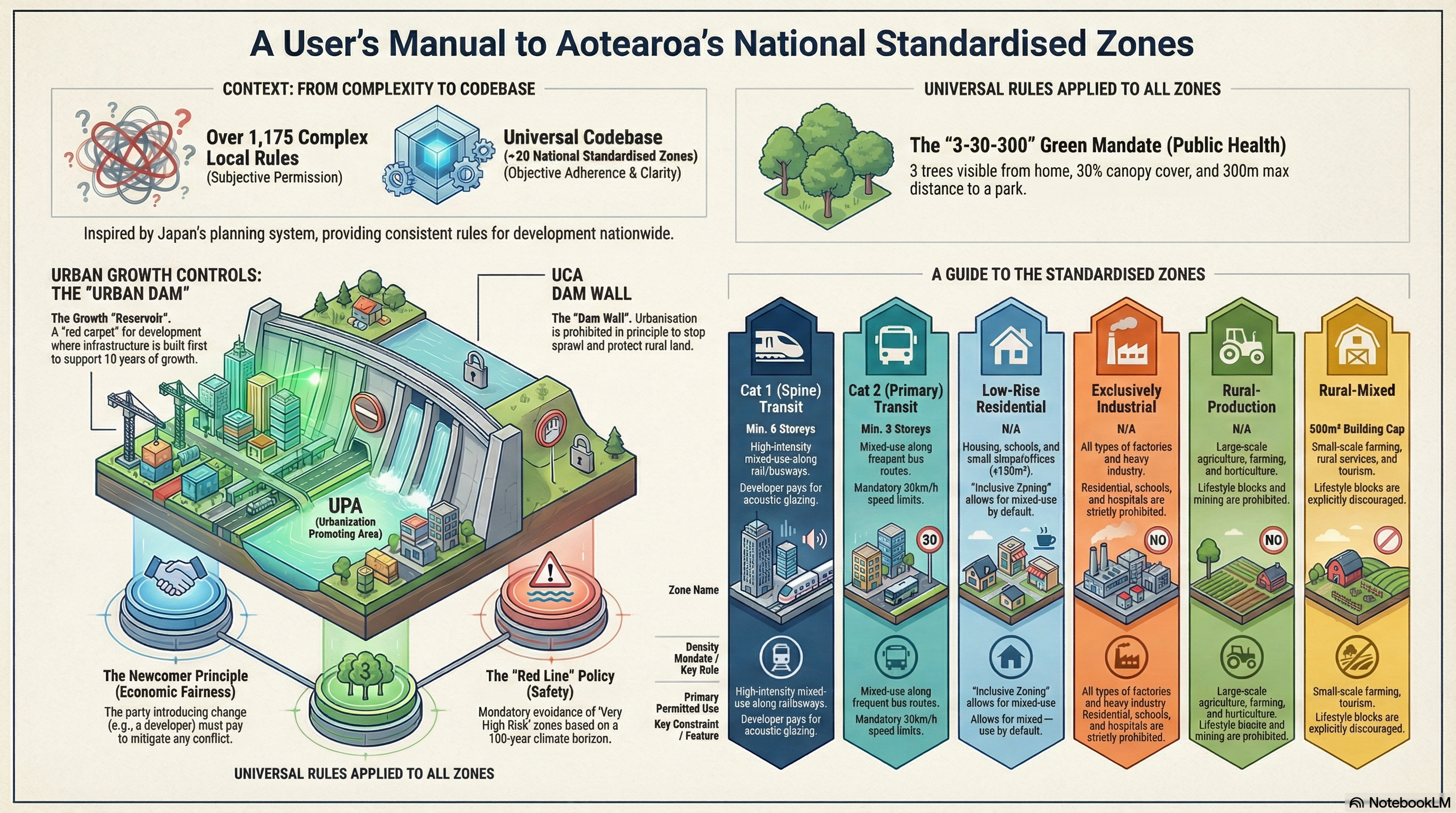
None-the-less despite what certain elected representatives thought, three storeys is still very possible and equally very allowed in Howick and Epsom. Whether it is Restricted Discretionary today and needing a consent, or a Permitted Activity next year under the new regime, three storeys was and never should go away. By the way medium density never harmed anyone and are your friends.
As a side, focus back on the City Centre and Metropolitan Centres is welcome though given at least with the Metros they are constantly forgotten about.

 Talking Southern Auckland