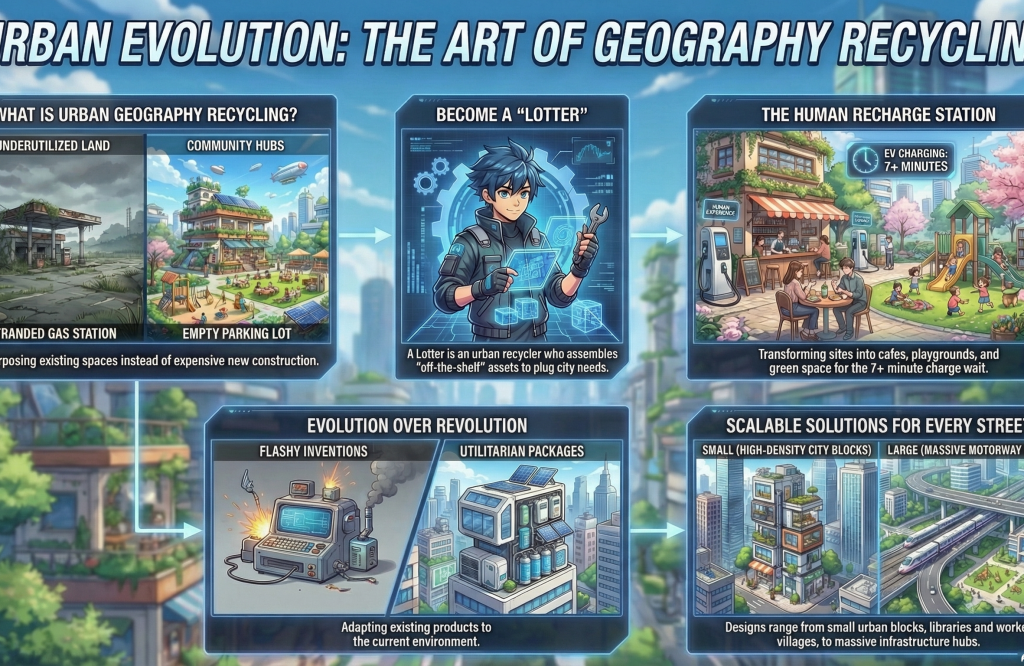
Cars and trucks will always be with us, as will inter-city rail. So, how to adapt the car and truck into a post oil-crisis world!
Never let a crisis go to waste in regards to opportunities. And by opportunities I do not mean sitting around with your head in the sand thinking this might all blow ever as the current National government is thinking. By opportunities I mean it is time to engage in some good old fashioned public works to build resilience into the economy. I have already covered inter-city rail, intra-city transit, and the accompanying supporting land use. You can see each of those respective outlines below:
A Recap to the Aotearoa Urban Operating System: Building the Connected Region
Executive Summary: Airport to Botany (A2B) Rapid Transit and Urban Transformation
Briefing: Transforming New Zealand’s Transit: The Japanese Integrated Development Model
Why Auckland’s Transit Future Isn’t a “Bullet Train”—It’s a Japanese Blueprint
But, the car and the truck will always be with us as well as the train and the e-bike. So, tools are needed to help transition the road fleet over away from fossil fuels to electric. And to do this in supporting them, the infrastructure also needs to be in place. Back in 2019 I wrote about needing the supporting infrastructure in place for the transition to EVs. Given the oil crisis as of 2026 I went back to my 2019 post and ran it through the AI to freshen it up for the 2026 geo-political situation.
Here we have the beginners guide to me using urban design to solve a very electric problem in both our cities, and rural areas.
1. Introduction: Beyond the Concrete Jungle
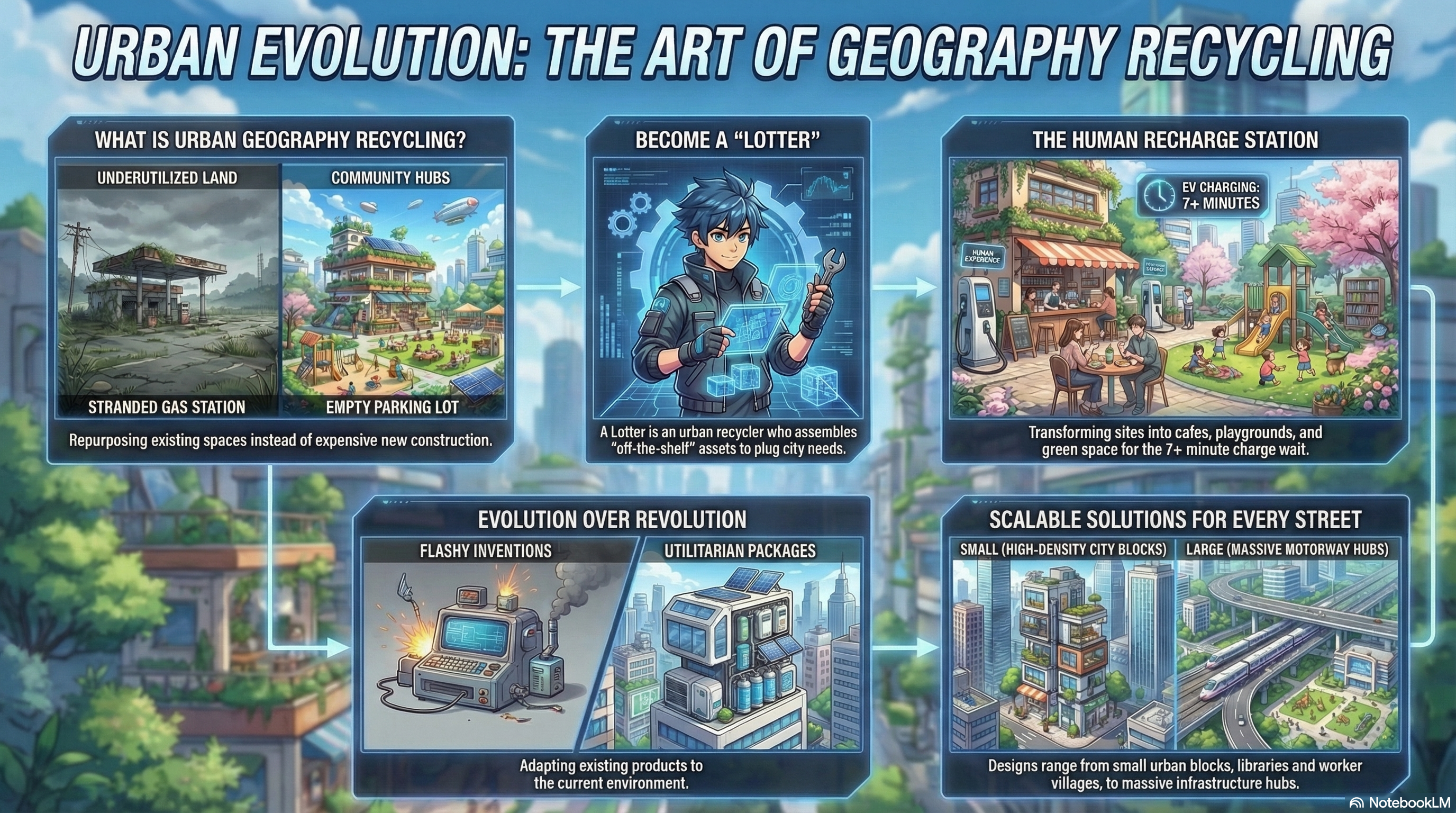
In contemporary urban planning, the impulse is often toward the “revolutionary”—the pursuit of disruptive technologies or radical architectural overhauls. However, a more pragmatically sustainable and efficient methodology is found in Urban Geography Recycling. This framework prioritizes an “evolutionary” approach to city-building, focusing on the sophisticated repurposing of existing land, underutilized infrastructure, and established assets to accommodate shifting technological and societal demands.
As urbanist Ben Ross articulates in his exploration of the South Pacific context, specifically within the Auckland and Manukau regions:
“We do not have a tendency to do revolution but rather evolution of what is already there as well as tried and very well tested. We are the Urban Geography recyclers inside a city using what it already has to produce something better to fill an unsatisfied need.”
This philosophy recognizes that cities are not static monuments but living organisms that must be periodically “recycled” to maintain utility. To transition from abstract theory to applied practice, we must examine the pressing infrastructure challenge currently facing modern transit: the integration of electric vehicle (EV) charging into the human experience.
2. The “Why”: Solving the 7-Minute Problem
Traditional fossil-fuel infrastructure is optimized for machine efficiency. A standard internal combustion engine vehicle can be refuelled in a three-minute window. However, the transition to EV transit introduces a significant period of unproductive downtime. Even utilizing modern “super chargers,” the average charging duration is approximately seven minutes. While “instant battery swaps” remain an alternative for heavy logistics like trucks and buses, the passenger vehicle sector is defined by this seven-minute charging window.
For a family traveling through a corridor like the Manukau Trans-Link, seven minutes of “twiddling one’s thumbs” while children become restless in the rear seats represents a profound failure in human-centric design. The solution lies in the transformation of transit stops from sterile “fuelling points” into Human Recharge Stations.
Comparative Infrastructure Philosophies
| Feature | Traditional Service Stations | Human Recharge Stations |
| Primary Focus | Machine-centric: Fuelling and speed. | Human-centric: Comfort and community. |
| Design Logic | Utilitarian and transaction based. | Multi-use and experience based. |
| Typical Downtime | 2–3 minutes (Gas/Diesel). | 7+ minutes (EV Charging). |
| Atmosphere | Asphalt-heavy, industrial. | Green, relaxing, and inclusive. |
| Core Outcome | Refuelled vehicle. | Recharged driver and passengers. |
While the traditional station views the human as an inconvenient attachment to the machine, the Human Recharge Station views the machine’s downtime as an opportunity for human utility.
3. Defining the Creator: The Role of the ‘Lotter’
To prototype these environments, we utilize the BLaM (Builders, Lotters, and Modders) framework. This hierarchy, frequently employed in urban simulation tools like Cities Skylines, provides a blueprint for how planners can iterate on city needs:
- Builders: Individuals who create entirely new digital or physical architectural assets from the ground up.
- Lotters: The “Urban Geography Recyclers” who take “off-the-shelf” assets and assemble them into a new “lot” to fill a specific community hole.
- Modders: Individuals who alter the fundamental rules or mechanical systems of the urban environment.
The Lotter serves as the critical bridge between old infrastructure and innovative technology. In the pedagogical context of Cities Skylines, Lotting allows for rapid prototyping of real-world solutions without the prohibitive costs of new construction. By “recycling” both the physical land—such as poorly used parking lots—and the design process (using existing assets rather than inventing new ones), Lotters provide an efficient path to urban evolution.
4. Analysing the Functional Composition of Recharge Infrastructure
A Human Recharge Station is more than a parking lot with plugs; it is a “human experience place.” Drawing from Danish infrastructure models and simulated for the South Pacific environment, these stations integrate amenities that turn a mandatory delay into a period of value.
Essential Components of the Recharge Model
- Basic Needs (Universal)
- Sanitation: High-quality toilets and dedicated baby-changing facilities.
- Nutrition: Diverse food options ranging from mobile food trucks and coffee kiosks to established cafes.
- Value-Add Assets (Experience-Driven)
- Green Infrastructure: Gardens and parklands designed for cognitive rest.
- Active Zones: Playgrounds that allow children to “burn off energy” during transit.
- Refuge Spaces: Dedicated libraries or bookstores, which provide essential shelter and mental engagement “if it is hosing with rain.”
- Tier-Specific Assets
- Specialized Retail: Gas stations, repair centres, and supermarkets (reserved for medium and large tiers).
The “so what?” of this design is simple: by providing for human needs—shelter, play, and relaxation—the planner transforms a logistical necessity into a community asset.
5. Scaling the Concept: Three Tiers of Innovation
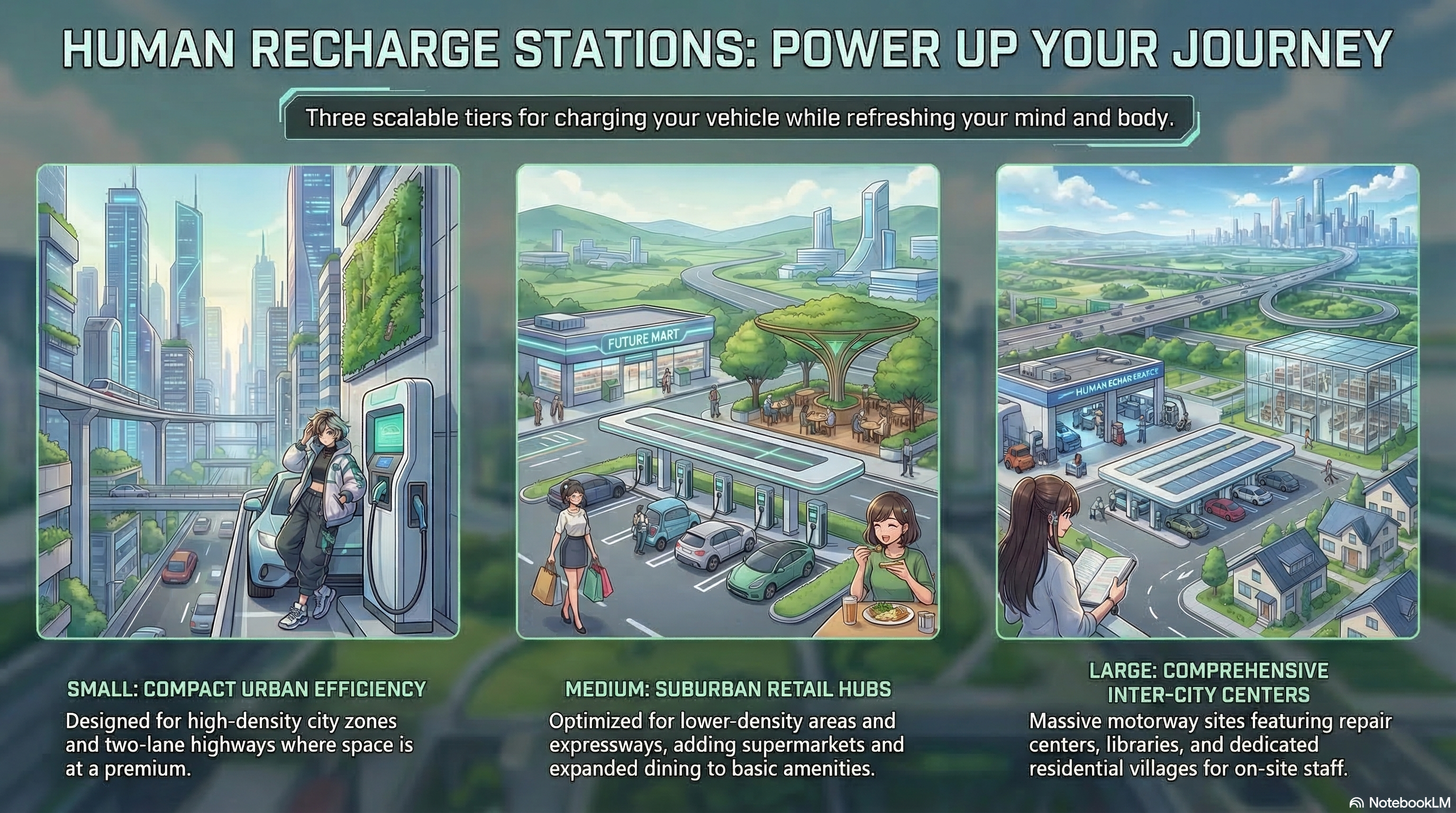
Urban Geography Recycling is inherently “utilitarian,” meaning the scale of the intervention must match the density of the environment. In the Manukau context, this scaling ensures that infrastructure is neither excessive nor insufficient.
| Station Size | Ideal Location | Key Features |
| Small | High-density urban zones or 2-lane national highways. | Compact footprint; focuses on essential charging, toilets, and coffee kiosks. |
| Medium | Lower-density urban areas; 4-lane expressways. | Expanded food outlets; includes specialized retail and basic repair centres. |
| Large | 4-8 lane inter-city motorways or 8-lane urban avenues. | “Out-of-centre” hubs; features libraries, full-service restaurants, and repair shops. Includes adjacent “residential villages” (utilizing assets like McLennan Park/Onehunga housing) and bus connections to major centres like Manukau. |
This tiered logic allows for the “recycling” of diverse land types, from stranded gas stations on rural highways to underutilized urban avenues.
6. Conclusion: Evolution Over Revolution
The transition to sustainable transportation does not necessitate waiting for a revolutionary breakthrough in autonomous technology or multi-billion-dollar construction projects. Instead, the most effective strategy is the evolution of our existing environment. By recycling the geography, we already possess—transforming “dead” space into human-centric hubs—we solve the 7-minute problem through utilitarian design.
3 Critical Insights for Aspiring Urban Designers
- Prioritize Human-Centric Utility: Infrastructure must serve the passenger, not just the machine. If a technological constraint creates a seven-minute delay, the designer’s duty is to provide seven minutes of human value.
- Embrace Evolution over Revolution: Radical change is often expensive and time-consuming. True “Urban Geography Recycling” uses tried-and-tested elements—parks, toilets, and cafes—repackaged into “lots” that solve modern problems.
- Contextual Geographic Adaptation: Effective design is never one-size-fits-all. Scaling your intervention to the specific road type (from 2-lane to 8-lane) and surrounding density ensures that the recycling of land is both cost-effective and functionally appropriate.

 Talking Southern Auckland