Papakura Local Board pushes ahead A fellow local in the Papakura Local Board area has been busy with enquiries to the Mayoral Office over a number of projects in … Continue reading Updates on Takanini-Addison Area

Papakura Local Board pushes ahead A fellow local in the Papakura Local Board area has been busy with enquiries to the Mayoral Office over a number of projects in … Continue reading Updates on Takanini-Addison Area

A Look at the OTHER side of the Planning Debate Gripping New Zealand This is guest post using extracts from a discussion between people on the current Resource Management Act … Continue reading Guest Discussion Post – On Alternative Auckland Planning
As I reblog this I also caught this presser from MP Kelvin Davis:
Kelvin
DAVIS
MP for Te Tai Tokerau
Associate Police Spokesperson10 October 2014 MEDIA STATEMENT
Rapists, not Tinder, the threat to women
Blame for rape and sexual assault should only ever be laid at the door of the perpetrator, not dating services or the actions of women themselves, Labour’s Associate Police spokesperson Kelvin Davis says.“Tinder is not the problem and women being told to keep themselves safe is not the solution.
“We have got to stop blaming victims or today’s technology or any reasons other than the sick minds of perpetrators.
“It is time we pointed the finger fairly and squarely at the problem which is the unhealthy attitude of too many men who think it is okay to violate women.
“The simple mantra is ‘her body, her rules’.
“That is the message all men should be spreading amongst themselves in the home, at the pub, in the sports club and on the marae,” says Kelvin Davis.I agree.
While I completely understand the need for women, and men for that matter to be aware of the dangers of sexual violence the fact is, people should be able to go out on a date, or out with friends for a drink, or whatever it is that they want to do, and they should be able to do so without the fear of harassment or assault of either a sexual or violent nature. That’s it, pretty bloody simple.
The message seems to be, from the NZ Media and NZ Police, that people should be wary of things like Tinder and careful when going out on a first date. While caution is valid, people should not have to fear being raped when they go out and the overriding message from the Police should be “Don’t rape, assault or harass, or we will come at you, bro, and we will mess you…
View original post 244 more words
Credit is due where credit is due as I always say. NZTA’s Auckland Division is pretty good with the Tweets on happenings around the State Highway Network, major incidents on our arterial roads, events, and from time to time even public transport even though NZTA’s main jurisdiction is the State Highways with Auckland Transport supposedly meant to be picking up the rest.
Well Auckland Transport seems to be absolutely tone-deaf to happenings around its own network including the trains while NZTA seem to be slowly filling the gap as resource and skill allows.
This morning something went wrong on the Western Line (update: Breakdown) causing delays, cancellations, and over crowded trains having to skip stations in their trip to Newmarket and Britomart thus leaving passengers behind. Now if that was not causing enough angry Tweets from commuters then this next bit would.
Reports came in pretty fast that due to an over crowded train on the Western Line, a poor passenger had collapsed and required medical treatment at Baldwin Avenue Station. Of course this is going to cause further delays but having a passenger collapse due to over crowding trains is not on by any stretch.
Now when you have disruptions on a public transport network you expect Tweets, Facebook Messages, and even phone texts to go out just like Civil Defence did in the blackouts earlier this week. This way people are alerted and can make decisions rather than standing at a station wondering when their next train would come. Social media these days allows rapid and near instant communication to the world of such situations. Of course Auckland Transport could have diverted Southern Line trains to go do some shuttling between New Lynn and Newmarket to assist and rail buses (or just alerting people to go use the bus with AT-HOP universal across the system) being dispatched would have further assisted the Western Line.
But what did we get? Until about two paragraphs ago in writing this post we got absolutely nothing from Auckland Transport across the media spectrum AT ALL. Result? The Baldwin Avenue incident which is very easily avoided.
So while this incident occurs the Auckland Transport CEO gets a pay rise, and the head of Comm’s as well as the Chief Operation Officer twiddle their thumbs.
Bit unacceptable while Auckland Transport has failed to deliver most of its targets?
Call me a bit of an old fashion person but I thought when a leader failed to deliver their targets set out it was instant dismissal. How times have changed.
And as I finish this up I just saw this:
Horse long bolted
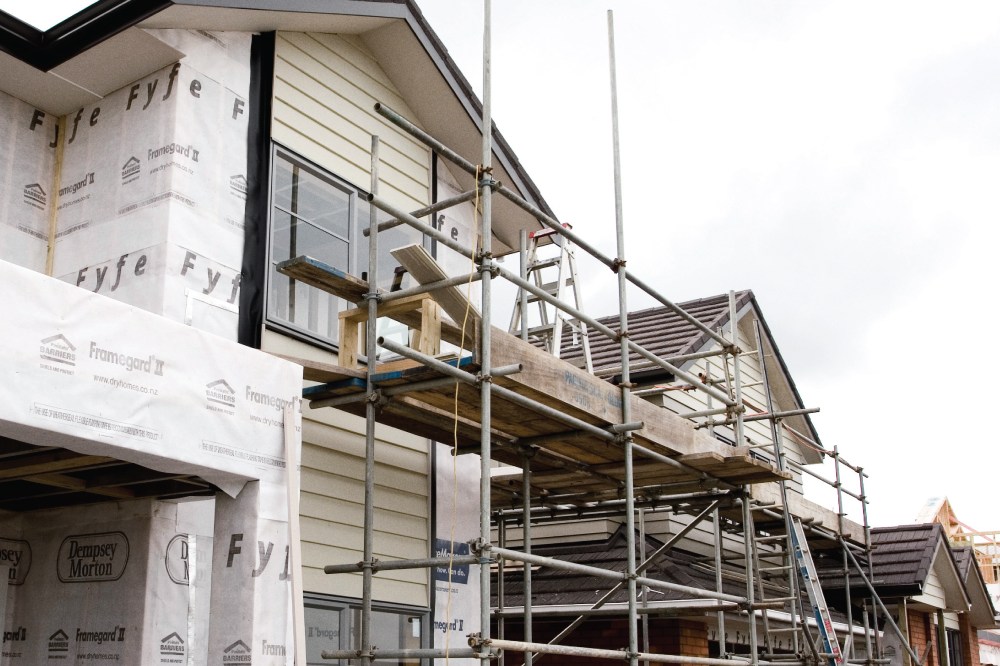
A look at those inefficiencies A piece over at Interest.co.nz illustrated the risk and costs developers often face when coming to development residential complexes. If it is not the … Continue reading Inefficiencies in the Property System
This story gets more bizarre as the story rolls on each new day. We first are made somewhat aware in May when a high-profile Aucklander is granted name suppression on some charges brought by some public authority. Then we see the headlines of former Heart of the City CEO Alex Swney is up on 39 charges of tax evasion brought on by the IRD. Swney as a result has his contract terminated by HotC and the forensic accountants brought in to have a look. I was wondering when Council would react to the situation and hello we have this from Todd Niall of Radio NZ:
Updated 14 minutes ago – Todd Niall
The Auckland Council is moving to protect millions of dollar of ratepayers’ money after the head of the city’s downtown promotion agency was sacked over tax evasion charges.
Listen to more on Morning Report ( 1 min 56 sec )
Mr Swney has denied 39 charges of tax evasion. Inland Revenue alleges tax of almost $1.8 million was unpaid, and a further $1.3 million is owed in penalties and interest. Some charges involve allegedly fictitious invoices.
Firm requirements
Auckland Council chief executive Stephen Town has written a firmly-worded letter, requiring Heart of the City to confirm in writing that it has engaged forensic accountants to go through its books and to give a timeframe for that work and any other investigations.
He also wants details of the agency’s financial position and cash-flows and is seeking clear assurances about its management processes.
Mr Town said it has been told its future could be in question if it does not respond appropriately.
Coincidentally, the latest quarterly installment of $1 million of ratepayers’ money was transferred to Heart of the City the day before the council was notified of Mr Swney’s dismissal.
The council’s letter to the agency underlines its dependence on council support and concludes: “Council will be reviewing this matter formally, including Council’s rights under the Business Improvement District Policy, and Partnering Agreement, and implications for arrangements going forward.
…..
Source and full article: http://www.radionz.co.nz/news/regional/256481/financial-scrutiny-of-heart-of-the-city
May I nudge Council to widen the case a little bit more to restore confidence in the ratepayer after this high-profile incident. Call it an insurance policy after this saga as we don’t need any more surprises as other large projects come through the pipeline.
English was partially right but missed the wider Context National are known to miss. More needs to be fleshed out on the entire mess before we start playing with National Policy Statements, and National Environment Standards that are allowed under the Resource Management Act.
More on this later with hopefully a guest post as well
Commentator and former National Party President Michelle Boag this afternoon tried to call the housing issue an Auckland problem. I can categorically state with 100% surety that this is a load of utter crap.
Yes, house prices are rising faster in Auckland than pretty much anywhere else, and yes some parts of the nation are experiencing stagnant or falling prices, this has always and probably will always be the case. This, however does not mean that Joe and Jane Bloggs can afford to buy their own home in Hamilton, Wellington, Christchurch or Dunedin. Incomes in all of these centres is lower and the house price to income ratio is, while not quite as extreme as in Auckland, still pretty out of kilter.
Bill English blames councils for this issue, and he blames the Resource Management Act. He blamed Labour when they were in power too, but despite having had 6…
View original post 305 more words
From NZTA (and Auckland Transport)
Projects to improve safety around several schools in Auckland are being fast-tracked through a new streamlined funding process developed between the NZ Transport Agency (NZTA) and Auckland Transport (AT).
The projects are part of AT’s Safety Around Schools initiative, which is primarily focused on 20 high risk schools located in Otahuhu, Mangere, Otara, and the eastern suburbs of Manukau from Howick to Botany Downs. They include the installation of pedestrian crossings and refugee islands, 40kph school zone speed limit signage, and cycle lanes.
Total cost of the projects is $4.5m. The Transport Agency is covering $2.4 million of the cost (53%), and AT the remainder.
In the past, both AT and the Transport Agency would review and approve funding applications. Under the streamlined process introduced earlier this year, AT can review and approve funding applications for projects under $5m using the Transport Agency’s funding criteria.
“It means that funding can be delivered more quickly than in the past,” says the Transport Agency Planning and Investment Manager Coralie O’Brien. “Helping improve safety for children around schools is a very positive example of how the simplified process works.”
AT’s Community and Road Safety Manager, Karen Hay, says the Safety Around Schools initiative also aims to reduce morning congestion by encouraging people to walk and cycle and use public transport as an alternative to the car.
“This is having a significant impact on congestion and pollution. Initiatives have reduced the number of cars delivering students to school by 12,000 during each morning rush hour. That equates to 2.4 million trips saved every year without even counting the trips saved in the afternoons.”
AT is also investigating further safety initiatives for schools in central Auckland, and in the west and north of the city.
One of the Transport Agency’s roles is to provide funds from its National Land Transport Programme to help councils and their organisations deliver a range of public transport, roading and cycling and walking projects for their communities.
Transport Agency funds are gathered from excise duties on fuel, road user charges and vehicle registration fees and re-invested in transport-related projects like AT’s Safety Around Schools initiative.
———
Source: NZTA website
Good to see this happening. That said I have not forgotten about the Southern Motorway upgrades including the Takanini Interchange upgrade which caused some concerns around lack of bus lanes in the given area. I am waiting for the next phase of the development to be complete to see what comes up before firing any relevant questions off again – to Auckland Transport.
I saw this presser from the New Zealand Planning Institute:
Urban planning not to blame for inequality
Regardless of whether the government accepts or rejects a growing gap in equality within New Zealand, it has agreed that there are a variety of national and international issues that cause inequality, including finance and tax policy, under and un-employment, the pressure of foreign investment etc.
NZPI is therefore surprised and disappointed at Minister Bill English’s recent comment that the single biggest contributor to the gap between the haves and have nots is ‘urban planning processes’. This view is unsupported in any publicly available government report on inequality within New Zealand. On the contrary, the evidence available suggests that urban planning processes play a negligible part in housing affordability which is now being inextricably linked with inequality.
The regions of New Zealand face quite different pressures.Land availability and housing affordability are not typically problems that face provincial New Zealand and yet poverty is very evident in our provinces. Local planning policy is one contributor to housing affordability but certainly not the main one. The relative inability to build at scale, relative high cost of building materials, land banking, tax structure, interest rates, profiteering and sentiment towards residential property as an asset class in general have a huge role in housing affordability.
NZPI waits with interest to hear of the Government’s proposed changes to the RMA, the legislation that sets the context for all planning policies in NZ.
Ends.
……..
A fellow Tweeter did say the NZPI is in a bit of self denial and that Bill English did certainly fire a cheap shot after sitting on his hands for the last six years when he could have been a tad more productive then and now.
The inability to build at scale, and land banking are both direct consequences of actual planning policy and regulation. Thus I would also argue those two issues are two of the three biggest issues around the housing situation (the other being the NIMBY – Consenting (so development controls)).
Not rather pleased with NZPI in light of that presser…

Blog serves as a good archive and e-story as well Well it seems this Herald article (as well as wider comments elsewhere): ‘Illegal’ to build a house in Auckland … Continue reading A Collation of Posts on Auckland Development

 Talking Southern Auckland