Operating but there were delays I am still carrying out my usual checks on the Electric Trains running on the Onehunga Line after they went back into full … Continue reading Update on Onehunga Services Today
Everything else
Operating but there were delays I am still carrying out my usual checks on the Electric Trains running on the Onehunga Line after they went back into full … Continue reading Update on Onehunga Services Today
I received my usual updates on Twitter about whether the electric trains are running or not after facing Day 11 of being grounded since power infrastructure faults became significant two Sunday’s ago
And this is what greets me
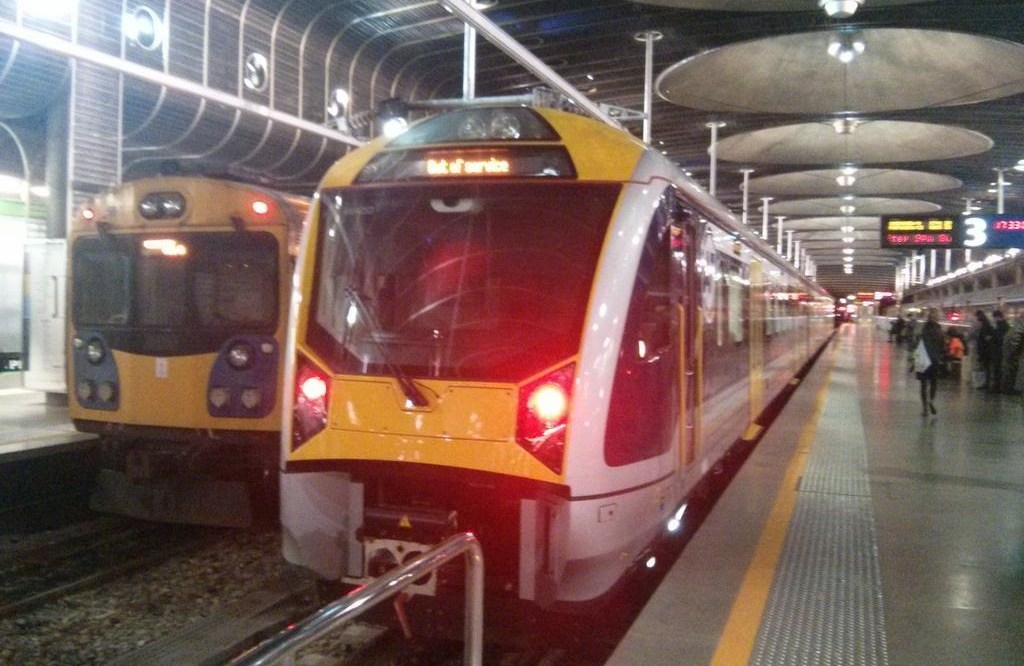
The 5:16pm main peak service from Britomart to Onehunga coming out of the Newmarket tunnel heading towards Britomart
And just a few moments ago as I write this
The second main peak service the 5:46pm also got away on time as well.
So our electrics are back after 10.5 days being grounded. The catch is will they hold out or will that fault return? We wait and see.
From Auckland Council
Community feedback has played a major part in the final content of two new regional bylaws adopted by Auckland Council’s Governing Body today.
In adopting the final Navigation Safety and Cemeteries and Crematoria bylaws, Regulatory and Bylaws Committee Chairman Calum Penrose says both are excellent examples of how the consultation and hearing process can have a positive outcome for the community and council.
“With both bylaws we came up with a series of proposals aimed at managing a particular issue – such as public concerns over the number of drownings involving people not wearing lifejackets – and how to protect public health and safety in both situations.
“By the community getting involved in these decisions through the submission process, we could see that in some cases we didn’t quite get it right. So we listened, we considered and we made changes that the council and the public can work with – it’s been a great outcome.
“I think with navigation safety in particular it has transferred the responsibility for keeping people safe back to the skipper,” he says.
Also at today’s meeting, councillors agreed the proposed Animal Management and Alcohol Control bylaws and that an amendment to council’s Health and Hygiene Bylaw are ready to be released for public consultation.
Auckland Council inherited 158 bylaws from Auckland’s former legacy councils and, under the Local Government Act, is required to review all of these by October 2015. The council has now implemented 12 of 30 region-wide bylaws, all of which introduce a fairer and more consistent experience for our customers, no matter where in Auckland they live or own a business.
Reports included on all these bylaws are in the Governing Body agenda, available on the council’s website.
Information on the new and proposed bylaws below:
Will replace the current Auckland Regional Council Navigation Safety Bylaw 2008 and includes new regulations as follows:
The new bylaw will come in to effect at Labour Weekend and council is developing an awareness and education programme to ensure people are aware of the new regulations and their responsibilities. It will also write to the Minister of Transport to review the Maritime Transport Act to allow the council to issue infringements for breaches of the new regulations.
This bylaw and code of practice will replace eight bylaws inherited from former councils and replace with a single approach to managing facilities across the region. It will come in to effect from 1 November 2014.
Changes made as a result of consultation including added a series of explanatory notes to the code to provide clarity.
Other changes include
Changes were also made to clarify that approval is not required for the scattering of ashes in public places but that information will be provided about this activity in sensitive areas such as playgrounds and sportsfields.
Proposed bylaws being consulted on from later this month:
Will replace 18 bylaws relating to the management of animals with a single region-wide approach to minimise nuisance and risks to public health and safety.
Includes proposals relating to the keeping of stock (including chickens) and bees and in urban areas and on public places and horse riding in public places.
Will establish a process for the review of the region’s alcohol control areas (liquor bans). Also proposes that local boards are given delegation to make review the those bans located in their areas.
New legislation requires that all alcohol control areas must be based on evidence of crime and alcohol related harm before a control can be put in place.
We propose amending the bylaw to exempt pharmacies from needing a licence to carry out ear piercings as they are already licenced under the Medicines Act 1981 and undergo regular audits by the Ministry of Health.
The bylaw requires health premises piercing the skin (including commercial ear piercing) to get a licence from council.
—-ends—-
I will keep a running count until the Electric Trains are back in full revenue service on the Onehunga Line Every morning and every evening I check Twitter … Continue reading Day 11 and the Electric Train Fleet is Still Grounded
From Auckland Council
Each board, from Great Barrier, to Franklin in the south and Rodney in the north, has produced a draft Local Board Plan which provides a framework that will guide its decision-making, actions and priorities over the next three years.
Common themes from the draft plans include:
Board members were out and about in their communities in February and March talking about the ideas that helped shape the draft plans and during July have been seeking formal submissions at consultation meetings around the region.
Aucklanders can still make a submission on their draft Local Board Plan either by filling out the freepost form that was sent with a summary document to every household during July or by going online at shapeauckland.co.nz.
People can read the draft plan in full at the shapeauckland website or by going to selected libraries and Auckland Council service centres.
Once the submission period ends on 6 August, hearings to consider all feedback will be held between August and September, with the Local Board Plans due to be adopted in October.
For more information or additional submission forms, people should call 09 301 0101.
Public feedback will help each board decide what its priorities are. These will then be considered through the process now underway for the next draft Long-term Plan (LTP) for 2015-2025.
Local boards have a significant and wide-ranging role that spans most local government services and activities. Local boards make decisions on local matters, provide local leadership and support strong local communities. Local boards provide important local input into region-wide strategies and plans including those of the council-controlled organisations (CCOs). Details of each local board can be found at the ‘About Council’ page at aucklandcouncil.govt.nz.
Each local boards’ budget for each year is subject to agreement with the governing body as part of the discussion on the annual local board agreement.
Local boards are responsible for:
—ends—-
At the moment I am finishing up both the Papakura Local Board, and the Otara-Papatoetoe Local Board draft plan submissions. After that it will be onto the Otara-Papatoetoe Local Board Area Plan
From Auckland Council
Auckland Council is correcting a minor technical issue in the setting of this year’s rates.
At the 26 June Governing Body meeting, the Council voted to set its rates immediately prior to adopting the Annual Plan, rather than immediately after as required by the Local Government (Rating) Act 2002.
To remove any potential ambiguity created by this issue, Auckland Council’s Governing Body will be asked to repeat its 2014-15 rates resolutions as part of its ordinary meeting on 14 August.
The resolution will not change rates as set on 26 June, and there will be no change to what appears on people’s rates bills.
A Council spokesperson said:
“Unfortunately the ordering of the agenda was not strictly in line with what is required by the Act. This resolution will remove any potential ambiguity this may have created. It will have no impact on the rates that were set by Council.”
Auckland Council will publish a notice in the New Zealand Herald tomorrow, pursuant to section 119 of the Local Government (Rating) Act 2002.
—ends—
Okay this one is more for your Unitary Plan wonks (like me) but it pays to keep an eye on Unitary Plan Hearing Panel proceedings to gauge the debate and reactions on the Proposed Unitary Plan.
Last night I saw from the Unitary Plan Page (the one the Hearings Panel runs) a Procedural Minute from the Chair – Judge Kirkpatrick in regards to the Further Submission process recently completed.
Before I embed the material just a note on the Hearings Panel and relevant information:
From the Unitary Plan Independent Panel Procedures Page:
Some of the important things to note about the hearing process are listed here.
Source: http://www.aupihp.govt.nz/procedures/
—–
Meaning anything I post in regards to the pre hearings or hearings is public information unless stated otherwise.
The “Procedural Minute” that was recently issued in regards to Further Submissions (that recently closed)
The Letter of the upcoming Pre Hearing Conference
From what I can gather the Memorandum of Counsel is on the Further Submission process, the complexity of the Unitary Plan, and Auckland Council’s large submission to the Unitary Plan. The applicants have asked the Hearings Panel in this case for an IT expert and independent planning consultant to assist people through both the Unitary Plan and the Unitary Plan website. While the pre hearing is to go ahead it seems the Panel will decline this request by the applicants (hmm I could have done that for them having waded through all 7,000 pages of that cumbersome document a few too many times).
However, it is to note that we could see the Hearings grind down if pre hearings and hearings get stuck on the complexity of the Unitary Plan let alone anything else including rezoning at site specific level.
As for my submission I had five oppose it and one in support. Going to be fun times ahead
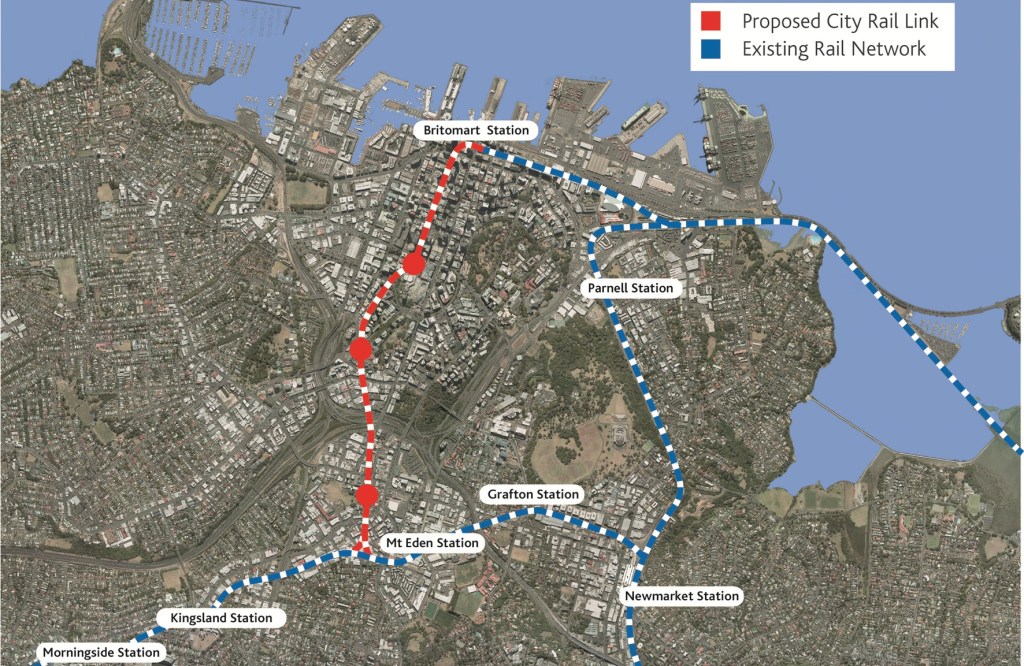
In the technical first stage form of a geo-technical survey I caught this earlier on Twitter One guess what they are drilling for! pic.twitter.com/IoCWFWlcH8 — Christopher Dempsey (@Christodemp) … Continue reading City Rail Link Under Way
I will let the others talk about the Holiday Highway and so on.
But I shall leave you with this straight out of the USA; home of abandoned malls, abandoned strip malls and now this
A shame I and my children have to carry this can from my parents’* generation who seemed not quite having a grasp on transport, planning and social economics…
*not all from the Baby Boomer generation are bad with their economics. Sadly though they get tarred by the bad decisions made by their associates…
From Auckland Council
Auckland Council is in the process of reducing the number of its council buildings in the central city from seven to three to save money and create more efficient and productive work spaces.
The council purchased the former ASB Tower at 135 Albert Street in July 2012 for $104m and staff are presently moving in. The move to 135 Albert Street results in savings of about $2.7m a year over the next 10 years. Over the next 20 years, the savings will be over $100m.
A decision on future accommodation had to be made as leases on rented buildings were coming up for renewal.
Purchasing 135 Albert Street was the cheapest of all options examined, which included staying in existing buildings, building a new building or purchasing an alternative existing building.
Savings are being realised through exiting leases on rented offices, operational efficiencies, better utilisation of space and reduced time travelling between offices. Staff productivity and effectiveness are also expected to improve as teams and groups work more closely together.
In the long term, approximately 2400 staff will be accommodated in 135 Albert Street, including space for elected members.
Some departments that were in Bledisloe House have already moved to 135 Albert Street, enabling staff in rented office space, such as on Hereford Street, to move to Bledisloe House or Albert Street.
As part of the current work to upgrade Bledisloe Lane, the customer services centre and reception presently in the ground floor area of the Civic Administration Building will be moved into the ground level of Bledisloe House.
These works sit within existing renewal budgets.
—ends—
 Talking Southern Auckland