A first look From Auckland Council: Pocket Park trials ideas for Quay Street A micro-park that popped up on Quay Street over the weekend gives Aucklanders a glimpse … Continue reading Pocket Parks to be Trialled in Quay Street
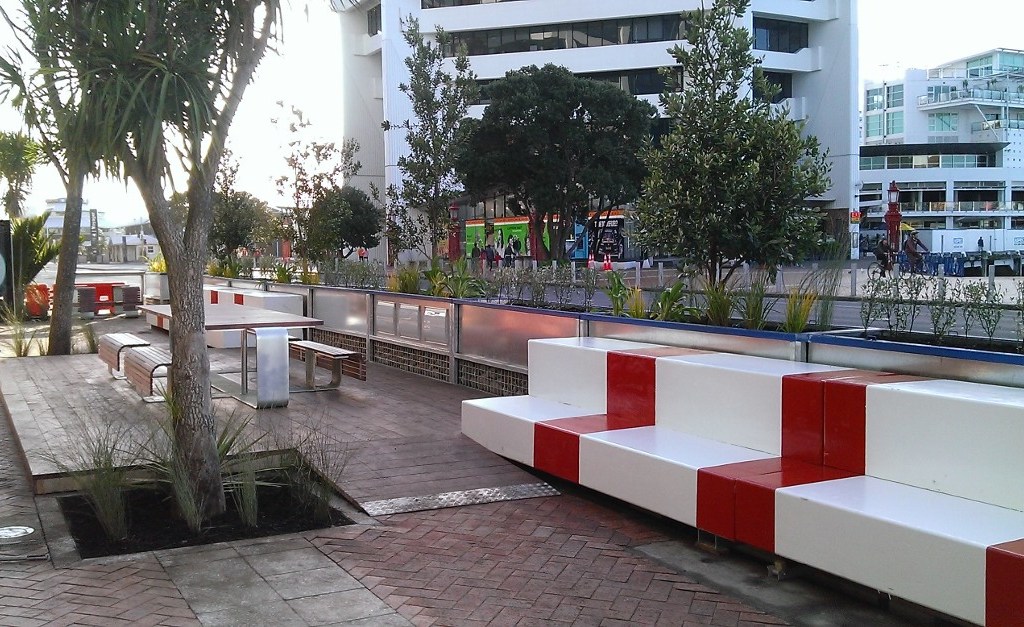
A first look From Auckland Council: Pocket Park trials ideas for Quay Street A micro-park that popped up on Quay Street over the weekend gives Aucklanders a glimpse … Continue reading Pocket Parks to be Trialled in Quay Street
From Auckland Council
Calling all arts aficionados, cultural connoisseurs and anyone interested in arts and culture – it’s time to have your say on how Auckland’s arts and culture can develop over the next decade.
The Draft Arts and Culture Strategic Action Plan, which aims to deliver on the Auckland Plan’s vision to ‘integrate arts and culture into our everyday lives’, opens for public consultation today.
The draft action plan sets out a five to ten year strategic direction for the planning and delivery of arts and cultural activities in Auckland. It identifies six goals and supporting key actions to meet the challenges of Auckland’s continued growth, changing demographics and increasing international competitiveness in the creative sector, with a focus on making arts and culture accessible to everyone.
The draft action plan was approved by the Arts, Culture and Events Committee last Wednesday with committee members in agreement that the plan provides a sound base for further discussion with Aucklanders.
Chair of the committee, Councillor Alf Filipaina says the draft responds to the Auckland Plan statement: ‘Auckland expects that our arts and culture will thrive, unite, delight, challenge and entertain, and also drive wealth and prosperity for individuals and for Auckland.’
“During engagement for the Auckland Plan, arts and culture featured in its power to deliver on the transformational shifts required to make Auckland the world’s most liveable city”, he says.
“To reach all parts of our region, both urban and rural, inner city and suburbs, and to make arts and culture programs relevant to the different communities who live here requires a focused plan.”
Mr Filipaina says the ‘whole of Auckland’ plan will be delivered in partnership with other key stakeholders in the arts and culture sector.
To date, the Ministry for Culture and Heritage, Creative New Zealand, Creative Coalition, ASB Community Trust, Independent Māori Statutory Board, and Pacific People Advisory Panel have worked with the council to develop the draft.
Aucklanders are encouraged to head to shapeauckland.co.nz to read the draft action plan and to share their thoughts through an online submission.
The public consultation period ends at 5pm on Thursday 24 July 2014.
—ends—

Hmmm might go have a look at the draft plan
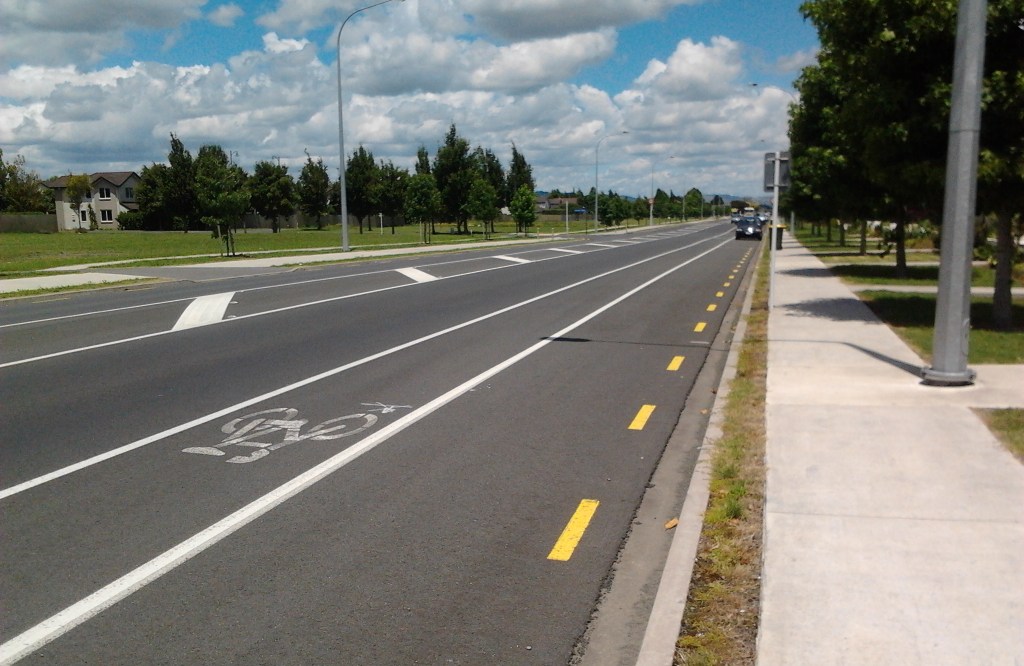
NZTA chipping in with more cycle-ways I caught this little gem on Twitter while writing my previous post on the Governing Body meeting later in the week: #Auckland … Continue reading Cycle-way Project to get Under-way in Papakura

Discussion on 2014/2015 Rates, and two Notices of Motions coming up On Thursday the Auckland Council Governing Body meets up in Town Hall. The Governing Body Agenda for … Continue reading Governing Body June Agenda Up

But at a cost to MIT. Also renewed pressure on getting the South Link built Yesterday the MIT Manukau Campus in Manukau City Centre opened for business. Next … Continue reading MIT Now Open
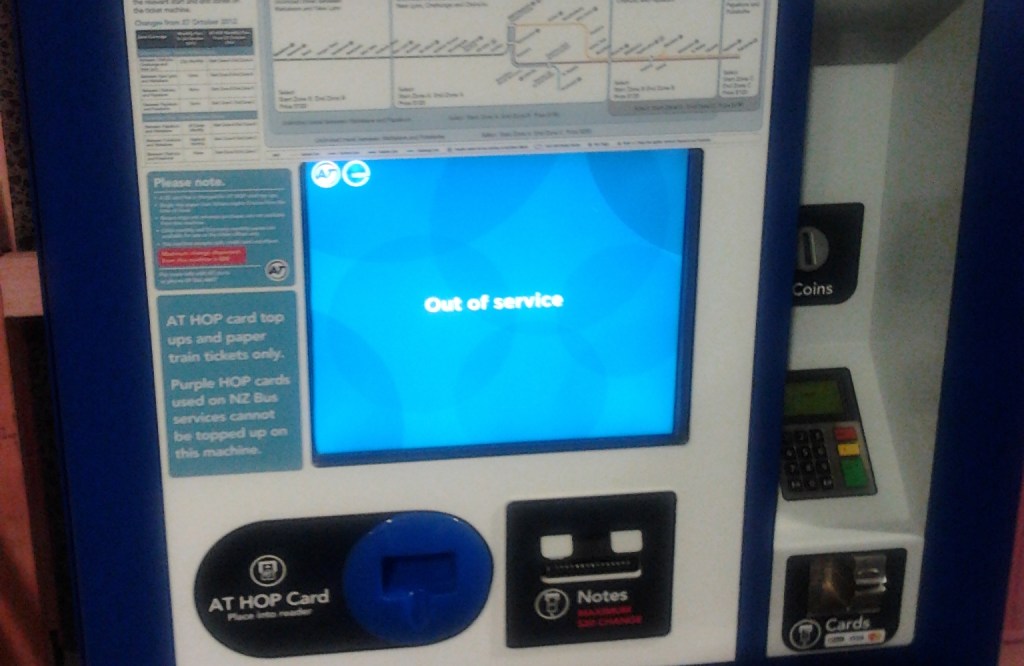
Roll Out of Day Passes was meant to be May 15, now delayed until fix and short-term work around has sorted Note: All information embedded in this post … Continue reading AT-HOP System is in Trouble in Regards to Taking on Daily Passes
From Auckland Council:
Auckland Council Property Limited (ACPL) has been given additional resources to expand its operations and lift the supply of land for housing and town centre regeneration.
The Finance and Performance Committee today expanded the role of the council’s commercial property arm to streamline its ability to acquire land and amalgamate council-owned and private sites.
“ACPL is the council’s primary vehicle for freeing up land for housing development. The resources approved today give it the flexibility to move faster and deliver better results for the council and the housing market,” said committee chair Council Penny Webster.
“It’s important to note that ACPL will not be venturing into property development in the built form, simply becoming more active in providing land for the private sector in support of the council’s housing policies,” she emphasised.
The improved resources include access for the ACPL board to up to $15million from the council’s Strategic Development Fund and a new self-funding $5million annual development budget to cover investigatory activities and for adding value to properties prior to sale.
—-ends—-
Good to see. Lets hope some Metropolitan Centre and Town Centre Plans come out soon.
I mention the place Otara and I bet most people will think of negative connotations. A real shame as I have never felt threatened walking throw Otara Town Centre but see quite a melting pot of different cultures all blending in together going about their business. Otara like the rest of South Auckland often gets downtrodden on by the rest of Auckland. However, as noted last year South Auckland (and Otara with it) is fast becoming a rising jewel in Auckland’s crown despite the Council continuously dumping what is perceived to be too much resources into the City Centre and Waterfront at the expense of wider Auckland (I will get another post on this up later today). See my South Auckland – The Rising Jewel in Auckland’s Crown on the rise of the South.
I saw this come up on Twitter last night buried amongst the political chatter:
In short it is a set of four micro-projects enhancing Otara Town Centre while also giving educational tips on waste reduction, recycling and re-using existing materials.
Taking a look at the webpage this is what The Roots are wanting to achieve with Otara Town Centre:
KAUPAPA
The purpose of this project is to grow creative ways of working that mobilise young people to inspire their friends, family/whanau and wider community to tace action towards zero waste in ways that foster:
• Responsibility to be part of the waste solutions
• Respect for self, family, community and the planet
• Resourcefulness of waste as a resource and entrepreneurship
Creative Community Engagement includes:
• Generating awareness through making that instigates the above
• Harnessing energy of young people to communicate, demonstrate and lead the above
• Showcasing products and means of production that value waste as resources
• Creating a context for creativity around waste minimisation to flourish
NOTE: This initiative will compliment a project with Otara Health for a community waste facilitator/educator who will be working with residents and the wider community to prepare them for the changes to waste collections in 2015-16.

SCOPE
The scope of this project is to:
• Creatively engage with young people (with a focus on Maori and Pacific youth) to catalyse and mobilise them to be part of leading a movement of change for reduction of waste to landfill
• Initially focus activity in the Otara-Papatoetoe Local Board area
• Work collaboratively with Otara Health, Cross Power Ministries, MIT, other youth / community focused networks and organizations, and Council to develop an integrated team approach to working in Otara.
A key focus will be to work in ways that foster youth leadership, strengthen Otara / Papatoetoe communities and contribute to social, cultural, economic and wider environmental outcomes. It is envisaged that over time this approach will be extended to work with other communities within the Auckland region and potentially other areas.
RECYLED GARDEN
To develop a collaborative process to encourage community input to create a Recycled Garden at the Te Puke O Tara Community Centre, to showcase simple innovative ways to grow food and reuse waste material.
KEW LANE
To beautify our community by creating four Murals led by local artists working with local high schools in Kew Lane at Otara Town Centre, which will reflect the four main themes: Otara, Cultures, Zero Waste and Matariki.
PALLET PARKLETS
To build and programme a ‘pop-up’ temporary installation(parklet) which aims to create a sense of community by re-purposing part of a street (carpark) into a public space for creative community conversations with a focus on environmental and waste issues.
CREATIVE WORKSHOPS
To create seven stars that represents Matariki. These stars will be made from plastic bottles, and lit with LED solar lights. This collaborative piece will be installed and suspended in the Otara Town Centre – Fish Canopy “the body of the fish”
…..
Source: http://theroots.org.nz/roots-waste/
The graphics that I have omitted can also be seen at The Roots website
These are the locations of the micro projects in the Otara Town Centre:

This really looks like a great initiative that will take place on July 5. I might pop down on the 5th and have a look.
Also to note that the Otara-Papatoetoe Local Board are due to start their Area Plan which will include the Otara Town Centre later on this year. Shape Auckland will have the date of when consultation starts on that Area Plan so keep an eye out for it.
Any other local projects out there you think needs a shout out? Flick me an email at view[dot]of[dot]auckland[at]gmail[dot] com or flick me a Tweet at @BenRoss_AKL
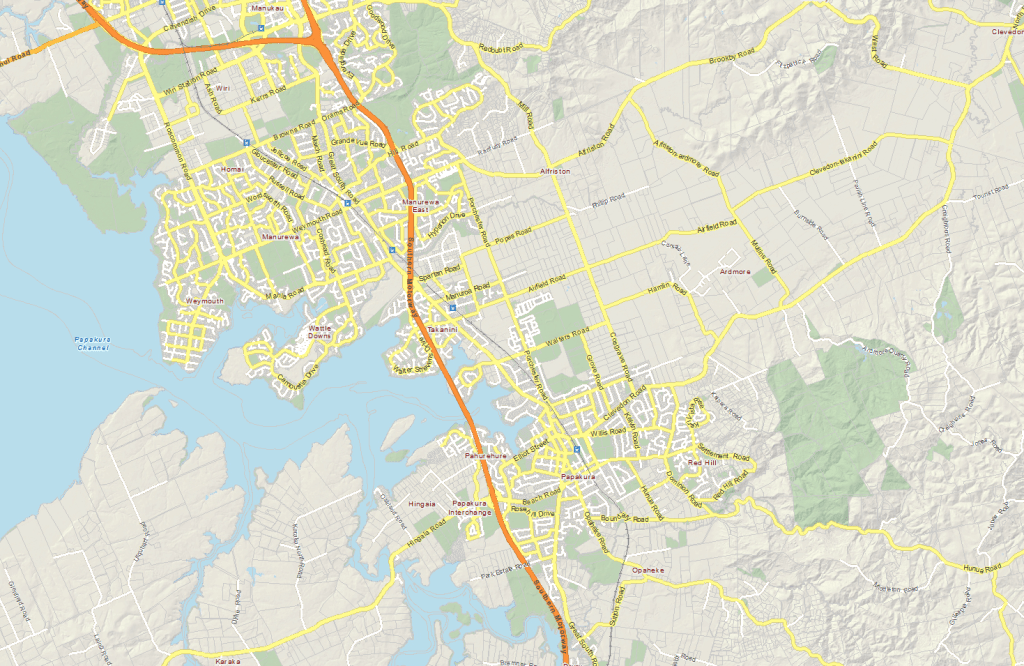
Consultation, Public Open Days and even a website coming up In Budget 2014 we heard from the Minister of Finance that the Government was loaning $375m to NZTA to … Continue reading More Information on the Southern Motorway Upgrade
From MIT via Scoop

MIT Manukau Blessed ‘Te Waonui O Te Mātauranga’
17th June, 2014
At sunrise on Monday morning the 16th of June, Mana Whenua blessed MIT’s new ‘smart’ Campus in Manukau.
About 120 people attended the Blessing from MIT, Hawkins Construction, Architects Warren & Mahoney, local Iwi and Kāhui Ariki, Ngaire Lasika (Muru) represented the Māori King, Tuheitia Paki.
Manukau Institute of Technology Kaiākau, Kūkupa Tirikatene invited Mana Whenua to bless the Campus by quoting The Tapestry of Understanding.
THE TAPESTRY OF UNDERSTANDING TE WHĀRIKI KIA MOHIO TĀTOU KI A TĀTOU
| The Tapestry of Understanding | E kore e taea e te whenu kotahi |
| Cannot be woven by one strand alone | ki te raranga i te whāriki kia mōhio tātou ki a tātou. |
| It takes the working together of strands | Mā te mahi tahi o ngā whenu |
| The working together of weavers | mā te mahi tahi o ngā kairaranga |
| To complete such a tapestry. | ka oti tēnei whāriki |
| When it has been completed | I te otinga |
| Let us look at the good that comes from it | me titiro ki ngā pai ka puta mai |
| In time take a look at those dropped stitches | Ā tana wā me titiro i ngā raranga i makere |
| For there is a message there also. | nā te mea he kōrero anō kei reira |
MAORI NAME
From the beginning of Semester Two, in mid-July, MIT Manukau will be home to the Faculty of Business & IT and School of Logistics which represent MIT’s fastest growing study areas and NZ’s most needed skills & in-demand vocations.
The revolutionary cloud-based, ‘flipped-learning’ campus can accommodate up to 5,000 students and connect 20,000 wireless devices at any one time.
The wide range of courses to be taught at MIT Manukau – free community computer lessons right through to post-graduate degrees – plus its position in the heart of Manukau were two important considerations when giving it a Maori name.
‘Te Waonui O Te Mātauranga’ was chosen, translated it means ‘The Forest of Learning’.
The Maori poutama or ‘staircase of knowledge’ has been integrated into the building design by Architects, Warren & Mahoney.
MIT Senior Lecturer Peter Boyd and Artist Matt van Sturmer led the art project and say the concept for the designs originate from the Campus’ kaupapa or themes.
“We put together the three important strands; people, environment and knowledge. The carved steel and glass lintel above the main entry is based on the creation of knowledge and the graphic application in the wind lobby below, Haumihiata, “Fragrance of the Dawn or Dawn Chorus – welcomes you into a learning environment”, says Peter Boyd.
“The ground floor represents Tangata Whenua. The dark colours symbolise earth and as you go up the levels there’s a change to the greens and blues of water and air until it turns to magenta at the top which signifies the spiritual realm. Moving up through the levels also moves one through all the communities who will use ‘Te Waonui o Te Mātauranga’ and the knowledge systems they bring with them”.
The huge, screen-printed art panels mounted as wall elements in the teaching areas were designed by MIT Creative Arts Lecturers, Deborah Crowe and Emma McLellan and the third was designed by graduate, Sheree Stone.
“These panels also talk about the natural world, people and knowledge”.
Minister of Tertiary Education, Steven Joyce and Auckland Mayor, Len Brown will officially open MIT Manukau this Friday.
—ends—
Source: http://www.scoop.co.nz/stories/ED1406/S00086/mit-manukau-blessed-te-waonui-o-te-matauranga.htm
I might go along to the open day and have a look. Nice for Transdev and Auckland Transport to have free trains going to and from the Manukau Station on the open day. A real bugger that the Manukau South Rail Link is not built yet (being worked through the final hoops in Council with a public announcement due later this year) to serve around the 67% of the expected patronage levels for Manukau Station…
 Talking Southern Auckland