Category: Financial Planning

NZTA Recommends City Rail Link Sooner Rather Later

NZTA Briefs Minister, Minister Warm to the Idea


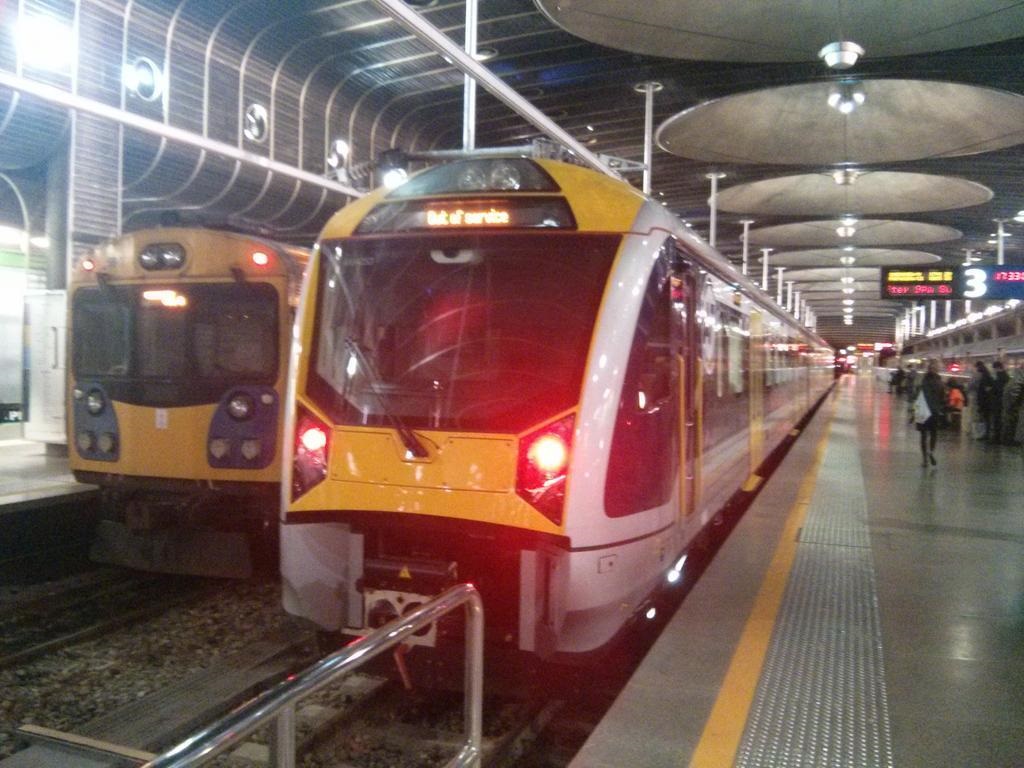
Electric Train at Britomart Source: pic.twitter.com/vjQZfMUeex
Electric Train at Britomart
Source: pic.twitter.com/vjQZfMUeex

NZTA (New Zealand Transport Agency) has recently briefed new Transport Minister Simon Bridges of activities the organisation is up to and keeping an eye on presently and for the future. This Briefing Incoming Ministers (or BiM) is routine and occurs after an election or when a Minister changes over for that respective Ministry.


The BIM to the Minister can be read below:


Of note I did pick the up the following in regards to the City Rail Link from NZTA:

5.8 CITY RAIL LINK – AUCKLAND
Auckland Council and Auckland Transport are continuing to plan, design and acquire property for the City Rail Link. The City Rail Link is now being delivered in two distinct parts.
Phase One is the enabling works to build two rail tunnels between Britomart under Queen Street and the Downtown Shopping Centre, and a ‘cut and cover’ tunnel under Albert Street as far as Wyndham Street. The enabling works are planned for 2016 to 2017 to coincide with the planned
redevelopment of the Downtown Shopping Centre by Precinct Properties Ltd. Auckland Council is budgeting between $240 million and $250 million for these works. The aim is to complete the enabling works before the World Masters Games in April 2017. We think this is a sensible sequencing of enabling works which will minimise disruption of critical intersections in the CBD, and enable compliance with the planning conditions that only one intersection can be out of action at any one time. A more compact construction schedule at a later time would prove too disruptive.
Phase Two is the tunnel boring machine and station building stages of the project. This phase could start as early as 2018 and be completed by 2022 at a cost of around $2 billion. Design and procurement decisions for this phase could be taken progressively from 2015/16 onwards, but are dependent on future funding decisions and commitments. The Crown is not currently an active partner in the City Rail Link project implementation. The government has signalled it will only consider being a funding partner to enable a construction start in 2020, or possibly earlier if certain patronage or other targets are achieved. The risk of not being involved in these early stages is that the key elements of the project get determined in the meantime. If the Crown is to be a future funding partner it needs a mechanism to identify options and risks around planning, design, procurement and financing. We have experience in complex infrastructure projects of the scale of the City Rail Link. One mechanism to help manage Crown risk could be for the Transport Agency to become a technical partner with Auckland Transport in developing the City Rail Link. This would be consistent with the one transport system arrangements that have been forged with Auckland Transport and Auckland Council over the last 3-4 years.

…….

Source: http://www.nzta.govt.nz/resources/briefing-for-incoming-minister/docs/briefing-to-incoming-minister-2014.pdf (page 25)


Minister Simon Bridges talks about the two phases to NewsTalk ZB earlier today: Simon Bridges: Auckland’s City Rail Link.

So it seems the Minister is quite warm to the City Rail Link being split into two phases as NZTA has recommended insofar as the Minister has given his blessing for phase one to begin (that is the enabling works) as soon as Council has its own finances sorted.

As for Phase Two the Minister right at the end of the interview gave a one word answer that all things lined up and considered, would allow this phase of the CRL to begin in 2018.


All this would bring the City Rail Link two-phase operation in line with what Councillor Linda Cooper tried to get through in the Budget Committee last week (Analysis on The Budget Committee Day One) which to me would have been a good “fail safe” device knowing the Government is holding firm to 2020. However, and rather stupidly the majority of the Budget Committee led by the Mayor are holding fast to whole hogging the CRL from 2016 no matter what.


For me and as noted in three City Rail Link podcasts what NZTA has proposed is a good Best of Both Worlds solution and would be entirely consistent with my calling to start the CRL around the 2017/2018 start date. That said it would be my stance over the last three years (when I last updated it from my original Auckland Plan submission) slightly updated to allow the enabling works so that we are in sync with the Precinct Property development in Downtown Auckland.


So NZTA has moved first and we have a Minister giving his blessing to the enabling works at the minimum while warm to Phase Two starting 2018 all things considered. Now would be a very good idea for Council to agree to the NZTA two-phase operation for the sanctity of the City Rail Link. In other words for an inflexible Mayor to be come a tad more flexible.


CRL Recent Podcasts

SELL IT

Selling the City Rail Link

The Weekend Analysis – Capacity and Frequencies open with The City Rail Link


Council Notice on Website Issues

Ouch


From Auckland Council

Auckland Council apologises for difficulties accessing property valuations online


Auckland Council has apologised for difficulties accessing the new 2014 property valuations published on its website today.

Acting Chief Finance Officer Kevin Ramsay says council is working to resolve the issue but said that some people may still experience intermittent delays or difficulties accessing property valuations.

“We are sorry for the inconvenience this has caused,” Mr Ramsay said. “We are working to resolve this issue with our website as quickly as possible. We know there is huge interest in this year’s property valuations and had planned for a user-friendly experience, so it is regrettable these problems occurred.”

The valuations, which are completed every three years, will be used to help determine the share of rates for each property for year beginning 1 July 2015, but have no impact on the amount of rates council collects overall

Council property valuations – key facts:


  • Property valuations help determine the share of rates people pay but have no impact on the amount of rates money the council collects
  • This year’s property revaluation showed an average capital value increase of 29 per cent since 2011
  • The average residential capital value increase was 34.8 per cent
  • All property owners will also receive a notice in the mail in mid-November
  • All property owners have the right to object to their values and the objections process is now open.

More at: aucklandcouncil.govt.nz/EN/ratesbuildingproperty/ratesvaluations/valuations/Pages/home.aspx

——-ends——

Note: the Residential Average I used for the base formula in my previous post is at 34.8% not 34% as I stated. I means I am up for a Rates rise of 7.1% not 7.9% as mentioned earlier. None the less it is still looking down the barrel of a stiff Rates rise on these approximates!


The Standardising of Council Fees

That said fees go up in some cases


From Auckland Council after the Budget Committee deliberations:

Council continues to standardise licensing fees


Auckland Council’s budget committee yesterday agreed to standardise a number of regulatory fees and charges as a continuation of its long-term goal of a more user-pays model.

The 2015/16 budget proposal includes alignment of licence fees for more environmental health activities, event permits and street trading, including rentals for the use of public space.

Some of the former legacy councils had an outdoor dining licence fee based on the area of the footpath used. However, the introduction of the new Trading and Events in Public Places Bylaw from 1 July 2015 will mean this will apply to the entire Auckland region, including Franklin and Rodney regions for the first time.


Councillors were advised that the proposed fees for street trading, which includes outdoor dining and mobile vendors in public spaces, are based on commercial land yields or the value of the location. This means that rental rates will vary across the region to allow for fairness and affordability but the committee felt that for businesses facing a substantial increase, a cap of $500 per year over the next three years was needed.


All of the proposed street trading fees are based on recovering the council’s costs of delivering the related licensing services, keeping the public spaces clean and that businesses are utilising public spaces for commercial use.

Over the last three years, the council has standardised fees for dog registration, food premises and health and hygiene related businesses via the bylaw process.  Although not discussed at budget committee, dog registration fees for the 2015/16 year are expected to rise by inflation only.


Food operators will go into a third year of a gradual increase to annual food registration fees as part of a five year plan to standardise charges across the region.


Public consultation on the proposed fees will begin in late January 2015.

The view the draft Trading and Events in Public Places Bylaw, visit aucklandcouncil.govt.nz/bylaws

—–ends—-


FAQs

Licensing Fees for 2015/16 – FAQs

Trading & Events in Public Places

Why is the council charging a rental fee for outdoor dining?

The proposed fee recognises that there is a commercial benefit to those who are using the public space (footpaths and so on) to conduct their business. The licence allows exclusive use of certain public space, e.g. dining area on the street frontage of a café, which reduces some accessibility for the general public.


Has there always been a fee for outdoor dining spaces?

Many of the former legacy councils had outdoor licensing fees based on the outdoor area of the footpath used.  A separate charge for occupancy of public spaces in addition to licence fees is a common occurrence in other councils in New Zealand, Australia and the UK.


How have the fees been calculated?

Rental charges for public spaces have been based on commercial land yields – the value of the location – and the demand, which is measured by the volume of street trading activities in the area. As mobile vendors/temporary stalls tend to be on roadsides or in carparks, the rental charge has been based on council parking charges.


As demand varies across the city due to location, are there different rental rates?

Yes, they have been broken down into three tiers to allow for fairness and affordability.

Tier 1 Auckland CBD
Tier 2 Orewa, Browns Bay, Takapuna, Birkenhead, Devonport, Ponsonby, Herne Bay, Freemans Bay, Mission Bay, Grey Lynn, Newmarket, Ellerslie, Howick, Epsom, Kingsland, Milford, Mount Eden, Newton Parnell, Remuera, St Heliers.
Tier 3 All other suburbs


Why have some outdoor dining fees increased substantially?

The proposed fees are based on adjacent commercial land values and are heavily discounted (40 percent). Additionally, some legacy council areas were heavily subsidised or will face a charge for the first time.

A business facing an increase on what they currently pay of more than $500 (licence fee and rental combined) will be phased in over three years to help manage the impact.


How many businesses will this affect in the Auckland region?

Street trading licensees will pay a fee for one of the following activities:

  • Outdoor dining and drinking – 800
  • Mobile vendor or temporary stalls – 600
  • Market operators – >30


Are fees increasing for mobile traders/roadside stalls?

Fees for mobile traders and roadside stalls are dependent on the suburb that the trading activity is occurring in.  Fees may increase or decrease compared to current fees depending on the location of the activity.


What are the general proposed fees for 2015/16?

Licence type Annual licence fee Plus rental fee of public space per year*

*unless stated

Outdoor dining and drinking $360 T1: $140/m2   T2: $85/m  T3: $20/m2
Mobile vendor/temp stall $300 T1: $0.30/m2 T2: $0.15/m2  T3: $0.05/m2
Market operator $360 $0.25m2 per day
Distribution of street material $60 $75/distribution stand


Is council increasing fees for outdoor dining to generate additional income?

The proposed increases are the result of a major review of all the various street trading fees in the Auckland region, introducing a fair and consistent system. The new fees are timed to coincide with the introduction of the Trading and Events in Public Places Bylaw which will come into effect 1 July 2015


Does Auckland Council have rules in place around smoking in outdoor dining spaces?

Not currently but the council’s Smokefree policy will be reviewed in 2018 and outdoor dining spaces will come under that review.


What other fees other than outdoor dining and mobile traders/roadside stalls align to the Trading & Events in Public Places Bylaw?

Fees are proposed for: Market operators, distribution of promotional materials, events permits and filming in public places.

A charge for street performance has not been proposed as this activity has minimal impact, we want to keep it affordable and it adds to the cities vibrancy.


Who issues events permits and how have the fees been structured?

The Auckland Council Events team issue permits for events. Proposed permit fees have been based on whether it is a commercial/private event or a community event and the number of people attending. Fees cover permit (regulatory) costs as well as facilitation support for commercial events whereas a community event will pay just 50 percent of the regulatory fee.

A community event funded by the council will not pay a permit fee.


Is there a fee for filming in public places?

Yes. ATEED issues permits for filming in public places and these are currently based on legacy council charges.   A review and simplification of these charges is underway and will be presented in December 2014 to the Regional Strategy and Policy Committee.

———-


Consultation on the Long Term Plan is early next year