The idea is not to dig a hole Note: Talking Auckland replicating Facebook posts. Talking Auckland’s standing policy is that any Facebook posts made in Public Mode by anyone … Continue reading Councillor Quax Lands In Herald – And Replies


The idea is not to dig a hole Note: Talking Auckland replicating Facebook posts. Talking Auckland’s standing policy is that any Facebook posts made in Public Mode by anyone … Continue reading Councillor Quax Lands In Herald – And Replies

But what does Auckland think? And what does the Mayor say? Mayor Len Brown has no doubt started the Main Stream Media offensive as we approach January 23 when … Continue reading Mayor Starts 2015 by Talking Transport – UPDATED WITH MAYORAL INTERVIEW
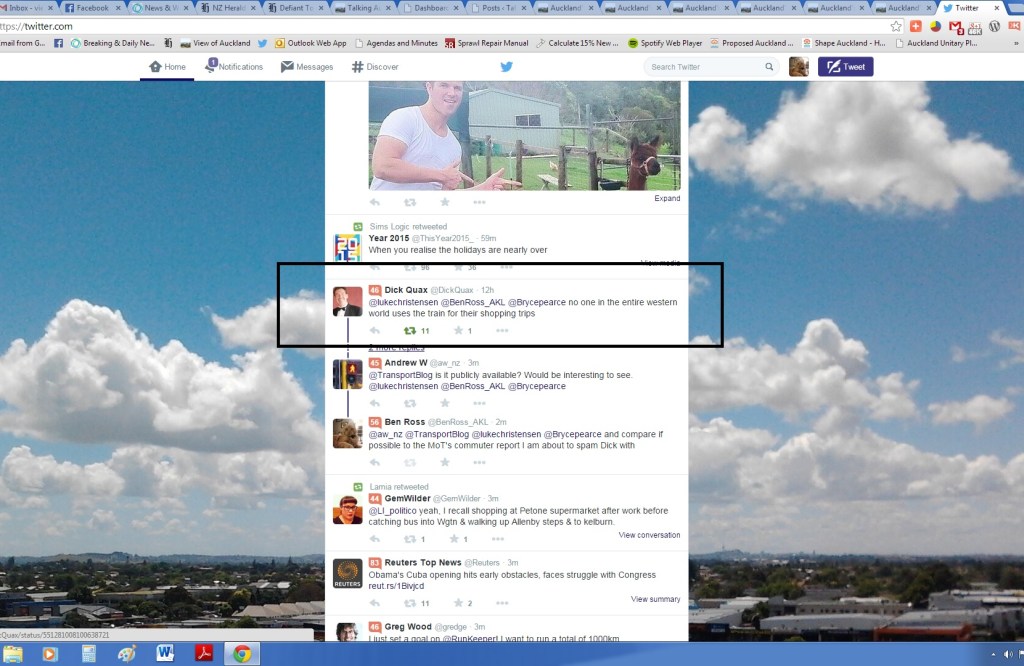
And here come the replies When Councillor Dick Quax Tweets this: @lukechristensen @BenRoss_AKL @Brycepearce no one in the entire western world uses the train for their shopping trips — … Continue reading Councillor Dick Quax Tweets

A Day at the Botanical Gardens Yesterday for New Years Day the clan from South and West Auckland assembled and invaded the Auckland Regional Botanical Gardens. The story in … Continue reading Summer Series 14/15: The Botanical Gardens
And topping off a very interesting 2014 the last of the monthly 2014 blog rankings are out.
As noted in an earlier post this morning yesterday was the third anniversary of Talking Auckland. As I look back over 2014 I also look forward to 2015.
I am also looking at freshening up the blog layout and investigating whether to take some content like any urban renewal stuff (e.g the Manukau Redevelopment projects) behind a paywall. I will let you know what my thoughts and decisions are around that later on.
And as always a thanks to readers, fellow commentators, and followers on the Facebook and Twitter pages. Without you Talking Auckland would be just talking to a blank wall 😉

PLEASE NOTE: Sitemeter is still playing up but far fewer blogs are effected. It was still impossible to get the stats for a the blogs that I list below. Maybe more bloggers will shift to StatCounter or other counter.
No stats could be found for these blogs:
| Science Behind the Curtain | Grumpollie |
There are now over 300 blogs on the list, although I am weeding out those which are no longer active or have removed public access to sitemeters. (Let me know if I weed out yours by mistake, or get your stats wrong).
Every month I get queries from people wanting their own blog included. I encourage and am happy to respond to queries but have prepared a list of frequently asked questions (FAQs) people can check out. Have a look at NZ Blog Rankings FAQ. This is particularly helpful to those wondering how to set up sitemeters.
Please note, the system is…
View original post 1,665 more words

What does 2015 have for Auckland? Yesterday was the third anniversary of Talking Auckland being established. I can say it has been a very interesting three-year journey starting as … Continue reading 3 Years Young and 2015

The WordPress.com stats helper monkeys prepared a 2014 annual report for this blog. Here’s an excerpt: The Louvre Museum has 8.5 million visitors per year. This blog was … Continue reading 2014 in review
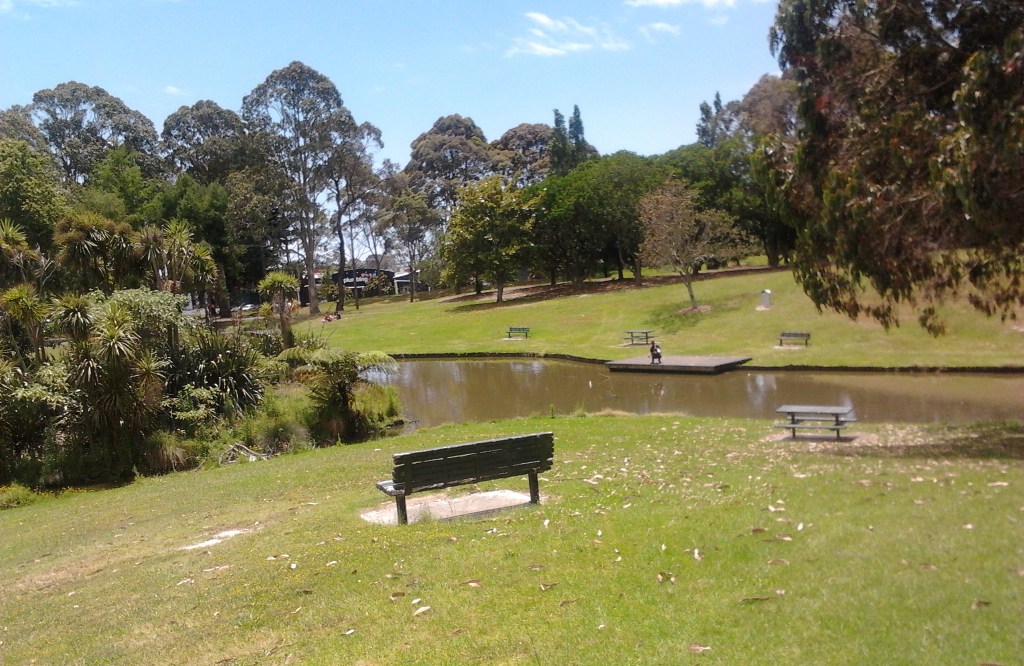
While needing some loving I did find a surprise along the way When I do not forget I usually take pictures during the Summer break when walking around the … Continue reading Talking Auckland Summer Series 14/15 – A Stroll In The Park
While IAP2’s post would be aimed at Public Authorities and maybe businesses on the forefront of social engagement, the five points are also relevant to blogs covering such issues like Talking Auckland does.
As we head into 2015 and a very busy year for Auckland (and myself) Point #2 is something most relevant for the blog:
“Topic-specific interests trump demographics. PR and marketing pros know there is no such thing as a “general public.” When you use a spray-and-pray campaign approach, not only will you not effectively evaluate your efforts, but you might end up wasting a lot of money delivering your message to people who couldn’t care less about what you’re saying. Many brand managers have sent out targeted messages on social media, only to see interest from audiences never even considered in the planning process. This doesn’t mean there’s a “general public.” Social media is just highlighting the importance of finding those who care about your message. Identifying demographics is a start, but once you find those people who are really interested in your product, service, or cause, your message will go much further.”
This is really applicable as the blog has reached a critical mass in sharing information with that sharing happening multiple times over above normal organic reach (meaning using Twitter the number of Retweets on top of Retweets that expands the reach). So in short making sure the information is relevant to those interested and might share it to their circles and beyond. Especially if I want to “assist” in getting greater participation in our civic institution.
So while on holiday and the blog in Summer Series mode, reviews and plans to continue to enhance Talking Auckland are under way
5 THINGS TO LOOK FOR IN SOCIAL MEDIA ANALYTICS
Source: PR Daily
Five things to look for when collecting and deciphering social media analytics:
1. Let your audience guide you to new places. Studying a social media platform’s analytics not only can let you know whether you’re on the right path with ongoing branding and engagement efforts, but also can determine the direction of your future efforts.
2. Topic-specific interests trump demographics. PR and marketing pros know there is no such thing as a “general public.” When you use a spray-and-pray campaign approach, not only will you not effectively evaluate your efforts, but you might end up wasting a lot of money delivering your message to people who couldn’t care less about what you’re saying. Many brand managers have sent out targeted messages on social media, only to see interest from audiences never even considered in the…
View original post 269 more words
Well this is timely given the Sky City blow out dogging the Government. My message is still the same, flip the bird to Sky City and walk away Steven Joyce (and Auckland Council as well in regards to operation subsidies).
Never before has Left, Centre, Right, Liberal, Conservative and Libertarian been so united against Sky City in this instance. Well done Sky City for that dubious and rare feat.
Now I see the average cost of blow outs backed up by some good evidence is mentioned. So I link this old but goodie: https://voakl.net/2012/05/18/the-crl-and-the-rail-fallacy/
Those Fallacy posts for the CRL served as a warning so we can avoid such blow outs like the disaster of the motorway tunnel construction in Seattle.
I note the average rail cost blow out was 44.7% with ranges between 0-100%. This would put it close to my 1.5x or 50% blow out potential.
However, before someone complains about rail I point out that the Sydney Toll Roads have gone bust twice, the Brisbane Airport Toll Road once, and a few in America going bust….


SkyCity is sniffing around the New Zealand government for a $130 million bailout. The initial project estimate was $402 million for a convention centre and enlarged casino.

SkyCity was very clear when the convention centre deal was announced that it would be at no cost to either taxpayers or Auckland ratepayers.
The literature on mega-projects suggests that large engineering projects frequently fail to achieve their intended financial and operating objectives. Nine out of ten mega-projects have cost-over runs:
View original post 582 more words


 Talking Southern Auckland