More Literature on AT-HOP I saw this being distributed around rail stations this morning on my trip into the city – the latest on AT-HOP and impending ticket regime … Continue reading AT-HOP Update
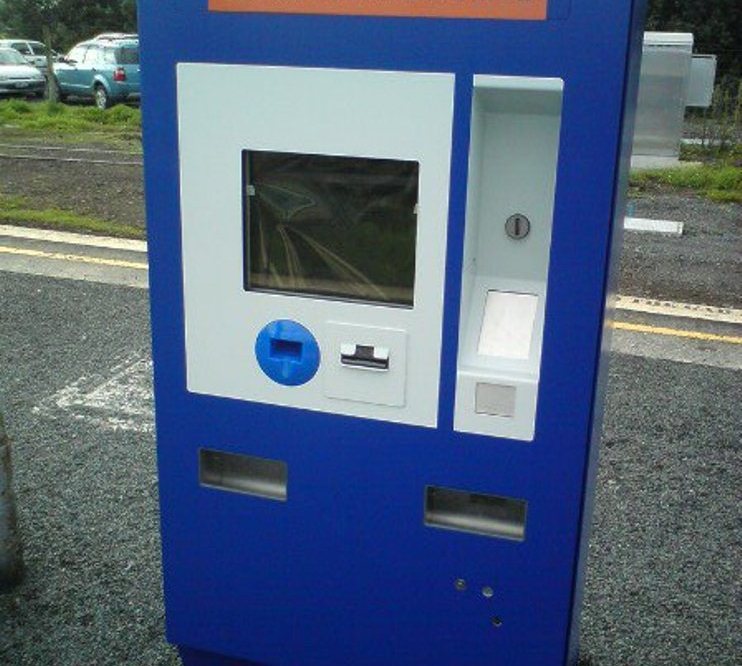

More Literature on AT-HOP I saw this being distributed around rail stations this morning on my trip into the city – the latest on AT-HOP and impending ticket regime … Continue reading AT-HOP Update
I have noticed one heck of flare up over the Hauraki Gulf, The Hauraki Gulf Forum and the attempt to set up a bureaucratic nightmare in regards to implementation of The Hauraki Gulf Marine Spatial Plan.
This flare up is what is inspiring me to compose my technical first speech of my campaign in the Local Government Elections next year as I contest for a seat on the Papakura Local Board.
I will continue to keep an eye on the Hauraki Gulf developments and possibly follow-up with some commentary this weekend.
But it seems Auckland ratepayers are being taken for a ride by those who voted AGAINST Councillor Mike Lee’s amendment yesterday…
I finally managed to squeeze some time in my hectic work schedule to trundle along to a Auckland Council committee meeting today. And today it was the Transport Committee chaired by Councillor Mike Lee that I was able to rock up to and sit quietly down the back and observe around about two-thirds of the proceedings before I wanted lunch and carry on with other things.
I also saw for the first time although I did not introduce myself (bit shameful on me) to them were; MP Julie-Ann Genter and Principle Transport Planner Joshua Arbury. Both were due to give their respective reports or presentations in front of the Transport Committee today.
You can see the agenda (the hard copy was thicker than a piece of 4 by 2) in the embeds below. But from observations today out of that Transport Committee; the bulk of the resolutions were: “To Hold another meeting to discuss what was in this meeting which was about the previous three meetings WHICH was about the meeting last year.”
I say we are getting progress somewhere if today’s resolutions were anything to go by…
One thing that I will single out though was the immature behaviour of Councillors Quax and Morrison against Julie-Ann Genter and her first class presentation (which reminds me to email her to get a copy of that presentation). Councillor Quax raised a point of order as Ms Genter was explaining a finer point in her section of the presentation about abolishing ‘minimum parking requirements for a development’ due to “time.” While the Chair might of not been keeping time I certainly was and 10 mins was not up to the point anyone that passed a motion for extension of time (which Cllr Dr Cathy Casey did raise in the end) I would have been grateful so I could hear Ms Genter finish her presentation fully. What Councillor Quax was doing was trying to “stomp” on Ms Genter’s presentation as it would have been a direct affront to his flawed and dead ideology which Auckland is trying to shake the legacy from off.
I for one Councillor Quax do not support Minimum Parking Requirements and made that extremely clear in my submission to the Auckland Plan, and will make it even more extremely clear in my submission to the Unitary Plan.
As for Councillor Morrison and asking Ms Genter had she read the Auckland Plan. That to me was implying that the MP had no idea what she was talking about in her presentation when speaking on land and transport planning. Most likely also Councillor Morrison was also implying that he supported the extremely flawed ideology on having Minimum Parking Requirements. I’ll tell you want Councillor, I would be falling head over heels to get Ms Genter into a working party on the unitary plan as some of her ideas were pretty damn solid and much better than what I am seeing coming out of Unitary Plan discussions at the moment.
So to both Councillors – SHAME ON YOU! Then again both of you I would oppose and are in opposition to what you represent any how…
And on that note, I wonder if I rock up to the Governing Body meeting coming up – should be a lively debate in that meeting.
Oh and good to see my local Councillor Calum Penrose also participating in the Transport Committee today 😀
[update from Admin: Embeds now working]
After yesterday’s initial post on Quay Street Nuts, I had a few discussions with others as well as a general head scratching session last night on the Quay Street issue. Basically I came to the same conclusion as I did yesterday in which I said:
So from what I can gather unless my English and interpreting documents some what out of whack, these incoming changes have been signalled well in advanced in three sets of plans (The Auckland Plank, The City Centre Master Plan, and The Long Term Plan 2012-2022). Whether I agree with the changes or not is a different story although it can be seen above in my comments to the Facebook thread.
In short I have no issue with the Quay Street works, but as I said:
“I think the problem is that this part of Quay Street flipping over to a boulevard is somewhat too soon without actual alternative in place. Stanley Street and State Highway 16 is not somewhat of an alternative heading from the east seeming our engineers can not phase traffic lights for peanuts”
Outside of that issue, I am not having major issues here with Quay Street (west) although I am looking at alternatives here (not whole scale Quay Street west – just some minor tinkering to smooth the works transition). As for Quay Street east, I already drew up a plan for that and submitted on it. However works in that sector are not due to after the CRL I believe, so still time to keep the dialogue going there.
Oh if you are wondering what I meant about sticking the boot in at that particular Hearings Panel; it means I strongly disagreed with Parnell and do not want that station built, was not overtly fond of Quay Street work so soon in the game, and as for the CRL – well you all know how I advocate for that mega project on a delayed timetable. But as I said, there was both constructive criticism and as I said singing the praises too. So I am not always a grumpy old fart
Due credit is give when it is due – such as Councillor Wood is about to find out.
George will still get his due credit tomorrow when he goes into bat for the 380 Airport buses at tomorrow’s Transport Committee meeting.
Just to provide clarification here on Quay Street-west and Quay Street-east as they are treated as two distinct entities by both Auckland Council and the CCO’s as well as myself. Quay Street-west is Quay Street from the Viaduct Harbour through to the Tangihua Street/Tinley Street/Quay Street Intersection (where the Z petrol station and port entrance is); while Quay Street-east is from that same intersection through to the Stanley Street/Tamaki Drive/Quay Street intersection.
Further explaining: with Quay Street-east; that is being “dealt with” in my Auckland Water-Frontier work as I create a boulevard and an expressway in that section of Quay Street. This run of commentary on Quay Street-west is where this post (and the current “angst” from Orakei) is focusing on (again mentioned above).
I also had a read of a few letters to the Editor in the Herald this morning which were somewhat scathing of basically Orakei (mainly the Councillor, Local Board Chair and the Tamaki MP), while one was supportive of light rail along Tamaki Drive. And again after a ponder I would also tend to be in agreement with Mr Sheehan of Milford and his letter to the editor as well as Mr Broome’s letter to the editor on Light Rail – although I would look into the timetable of that. I would look at the light rail timetabling plan (for roll out) due to the fact I had mentioned something similar in the Wynyard Quarter section of my submissions where a light rail line would run from Wynyard Quarter to (as of now after some progression post-submission) east end of The Auckland Water-Frontier project zone.
And where does all this bring me too? It brings me to politely disagree with Orakei and their assertions around Quay Street and offer support behind Ludo Campbell-Reid and the works soon to start on Quay Street-west (although I can withdraw that support too).
A respected former centre-right councillor did raise with me: “I think its more the lack of communication than the vision.” My reply to that was: “The question though is where (the lack of communication). I found it in three sections of the City Centre Master Plan, a section of the Long Term Plan and sections in the main Auckland Plan. Heck even I was aware of Quay Street west (although I paid little attention to it as I was focused on Wynyard Quarter and Quay Street east) when writing submissions and having frank discussions with Ludo, Cathy Casey, and George Wood in the hearings panel. I am of the current opinion Quay Street might have snuck up on some more quickly than first anticipated”
So the issue in my eyes with Quay Street-west is basically done and dusted with works soon about to begin – of which I have as said many times above and before, no problems with. I might email Ludo Campbell Reid around some minor “transitional” concerns with Quay Street-west to endure traffic movements are smooth and not heavily disrupted pre CRL however to seek some reassurances.
References
Letters to The Editor
Reference to City Centre Master Plan
I was cruising through the opinion sections of the Herald on the trip home today when I saw this opinion piece on coal:
From the NZ Herald:
Dave Feickert: Dark day as coal mines shuttered
By Dave Feickert
The recent decisions by Solid Energy to put the Spring Creek coking coal mine on to care and maintenance and stop the development of the half sunk ventilation shaft at the East Side mine will have horrendous consequences for the West Coast and the Huntly regions. These regions are already hard hit, especially the Coast after the deaths of 29 Pike River men in a gas explosion on 19 November, 2010, and the loss of over 300 Pike jobs.
Coming with the decision to dismiss many other staff at its headquarters and elsewhere it looks like a panic restructuring brought on by crisis. State Owned Enterprises Minister Tony Ryall told Solid Energy unions on Tuesday that the company had debts of over $300 million. This was news to the men. He made this sound highly significant but in financial terms it is not. It may be that the debt accumulated without the Government being aware, but that is because of the remote, revenue-collector role they chose to play.
Solid Energy has made a hefty $614.3 million profit over the last 10 years, with $394 million in the last five years alone. Government has had its pound of flesh big time.
Why then is this state-owned enterprise acting more like an American coal robber baron from the 1920s and despoiling whole communities?Both Mr Ryall and Prime Minister John Key have taken up the refrain of Solid Energy’s Don Elder that it’s all because of the collapse in international coal prices, which are priced in US dollars. Apparently, Spring Creek can only get $120 per tonne now and its production costs are high, partly because it is going through a development phase into new reserves. So over 300 miners in an area of high unemployment are to be sacrificed and there is nothing the Government can do.
It is difficult not to share the anger of the miners who went to see Ryall at the Beehive because this is decidedly not the international view of coking coal prices. Kevin Crutchfield, the CEO of Alpha, one of the biggest coal mining companies in the US, has just said, on explaining why it is moving from power station coal to coking coal: “Globally there remains a structural undersupply of metallurgical coal and Alpha expects to see demand grow by more than 100 million tons by the end of the decade.” This is long-term thinking, totally absent in the Solid Energy board.
Crutchfield and other coal industry analysts know that the demand for steel will pick up again in China as that country, India and Brazil move to a developed country per capita use of steel. They are only halfway there at the moment. Coking coal prices will then rise.
The key question for Solid Energy is how to get through production gaps, when developing new areas of coal is costly, as it always is in mining, through to the promised land. Do the Solid Energy board members understand this? There is not a single mining engineer on the board and the sole Australian minerals expert knows little about how to mine West Coast coals, I would guess. Elder, himself, is not a mining engineer.
So if coal prices are “volatile” rather than “fixed” what about production costs? Well, we have just seen an unprecedented co-operation between a workforce and local management to come up with a costed plan for transition, survival and future success. It has already been rejected, with Ryall admitting that he had not even read it; for that was a matter for the board. This is head-in-the-sand government.
And to hear Steven Joyce, the “ideas man” of the Government and a possible future PM, say that coal is one of the sunset industries they are not interested in is quite incredible. We have 11 billion tonnes of coal reserves and we should remember that oil and gas are by no means as plentiful. Coal was once the foundation of the chemical industry and will become so again as oil and gas deplete. Moreover, it will be processed in future in an environmentally acceptable manner. Once again, driven by its own insufficient oil supply and a growing dependency on oil imports, China is leading the way in this new revolution, but then it is doing so in renewables, too.
Let us then also consider the horrendous costs to the nation and the taxpayer should the non-miners on Solid Energy’s board decide to shut a publicly owned company’s key assets down – closing its two deep mines and refusing to develop Pike River, which it also owns. Pike had over 300 jobs and many of those miners remain unemployed. Spring Creek and East Side have over 300 miners, including contractors; so we have a thousand deep mining jobs at stake.
As the Europeans know from closing down their coal industries there are two jobs depending, in related industries, on every mining job.
I have calculated on the basis of the redundancy pay for Spring Creek miners and just 150 of the total workforce remaining unemployed for two years that the cost to the taxpayer -with the multiplier effect on other jobs – will be over $30 million. And here we are talking about the whole deep mine sector.
In the UK the mines started closing fast in 1986. Those 180 have now gone, but for a handful and the communities, 26 years on, remain devastated.
Just go and see for yourself, Mr Ryall.
Dave Feickert is a mining consultant who worked in the UK coal industry for 10 years. www.davefeickert.co.nz
This comment caught my attention the most:
HC (Onehunga)11:17 AM Monday, 1 Oct 2012
As much as I am for a gradual move away from the use of fossil fuels, I realise that the use of coal will be necessary for at least a few more decades, if not longer, for industrial purposes in steel mills, in powering some high tech power generation plants with sophisticated, environmentally friendly filter systems reducing emissions. Other industrial use of the resource is possible.
And to build more alternative generation capacity, energy from coal is needed to make steel to build the wind generators, dams, solar reflectors and else.
So of course, the government is again following ideology and a hidden agenda.They prefer fully privatised operators like Bathurst (now how often did Joyce refer too that company?) and want to sell off 49 per cent of Solid Energy, being a state owned enterprise. It is apparently even written in their annual plan – or the likes thereof – that they want to make the SOE “fit” for the shares sell-off.
The government should step in to help Solid Energy establish some additional, diversified operations, within which the workers can be employed until the supposedly now so low coal price recovers again. Train them to do something else for being.
I would be tended to agree with that comment that was made in reply to the opinion piece. Look as I have said in my submissions amongst other places; oil, gas and mainly coal will be with us until at least the end of this century. Coal is used in so many of our industrial processes that if we were to ban all coal use tomorrow (hello Greens) we would be sent back before Roman times. Ask yourself and look around your home (including car, garage and outside) and see what had coal as an input to produce that item you have/use and what can honestly replace coal to make that item you have or use. You might be shocked on how crucial coal actually is. In my home coal was used for the following:
Coal is pretty well embedded with us if we are to remain industrious and not slip back to pre Industrial Revolution days until actual alternative are here and viable – which they are not.
To say other wise is damn stupid and foolish. And as said from the commenter and myself, coal will phase out eventually – just not when the Greens would like to do so.
So unless you are willing to give up every thing you have that was made by industrious process (and that includes your bus, train and bike) then don’t go bagging coal. Of you do have an alternative – why is it not on the market yet?
The Long Term Plan 2012-2022 was adopted into existence earlier this year, setting the Council’s course on all things revenue and expenditure (yeah lets ignore the V8s and White Water-rafting for a few seconds). On the rates side; some of us got stung with large rates rises while others got nice rates decreases. All of us though got service and capital expenditure cuts when our respective Local Boards had to follow through on a 3% cut in their budgets per the Mayor’s “orders.”
Manurewa Local Board have been very vocal on what the funding cuts have meant capital expenditure wise (so money for community projects like playgrounds and upgrades to community facilities). Well it seems I have stumbled (via the NZH) across our first OPEX (so facilities funding in the operational costs side) casualties in the form of POSSIBLE library closures.
From the NZ Herald:
Cost cuts threaten two libraries
5:30 AM Monday Oct 1, 2012
Pressure goes on after mayor’s directive for all areas of city council to trim budgets by 3 per cent in election year.
Libraries in Snells Beach and Grey Lynn have been marked for closure as the result of a directive from Mayor Len Brown to reduce costs in what will be election year.
Snells Beach residents, many of whom are retirees, are bewildered and angry at murmurings the refurbished Mahurangi East Library in the community centre is closing.
More than 300 locals have signed a petition deploring the proposal and there is fighting talk by local politicians of chaining themselves to the building.
“We love our bright, welcoming, well-used library, the heart and soul of this mixed and growing community,” said local Sandra Garman.
The other locality in the cost-cutting sights of council library manager Allison Dobbie is the Grey Lynn library, housed in its original 1924 building on Great North Rd.
Waitemata Local Board chairman Shale Chambers said closing Grey Lynn library would be unwarranted, completely wrong and would cause pointless grief.
Mr Brown, through chief executive Doug McKay, has directed all council departments, local boards and council-owned bodies to cut their operating budgets by 3 per cent next year.
This is so Mr Brown can reduce the projected rates increase for his election-year budget to “well below 4 per cent”.
Mr Brown and Mr McKay have boasted about making $1.7 billion in savings and efficiencies over 10 years.
And for the first time they are calling for cuts to service levels. This has led Ms Dobbie to look at closing two of the council’s 55 libraries.
She did not return calls to comment about the pressure she was under to reduce library services.
In a written statement, Mr Brown said he doubted any libraries would be closed to reduce next year’s rates.
But he would not give a firm guarantee to Snells Beach and Grey Lynn library users
Article continues at NZH site
Okay so which way is it, we looking at library closures or not? And why is a guarantee not able to be given here – that to me sounds like that the libraries will close but not one has the balls to say so from the outset. Gee I feel the communities affected through being left in limbo over the state of their libraries.
But we all knew this kind of thing was coming under this Council with this failed Long Term Plan.
I suggest that we divert money from the CAPEX budget and sink it into the OPEX budget. The money for the Cruise Ship Terminal and the money for phase one for the Quay Street Boulevard would cover the libraries and other Local Board budgets for the next wee while to come (oh say 10 years).
And what about Quay Street Boulevard? Defer all work on it until 2020 but leave enough money behind for our engineers to get the traffic light phasing RIGHT and maybe some extra signage and pot plants.
Hey we all got to make sacrifices here and I am making a few suggestions that are win-wins all round here.
But then again win-wins and the simple things often escape Council and the bureaucrats – otherwise we would not have these problems would we?
Well so the Herald has pointed out this morning:
From the NZH:
Quay St boulevard ‘just nuts’
By Amelia Wade
5:30 AM Monday Oct 1, 2012
Anger has erupted over plans to turn Quay St into a pedestrian-friendly boulevard within three years – and the greatest upset has been caused by what critics say was lack of public consultation.
But Waterfront Auckland says it kept the community well informed about the “exciting project” and it “couldn’t have done more” consultation.
Waterfront Auckland’s plans, revealed in the Herald on Friday, could result in more crossing points, a wider footpath taking in a lane of traffic or two and opening up parts of the red fence to improve to the water’s edge.
The first stage – from the Viaduct to Britomart – is due to be finished by 2016.
But critics of the project say the Tamaki Drive Master Plan hasn’t been taken into account, the traffic plan is “just nuts” and the local board most negatively affected by the proposal was not consulted.
Tamaki MP Simon O’Connor said he was disappointed by the plan, which he said would take cars off the street in the name of beautification.
“This is a surprising development that does not appear to have been thought out …
It seems to be motived more by ideology than practicality.”
Mr O’Connor said Waterfront Auckland was pinning its hopes on the “unfunded, yet to be built rail loop and a new ferry service”.
Auckland councillor Cameron Brewer said the suggestion that Quay St was not a busy road outside rush hour was “just pie in the sky”.
“This is a critical piece of transport infrastructure that carries over 30,000 cars a day. Taking out lanes and directing more traffic down the likes of Customs St is just nuts.”
Mr Brewer said he had been given assurances that the community would be closely consulted before any decisions were made.
Orakei Local Board chairwoman Desley Simpson said Auckland Council‘s environmental strategy and policy planning manager, Ludo Campbell-Reid, had been to only one of the board’s meetings, during which he gave a short presentation on the original Quay St Vision.
“We were not encouraged or asked for any comment on input into these plans. He promised to workshop this with the board which has yet to happen,” Ms Simpson said.
She said the plans also didn’t take into account the Tamaki Drive master plan, in development since February, which includes safety improvements at the intersection with The Strand.
Waterfront Auckland’s general manager of development, Rod Marler, said the Tamaki Drive plan was outside its area of control and influence but it had been working with Ms Simpson and consulting the local board about its plans.
Mr Marler also said there was three months of consultation for the waterfront plan last year and included in that was the Quay St project.
“All the projects that we proposed for the waterfront had wide consultation, on general public bills, with key stake holders. It’s been through council, it’s been through local boards – there was plenty of opportunity for people to discuss those initiative … I don’t think we could have done too much more, from a waterfront plan perspective.”
Mr Marler said there was a roadshow for the plans, to which all the affected parties were invited, and there were also workshops with the council.
Waterfront woes
Tell us what you think about the plan. newsdesk@nzherald.co.nz
Might get some feedback to the Herald on this if I can be bothered getting round to it (lunch first) 😛
Now this was from Facebook this morning in regards to Councillor Cameron Brewer replying to the Herald’s “Nuts” piece (comments also included):
Local MP Simon O’Connor, local board chair Desley Simpson, and the local councillor went out to bat for their eastern bays constituents who woke up on Friday to the surprising news that the Quay Street boulevard is supposedly done and dusted!
 Quay St boulevard ‘just nuts’ – National – NZ Herald NewsAnger has erupted over plans to turn Quay St into a pedestrian-friendly boulevard within three years – and the greatest upset has been caused by what critics say was lack of public
Okay not good – although I thought in my presentation to Council said that the above was extremely fool hardy if not stupid… someone forgot to give Ludo and the Planners the memo 😛
However as I said above: the problem is that this part of Quay Street flipping over to a boulevard is somewhat too soon without actual alternative in place. Stanley Street and State Highway 16 is not somewhat of an alternative heading from the east seeming our engineers can not phase traffic lights for peanuts
Emphasis on the last past with engineers, lights and peanuts!
Look why I am giving a damn here when this is affecting Waitemata, Orakei and North Shore Wards and not Papakura is a case of who knows. But there is a way around this for Quay Street west (the Britomart end) I am just trying to think of something (Quay Street East is not affected yet).
In the mean time I seriously need more coffee – I don’t get paid enough for this – wait I dont at all 😛
So from what I can gather unless my English and interpreting documents some what out of whack, these incoming changes have been signalled well in advanced in three sets of plans (The Auckland Plank, The City Centre Master Plan, and The Long Term Plan 2012-2022). Whether I agree with the changes or not is a different story although it can be seen above in my comments to the Facebook thread.
In short I have no issue with the Quay Street works, but as I said:
“I think the problem is that this part of Quay Street flipping over to a boulevard is somewhat too soon without actual alternative in place. Stanley Street and State Highway 16 is not somewhat of an alternative heading from the east seeming our engineers can not phase traffic lights for peanuts”
Outside of that issue, I am not having major issues here with Quay Street (west) although I am looking at alternatives here (not whole scale Quay Street west – just some minor tinkering to smooth the works transition). As for Quay Street east, I already drew up a plan for that and submitted on it. However works in that sector are not due to after the CRL I believe, so still time to keep the dialogue going there.
Oh if you are wondering what I meant about sticking the boot in at that particular Hearings Panel; it means I strongly disagreed with Parnell and do not want that station built, was not overtly fond of Quay Street work so soon in the game, and as for the CRL – well you all know how I advocate for that mega project on a delayed timetable. But as I said, there was both constructive criticism and as I said singing the praises too. So I am not always a grumpy old fart 😛
Due credit is give when it is due – such as Councillor Wood is about to find out. 😀
NZTA Updates on Waterview Project
Right, so here goes my second post. Nice, easy and cheat style, I am passing on a press release.
From New Zealand Transport Agency (NZTA):
Auckland’s Waterview Connection project reaches important stage
The NZ Transport Agency says completion of Auckland’s Western Ring Route marks a significant milestone tonight (Sunday 30 September) with the start of enabling works at Waterview at the northern end of the Waterview Connection project.
There will be changes overnight to one of west Auckland’s key arterial routes through the Waterview area when the lanes on the Great North Road are narrowed slightly and realigned.
The NZTA’s State Highways Manager for Auckland and Northland, Tommy Parker, says all lanes in both directions on the Great North Road will remain open throughout the Waterview Connection project, but people should drive with caution and now be prepared for slight delays at peak times.
“Construction activity in Waterview will also affect local pedestrian access, and we are asking drivers to respect the speed limit and be extra vigilant when passing through the Waterview community,” Mr Parker says.
The changes to the Great North Road are one part of the enabling works in Waterview by the NZTA’s project delivery partners for the Waterview Connection, the Well-Connected Alliance. During the next few months, the enabling works will include providing more park space to offset the temporary loss of land required by the project team on the existing Waterview Reserve, the staged removal of 96 NZTA-owned properties in north Waterview, relocating services and the construction of noise walls.
When completed, construction will start in the New Year on the project’s northern tunnel portal.
“This is an important step for the project, and we ask for the community’s continued support and patience as we work to complete this project as quickly as we can,” Mr Parker says.
The $1.4b Waterview Connection is New Zealand’s biggest and most complex roading project, and includes twin 2.4km-long three-lane tunnels.
The project is planned to finish in 2016 and complete the key link in the Western Ring Route, identified by the Government as a road of national significance to contribute to New Zealand’s economic growth and prosperity. It will connect the Southwestern (State Highway 20) and Northwestern (SH16) motorways – a 48 kilometre motorway alternative for commercial transport operators, businesses, commuters and tourists that will ease pressure on SH1 and the Auckland Harbour Bridge
As enabling works gear up at Waterview, activity is well advanced at the southern entrance to the tunnel. The project team has been excavating layers of volcanic rock through a series of controlled blasting.
A trench 30 metres deep is being excavated to accommodate the arrival next July of the project’s tunnel boring machine. The 14 metre diameter machine, designed in Germany and being built in China, will take a year to complete its 2.4 kilometre-long journey to Waterview where it will be turned around to burrow its way back south and complete the twin tunnels.
“The enabling works at Waterview are important preparations to ensure that we can get the most efficient and smartest use from this machine as is possible, and that will have dividends for both those people neighbouring the project and the wider Auckland community.” Mr Parker says.
ENDS
With this in mind, how and where does the City Rail Link sit regarding complexity and scale compared to the Waterview connection?

Richard Donnagen Says Hi Good evening everyone. My name is Richard Donnagen. I am an amateur photographer and I like to travel and am a big fan of … Continue reading Greetings BR:AKL
Meaning to get on top of this particular topic for a while but have been busy dealing with literally a million other things.
Recently there was a Herald article from our Deputy Mayor Penny Hulse on the logic and reason behind the current tact of the writing up of the draft Unitary Plan before it goes out for consultation next year. Whale Oil – Cameron Slater has been keeping a close eye on this Unitary Plan development, especially around the fact that we could lose the right of appeal in the Environment Court on Unitary Plan decisions.
Lets take a look at Deputy Mayor Hulse’s remarks in the Herald:
From the NZH:
Penny Hulse: Plan will boost Auckland’s growth
By Penny Hulse
Council is working with Govt to speed implementation and ensure consultation.
This month, Auckland Council is starting extensive engagement on the region’s new planning rulebook – which will set out where and how our city grows for years to come.
It will determine how we protect our wonderful environment and built heritage and how we improve urban design.
This rulebook, called the Unitary Plan, is the next step in bringing the region together, replacing the various district and regional plans of the old councils with one document focused on delivering the vision of the Auckland Plan.
The plan’s role in protecting our environment, character and heritage, while helping meet our growing housing needs, is clear. Perhaps less obvious is just how essential it will be to our economy. And that’s important, because our economy needs action, fast.
Yes, there are many excellent, productive businesses across many industries employing many highly-skilled people throughout our region.
But consider a few basic truths. Our GDP per head is three-quarters that of Sydney or Melbourne: we’re each generating nearly $10,000 less – every year.
We lose too many talented workers overseas. Business growth is held back by too little space.And our city’s sprawling layout and choking congestion means too much of our time and productivity chugs out of exhaust pipes on motorways.
On top of that, our shortage of affordable homes means too many families are spending too much of their money on rent or mortgages rather than seeing that money circulating through the productive economy or invested in new businesses.
So what can we do? Plenty.
A simple example. A refurbished train station will benefit existing homes and businesses. But if we enable more homes – and a wider choice of housing – near that station, along with more business development, more retail and other local facilities, then the bang gained from our buck will be far greater.
And that’s what we’re looking at, right across the city. Auckland Council has planned the biggest infrastructure investment in the city’s history, in everything from regional transport to local community facilities. As we develop the “compact city” that Aucklanders have asked for (loud and clear, through 18 months’ consultation on the Auckland Plan), we’ll ensure more people and businesses benefit from each piece of that investment.
It will mean “communities with stronger local economies: more customers for more local businesses, more people closer to more jobs, more sustainable facilities and livelier neighbourhoods.
We need to ensure land is available for development, with an extra 1400ha of business land needed over the next 30 years – the equivalent of 46 rugby fields a year. So one of the commitments we made in the Auckland Plan is to ensure an average of seven years’ forward supply of land, zoned and with bulk infrastructure in place.
All the evidence shows that bringing businesses closer together boosts productivity. Having related industries side-by-side stimulates the exchange of ideas and innovation, which itself creates more jobs and higher-paying jobs, while more attractive locations will be a magnet for further growth. This in turn will boost our city’s competitiveness in global markets. Our ongoing partnership with businesses is therefore essential as we develop the plan and then seek to implement it.
Then there are the other benefits of a simpler, consistent set of planning rules: less cost, less time and less hassle. Around 20,000 pages of existing plans – many more than a decade old – will be replaced by one, user-friendly online e-plan.
And, meanwhile, the economic boost from a building industry expanding from 2500 homes a year to our expected growth demands of nearer 13,000 – will be huge.
So we need to get on with it, but we also need to be smart. Which is why we want all Aucklanders to play their part, to help ensure the Unitary Plan protects what makes our city special, while delivering opportunities for growth. We are working with Government to find ways of speeding up the plan’s implementation and ensuring people can contribute. The last thing Auckland needs is for the plan to be held up in long legal processes where those with the deepest pockets tend to do best.
We have been developing the plan over the last 18 months, with input from businesses, environmental and community organisations, technical experts and other stakeholders.
This month begins a year of wider engagement. The intensive burst of workshops and forums over the next couple of months – with significant input from the local boards – will test the plan before its draft release in March, when we’ll be consulting right across the region.
I cannot stress just how important it will be for Aucklanders to have their say.
This is our chance to ensure the Auckland our children and grandchildren inherit will not only be more inclusive, sustainable, vibrant and beautiful – but also stronger and more prosperous as a result.
Penny Hulse is Deputy Mayor of Auckland.
And from a Right-Wing perspective – Whale Oil’s perspective of our Deputy Mayor’s article
From Whale Oil:
DO AS PENNY SAYS, NOT AS SHE AND LEN DO
by Whaleoil on September 26, 2012Hypocrisy is a deadly label in politics. These days hypocrisy oozes from every rotten pore of Auckland Council.
Deputy Mayor Penny Hulse is doing her boss’s bidding in Granny Herald, arguing for shit-box apartmentsaround train stations:
“A simple example. A refurbished train station will benefit existing homes and businesses. But if we enable more homes – and a wider choice of housing – near that station, along with more business development, more retail and other local facilities, then the bang gained from our buck will be far greater.”
This is a case of “live where I say, not as I live”. You see, Penny herself does not live on the fourth floor of an apartment building above the train station at New Lynn. She lives in tranquil Swanson, and a quick surf of Google Maps illustrates the kind of compact city living that she calls home.
This same double standard is practiced by Len Brown, who talks a good game: apartment living … compactness … public transport …. blah, blah, blah. The only issue is another quick surf on Google Maps illustrates the spatial living arrangements that the Mayor enjoys, replenished with double garages (not a train station for miles).
So Penny and Len are involved in a game of seduction. But it isn’t a seduction of ratepayers in Swanson or Flat Bush. It’s called the seduction of Environment Minister Amy Adams, and the proposition is the removal of appeal rights, and the prize is a squalid Auckland based defined by tiny apartments.
The deputy mayor is all too keen to stress the importance of public input into the compact city plan. But privately the strategy is to do the opposite: denying people appeal rights so they will be forced to live around train stations. She figures it is better to crowd the masses on top of one another rather than have them migrate near those leafy retreats where hypocritical councillors live.
My reaction to all this? Rather scathing actually for many reasons. I will run another post of the Environment Court and the Unitary Plan later on (as I want to see this play out some more over the rest of the year first) but for the most part I disagree strongly with the following:
Why? Again for a more fuller explanation check my submission to The Auckland Plan, but in short it is these reasons found in my What Do I Stand For and Believe In – For a Better Auckland page – mainly the:
8) Stay out of my way: I believe in the following strongly “Individual Freedom -> Individual Choice -> Individual Responsibility (oh and do not forget the consequences)” I am an adult who can make choices for myself (whether it was right or wrong), treat me as such rather than a child.
And that rule extends to where I want to live and in part Auckland’s urban development and choices as well (mainly people should (within reason) be free (yes I know of limitations) where to live and work).
I am awaiting for the Unitary Plan to come out in which I will be looking over with a very fine tooth comb before writing up an extensive submission back to Council on my thoughts of this “rule book of Auckland planning.” Needless to say that my submission to the Unitary Plan as well as any other submissions I have done since 2010 to either Auckland Council or Auckland Transport will also form the backbone of any policies for my campaign to Papakura Local Board next year.
But in the mean time you can (again) check my submission to The Auckland Plan below where I adopt the Liberal K.I.S.S rule for urban development, as well as this piece about Democrats against Agenda 21 (by the way if I was a US vote I would be a Democrat supporter and voter).
Note: My method while I do have ideology, values and beliefs is one: consensus, action and best of both worlds (if possible). Divisiveness is not my style but if a strong hand is needed especially in leadership – I can and am known to show it to see something through.

 Talking Southern Auckland