Tag: Auckland Council

Council Disabilities Panel Appointed

And the members are


From Auckland Council

Disability panel appointments confirmed


Appointments to the Disability Advisory Panel have been approved by Auckland Council’s governing body.

The 10 members of the panel will meet for the first time on 24 November 2014 to consider a work programme for the next couple of years, providing advice to councillors on how council plans, policies and strategies can impact on people with disabilities.

The council received 34 applications. Successful candidates were selected for having good knowledge of their communities, experience with governance and advisory roles, and an understanding of council’s future direction as envisioned in the Auckland Plan.

“We’re delighted to have such a high-calibre team in place,” said Councillor Sharon Stewart, liaison councillor for the panel. “I look forward to a constructive relationship with the panel and hearing ideas of how the council can engage more effectively with people with disabilities.”

The panel’s term will end a month before the next council elections in 2016.

The members are:


Clive Lansink – Clive Lansink was a member of the previous Disability Strategic Advisory Panel. He is blind. He is director of the company Accessible Information and Communications Ltd. He has held governance roles on a number of boards and committees in the disability sector.  Mr Lansink has a degree in law, and has been involved with Disability Law, a Ministry of Justice community service that provides free legal advice on disability issues. 

Colleen Brown – Colleen Brown served as deputy chair on the previous Disability Strategic Advisory Panel and was a Manurewa Local Board Member in the first term of Auckland Council. Ms Brown was also a Manukau City councillor. She has direct experience of living with a disability as she has a son with an intellectual disability. She has been involved in the disability sector for a long period of time and has served on a number of groups, government agencies and committees. 

Dan Buckingham – Dan Buckingham has used a wheelchair since the age of 18. He has been involved in wheelchair rugby as a player, and was the president for the New Zealand Wheelchair Rugby Association. He has mentored people in disability sport. He is currently chair of Attitude Trust which provides media initiatives, such as the television programme “Attitude”, to connect people with disabilities. 

David Hughes – David Hughes was a member of the previous Disability Strategic Advisory Panel. Mr Hughes is on the governance group of CCS Disability Action and has lived with a disability for over 50 years. He is currently serving on seven committees in the disability sector. He has a strong focus on facilitating access to services including housing and health for people with a disability. He is also on the steering group of the Auckland Disability Law Incorporation. 

Don McKenzie – Don McKenzie was a member of the previous Disability Strategic Advisory Panel. He is blind. He was a member of the Waiheke Local Board for the first term of Auckland Council. He is a well-known member of the Waiheke community has been the president of the local Rotary branch. Mr McKenzie has numerous governance roles, and has served as a ministerial appointee and as a delegate to international conferences. He has now retired yet continues to assist with and prepare submissions on behalf of the disability community. 

Dr Huhana Hickey – Dr Huhana Hickey was the previous chair of the Disability Strategic Advisory Panel. She is a post-doctoral fellow at the Taupua Waiora Māori Health Research Unit at the Auckland University of Technology. Dr Huhana is hearing impaired and is a wheelchair user. She identifies as being of Māori, Aboriginal, Native American and Sami descent. She is involved in a number of community groups and is the current kaituitui for the Disabled Persons Assembly. 

Jade Farrar – Mr Farrar brings youth and Pasifika experience to the panel. He is strongly connected to Pasifika disability networks in Auckland. He is the social media and network manager for PHAB, a support organisation for disabled youth.  He is a member of the Enabling Good Lives Leadership Group (part of the Office for Disability Issues), which provides advice to ministers on disability Issues. Mr Farrar has cerebral palsy and uses a wheel chair. 

John Herring – John Herring has served on the executive board of the Cerebral Palsy Society and has a child with cerebral palsy. Mr Herring was also one of the founders of the Glow Kids Trust, which provides intensive therapy and education for children with neurological motor disorders. Mr Herring is a civil engineer and is very familiar with Resource Management and Building Act issues with regard to access. 

Nicola Keyworth – Nicola Keyworth has ten years’ experience working in the disability sector, particularly with families that live with young people with disabilities. She has experience helping people with disabilities in various countries. Ms Keyworth works for Recreate NZ, which provides programmes including camps, getaways and school holiday programmes for families and young people with disabilities. 

Susan Sherrard – Ms Susan Sherrard was a member of the previous Disability Strategic Advisory Panel. She has over 25 years’ experience in leadership roles within the disability community. She is involved in the Election Forum which provides advice to disabled people on their right to vote and ensure that they are able to vote. Ms Sherrard has served on committees including the Waitemata DHB Disability Strategic Advisory Committee and the Whangarei Accessible Housing Trust.


—-ends—–

 

Rural Communities to Take a Lead

In Franklin Ward


From Auckland Council:

Council invites rural communities to take the lead


Rural communities in the Franklin area have the opportunity to manage their own halls, in response to community feedback.

Auckland Council issued a Request for Expressions of Interest (EOI) for the management and operation of 11 community halls across the Franklin Local Board area on Thursday 5 November 2014.

On Tuesday 28 October, the local board approved the operations model for the halls whereby the local board will be responsible for governance and strategy, while day-to-day operations will be managed by hall committees appointed by the local board.

“Franklin Local Board received a strong message from our communities in the Wairoa sub-division about how they want to operate their halls – run by the community, for the community. Currently, management of halls is undertaken differently within the rural areas of Wairoa, Pukekohe and Waiuku,” says local board chair, Andrew Baker.

“We’ve used a community-management model across some parts of Franklin, so we know that with the right support and agreements it can work well. Communities in rural locations take responsibility for their own local halls, giving them more flexibility and encouraging greater use of the halls as a community resource.”

Through the new model, there will be one way of operating as chosen by the community and supported by the local board. This means operations across Franklin will be consistent, transparent and efficient.

“It also means all of the halls will have strong local connections – we know rural communities have a high level of ownership over their venues,” adds Mr Baker.

The EOI will be used to identify those community groups with an interest in operating each hall. Each group must be an incorporated society or trust, or have the ability to become incorporated.

Further Information


Auckland Council will remain the landlord of the asset, but the hall committee will manage it using a ‘Licence to Occupy and Manage’ together with a funding agreement. The council will retain responsibility for major maintenance of the buildings.

The Expression of Interest includes the following 11 rural halls within Franklin:

  • Kawakawa Bay Community Hall
  • Orere War Memorial Hall
  • Maraetai Community Hall
  • Whitford Community Hall
  • Whitford War Memorial Pavilion
  • Beachlands Memorial Hall
  • Clevedon Community Hall
  • Clevedon District Centre
  • Ardmore Hall
  • Alfriston Hall
  • Waiuku War Memorial Town Hall.

For more information, email ruralhalls@aucklandcouncil.govt.nz

——ends——


Rating Valuation Objection Period Extended

You have until just before Christmas


Literally

From Auckland Council

Rating valuation objection period extended


The period for people to object to their 2014 rating valuation has been extended until 5pm Tuesday 23 December 2014. 


Acting CFO Kevin Ramsay says website issues have meant some people had difficulty accessing new values online when they were made available on Monday 10 November 2014.

“Early in the week we had unprecedented demand on our website, which meant there was intermittent service for users trying to access new values.”

“We were able to help many people over the phone to find out their value and we are still encouraging people to call 0508 000 021 for assistance”.

By now most property owners should have received their new values in the mail.

Council property valuations – key facts

  • Valuations, which are completed every three years, will be used to help determine the share of rates for each property for year beginning 1 July 2015, but have no impact on the amount of rates council collects overall.
  • This year’s property revaluation showed an average capital value increase of 29 per cent since 2011.
  • The average residential capital value increase was 34.8 per cent.

—-ends—–


Auckland Plan Annual Update

Getting There


Yesterday amongst other things the Auckland Development Committee heard the annual update on how well (or badly) the Auckland Plan is being implemented. The update will be up on the Council website soon and I will link it back when it is up.

In the mean time from Auckland Council:

Auckland Plan report shows good progress


Auckland is delivering on key Auckland Plan targets including a reduction in water consumption, an increase in access to sports fields and growth in the city’s GDP.

The Auckland Development Committee today (Thursday) received the third annual Auckland Plan progress update which tracks the progress of the plan’s actions and achievements over the past year.

Although the implementation of the plan has just begun, areas that still need improvement to reach set targets include levels of alcohol or drug impaired driving, low home ownership levels and lower than average export growth.

Auckland Development Committee Chair Deputy Mayor Penny Hulse says the report is encouraging, however as expected some areas need improvement.


“This report shows many positive developments and progress we should be proud of as a region,” she says.

“We have launched the new electric train services, completed the roll-out of the AT HOP card system, and we heard last month how Aucklanders are now making 12 million train journeys each year, overtaking Wellington for the first time.

“The report notes that since the opening of the Panmure Station in January there has been a 57 per cent increase in passenger numbers with an average of 1,116 passengers a day compared to 100 in 2002.

“More children are enrolled in early childhood education and there is an increase in people gaining post-secondary qualifications which is really important as we strive to become the world’s most liveable city.”

The report says the council can look to events like the NRL Nines, which delivered $9.35 million in GDP to Auckland, to highlight the economic strength of the city and help boost visitor numbers.

“However it is not acceptable for us to still have so many people driving under the influence of alcohol or drugs, or that the levels of homelessness are still high in Auckland,” says Ms Hulse.

“These challenges cannot be solved by council alone so we must continue to work with all Aucklanders and our key partners as envisaged by the Auckland Plan.

“The key is that we are aware of these challenges, and can adjust where we need to and improve our efforts in the right areas.”


Further Information

The Auckland Plan measures progress against seven outcomes:

  1. A Fair, Safe and Healthy Auckland
  2. A Green Auckland
  3. An Auckland of Prosperity and Opportunity
  4. A Well Connected and Accessible Auckland
  5. A Beautiful Auckland That is Loved by its People
  6. A Culturally Rich and Creative Auckland
  7. A Maori Identity That Is Auckland’s Point of Difference in the World.


—Ends—


The Auckland Plan also is measured against thirteen strategic directions for which four have been missed looking at the updates in the Agenda document below (see towards the end of the document):


NZTA Recommends City Rail Link Sooner Rather Later

NZTA Briefs Minister, Minister Warm to the Idea


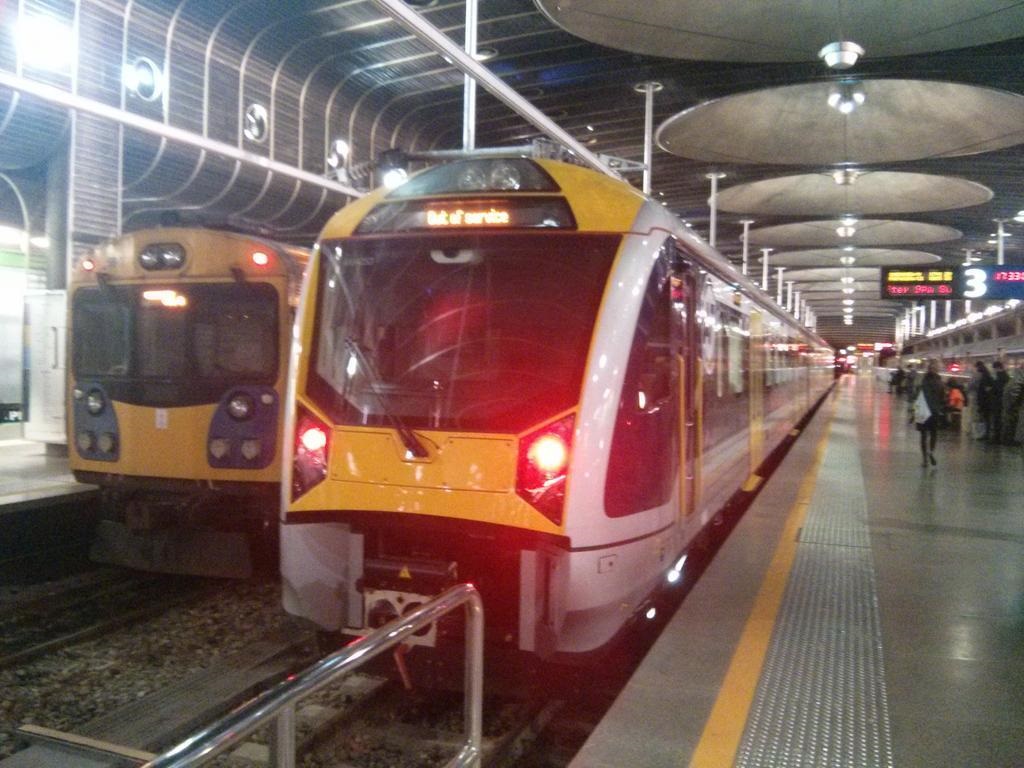
Electric Train at Britomart Source: pic.twitter.com/vjQZfMUeex
Electric Train at Britomart
Source: pic.twitter.com/vjQZfMUeex

NZTA (New Zealand Transport Agency) has recently briefed new Transport Minister Simon Bridges of activities the organisation is up to and keeping an eye on presently and for the future. This Briefing Incoming Ministers (or BiM) is routine and occurs after an election or when a Minister changes over for that respective Ministry.


The BIM to the Minister can be read below:


Of note I did pick the up the following in regards to the City Rail Link from NZTA:

5.8 CITY RAIL LINK – AUCKLAND
Auckland Council and Auckland Transport are continuing to plan, design and acquire property for the City Rail Link. The City Rail Link is now being delivered in two distinct parts.
Phase One is the enabling works to build two rail tunnels between Britomart under Queen Street and the Downtown Shopping Centre, and a ‘cut and cover’ tunnel under Albert Street as far as Wyndham Street. The enabling works are planned for 2016 to 2017 to coincide with the planned
redevelopment of the Downtown Shopping Centre by Precinct Properties Ltd. Auckland Council is budgeting between $240 million and $250 million for these works. The aim is to complete the enabling works before the World Masters Games in April 2017. We think this is a sensible sequencing of enabling works which will minimise disruption of critical intersections in the CBD, and enable compliance with the planning conditions that only one intersection can be out of action at any one time. A more compact construction schedule at a later time would prove too disruptive.
Phase Two is the tunnel boring machine and station building stages of the project. This phase could start as early as 2018 and be completed by 2022 at a cost of around $2 billion. Design and procurement decisions for this phase could be taken progressively from 2015/16 onwards, but are dependent on future funding decisions and commitments. The Crown is not currently an active partner in the City Rail Link project implementation. The government has signalled it will only consider being a funding partner to enable a construction start in 2020, or possibly earlier if certain patronage or other targets are achieved. The risk of not being involved in these early stages is that the key elements of the project get determined in the meantime. If the Crown is to be a future funding partner it needs a mechanism to identify options and risks around planning, design, procurement and financing. We have experience in complex infrastructure projects of the scale of the City Rail Link. One mechanism to help manage Crown risk could be for the Transport Agency to become a technical partner with Auckland Transport in developing the City Rail Link. This would be consistent with the one transport system arrangements that have been forged with Auckland Transport and Auckland Council over the last 3-4 years.

…….

Source: http://www.nzta.govt.nz/resources/briefing-for-incoming-minister/docs/briefing-to-incoming-minister-2014.pdf (page 25)


Minister Simon Bridges talks about the two phases to NewsTalk ZB earlier today: Simon Bridges: Auckland’s City Rail Link.

So it seems the Minister is quite warm to the City Rail Link being split into two phases as NZTA has recommended insofar as the Minister has given his blessing for phase one to begin (that is the enabling works) as soon as Council has its own finances sorted.

As for Phase Two the Minister right at the end of the interview gave a one word answer that all things lined up and considered, would allow this phase of the CRL to begin in 2018.


All this would bring the City Rail Link two-phase operation in line with what Councillor Linda Cooper tried to get through in the Budget Committee last week (Analysis on The Budget Committee Day One) which to me would have been a good “fail safe” device knowing the Government is holding firm to 2020. However, and rather stupidly the majority of the Budget Committee led by the Mayor are holding fast to whole hogging the CRL from 2016 no matter what.


For me and as noted in three City Rail Link podcasts what NZTA has proposed is a good Best of Both Worlds solution and would be entirely consistent with my calling to start the CRL around the 2017/2018 start date. That said it would be my stance over the last three years (when I last updated it from my original Auckland Plan submission) slightly updated to allow the enabling works so that we are in sync with the Precinct Property development in Downtown Auckland.


So NZTA has moved first and we have a Minister giving his blessing to the enabling works at the minimum while warm to Phase Two starting 2018 all things considered. Now would be a very good idea for Council to agree to the NZTA two-phase operation for the sanctity of the City Rail Link. In other words for an inflexible Mayor to be come a tad more flexible.


CRL Recent Podcasts

SELL IT

Selling the City Rail Link

The Weekend Analysis – Capacity and Frequencies open with The City Rail Link