Basic Summary in Supplement to Council’s Information If you are lucky like me you have your valuations with you by now (I got mine first thing before the crashes) … Continue reading Run Through The Valuations

Basic Summary in Supplement to Council’s Information If you are lucky like me you have your valuations with you by now (I got mine first thing before the crashes) … Continue reading Run Through The Valuations
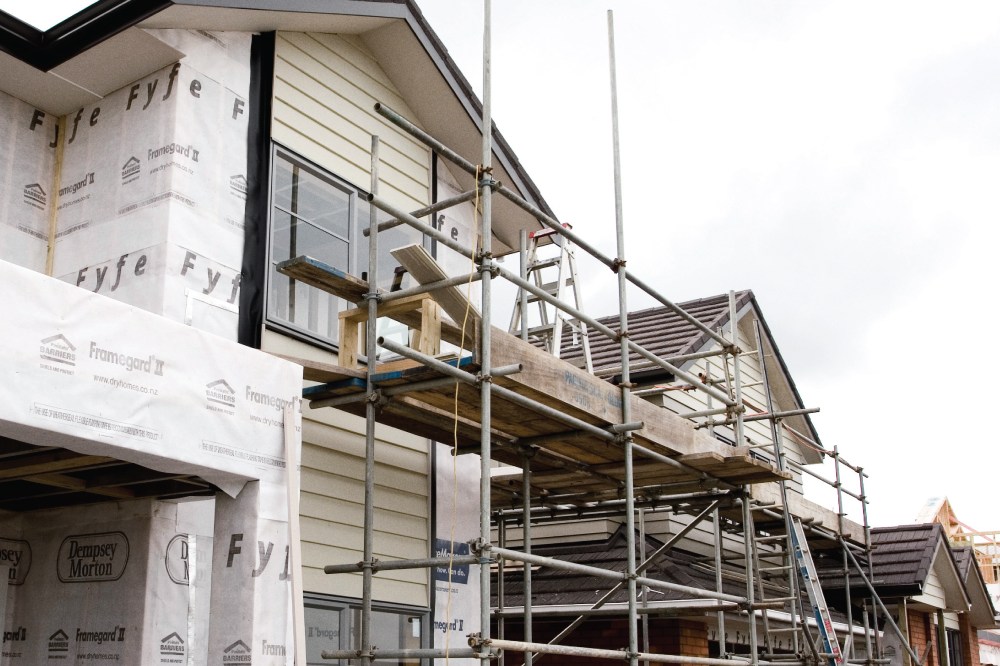
A Summary on How SHA’s Work In light of the constant housing “crisis” in Auckland that keeps popping up and after I ran a post about the Weymouth Special … Continue reading A Look at Special Housing Areas
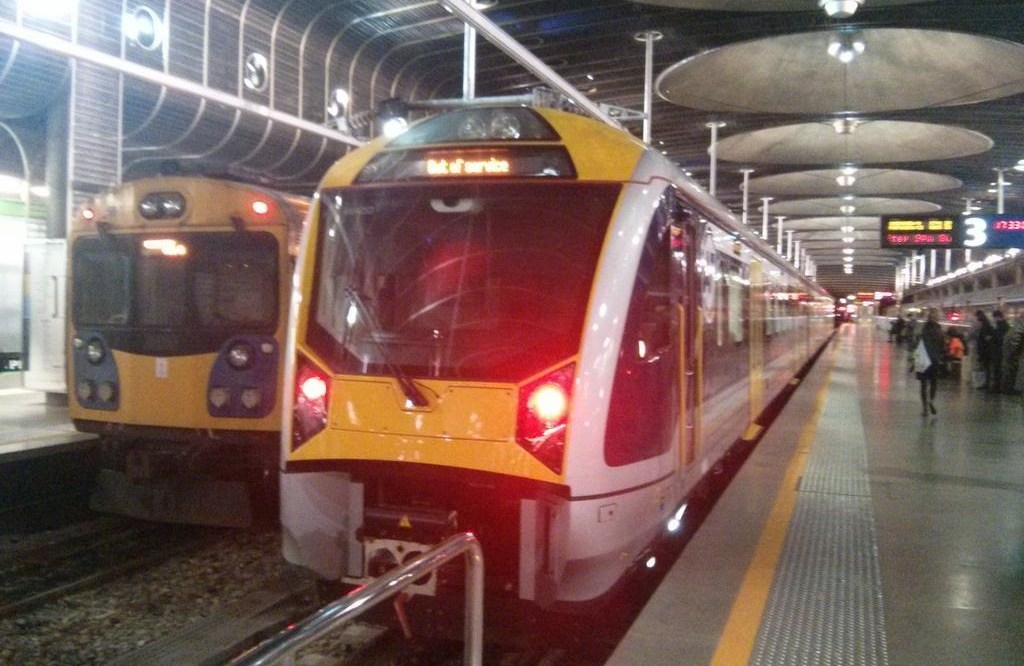
City Rail Link boosts transit capacity and options in Auckland Welcome to the Talking Auckland – The Weekend Analysis where I look back at a hot button issue that … Continue reading The Weekend Analysis – Capacity and Frequencies open with The City Rail Link

Looking at Alternative Funding instead of more Rates Welcome to the Talking Auckland ‘The Weekend Analysis’ podcasts where I look back at a hot button issue that has … Continue reading The Weekend Analysis – Alternative Funding
From Auckland Council after the Budget Committee deliberations:
Auckland Council’s budget committee yesterday agreed to standardise a number of regulatory fees and charges as a continuation of its long-term goal of a more user-pays model.
The 2015/16 budget proposal includes alignment of licence fees for more environmental health activities, event permits and street trading, including rentals for the use of public space.
Some of the former legacy councils had an outdoor dining licence fee based on the area of the footpath used. However, the introduction of the new Trading and Events in Public Places Bylaw from 1 July 2015 will mean this will apply to the entire Auckland region, including Franklin and Rodney regions for the first time.
Councillors were advised that the proposed fees for street trading, which includes outdoor dining and mobile vendors in public spaces, are based on commercial land yields or the value of the location. This means that rental rates will vary across the region to allow for fairness and affordability but the committee felt that for businesses facing a substantial increase, a cap of $500 per year over the next three years was needed.
All of the proposed street trading fees are based on recovering the council’s costs of delivering the related licensing services, keeping the public spaces clean and that businesses are utilising public spaces for commercial use.
Over the last three years, the council has standardised fees for dog registration, food premises and health and hygiene related businesses via the bylaw process. Although not discussed at budget committee, dog registration fees for the 2015/16 year are expected to rise by inflation only.
Food operators will go into a third year of a gradual increase to annual food registration fees as part of a five year plan to standardise charges across the region.
Public consultation on the proposed fees will begin in late January 2015.
The view the draft Trading and Events in Public Places Bylaw, visit aucklandcouncil.govt.nz/bylaws
—–ends—-
Licensing Fees for 2015/16 – FAQs
Trading & Events in Public Places
Why is the council charging a rental fee for outdoor dining?
The proposed fee recognises that there is a commercial benefit to those who are using the public space (footpaths and so on) to conduct their business. The licence allows exclusive use of certain public space, e.g. dining area on the street frontage of a café, which reduces some accessibility for the general public.
Has there always been a fee for outdoor dining spaces?
Many of the former legacy councils had outdoor licensing fees based on the outdoor area of the footpath used. A separate charge for occupancy of public spaces in addition to licence fees is a common occurrence in other councils in New Zealand, Australia and the UK.
How have the fees been calculated?
Rental charges for public spaces have been based on commercial land yields – the value of the location – and the demand, which is measured by the volume of street trading activities in the area. As mobile vendors/temporary stalls tend to be on roadsides or in carparks, the rental charge has been based on council parking charges.
As demand varies across the city due to location, are there different rental rates?
Yes, they have been broken down into three tiers to allow for fairness and affordability.
| Tier 1 | Auckland CBD |
| Tier 2 | Orewa, Browns Bay, Takapuna, Birkenhead, Devonport, Ponsonby, Herne Bay, Freemans Bay, Mission Bay, Grey Lynn, Newmarket, Ellerslie, Howick, Epsom, Kingsland, Milford, Mount Eden, Newton Parnell, Remuera, St Heliers. |
| Tier 3 | All other suburbs |
Why have some outdoor dining fees increased substantially?
The proposed fees are based on adjacent commercial land values and are heavily discounted (40 percent). Additionally, some legacy council areas were heavily subsidised or will face a charge for the first time.
A business facing an increase on what they currently pay of more than $500 (licence fee and rental combined) will be phased in over three years to help manage the impact.
How many businesses will this affect in the Auckland region?
Street trading licensees will pay a fee for one of the following activities:
Are fees increasing for mobile traders/roadside stalls?
Fees for mobile traders and roadside stalls are dependent on the suburb that the trading activity is occurring in. Fees may increase or decrease compared to current fees depending on the location of the activity.
What are the general proposed fees for 2015/16?
| Licence type | Annual licence fee | Plus rental fee of public space per year*
*unless stated |
| Outdoor dining and drinking | $360 | T1: $140/m2 T2: $85/m2 T3: $20/m2 |
| Mobile vendor/temp stall | $300 | T1: $0.30/m2 T2: $0.15/m2 T3: $0.05/m2 |
| Market operator | $360 | $0.25m2 per day |
| Distribution of street material | $60 | $75/distribution stand |
Is council increasing fees for outdoor dining to generate additional income?
The proposed increases are the result of a major review of all the various street trading fees in the Auckland region, introducing a fair and consistent system. The new fees are timed to coincide with the introduction of the Trading and Events in Public Places Bylaw which will come into effect 1 July 2015
Does Auckland Council have rules in place around smoking in outdoor dining spaces?
Not currently but the council’s Smokefree policy will be reviewed in 2018 and outdoor dining spaces will come under that review.
What other fees other than outdoor dining and mobile traders/roadside stalls align to the Trading & Events in Public Places Bylaw?
Fees are proposed for: Market operators, distribution of promotional materials, events permits and filming in public places.
A charge for street performance has not been proposed as this activity has minimal impact, we want to keep it affordable and it adds to the cities vibrancy.
Who issues events permits and how have the fees been structured?
The Auckland Council Events team issue permits for events. Proposed permit fees have been based on whether it is a commercial/private event or a community event and the number of people attending. Fees cover permit (regulatory) costs as well as facilitation support for commercial events whereas a community event will pay just 50 percent of the regulatory fee.
A community event funded by the council will not pay a permit fee.
Is there a fee for filming in public places?
Yes. ATEED issues permits for filming in public places and these are currently based on legacy council charges. A review and simplification of these charges is underway and will be presented in December 2014 to the Regional Strategy and Policy Committee.
———-
Consultation on the Long Term Plan is early next year
UAGC Set, Other Budget Decisions Made Yesterday was Day Two of the Budget Committee working its way through the 432 page agenda plus attachments. The main items covered were … Continue reading Budget Committee Day 2 Analysis
Full podcast will be up tomorrow.
From Auckland Council – in summary
Auckland Council’s Budget Committee today made decisions regarding its rating policy for the draft Long-term Plan (LTP) 2015-2025, council’s next 10-year budget.
The following decisions on rating policy make no difference to the overall amount of money council receives from rates; instead they are decisions about the distribution of rates among business, residential and farm/lifestyle ratepayers.
The Budget Committee voted to keep the fixed portion of rates (known as the Uniform Annual General Charge – UAGC) to its current proportion of 13.4 per cent of rates. Adjusted for the 3.5 per cent rate increase (as decided yesterday) the UAGC is proposed to be at $385. This is the amount every ratepayer pays to council regardless of the value of their property.
The level at which the UAGC is set affects the amount of rates raised from high value properties and low value properties. For example, if the UAGC is increased to $500 per year, then rates will rise for lower value properties and drop for higher value properties. If the UAGC is lowered to $250, rates will rise for higher value properties, and drop for lower value properties.
Mayor Len Brown says: “Differences to the UAGC have an impact on how rates are distributed across our communities and are always hotly debated. Today we agreed to keep the UAGC at its current level which reduces the rates impact of high revaluations on middle and low income households.”
The Budget Committee also agreed to set the business sector contribution at 32.8 per cent of total rates revenue for 2015/16, down from 33.3 per cent in 2014/15. This delivers an average benefit to business ratepayers of $260. The business sector differential is now set to reach a proportion of 25.8 per cent by 2025/26.
The Committee also decided to move from a ratio approach to setting business differentials to a percentage proportional approach. This change removes an unintended windfall benefit to businesses that would have resulted from the recent revaluations. The new approach also avoids an additional rates cost of 5 per cent for households.
The decisions made today are a starting point to include in the draft budget. The plan can, and will change following consultation with Aucklanders early next year.
Next steps:
——————————————–
How it benefits: Papakura, Howick, Botany, and the North Shore Recently I challenged people to sell the City Rail Link after it ran into some problems at the … Continue reading Selling the City Rail Link

And the Winner is From Auckland Council: Youth celebrate liveable city in video challenge Public transport, housing, the environment and social initiatives were the themes of the winning … Continue reading Youth Rise to the Challenge
Rates Rises, City Rail Link, and Alternative Transport Funding Package debated Yesterday the Budget Committee met and today again it meets. The pod cast covers yesterday tortuous debate in … Continue reading Analysis on The Budget Committee Day One
 Talking Southern Auckland