Local Services or Centralised Services – That is the Question On Monday I had written the LOCAL BOARD SERVICE PROVISIONS FALTER post which included photos about our Local Boards and communities … Continue reading Question on Local Service Provisions

Local Services or Centralised Services – That is the Question On Monday I had written the LOCAL BOARD SERVICE PROVISIONS FALTER post which included photos about our Local Boards and communities … Continue reading Question on Local Service Provisions
It is time to file another Local Government Official Information and Meetings Act request to the Auckland Council. This time the LGOIMA request will be on the recently opened Auckland Transport public car park building in Manukau which I reported on this morning. The request I will be filing will be for the original business case presented to the former Manukau City Council (under Mayor Len Brown) on this $14m building before it was carried over as a legacy project by today’s Auckland Council.
I am curious to what the business case was for this parking building in trying to understand why the former Manukau City Council went ahead with this project and possibly why Auckland Council did not stop it.
I’ll be keeping the readers up to date on the request – whether it is accepted or rejected by Council officials.
But in any case it is time to take a peek and what was the methodology behind the construction of this parking building in Manukau City Centre!
Just recently Manurewa Local Board Chair – Angela Dalton posted some rather sad pictures on the state of affairs in regards to maintenance to civic places like parks and berms in Manurewa. I’ll let the photos do the talking here:

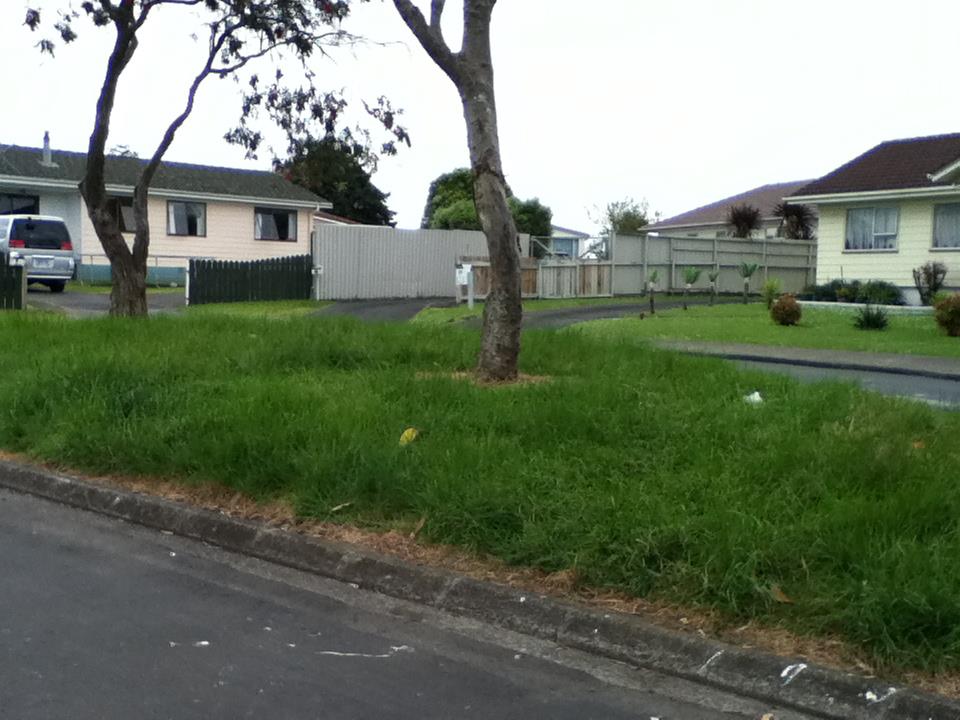
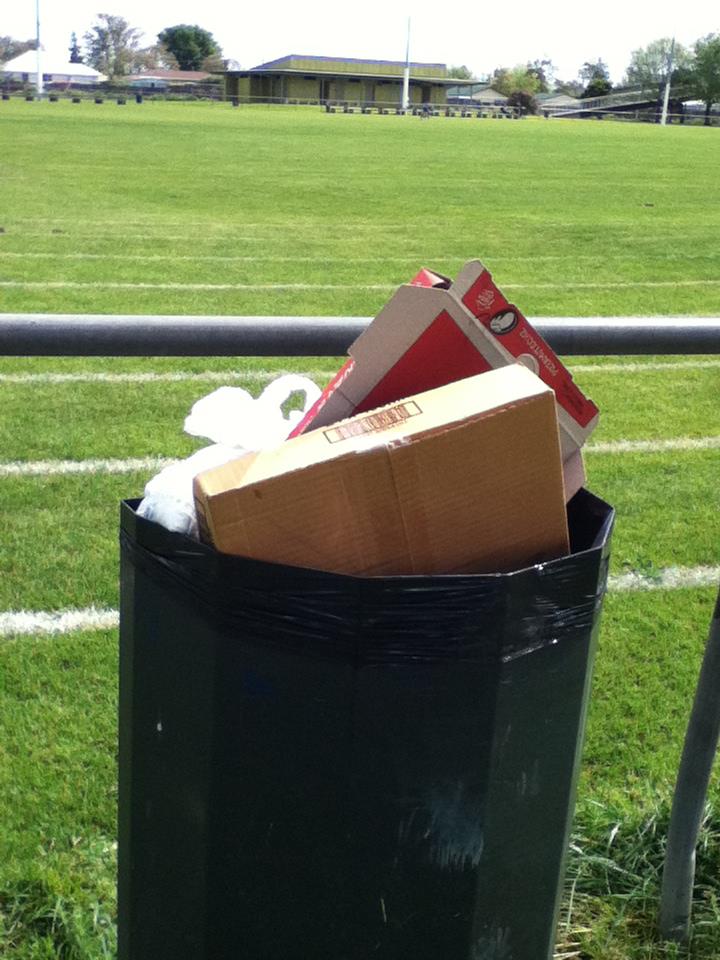

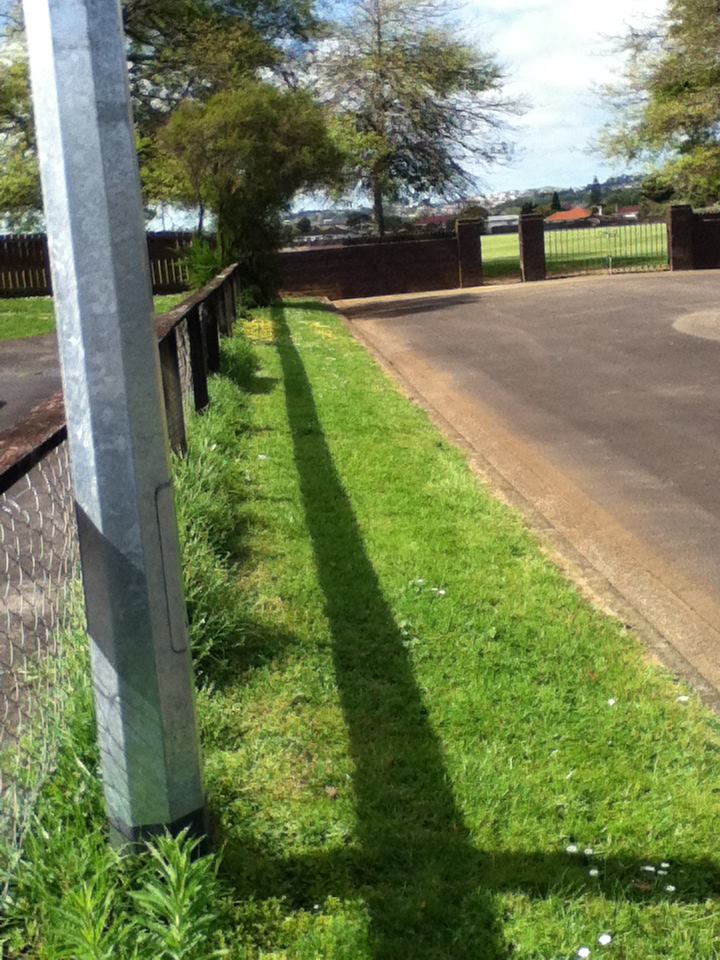

Now after Angela had posted the photos, the Council contractor raced out with the mowers to err trim the grass – and leave it all behind (which would have made great hay for my chickens) (oh and miss the edges too). However as the Manurewa and Papakura Local Boards will attest to, service provisions for these Local Boards from the main Council and its contractors who look after civic places has basically fallen off a cliff. And these Local Board Service Provision stories I keep seeing on Facebook due to either Local Boards facing cuts in their budgets to fund provisions or services, or super city amalgamation being a catalyst to decrease in either services or quality of services are appearing time and time again.
So the question is ‘what on earth is going on here?’ Why are our Local Boards being hurt with inadequate service provisions and ratepayers/communities having to suffer from reduced service levels from Auckland Council. Last month I ran a post (AN INVESTIGATION) highlighting the discussion about rates and service provisions to our local communities.
I had basically said that we need to look at how we fund things, how we fund the Local Boards, and how the Local Boards should be properly resourced to provide adequate service provisions for their communities. An example of what I said was:
Just a refresher (just in case) Bulk Funding the Local Boards goes like this. Orakei currently pays $106m in rates to the “Council” yet “Council” only gives $10m (about 10%) back to Orakei to run its Local Board and services. The proposal I am running with is Orakei pays $106m to “Council” and Council gives back (and that is a must, no if’s buts or maybes) 25-33% (up to Local Board’s decision on level) back to Orakei so Orakei can run and maintain its Local Community Services, Events plus any CAPEX spending as it sees fit (of course with dialogue with its residents and businesses).
The Governing Body can not touch the 33% as it is ring fenced to Local Boards. This also includes the Governing Body unable to hike the rates beyond 1.6x the rate of inflation at max with all spending spelled out per the current Better Local Government MK II Bill/Act/Paper
You can read the rest of that post by clicking HERE.
After I posted the “An Investigation” post, Botany National MP – Jami-Lee Ross posted and kicked off this discussion with me about Local Board funding and service provisions”
Rates Due to Hike Again – So Time for An Investigation
Okay, some idiot in Council mentioned rates and rates rises again giving the hapless ratepayer a sour stomach as we approach Summer and the Silly Season (although for Council, it is always the Silly Season with the Ratepayer Credit Card). Here is a piece from Councillor Cameron Brewer via Facebook with all the comments below (I am pasting this to draw context on where I am going with this):
2) everything regional is funded from a general rate set by governing body. They are accountable for it.
3) everything local is funded from a local services targeted rate, funded from within that ward and kept within that ward. Local board set this targeted rate and are accountable for it. No cross subsidisation on local projects. Complete control for local boards when it comes to local issues. High spending local boards can spend whatever they want. Frugal local boards can likewise do so and not see their savings going back into the general pool.
This model would ring-fence local funding for local initiatives, but would still see regional infrastructures and services funded. It would empower local boards much more as well as demand greater accountability.if you know what I mean
A good discussion of ideas there about Local Board funding and service provisions. And a (mature) discussion to be honest and frank we as a community and a city need to have.
I’ll tell you what, I will go look into these ideas some more and get back to you. However I am willing to run in my election to Papakura Local Board next year stating that; If elected to Papakura Local Board 2013, I will advocate and push for a full and frank discussion with the residents and businesses inside the Papakura Local Board area on Local Board Funding and Service Provision. Do you want the status quo as currently; or do you want something like bulk funding and increased “power” over your Local Board service provisions whether it be the method I suggest OR the method Jami-Lee Ross suggested. Which ever option you chose will be the option pushed to lobby the main Council/Governing Body!
Just a quick note though, the wheels of the governing body and bureaucracy turn slow. So even if and when the discussion began, it will take some time to push the governing body and bureaucracy to change and adopt the provisions you want for your community. Patience would be the key thing here, something even I need and have to persevere with as we go through the motions with the Manukau South Link.
Service provisions for our Local Boards funded or provided by the main Council is a sore point with local residents, businesses, communities and Local Boards. Alternatives are being searched for and once found should be presented to the local community/communities for their input and discussion. At the end of the day it is the local that gets stuck with how and what local service provisions are provided and funded for – whether it be from the main Council or via bulk funding. I am ready to have that robust discussion for a Better Papakura and Better Auckland – are you?
With AT-HOP under-way and not causing too many issues (the issues that are there are being followed up regularly) it is time to turn the light and focus onto two other issues that are perennial in the complaints department – that being Local Board Service Provisions (or lack thereof) and The Unitary Plan.
For the rest of 2012 BR:AKL will dedicate its focus in shining the light at Local Board Services and The Unitary Plan. Transport will still be mentioned but only if it is something significantly major in the current events department.
Tomorrow I will be starting my constructive criticisms and alternative idea proposals on The Unitary Plan, as well as how Local Board Service Provisions are suffering under this current Council.
There have been victories already chalked up at BR:AKL in various areas in progressing to a Better Auckland, and with continued dedication and passion more victories towards a Better Auckland will continued to be chalked up 😀 – For your benefit, not mine! So as BR:AKL and I continue to advocate towards a Better Papakura and Better Auckland, there will be:
No sensationalism, no emotional blackmail! Just presenting the facts as they appear and offering my opinion/commentary and ideas on progressing plans (including overhauls). Remembering my opinions and ideas are framed by the ‘What I Stand For‘ foundation principles for a Better Papakura and Better Auckland.
Shining The Light – To a Better Papakura (OUR home)
AND
To a Better Auckland – (OUR City)
Auckland 2013: YOUR CITY – YOUR CALL
I see the Main Stream Media and Central Government have got on the bandwagon about Auckland’s housing affordability situation. Much as I hate to say it, the MSM I am having no issues with reporting the news (when they do) but I am having issues with Central Government interfering in what is a debate between Council and its ratepayers.
I say that as two particular articles have cropped up from the NZH in regards to housing affordability:
First article
Govt to open up more land for houses
By Adam Bennett , Kate Shuttleworth
Prime Minister John Key says fast-tracking the supply of land will help solve the housing affordability crisis.
The Government is to work with councils to open up more land for development as it seeks to rein in New Zealand‘s high house prices.
Finance Minister Bill English will unveil the Government’s response to theProductivity Commission’s inquiry into home affordability after the Cabinet meets today.
He said it would act to address one of the main issues identified by the commission – a lack of land for building new homes – but the package was a broad programme.
“There isn’t really one simple initiative that changes the way the housing market works.
“It’s a very complicated beast so I wouldn’t get expectations too high about changing the trajectory of house prices next week.”
The commission focused on the need to free more land on city fringes for home-building, but Mr English said some of the best opportunities for development, particularly for low-priced housing, were within cities.
And the second article – actually an opinion piece
National’s affordable housing package lacks any substantial detail
Package? What package? No wonder National avoided over-selling the contents of their plan to make housing more affordable. The plan looks more like a rough first draft.
As Annette King, Labour’s housing spokeswoman noted, the Government’s long-awaited announcement was a combination of “considering new ways”, “undertaking more inquiries”, “doing more work” and “undertaking evaluations”.
The lack of detail serves to illustrate one thing: when it comes to increasing the housing stock, there is not a lot central government can do unless it is willing to spend big bikkies.
The two parts I am going to raise were both in bold in the first article:
“Prime Minister John Key says fast-tracking the supply of land will help solve the housing affordability crisis.”
Opening up supply of the land will help and was mentioned in the Auckland Plan, Long Term Plan and the Civic Forum (that I attended) for the Unitary Plan. What it needs is Council to follow through with the plans and get opening up that land now rather than later. So no need to worry John, already ahead of you there mate.
And from the Minister of Finance:
“The commission focused on the need to free more land on city fringes for home-building, but Mr English said some of the best opportunities for development, particularly for low-priced housing, were within cities.”
Well that seems to be more hitting the point on the head there. And the easiest way to accommodate what the Minister is saying is to:
Get on top of those three points via adopting the Keeping It Simple Stupid philosophy and you might find the above points going some distance (but not all) into helping get on top of our housing affordability and supply situation.
I was pondering over my coffee this morning a few things. First of all acknowledging that a house is deemed affordable when the price of purchasing your house is not more than three times above the total gross income of the people going to be paying the mortgage for that house. Four times above the income is indicating stress but still okay, but anything above five times the income (Auckland is at 5.3-6.0 times) is deemed unaffordable and the situation needs to be addressed FAST!
The second thing I was pondering over was; who is actually getting in the way of solving the housing affordability situation here in Auckland. Traditionally I would stick my boot into our planners, however after the Civic Forum on the Unitary Plan last Saturday I concluded that actually our Planners can and are redeeming themselves here are actually not the ones in the way for the most part. I told our planners at the Civic Forum that the biggest hinderance to urban development were our planners and they simply need to get out of the road. That point still stands in my eyes but to a lesser degree now after talking to them at length on Saturday. Planners have their shot at redemption if they can work with the Local Boards and ratepayers in a multi-way partnership as urban development occurs. Saturday showed the potential there from our planners in working with that partnership with the Local Boards and the ratepayer and I am hoping that potential can develop and flourish (rather than go backwards and me having to stick the boot back into them again – which I don’t honestly want to do as I do that enough with our beyond hopeless CCOs).
Now I know there are planners reading this who I talked too on Saturday and my message is this: Lets work together (planner, ratepayer and Local Boards) in developing an outcome forward for Auckland and its development through to 2040. The foundations were laid on Saturday and a lot of good faith and will was set at that Civic Forum. I extend my hand as a ratepayer to you – our planners as I don’t want to stick the boot in no more to you guys. I have ideas, you have ideas, we all have the same outcome as the Civic Forum showed, lets work together rather than apart. And that I make as a serious genuine offer. As for the ideas I have, you can read my rather extensive submission to The Auckland Plan which I will translate over to submissions for the Unitary Plan in due time. Oh and even though I am advocating the decentralisation of the urban development processes, Planners will be still flat-out if not even more flat-out as they buddy up with the Local Boards in delivering and providing advocacy during urban development phases 😉 !
So then if Planners are not getting in the road, then who is?
Sorry hate to say it but it is our Councillors and Central Government Politicians and in my next post, I am dedicating my boot to you both and how YOU are causing the housing affordability situation…
For Auckland Council Planners Consumption – My Submission to the Auckland Plan, and due to be translated to the Unitary Plan submissions
Some Feedback from the Civic Forum on the Unitary Plan Saturday I gave up my time (of which would have been in the garden) to attend the Civic Workshop … Continue reading Feedback from Civic Forum
Okay, some idiot in Council mentioned rates and rates rises again giving the hapless ratepayer a sour stomach as we approach Summer and the Silly Season (although for Council, it is always the Silly Season with the Ratepayer Credit Card). Here is a piece from Councillor Cameron Brewer via Facebook with all the comments below (I am pasting this to draw context on where I am going with this):
Despite inflation running at just 0.8%, rates keep going up and on the isthmus service levels fall. In the Mayor’s draft 2013/14 budget released today road-side berm mowing will be axed in the old Auckland City area. Wards like Orakei will soon be paying more for even less.
 Another service reduction for old Auckland City area | Voxy.co.nzAuckland Mayor Len Brown’s draft budget for 2013/14 released today will cut out a long-held lawn mowing service for residents living in the old Auckland City area who are the same ratepayers stung the hardest with ongoing rates increases, says Auckland Councillor for Orakei Cameron Brewer.
The Governing Body can not touch the 33% as it is ring fenced to Local Boards. This also includes the Governing Body unable to hike the rates beyond 1.6x the rate of inflation at max with all spending spelled out per the current Better Local Government MK II Bill/Act/Paper
It would have been reasonable to expect significant cost efficiencies to arise from the Auckland SuperCity merger — reduced duplication of effort and infrastructure being the efficiencies that spring immediately to mind.And it would have been reasonable to expect the rate take to stay stable and/or for services to be improved for the same cost, or more likely to decrease in cost as these efficiencies filtered their way down…
…but no. Exactly the opposite has happened.
(Makes marks of the Balanced Scorecard) Auckland Mayor Len Brown is proposing a rates rise of between 1.9 per cent and 2.9 per cent in next year’s election-year budget.
A 2% increase, within that context, is utterly unnecessary and obscene.
Okay so that is the discussion as of when I was writing this post. But the situation that I think is worth investigating is bulk funding Local Boards as I have suggested above:
Just a refresher (just in case) Bulk Funding the Local Boards goes like this. Orakei currently pays $106m in rates to the “Council” yet “Council” only gives $10m (about 10%) back to Orakei to run its Local Board and services. The proposal I am running with is Orakei pays $106m to “Council” and Council gives back (and that is a must, no if’s buts or maybes) 25-33% (up to Local Board’s decision on level) back to Orakei so Orakei can run and maintain its Local Community Services, Events plus any CAPEX spending as it sees fit (of course with dialogue with its residents and businesses).
The Governing Body can not touch the 33% as it is ring fenced to Local Boards. This also includes the Governing Body unable to hike the rates beyond 1.6x the rate of inflation at max with all spending spelled out per the current Better Local Government MK II Bill/Act/Paper
That policy piece stems from at least half of my What I Believe In for a Better Auckland fundamentals which I am going to pitch to voters at next year’s Local Government Elections (running for Papakura Local Board). The fundamentals being applied here are:
- Strong but no interfering Governance: Meaning Council shows active and real leadership but does not interfere with the daily lives of residents and businesses
- Finances: If my family has to live within its means then so does the civic institutions that impact on us greatly (that being Council and Government). You work out your income, then what you can spend on – NOT THE OTHER WAY AROUND as with Auckland Council
- Keeping It Local: Large centralised civic institutions seem impersonal (if not frightening) to most us. So how about keeping it Local and allow our Local Boards to be resourced properly so they can execute their true functions of local advocacy and providing our local community parks and services for us.
- Basics first: One thing I learnt when I moved out from the parents’ home and struck it out in the real world (including getting married and owning our first house) is that with the limited resources you have got, you did the basics first then with anything left over you just might be able to afford a luxury. Same applies to our civic institutions; they have limited resources so get the basics right first then “treat yourself or others” to a luxury if you are able to do so once the basics are taken care of.
- Listen and Engage: God gave us two ears and one mouth. In my line of work you actively listen with both ears THEN engage in dialogue with your one mouth. Not the other way around as that is usually monologue and the fastest way to get your ears clipped. Same applies to civic institutions: you actively listen with both ears THEN engage in dialogue with your one mouth unless you like getting your ears clipped… Oh and remember some days all the person wants you to do is JUST LISTEN to their little piece – as all we want some days is just to get it off our chests.
- Stay out of my way: I believe in the following strongly “Individual Freedom -> Individual Choice -> Individual Responsibility (oh and do not forget the consequences)” I am an adult who can make choices for myself (whether it was right or wrong), treat me as such rather than a child.
Actually that is 3/4 of my fundamentals being applied from the bulk funding of Local Boards proposal.
But the point I am going to pitch strongly to Papakura (in fact most likely to be the strongest as all other fundamentals technically stem from it) is Point Three (in bold):
Keeping It Local: Large centralised civic institutions seem impersonal (if not frightening) to most us. So how about keeping it Local and allow our Local Boards to be resourced properly so they can execute their true functions of local advocacy and providing our local community parks and services for us.
It is of my strongest belief that the Local Boards are in a better position than the main council and bureaucracy to deliver your local community services as well as being the main calling point from local residents (so you) in advocacy issues. And none more so with being the main calling point for advocacy that urban development within their jurisdictions.
In my submission to the Auckland Plan, and in my pitching to the Civic Forum of the Unitary Plan; I pushed for Local Boards working with planners in delivering the urban development outcomes in Auckland. An excerpt from my submission:
The main crux of the SLPD would come from the: decentralised, semi-regulated, collaborative, efficient, simplistic and affordable approach to LADU. This is how the crux or ideal would be achieved:
- Under SLPD’s the decisions and/or oversight would be with the Local Community Board rather than the centralised Council
- Council provides a statement of intent (The Auckland Plan) and action plan for Auckland (Auckland Long Term Plan) over the next period of time
- Council provides a mediation service when there is a dispute with an SLPD
- Council assists Local Community Boards with resources required when an SLPD is being carried out
- SLPD follows the Philosophies of Land Allocation/Development/Utilisation (mentioned page 14)
- Simplified Zoning
- Collaboration between the Local Board, Community and Developer (allowing greater flexibility and response to community concerns and needs/desires)
As well as
So in the end the SLPD-LADU model follows a hybrid of Houston’s method of urban planning and (to a limited extent) the (although simplistic and maybe crude compared to reality) techniques used in Sim City Four!
In short this is how the SLPD-LADU would work:
- Council provides its goal/vision for the wider city over a period of time
- Council provides a framework on how it would like to reach that goal
- Council and the Local Community Boards begin the SLPD-LADU Process by:
- Created a SLPD which “maps out” the local area’s intentions
- Zoning or rezoning begins
- Memorandum of Understanding between Council (if required), the Local Community Board and developers in developing the land (but complies with the Region LADU Philosophies previously mentioned)
- Development begins
- Development is then underway with the developer having to provide these basic provisions inside the zoning area – effectively zone or zoned district or districts:
- Water infrastructure for the district
- Electricity infrastructure (in coordination with the local lines company)
- Telecommunications infrastructure (in coordination with whoever is contracted to provide phone/broadband cabling
- Basic park/recreation facilities (set a minimum percentage of total developed area within the zoned district (except for “pure” industrial land)(percentage to be determined at a later date))
- Basic street network (that can be readily connectable to the main transit system)
- Allow for provision of a mass transit system if one is required (often in medium and higher density zoning districts)
- After completion, the corresponding infrastructure of the zoned district would be allowed and capable of connecting to the existing city infrastructure
You can see the rest of the Submission that covers Land Use (urban development) in the embed below.
But as you can see I am pushing for democracy to return to the Local Boards and costs to be brought back under control. I will run further commentary in my Civic Forum update but in regards to Council finances and debt, check my submission to the LTP via the link below as both submissions are interlinked.
2013 you will need to decide how you want your Local Board(s) to work for you (and how it should be resourced). We all have a long road ahead but I advocate for local (community) democracy and basics first in regards to finances for you the Papakura ratepayer. Yes we all need to work together for a better Auckland, but also we need to work and focus closer to home – a better Papakura. Because a Better Papakura that you love and enjoy to live in contributes to a better healthier Auckland!
Check my commentary on the Unitary Plan and the pitch for local democracy and moving away from big stick regulation in building outcomes for housing, transport and the (physical and human) environment!
Submission to LTP where I mention a Debt and Finance Policy for Council
Submission to Auckland Plan
Tonight I attended the introductory session on the Civic Forum for the Unitary Plan, hosted by Te Radar and Deputy Mayor Penny Hulse.
Needless to say I got; juice, food and parking paid for so I shall be back Saturday for the workshops on The Unitary Plan.
However the hour long session I realised two things:
For starters me being there (along with two others of similar age including a fellow blogger), I lowered the average age of Civic Forum participants by a third – I kid you not. I think I was the youngest there and I am 27 for heaven’s sake. The other thing I realised was this:
[Quoting from my Facebook status]
So I sat through the Unitary Plan introduction session hosted by Te Radar and the Deputy Mayor. First of all I got food, juice and parking paid for so that means I come back Saturday 😀
Seriously though in regards to the Unitary Plan, I feel like standing in front of an impassable mountain that is blocking my path, so I have some options:
1) Just sit in front of it and go no where
2) Try and tunnel through it3) Go around
4) Go over it
5) Stick the largest bloody hydrogen bomb underneath it and detonate itOptions chosen? You figure it out which one I would choose
The Auckland and Long Term Plans were straight forward to do submissions on. This Unitary Plan (The Planning Rule Book) is quite the something else to get my head around. None the less I shall endeavour to do my absolute best (using material from my previous submissions) plug away at the Saturday Civic Forum for the Unitary Plan, remembering the simpler it is, the better for Auckland it shall be (following the liberal dogma here).
So Saturday 10-4 at Town Hall. Lets see what I can converse about for the Rule Book that effectively rules us all 😛
As for that mountain, now where did I place that big red button!
Auckland currently sends to the landfill (according to the last lot of statistics) 1.1 MILLION tonnes of trash. That is a crap-load of trash being buried into our grounds. Councillor George Wood has just returned from Taipei where he (and the Mayor) checked out a municipal incinerator that burns Taipei City’s refuse (industrial, residential and commercial). Here is a translated version from George Wood on the Taipei City Incinerator:
It has been proposed by Councillor Wood that Auckland should investigate and if deemed feasible (a plant of the size of Taipei City costs $400m estimate) build such an incinerator for Auckland. I propose one better and go the full hog in building a Waste to Energy Incinerator to take care of our trashy trash! Basically that means the trash is burnt at extremely high heat (1000-1200C), the waste heat is then either used to boil water (good cooling circuit for a furnace burning at 1000c) to produce steam and crank that turbine for electricity generation or sent to heavy industry nearby for use, and the ash used to make bricks or roads.
To get more of an idea from WtE, check my previous article on the matter:
From “WHAT A LOAD OF RUBBISH:”
Council Continues to Debate Rubbish
…
HOW TO “TAKE CARE” OF THE TRASH
Strangely enough how to deal with waste that makes it to the landfills is very easy and the First World have mastered it quite well. Its called incineration folks and we already have a mothballed power plant ready to rock and roll. Yep you heard me right; what does not get recycled, composted or used as fill can be burnt with the ashes used as bricks or other materials as pointed out in the accompanying Wiki article. The wiki article along with its references, burning the rubbish – waste to energy seems to have quite few spin offs including being better for the environment gas emission wise:
Carbon dioxide emissions
In thermal WtE technologies, nearly all of the carbon content in the waste is emitted as carbon dioxide (CO2) to the atmosphere (when including final combustion of the products from pyrolysis and gasification; except when producing bio-char for fertilizer). Municipal solid waste (MSW) contain approximately the same mass fraction of carbon as CO2 itself (27%), so treatment of 1 metric ton (1.1 short tons) of MSW produce approximately 1 metric ton (1.1 short tons) of CO2.
In the event that the waste was landfilled, 1 metric ton (1.1 short tons) of MSW would produce approximately 62 cubic metres (2,200 cu ft) methane via the anaerobic decomposition of the biodegradable part of the waste. This amount of methane has more than twice the global warming potential than the 1 metric ton (1.1 short tons) of CO2, which would have been produced by combustion. In some countries, large amounts of landfill gas are collected, but still the global warming potential of the landfill gas emitted to atmosphere in e.g. the US in 1999 was approximately 32 % higher than the amount of CO2 that would have been emitted by combustion.[15]
In addition, nearly all biodegradable waste is biomass. That is, it has biological origin. This material has been formed by plants using atmospheric CO2 typically within the last growing season. If these plants are regrown the CO2 emitted from their combustion will be taken out from the atmosphere once more.
Such considerations are the main reason why several countries administrate WtE of the biomass part of waste as renewable energy.[16] The rest—mainly plastics and other oil and gas derived products—is generally treated as non-renewables.
Go figure
LOCATION FOR SUCH A PLANT
Meremere which was designed to become a Waste to Energy Plant until the Greens stopped it (idiots) would be a good site with road, transport and power grid links all within easy reach. Basically trash goes by road or rail to Meremere, burnt, and the juice sent via the National Grid straight back up to Auckland. Simple
Southdown/Penrose has a gas fired co-generation power station (so produces power and steam for industrial use) already there connected to the National Grid and disused meat works site next door that needs major urban redevelopment. Like Meremere, Southdown sites with extremely easy reach of road, rail and power grid links but with the added bonus of having industry near by that would use the waste heat for their usage (ACI Glass being one example and only just down the road). The extra spin-off with Southdown is it is right in the middle of Auckland so no need for excessive waste transportation for incineration.
If you are concerned about the emissions from a waste to energy plant, then go read the wiki article and more to the point its references attached. It seems the developed world can handle it so we should be able to as well, because we are First or Third World folks?
Landfills = third world
Recycling, Composting and Waste to Energy = First World.
Zero Waste = near impossible as even Earth and the Sun produces some rather nasty waste from time to time (although the Universe has a knack at recycling too)
So Auckland Council, lets keep it simple please.
The Penrose site I have here below in this graphic:

Click for full resolution
The site highlighted is around 7.5 hectares, similar size to the 7.2ha site in Taipei City. The area I am proposing in Southdown is the old freezing works site long abandoned (since 1980) and burnt to the ground twice already. The area is in heavy industrial land (so no residential) right next to the North Auckland Line (rail), Southdown Co-generation Power Station, and the North Auckland transmission line (part of the National Grid). So with the right scrubbers and pollution control measures in place, this site at Southdown would be perfect for Auckland’s first Waste to Energy Plant with full road and rail access. And with the site right next to the power station and National Grid, the power produced from the WtE plant can be fed directly to Auckland and Northland with waste heat also able to be fed along the pipeline from the power station next door to industry. So cleaner for the environment, we get some juice, industry gets heat and the Roads of National Significance gets some ash for road building . I’d say that is a win-win-win for the city 😀
Now then, to get that investigation and plant building going so Auckland can take care of her trash!
To quote me from Facebook:
“When the Unitary Plan appears to be thicker than your average Bible at home, you know there is something VERY wrong here – with our planners and planning process…”
Now hopefully that is not true; but after I asked this morning in Facebook to those who have seen the Unitary Plan in its preliminary stages, I am rather not looking forward to seeing the Unitary Plan thus far hopefully next week. The actual answer to my question on the thickness was this: “it’s so thick it’s stupid,” so confidence in the Unitary Plan has already gone down the toilet – cute…
Yesterday in my K.I.S.S post I said this in regards on the Unitary Plan and simplicity:
The Late Owen McShane taught me that any “plan” over a thumbnail in thickness (on A4 paper – no cheating with A3) is a: dead weight, too complex, and albatross around the city and ratepayers neck. I would be a case of Gin that the Unitary Plan is going to be thicker than my thumbnail to the point it is going to be thick as my fist (yes that means the plan makes a fist of things). The K.I.S.S rule needs applied to the unitary plan, but to do that in benefit of the city, 3/4 of our bureaucratic and Stalinist Planning Department in Council would be all out of a job. Maybe that might be a good thing?
Thumbnail in thickness being the absolute maximum that ANY operating plan should be! Well it seems the Unitary Plan is going to fail that little test so I devised some crude measurements here.
I measured the thickness of thickest and largest Bible in the house; the NIV Life Application Bible standing at 48mm (4.8cm) and some 2385 pages in thickness. I also measured the thickness of my thumbnail which stood at 18mm (1.8cm) which means in theory the Unitary Plan using A4 paper (A3 for any maps – I’ll be generous there) should not be thicker than 20mm (2.0cm) at the absolute maximum. However again that does not seem likely.
So lets take a look at some pictures (and yes they are crude) for reference to thicknesses here folks:

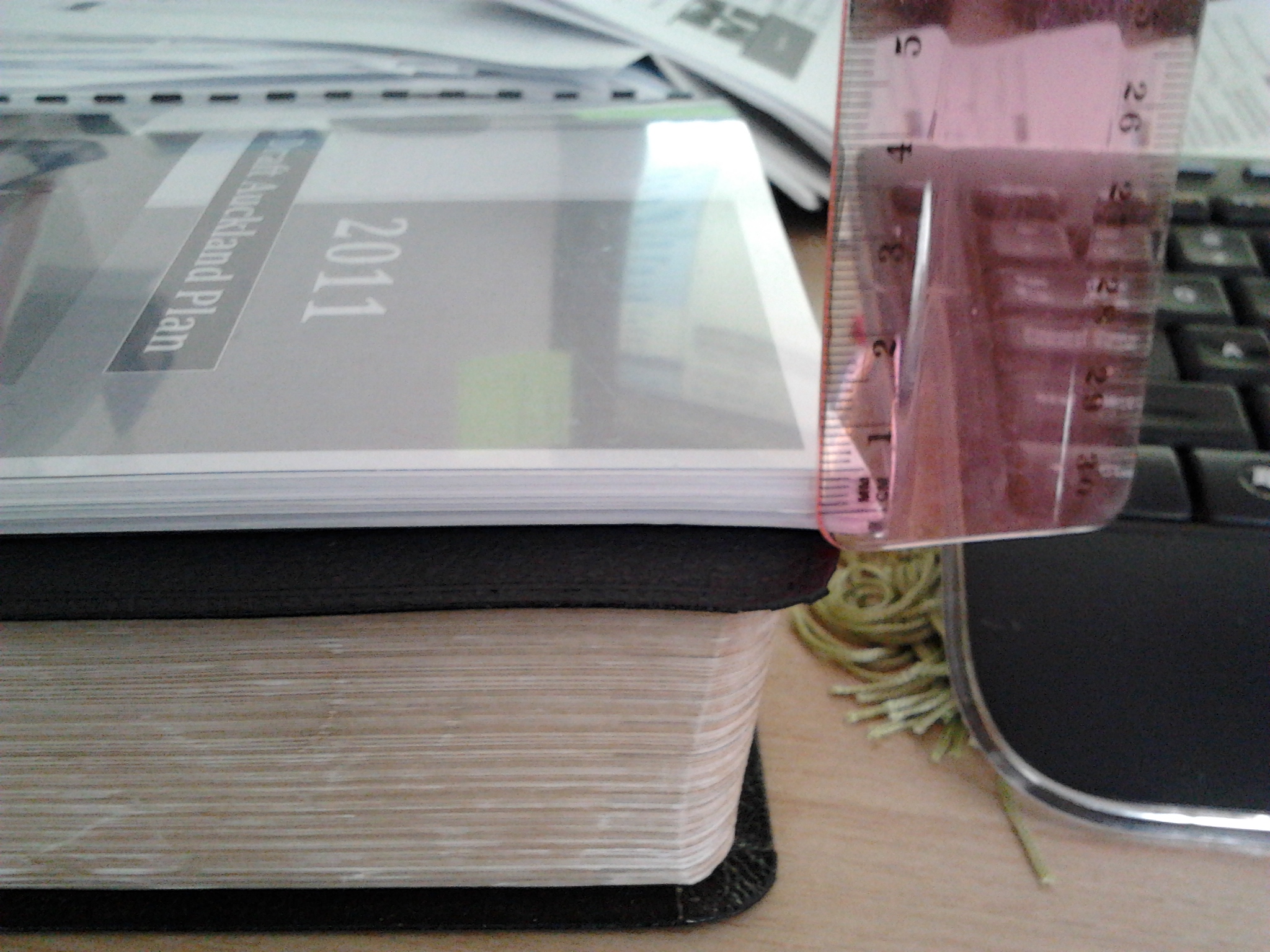



9mm (94 pages) in thickness (or half a thumbnail) when both my submissions to the Auckland and Long Term Plans are combined. With 18mm being the thickness of my thumbnail (make it 20mm for a tolerance factor) and applying the K.I.S.S rule quoted above, the Unitary Plan should not be longer than 200 pages or both my submissions doubled up in thickness. But no we are seriously looking at a massive behemoth that is looking to be as thick as our largest Bible at home.
Heavens sake what is wrong with our planners – do they not understand thrift and simplicity? Obviously not or I would not be writing this post.
However I have some good news folks for all those who like simplicity, efficiency and wanting Council and planners to get the heck out of the our lives (and the road too). I am off to the “Civic Forum to discuss the Auckland Unitary Plan” on Tuesday 23 October and Saturday 27 October at Auckland Town Hall. So ideas abound once I get my first glimpse of this Unitary Plan. And yes I shall endeavour to “shrink” the Unitary Plan so it is no thicker than one’s thumbnail in the line of two of my eight fundamentals for a Better Auckland:
So lets hope that at this Civic Forum this crucial fundamental will apply:
Dialogue not monologue (from the bureaucrats and Councillors)!
BR:AKL will run commentary as I attend this Civic Forum on the Unitary Plan and the outcomes from it.
Shining The Light –
To a Better Auckland
Auckland 2013: YOUR CITY – YOUR CALL


 Talking Southern Auckland