Pays to Check before announcing something I believe it was around 12 hours before the cold water got poured onto the Mayor after he announced a $250 million sweetener … Continue reading Mayor Could Have Derailed the City Rail Link
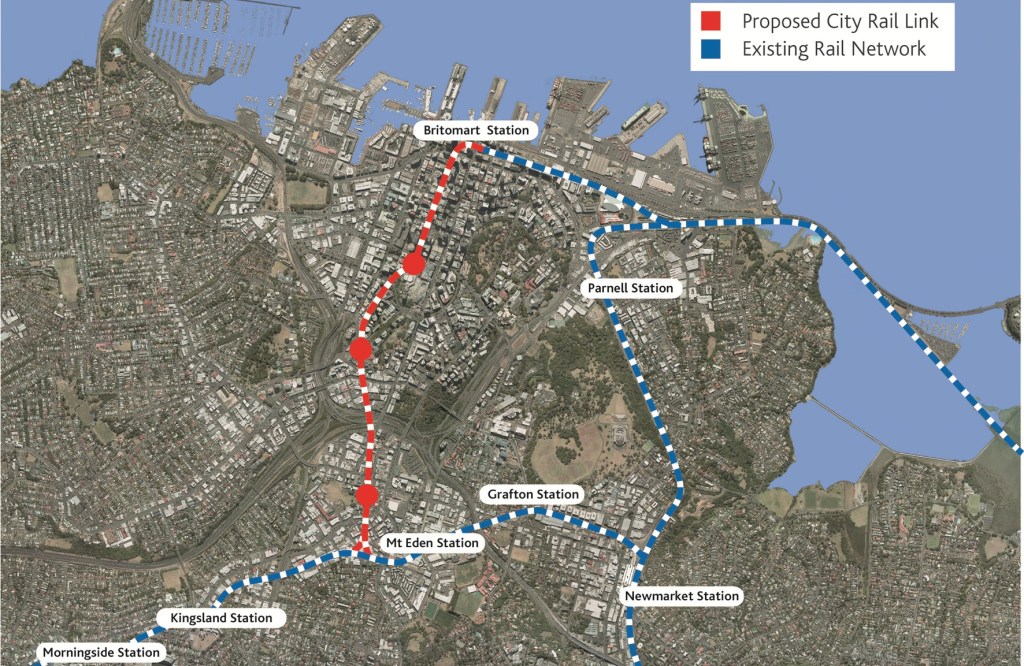
Pays to Check before announcing something I believe it was around 12 hours before the cold water got poured onto the Mayor after he announced a $250 million sweetener … Continue reading Mayor Could Have Derailed the City Rail Link
Time to Jump the Hoops I saw this morning as the leading headline that the Mayor is “offering” $250 million to “kick-start” the construction of the City Rail Link … Continue reading $250m for CRL Still Has Hurdles
I caught this from the Respect our Community Campaign Facebook page:
MORE GOOD NEWS!!
Via Donna, we have just heard from Maungakiekie Local Board chairman, Simon Randall that Auckland Transport have dropped plans to push their motorway through the northern foreshore of Manukau Harbour and Panama/Riverside! Great news … here is his email:
I have just gotten off the phone with Auckland Transport who has confirmed that the focus of the east west link will be between SH20 and SH1 on the northern side of the Mangere Inlet, meaning that initial suggestions that there may be new motorway connections through the Panama Road area are no longer going to be pursued. I hope that this is good news for you, the Local Board has pushed for this to be abandoned for some time and are pleased it now has been abandoned.
There may still be some minor works associated in the area to support the East West Link, these have yet to be developed but I have made it clear that the Panama Road / Riverside Community to be well engaged on this project and have urged early discussions with residents such as yourselves…etc etc
—-ends—-
That is news indeed.
So the question is – where next?

Lessons from Don Draper (for Planners) – From Planetizen I caught this real gem from Planetizen on Planners needing to think like Don Draper from the Mad Men series. … Continue reading How Don Draper Could Help Our Planners
I do not usually run NZTA media releases but this one I will as it shows we are nearly there with the completion of the long awaited Western Ring Route.
From NZTA:
5 Feb 2014 04:35pm | NZ Transport Agency: Auckland and Northland
The contract to construct the next stage of Auckland’s Western Ring Route – upgrading the Northwestern Motorway (State Highway 16) between the St Lukes Road and Great North Road interchanges – has been awarded to the Australian-based infrastructure company, Leighton Contractors.
The $70m project is jointly funded by the NZ Transport Agency and Auckland Transport.
A two kilometre-long section of the motorway will be widened from three to four lanes in each direction. There will also be improvements to the motorway ramps and the St Lukes Road -Great North Road intersection, while the St Lukes Road overbridge spanning the motorway will be widened to benefit drivers, walkers and cyclists.
The Transport Agency’s Highways Manager, Tommy Parker, says this is the last of six projects to connect the Northwestern and Southwestern (SH20) motorways.
“The upgrade is part of our programme to get our network ready for the increased volume of traffic when the Waterview tunnels connecting the Northwestern and Southwestern (SH20) motorways are completed in early 2017,” Mr Parker says.
Work is due to start in mid-autumn and be completed by late 2016. The other projects to connect the two motorways are the upgrade of the Maioro Street interchanges (SH20) which is completed, and the upgrade of the Lincoln and Te Atatu interchanges, the Causeway Upgrade Project, and the Waterview Connection, which are all under construction.
“Leightons bring plenty of infrastructure experience to the St Lukes project. The company is part of the Causeway alliance, and has been involved in some of our biggest Auckland developments including the Northern Gateway Toll Road and the Newmarket Viaduct Replacement Project.” Mr Parker says.
The Western Ring Route is a Road of National Significance, and will provide a 47km-long alternative to SH1 between Albany and Manukau. It will improve safety and city and regional transport connections for people and freight.
—-ends—-
Source: http://www.nzta.govt.nz/about/media/releases/3170/news.html
It will be good to have the entire project finished as for one I would be using it as the main highway between my place on Papakura and my mum’s place in Te Atatu (thus skipping the CBD and Central Motorway junction).
I was thinking once the Western Ring Route is fully completed, should it be converted to State Highway One with State Highway 20 taking the Manukau to CBD section while State Highway 18 taking the CBD to Albany section. State Highway one was always designed to be the inter-city and inter-regional road link with the State Highways 20, 16 and 18 being the intra-regional highways. So with the Western Ring Route soon to be completed and serving as the primary inter-regional route for cars and road freight (as it will by-pass the Harbour Bridge and the CBD) I believe it should carry the State Highway One shield.
I also noted this from the release:
The Western Ring Route is a Road of National Significance, and will provide a 47km-long alternative to SH1 between Albany and Manukau. It will improve safety and city and regional transport connections for people and freight.
Manukau and Albany – the two touted Super Metropolitan Centres of Auckland serving as regional people, commerce, freight and industrial service (for Manukau) hubs for their areas and partnering areas (Manukau with the Northern Waikato and Albany for Northland). Both Super Metropolitan Centres sit on the two boundaries of the Western Ring Route.
Bernard Orsman of the NZ Herald picked up on two Auckland Council elected representatives “rebelling” against Auckland Transport rules and converting berms into something more “green.”
From the NZ Herald
By Bernard Orsman 6:17 AM Wednesday Feb 5, 2014

Pippa Coom says bees and butterflies love her planted berm. Photo / Richard Robinson
Two Auckland Council politicians are flouting council rules by planting flower beds on their berms.
Councillor Cathy Casey and Waitemata Local Board member Pippa Coom are proud of their flower beds, with Dr Casey saying it was easier to maintain flowers than mow a berm against a wall at her Mt Albert home.
Ms Coom said not everyone wanted verges to be mowed and her planted berm in Grey Lynn was about having a diverse landscape.
The bees and butterflies loved it and it gave her a chance to talk to neighbours, she said.
Auckland Transport could help out, she said, by setting guidelines about what could be planted.
A council debate on the berm issue yesterday also heard of cases of people planting flax and corn on berms.
Defiance of the rules angered councillor Denise Krum, who said the approach of planting corn, flax and flowers and politicians’ behaviour sent a message to residents that anything goes.
…
Source: http://www.nzherald.co.nz/nz/news/article.cfm?c_id=1&objectid=11196784
Good on Pippa Coom and Councillor Casey for greening their little slice of the City up and converting the berm outside their property into something more friendly to nature (and appeasing to the eye). Also good to see Auckland Transport will not hound people down who do convert the berms over into a community garden as mentioned below:
Later, Auckland Transport communications manager Sharon Hunter said no action was taken against people who planted flowers and other plants on their berms. They would only be asked to remove plants that grew high, obscured a street sign or became a hazard.
The real pity I have those is what Councillor Denise Krum (a member of the National Party which believes in Individual Freedom, Choice and Responsibility) said in the article. Rather than help the Local Boards, residents and Auckland Transport set up some basic guidelines on what can be planted, the responsibility and maintenance onus, and the knowledge that contractors can dig up the berm at any time to access utilities; Councillor Krum goes all Nanny State on us and would pretty much dictate what Auckland residents can not do – in greening up their city as a potential solution to the “berm issue” (the other being kicking it to Local Boards and Local Boards via targeted rates having their own contractors mowing their berms).
North America and the EU nations often run community garden schemes in cities to often great success. Not only is the respective city more “green” and friendly to wildlife (like bees) but social issues decrease as communities feel involved in something that is tangible. That is they take pride in their work and feel more connected with the city fabric rather than being isolated out. This can be seen as a win for the physical environment and win for the social environment. Another win could be the tourism element as tourists see a greening and varied cityscape from these “community” berms.
Or as Campbell Live pointed out when on tour with the Mayor, convert a few berms to either off street parking or cycle-ways.
Either way there are solutions and I believe it is time to hand this one to the City citizenry and the Local Boards. Especially as a “review” of the berm policy pushed for by some of the Isthmus Councillors was defeated 15-7 (68%) in Council yesterday. With those super-majority numbers I do not expect to see this issue of berms come back up again for the rest of the term of Council – outside of kicking it back to the Local Boards and some basic guidelines for those who wish to convert their berm into a garden.
Councillor Cameron Brewer made an off-hand remark to New Zealand Herald’s Bernard Orsman about how the special one-off Auckland International Airport Dividend of $101 million should be used to restore berm mowing to areas of the Isthmus that had it before the Super City came into existence.
From The Aucklander – Division of the NZ Herald
Council returns to mowing berms in Auckland
By Bernard Orsman 6:49 AM Monday Feb 3, 2014
Residents who can’t cut the grass, or refuse to, will get a trim but contractors can wait until it is 20cm high.
…
Orakei councillor Cameron Brewer said he planned an amendment for the proper reinstatement of berm mowing, which could be funded from a special $101 million dividend from Auckland Airport, or internal savings.
…
Source: http://www.nzherald.co.nz/aucklander/news/article.cfm?c_id=1503378&objectid=11195808
It is one of the few times condemnation from both the Centre Left and Right were rather swift against Councillor Brewer for mentioned that a dividend would be used for a OPEX rather than CAPEX line (Opex means Operational Budget for Day to Day running of the Council, CAPEX is your Capital Expenditure – that is investment into things like infrastructure).
That $101 million would be best set for infrastructure like say some cycle ways, the St Johns Station, maybe the Manukau South Rail Link and some grade separation of our dangerous rail crossings, perhaps some storm-water infrastructure or paying down some debt which actually is not a bad suggestion from Councillor George Wood.
But to pay for OPEX expenses like berms for a few on the Isthmus? I think not.
Look the solution is dead simple for the berm situation.
I recommend that the issue be sent to the Local Boards for their final decision. That is if the respective Local Board would like berm mowing for their residential areas then they would have the chance to:
If I was to say the Papakura Local Board and was going to charge a targeted rate for berm mowing for the area I would tender the service out to a local firm in the area (if possible). This means a local business with local area knowledge has the chance of providing a service to the community of Papakura and providing employment to the local area. More local employment means more spending and more investment in the area. I call that a Win-win-win-major win if this was able to occur.
So lets kick this issue of berm mowing to the goal line once and for all and hand it over to the Local Boards to decide rather than the main Governing Body.
As for the Isthmus and their berms I found this rather telling from a comment on Cameron Brewer’s public Facebook remark on the issue (note Cameron did not write this comment but a ratepayer of Auckland did):
We drove to the airport back in October and went through Gillies Ave and Manukau Rd. Those who had not mown their berms in the upmarket area should be ashamed of themselves. The neighbours would be really annoyed with them. As we drove through the not so affluent area all the berms were mowed nice and tidily (bar one that had construction activity in the adjacent section). I would be mowing the neighbour’s unmown berm myself because it affects your own place. And most of the houses bedside the umown berms had lovely tidy mown lawns.
And I can vouch for that the numerous times I have travelled through the Isthmus. That said the commenter and myself are not painting our affluent areas all with the same tar brush as there are some who do mow their berms and look after them. What was telling though was where however, most of the issues were coming from on the Isthmus. Also at the same time there are those on the Isthmus who have converted their berms to gardens of different varieties. This should be encouraged rather than punished as it does add spice and “colour” to Auckland.
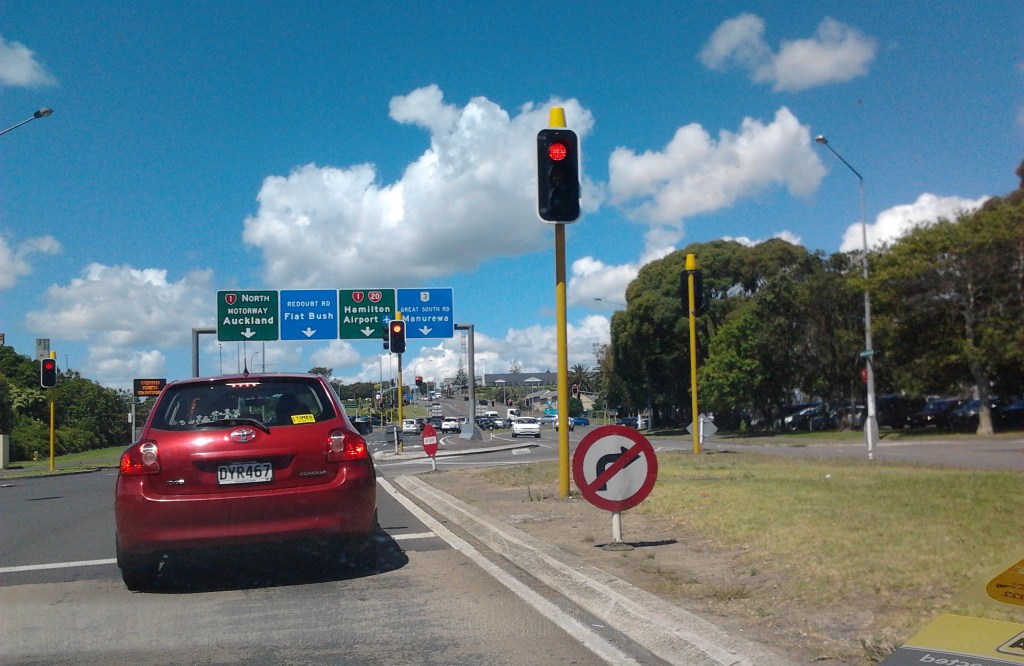
Time to Restore the People to Auckland But also maintain efficiency Long story short we know Auckland and its current urban design and transport planning policies are straight out … Continue reading What Speed Should Our Roads Be?
I caught on Twitter yesterday this from Campbell Live:
So cue watching Campbell live for the cycling clip and article which you see here below
Future plans for Auckland cycleways announced
By Lachlan Forsyth Thursday 30 Jan 2014 7:13p.m.
Auckland Mayor Len Brown and Campbell Live reporter Lachlan Forsyth took on Auckland’s traffic this afternoon to discuss the future plans for Auckland’s cycleways.
“We’re doing around 1000km of cycle pedestrian way, we want to do that over 30 years,” says Mr Brown.
Figures from Lobby group Gen Zero suggest Auckland’s per capita investment in cycling is woeful – $5.70 compared to Dunedin’s $14.90 and Wellington’s $21. At $37, Christchurch spends more than seven times as much.
“We have not been spending enough and we will be looking to spend more, reflecting a sentiment amongst Aucklanders that we really need to have the options up,” says Mr Brown.
The Mayor has stated that he wants a higher prioritisation of cycling projects against other transport initiatives, the construction of Skypath, and a $900 million 1000 km cycle network completed over the next 30 years.
Auckland Transport already has an annual budget of $1.1 billion, overseeing more than 7000km of road.The Skypath is a much needed link for pedestrians and cyclists over the Harbour Bridge, but Mr Brown says a final decision will be made in the next few months.
“It really depends on how we go with our discussions with the Northcote community and St Mary’s Bay community.”
One problem that cyclists often come across is traffic lights not registering them. This means the lights stay red unless a car comes along.
…
Long story short it is material already covered before and unless the 2015 Long Term Plan changes the funding allocation (discussion on the LTP is later this year) we will be maintaining the status quo in building cycling infrastructure. That said I have noticed the South Auckland Local Boards being proactive with adding more cycling infrastructure ranging from the green paint, to shared paths, to even the odd dedicated cycle path, to improving intersection crossings. While it is mainly remedial works to improve existing areas none the less the respective Local Boards seem to be doing more than other areas in Auckland.
Most recent piece of remedial works was here in Manukau (I’ll get pictures when next down there)
And some examples of cycling infrastructure that is already in place and being added to over time
What does limit the Local Boards doing more is the piddly budgets they get from the main Council to carry out these kind of beneficial tasks. Sadly this 2014/2015 Annual Plan and possibly the 2015 Long Term Plan will see Local Boards get no more money to the point they could be facing cuts to their budgets. Rather unacceptable in my eyes as the Local Boards are more responsive than the Governing Body in tending to local beneficial projects…
Finally I noted on Campbell Live this:
To which I say it is time for the redux here: Cycling Accident Leaves Larger Questions To Be Answered
Some solutions that are short, medium and long term were all provided as examples.
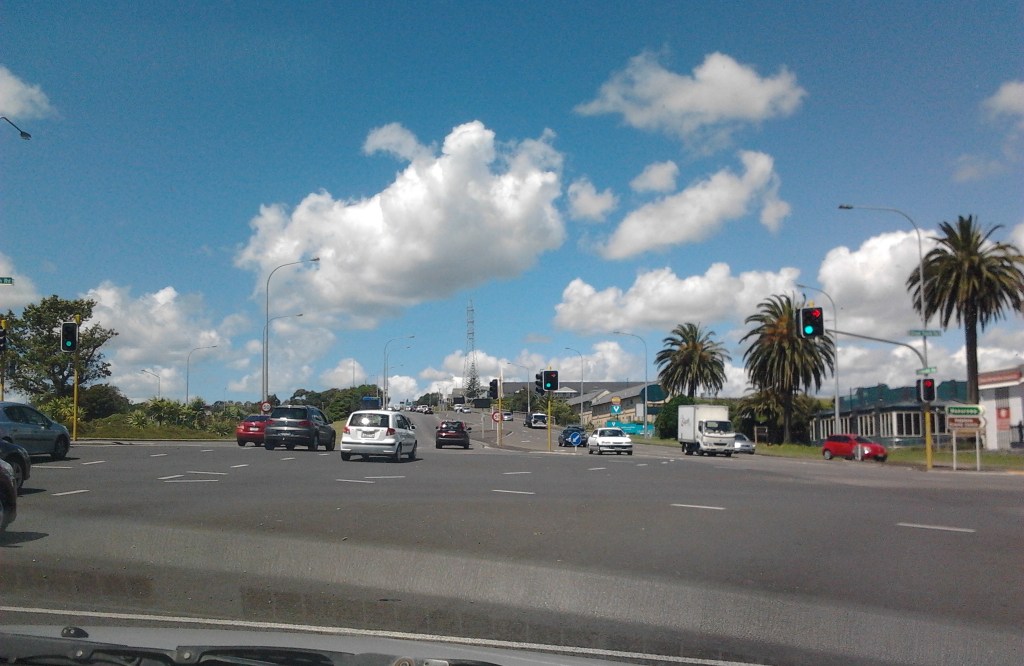
Exciting Times Ahead And a Reminder on the Unitary Plan The media was full of positive stories on Auckland and the wider economy this morning. This shows increased confidence … Continue reading Happenings in Auckland
 Talking Southern Auckland