One thing that use to irk me about the bi-annual inorganic collections: the area looking worse than a standard tip.
Well Auckland Council will be adopting what Waitakere City Council did pre-Super City in that inorganic’s on the berm-side will be dumped as of next year and replaced with a pay-and-pick-up scheme.
Sorting through other people’s trash for possible treasures will soon be history.
Inorganic collections – long adored by bargain hunters and despised by berm lovers – are being chucked out. The Auckland Council is introducing major changes, which include ending the roadside collections and setting up 30 community recycling hubs around the city.
From July 1 next year Aucklanders will call the council to arrange pick-ups from their yards.
The council’s solid waste manager, Ian Stupple, said a trial of the system in Howick and Pakuranga late last year found half the waste bound for landfill could be re-used or recycled.
“At the moment it’s a mess. The waste is scattered all over the berms and it’s potentially dangerous for the operators.
“This way it will be a lot safer and the material will be in a much better condition and easier to collect.”
The centres would be set over the next 20 years.
Stupple said people would be able to drop off their unwanted items and scratch around the sales yard for treasures.
There may even be coffee shops at some of the centres.
“So it’s almost a community facility like a leisure centre or a library where people would hopefully be attracted to go to on a regular basis.”
The facilities, run by private operators or community groups, would create job and training opportunities, Stupple said.
…
Switch saves expensive clean-ups
Western wards in Auckland ditched kerbside inorganic collections in 2009 and introduced $25 home pick-ups.
Speaking while doing collections in Te Atatu, contractor Lance Goodwin said both systems had benefits but collecting from within properties was better.
…
I gather there would be a token fee to drop your stuff off at the Community Recycling Hubs. That said providing the fee was not prohibitive I would be using the hubs in place of the bi-annual dump on the kerb while having a nosy around from those second-hand goods or picking up some compost (if green waste is processed and sold at the hub).
Would this new scheme cause a spike in illegal dumping? Possible so enforcement will need to be strengthened to deter this much as possible.
I have noted a Herald article about Auckland metro rail passenger numbers at record levels while ferry numbers are dipping (it will be the fares) this morning. Check “Rail clips the ticket as ferry trips fall away” for more on that story.
Tauranga to Auckland by Rail?
Before the last Labour Government (1999-2008) ditched the service the Silver Fern rail car use to run a daily service between Tauranga and Auckland that would take around 3.5 hours each way. As a kid I use to catch it when holidaying with my grandparents who reside in Tauranga and the trip wasn’t that bad – even though it took an hour longer than going by car.
There have been numerous attempts since the service was scrapped to reinstate the service but the infrastructure investment alone would be costly to allow dual freight/passenger running again. None-the-less a new attempt via a study is being pushed to reinstate the inter-city rail service.
Posted at 7:01am Sunday 30 Mar, 2014 | By Luke Balvert luke@thesun.co.nz
The re-instatement of a passenger train between Tauranga and Auckland continues to gain strong interest from a group of city firms currently shelling out more than $100,000 a week on commuting costs.
A Priority One study investigated 37 targeted corporates and other businesses in Tauranga and the Western Bay of Plenty to find what their inter-city travel requirements, practices and costs are and whether they would be interested in the concept of commuting by rail.
Corporates and businesses commuting the most include Zespri International, BECA, Comvita, Sharp Tudhope and Bay of Plenty Polytechnic.
Travelling by road means several hours of unproductive time, while flying can be costly and still requires a trip into the city from the airport – both expensive and time consuming.
Together the 37 firms currently spend $104,558 in travel costs and staff time on weekly commutes, including $71,550 in unproductive staff time, $23,408 in driving mileage and $9600 in air travel, including taxi fares.
Priority One project manager Annie Hill says in the last few years interest has been generated in reinstating the passenger train service, with firms supportive to align with business needs in Auckland.
Of those that travel at least once a week to Auckland, 88 per cent say they would consider using the service. But they note the service would need to be faster than driving, have wi-fi capabilities, not be too expensive, and have reasonable departure times to suit business needs.
…..
So we have a problem and that is the inter-city commute between Auckland and Tauranga. Passenger rail between Auckland and Tauranga could work but as it was noted in red: “the service would need to be faster than driving, have wi-fi capabilities, not be too expensive, and have reasonable departure times to suit business needs.“
So the infrastructure (tracks, signals, points and eventually rolling stock) will need to be brought up to scratch before even attempting to run passenger rail between the two cities again.
Annie says despite the survey, giving New Zealand Transport Agency via SmartGrowth an economic viewpoint on the cost, the chances of a commuter service are very slim in the next 20-30 years as the rail lines do not have the capacity.
With freight rail the current priority, the rail service would need a significant upgrade to accommodate a fast passenger service, says Annie.
Yep that is the case with the current set up of the lines at the moment. To get a viable passenger service between Auckland and Tauranga you would need to do the following upgrades first:
The third main between Westfield and Pukekohe
Double tracking between Pukekohe and Hamilton
More passing loops between Hamilton and Tauranga with possible full double tracking in 30-years
Reinstatement of Tauranga Station which would need to be on its own loop away from main line to allow freight trains to continue to move unimpeded
Rolling stock to support three services a day in each direction between Tauranga and Papakura (you would transfer to an EMU to continue the trip north)
All this would take time and considerable investment. But with increasing freight trains to Hamilton and Tauranga from Auckland you could tie the investment in double/triple tracking plus more passing loops with freight as well as wanting passenger services as well. This would make investment in the rail system more viable. And with plans afoot around growth (residential and industrial) in the Golden Triangle (Auckland-Hamilton-Tauranga) that is to occur over the next 40-50 years, passenger rail between Auckland (Papakura) and Tauranga is certainly not dead.
24 months late but finally here It has taken around two years to recover from the previous peak of 10.8 million rail (we suffered a sustained dip after that peak) … Continue reading 11 Million Rail Passenger Trips
Scrapping over funding bores me while the Unitary Plan sparks more interest (no I am not dissing the rescue helicopter service either but I don’t believe in over-cooking the story either) and is not being covered well.
So today I will be Tweeting Live from the Budget Committee at 1:30pm from Town Hall on the proceedings. My Twitter handle is @BenRoss_AKL and full report will be posted in the morning.
Full Unitary Plan Hearings Cost $28.4 million Yesterday in my “Governing Body and Budget Committee Agenda’s Out” post I had pointed out that the Unitary Plan Hearings Panel is budgeted … Continue reading Price of our Democracy?
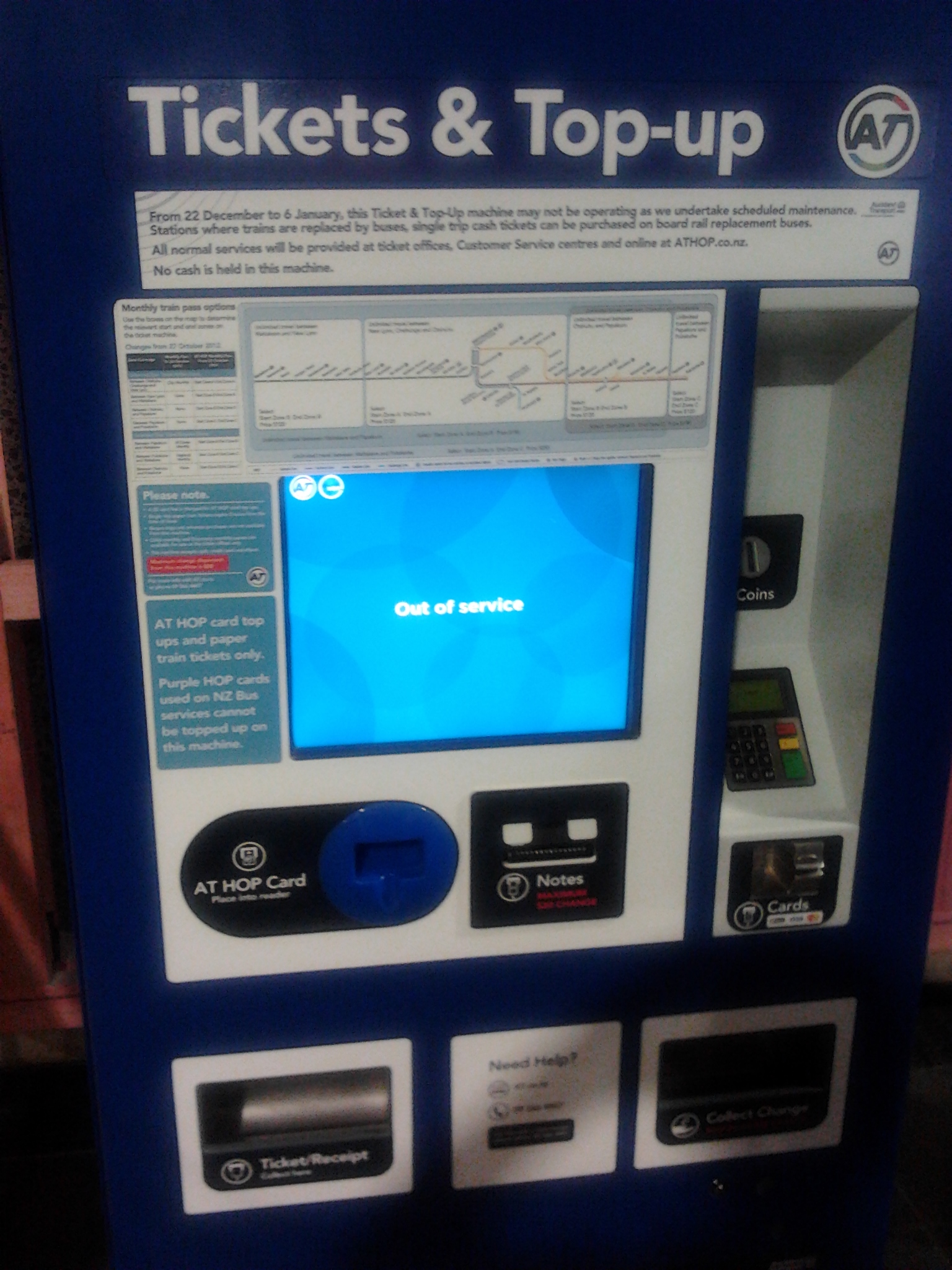
Yes the sole machine was out of order, however tech support had been notified 10mins earlier
Like Transport Blog (Celebration time, HOP Rollout Complete) congratulate and note the completion of the AT HOP roll out that is now completed. The journey has been very bumpy with all sorts of set backs and stories running around all over the place. In a sense of irony Talking Auckland (through its first inception View of Auckland) was partially founded in reaction to the AT-HOP and Snapper disasters at the time back in 2011. But today a moment to reflect, note, congratulate and celebrate that this roll out of this “universal” Public Transport smart card is complete.
Auckland Transport has completed the rollout of AT HOP, its reusable pre-pay smart card for travel on trains, ferries and buses.
There are currently more than 250,000 AT HOP cards being regularly used by customers around the region.
AT HOP allows customers to use one travel card on different modes of transport and public transport operators.
The card was first introduced on the region’s rail network in October 2012 and has been progressively rolled out since then.
Auckland Transport chairman, Dr Lester Levy, says it is significant for further developing public transport in New Zealand’s largest city. He says the rate at which public transport users have taken to the new system so far bodes well for on-going patronage growth.
“Other transformational projects such as the fleet of new electric trains, improved reliability of all services and a major focus on customer needs and satisfaction levels are other vital elements in delivering a world class public transport system,” he says.
Auckland mayor Len Brown is a regular user of public transport and also acknowledges what a significant milestone completion of the AT HOP rollout is. “The transformation of Auckland’s public transport system is well and truly underway, and the completion of the AT HOP rollout is a critical part of that,” he says.
“I want to congratulate Auckland Transport for delivering this project in such an effective and timely way.”
The project has been delivered in partnership with the New Zealand Transport Agency (NZTA).
Dave Brash, the New Zealand Transport Agency’s group manager of Planning and Investment, congratulates the Auckland Transport-led team on the successful introduction of integrated ticketing into Auckland.
“Making public transport easier and more attractive for people is a key priority for NZTA. So, after seven years of development, and a $73 million investment from the national land transport fund, we’re pleased with the resulting sophisticated platform, underpinned by a national ticketing standard that could support integrated ticketing systems across the country.”
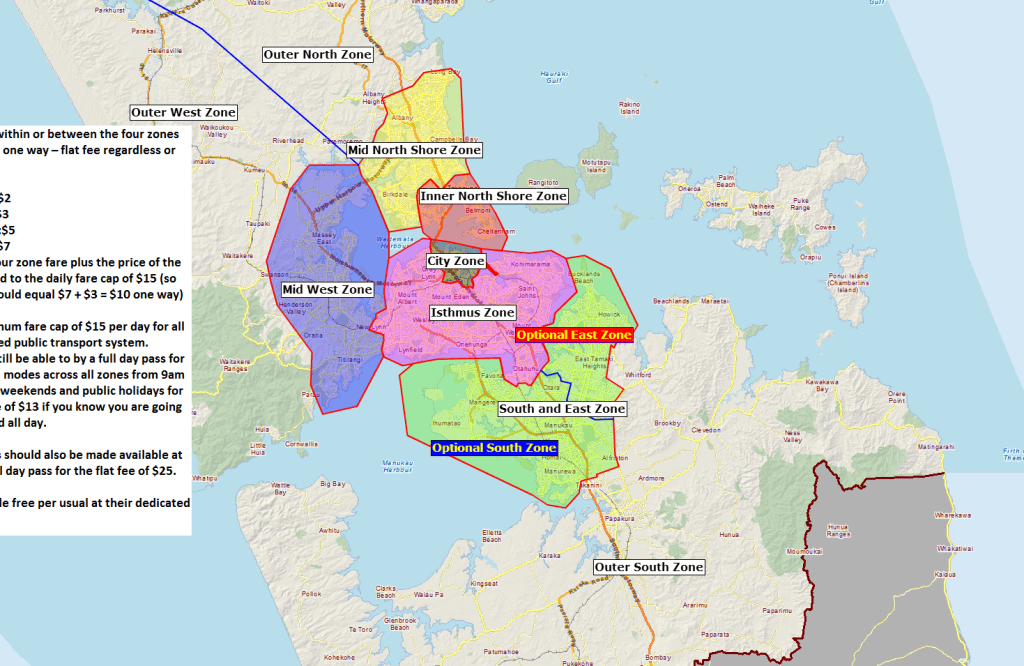
I use my HOP card when ever I travel on the train, bus or ferry and I personally enjoy using it with little issue. I detest carrying cash in the 21st Century so AT HOP just makes my life that much more easier when using the public transport system. Integrated Fares are on the way as Auckland Transport works through that and the service tenders (Rail starts next month) will no doubt have Integrated Fare provisions included for our public transport operators. If AT extends the HOP card to their parking buildings as a form of payment as well as one day maybe their Park-n-Rides that would be an extra one up for me (I know they can not start with using AT-HOP for parking yet until the IRD changes its treatment with HOP post June 2015, but we might as well get the ball rolling now in planning). Further more we also have the roll out of the new South Auckland Bus Network starting next year in which all-in-all makes public transport just that much more attractive.
We still have a long way to go with things like the City Rail Link, the Manukau South Link, Pukekohe Electrification, more bus-ways, ridding us of paper tickets for something more robust like Sydney’s card tickets and so on. But lets put that to one side today, this week and take a moment, a reflection of the fact Auckland now has a universal public transport smart card.
I tip my hat and give congratulations to Dr Lester Levy and Auckland Transport with AT-HOP as an integrated ticketing scheme now fully complete.

 Talking Southern Auckland