Tag: Molten Salt Thorium Nuclear Reactor

Thorium Power 101

A straight forward look at the next generation clean mass power generation


I saw this video link from TVNZ last night (of all places) on Thorium nuclear power generation.

The Wikipedia article around Molten Salt Reactors which use the Thorium fuel cycle can be seen here: http://en.wikipedia.org/wiki/Molten_salt_reactor


The diagram of a Thorium Molten Salt Reactor for medium and large-scale nuclear power generation operations can be seen in the graphic below:

Source: http://upload.wikimedia.org/wikipedia/commons/thumb/0/08/Molten_Salt_Reactor.svg/2000px-Molten_Salt_Reactor.svg.png


I do recommend watching the video which is around 33 minutes long.


While New Zealand is too small for Thorium nuclear power (although you can make the reactor small enough to fit in a sea container thus portable) and Australia would be the smallest industrial country able to handle a full-scale operation (two reactors each producing 1 Gigawatt (Huntly Coal/Gas fire station produces 1.385 GW when all four boilers and the E3 plant are going full power)) countries like: Germany, USA, UK, Russia, China, and India are best suited for Thorium power. 

I do believe Thorium nuclear is part of the solution for a suite of options for both the next stage of power generation away from fossil fuels and conventional uranium nuclear reactor, and trying not to dump all this crap into the atmosphere.

One of the main advantages of Thorium is that the waste can not be used to produce nuclear and thermonuclear (the H-Bomb) weapons. So that sorts the proliferation issue. Also it is believed Thorium reactors can not meltdown like their uranium/plutonium counterparts owing to the physics around the reaction of Thorium. MSR’s are liquid fuel reactors (rather than solid fuel in conventional reactors) that has the fuel intermixed with the coolant. In the case of a “situation” you cut off the fuel/coolant supply to the reactor while dumping the rest of the material already inside the reactor into dump tanks and that is it. No reaction, very little if any latent heat (that even shut down conventional reactors still need to deal with produced from what becomes inert Thorium). As it says in the video to keep a Thorium reactor going you need to constantly add fuel to keep it going (like a fire) while with Uranium you constantly need to keep on top of to stop it racing away even when it is in shut down state inside a nuclear reactor.


So does Thorium have a future in power generation?

From the Americans the answer is at the moment no (check the video) owing to the defence-industrial complex around conventional reactors (see bit about the how the US Navy wanting a reactor design for their subs back in the 50’s) and being able to produce fuel for their nuclear weapon program.

From other countries like China, India and the UK the answer is yes. China is working on MSR thorium type reactors (both solid and the more preferred liquid types) with 2017 a target date for getting an experimental MSR reactor ready for tests before they expand into commercial operation. India which also has some of the largest Thorium deposits in the world is looking at Thorium nuclear generation  as the country continues to industrialise and suffers from extensive power blackouts currently.


Lets see where we go with this. Hopefully a bright clean future.


China and India Developing Thorium Power Generation

The Nuke  – Part of the Future Tool Kit


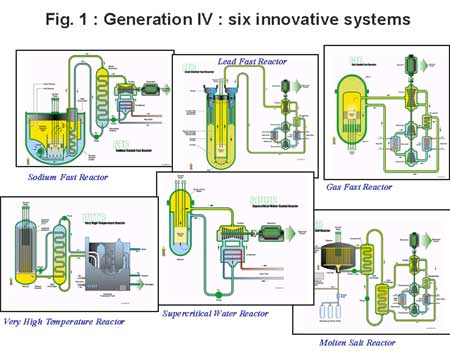
Last year I wrote a post on what is known as Generation IV nuclear power generation and the potential benefits it could deliver to an ever energy-hungry world. You can see the post here: Generation IV Nuclear Power

Earlier this month The Economist released its own article on Thorium based nuclear power with it reporting on India and China making the biggest strides as they both try to meet their ever-growing energy demands (without having to revert to coal or gas-fired generation).

From The Economist:

Thorium reactors

Asgard’s fire

Thorium, an element named after the Norse god of thunder, may soon contribute to the world’s electricity supply

Apr 12th 2014 | From the print edition

WELL begun; half done. That proverb—or, rather, its obverse—encapsulates the problems which have dogged civil nuclear power since its inception. Atomic energy is seen by many, and with reason, as the misbegotten stepchild of the world’s atom-bomb programmes: ill begun and badly done. But a clean slate is a wonderful thing. And that might soon be provided by two of the world’s rising industrial powers, India and China, whose demand for energy is leading them to look at the idea of building reactors that run on thorium.

Existing reactors use uranium or plutonium—the stuff of bombs. Uranium reactors need the same fuel-enrichment technology that bomb-makers employ, and can thus give cover for clandestine weapons programmes. Plutonium is made from unenriched uranium in reactors whose purpose can easily be switched to bomb-making. Thorium, though, is hard to turn into a bomb; not impossible, but sufficiently uninviting a prospect that America axed thorium research in the 1970s. It is also three or four times as abundant as uranium. In a world where nuclear energy was a primary goal of research, rather than a military spin-off, it would certainly look worthy of investigation. And it is, indeed, being investigated.

India has abundant thorium reserves, and the country’s nuclear-power programme, which is intended, eventually, to supply a quarter of the country’s electricity (up from 3% at the moment), plans to use these for fuel. This will take time. The Indira Gandhi Centre for Atomic Research already runs a small research reactor in Kalpakkam, Tamil Nadu, and the Bhabha Atomic Research Centre in Mumbai plans to follow this up with a thorium-powered heavy-water reactor that will, it hopes, be ready early next decade.

China’s thorium programme looks bigger. The Chinese Academy of Sciences claims the country now has “the world’s largest national effort on thorium”, employing a team of 430 scientists and engineers, a number planned to rise to 750 by 2015. This team, moreover, is headed by Jiang Mianheng, an engineering graduate of Drexel University in the United States who is the son of China’s former leader, Jiang Zemin (himself an engineer). Some may question whether Mr Jiang got his job strictly on merit. His appointment, though, does suggest the project has political clout. The team plan to fire up a prototype thorium reactor in 2015. Like India’s, this will use solid fuel. But by 2017 the Shanghai Institute of Applied Physics expects to have one that uses a trickier but better fuel, molten thorium fluoride.

…..

Molten Thorium Fluoride otherwise known as the Liquid Fluoride Thorium Reactor – a form of the Molten Salt Reactor design. More on the LFTR type of reactor can be found HERE with a basic design of such a reactor below:

Source: http://upload.wikimedia.org/wikipedia/commons/thumb/0/08/Molten_Salt_Reactor.svg/1000px-Molten_Salt_Reactor.svg.png


The rest of The Economist article carries on listing the benefits and challenges of Thorium based power. I noted in the Wikipedia article that Thorium based nuclear energy could even be used for what is known as nuclear desalination (using nuclear energy to turn sea-water into fresh water). Nuclear desalination already happens on a limited scale and you can read about it HERE. In a sense of irony the late Gerry Anderson’s ‘Thunderbirds’ had an episode (one of my favourites) called the Mighty Atom where in 2065 the Australians and later north Africans used nuclear energy to turn sea water into fresh water for use of irrigation in the Earth’s deserts (most likely to address the growing food shortage in that era). However, the arch-villain The Hood had accidentally set off a chain of events that destroyed the Australian atomic irrigation station (nearly poisoning Melbourne on the way), while a year later committed a deliberate act of sabotage to the Saharan atomic irrigation station to attract out International Rescue who would go on saving the station.


Cult classics aside, nuclear energy was once touted as a large-scale replacement to fossil fuel power generation for large industrialised or industrialising accidents. However, convention nuclear power (that uses uranium and plutonium) has suffered a series of critical set backs (three major meltdowns) that will never allow it to be as widespread as once promised in the 1960’s. But we can also not continue to increase our waste gas emissions from increasing fossil fuel use as the world economy (well) splutters forward. Solar and wind are good for micro and localised uses while hydro meets resistance owing to dams changing the ecology of the river being dam-ed (or damned). Thorium-based power could give an answer to our large industrial and industrialising countries that is clean and goes some distance in weaning that country off fossil fuel based power generation. India and China see the potential so it is hoped that other nations including the Americans (who bottled the technology effectively in the 60’s when they realised Thorium reactors could not produce nuclear weapon fuel for their Cold War “efforts”). And as fresh water becomes more scarce, nuclear desalination could provide assistance in turning sea-water into potable water for both drinking and irrigation.


And for those Thunderbird fans out there here is Part One of The Mighty Atom (and yes it has that line: “The REACTOR is under the complete control of the project staff – nothing CAN GO WRONG……):