Stupidity Always Wins A pet peeve of mine is how useless our road engineers are in Auckland. Why? Because for the life of them they can not get … Continue reading Pedestrian Vs Car
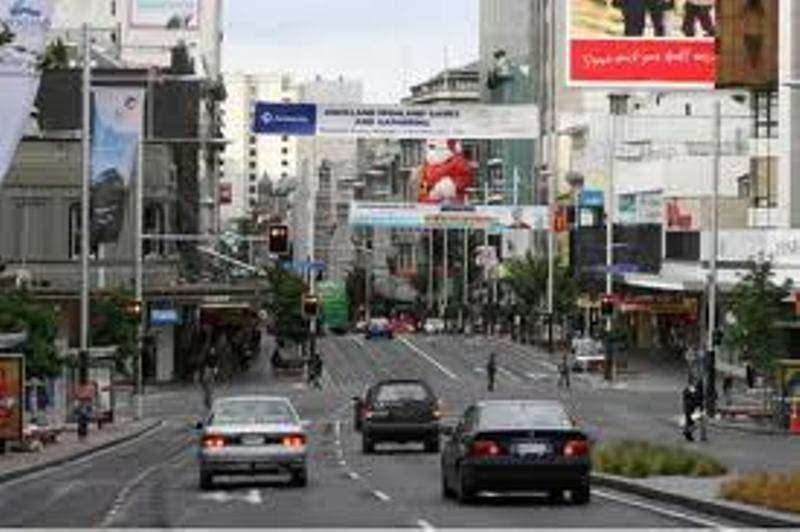
Stupidity Always Wins A pet peeve of mine is how useless our road engineers are in Auckland. Why? Because for the life of them they can not get … Continue reading Pedestrian Vs Car
No I am not kidding – the mayor Len Brown DID get left behind forcing the ferry to turn around to come and get him after he was caught gas bagging and forgot to catch the service.
From TVNZ
New Hobsonville Pt ferry service launched
For the first time in 50 years Auckland City has funded new ferry terminals in a bid to get commuters off the roads and onto the water.
A new ferry service was launched today and will connect the suburbs of Hobsonville and Beach Haven with downtown Auckland. Two morning and three afternoon services will run on weekdays.
The trips will take 30 minutes and cost $12 a ride for those paying cash, and less for those with an Auckland Transport Hop card.
Hundreds of people gathered to see the launch. The first passengers were Auckland Mayor Len Brown and Prime Minister John Key.
From downtown Auckland the ferry travels west on a scenic journey across the Waitemata Harbour.
“It’s gorgeous,” said Key.
“What you take for granted when you live in Auckland is just how beautiful the surroundings are, and you get a completely different perspective from the water. Can’t think of a nicer way to start the day,” the Helensville MP said.
The boat stops at the North Shore suburb of Beach Haven and then it’s just 400 metres across the water to Hobsonville, a trip the mayor nearly missed out on when the boat left without him
…
DOH!
A Radio NZ piece has also come up on the new ferry service this morning that is worth a listen. You can listen by click the link HERE.
Two things that did catch my attention were the following:
While I have confidence these ferry services will take off and be a success (got to get more sailings in) the concerns noted above won’t help gaining full confidence when there is so much work to get through in getting this right.
A good and basic system has started with this new ferry service, but the inner mechanics in AT when it comes to things like subsidies, competition and lack of facilities on existing services need to be ironed out before things can advance to a first class system.
I (well someone will) keep an eye on this and see where things ends up 12 months from now…
A good start and with full potential to become something great. As Louis said need to work on Zonal and Cheaper Fares to get this work better
(as of off peak – one step at a time)
Some feedback from a reader (who has asked to remain anonymous which BR:AKL will do as requested) on their experience with our rail system down at Britomart over the recent Auckland Anniversary Weekend:
Made a big mistake yesterday. I showed some international investors around the waterfront yesterday knowing it would be vibrant with Anniversary day regatta on. All was well until they wanted to go see our train station (which was Britomart). What a “disaster” that turned out to be.
They stood there for about 5-10min taking it all in, watching as the same people were at the ticket box with one person working (at that particular ticket box (The station platform level one on the other side of the gates where the “Onboard Fare is usually paid)) trying to sort something out for five minutes. As a result people were coming and going from the waiting queue annoyed.
The investors were not impressed at all and said that what they seen of Auckland doesn’t impress them as a viable city to invest in. They said love the wide open spaces, weather etc. but just doesn’t stack up as commercially viable.
While I am here: Every time I go into Station Square in Newmarket to show potential investors/tenants the vacant shops I pray there are humans (besides the unemployed and school kids hanging around during school hours I might pray but the poor tenants are mental wrecks waiting for the last four years for the trains to arrive every thee minutes and what was it like 17,000 people using that station.
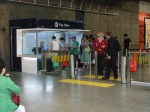
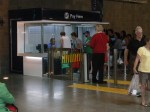
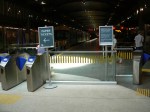
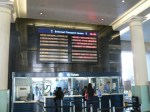
Well after another anonymous reader fed to the blog some statistics from the Anniversary Weekend I am not surprised that our friend above was rather disheartened and the investors spooked off.
The statistics I am referring to is how many Rail Ticket Machines had some kind of fault in them. 37 faults on 31 machines out of an approximate total of 57 rail ticket machines across the Auckland rail network over the long weekend. The faults can range from:
So 31 out of 57 machines had either one or more of the above listed faults in the weekend. To make it worse, if you call it in to the AT-HOP help desk the technician won’t come until Tuesday to “fix” the issue (I kid you not).
Now to make life harder, those with AT-HOP cards who would tag on and off like I do when travelling by train would have faced numerous tagging posts “offline” meaning you need to go find another tag post. I knew of a couple of stations (I went travelling on the train in the weekend “exploring”) that had two out of three of their tag posts offline. Again call it into AT-HOP help desk and the technician comes out Tuesday.
What on earth happened over the Anniversary weekend when Auckland had all the tourists in. I thought we were meant to make our good train system that – good; not bloody difficult and spooking off people.
Groan – the amount of work to advance the good system into an Advanced First-Class system just keeps piling up and up and up with no light at the end of the tunnel.
Come on guys – I know you can do better 😦
Over the last year advancements have been made on Auckland‘s heavy rail system (for both passengers and freight). BR:AKL has been following developments as Auckland’s rail continue to grow and evolve through the 21st Century. With the next step of the City Rail Link under way – that is the Notice of Requirements (protecting the land route for the CRL); BR:AKL takes a quick look back at some rail posts, in particular the operational model post CRL but pre North Shore Line, and The North Shore Line herself.
Operational Models – An Alternative Proposal Post CRL, but pre North Shore Line (thus far)
THE PROPOSAL After seeing one or two particular proposals for CRL Timetable and/or Operations (that is how passenger trains would run along the Auckland Rail Metro Network) I thought to myself if I could come up with my own proposal.
THE CRL TIMETABLE/OPERATION FREQUENCY PLAN
With the baseline operation plan laid out (so basically one train an hour on each of the three lines in each direction) it was time to ramp the frequencies up to acceptable standards
POTENTIAL PASSENGER CAPACITY ON POST CRL RAIL NETWORK So far in my City Rail Link Timetable and Operation Plan Proposal I have covered the foundation of my proposal on passenger train operations and frequencies once the $3.6b (Rail Fallacy applying of course) CRL was opened and under way. You can get a full recap at my CRL TIMETABLE AND OPERATION PLAN – PART TWO post. In this post I build upon the proposed frequencies from Part Two and apply what potential capacity the Auckland Passenger Rail network could have post CRL. Now remember as of current in my proposals I have three lines of operation – they are: …
Parts Four and Five have been in the pipeline since Part Three and should be up for “publishing” sometime in February (Part Five as soon as the RPTP is finalised). Part Four would look at a Manukau to New Lynn “shuttle” via Glen Innes and Britomart as well as preparing for the Manukau (Rail) South Link) with Part Five looking at a dummy timetable post CRL but factoring in any changes with the Regional Public Transport Plan. The CRL Timetable and Operational Plan series will be used in lobbying and advocacy once Auckland Transport starts drawing up proposed operation plans for the trains once the CRL is operational.
As for the North Shore Line two posts were dedicated to this crucial project as well as mentions in submissions to The Auckland Plan:
Could We See Rail on The North Shore?
…one thing has struck me – well two actually:
- No mention of The North Shore Line (which crosses the City Rail Link at Aotea Station)
- No apparent future proofing of Aotea Station for The North Shore Line when it gets built (that is when not if folks)
…
Including aspects of The North Shore Line are crucial as part of connecting “all” of (metro) Auckland to the rail system. Both North Shore Line posts spell out the importance of the CRL as well as The North Shore Line. As time goes on I will write-up a Timetable and Operation Plan – Post North Shore Line with all the lines built and what such a timetable could look like for Auckland.
So interesting and exciting times ahead as advancements in one aspect of Auckland’s Fully Integrated Transport System (or Suite) continue slowly but surely.
[All City Rail Link posts can be found by typing “City Rail Link Debate” into blog search box]
This morning while reading the morning Facebook comments (politicians and councillors are usually online making their statements for the start of the day) I saw this from Councillor Cameron Brewer in regards to CBD parking:
Cameron Brewer shared a link.
Don’t ever say I’m never nice nor helpful: ‘Mr Brewer, chairman of the Business Advisory Panel, said the council had “done well” to reduce its charges in its three main parking buildings in the central city.’
My friend Alex Swney in the CBD is hoping the private car parking providers will follow suit. In the meantime it’s much cheaper to use council’s Civic, Downtown, and Victoria Street car-parks. That’s my public service announcement for the day…
The article in question from the NZ Herald was this one: Big cities mean big parking bills
As a result I packed the following quip:
Mr Ryan has hit it right on the money – and it is the truth – not that Transport Blog would ever recognise it:
“”The reality is that until Auckland’s public transport services are improved, motor vehicles shall still pour into the city each morning at increasing rates, and these commuters do need to be catered for – and that’s where the private parking companies have a significant role to play.”
That spawned off a few questions in Twitter and Facebook while I was away in Manukau however in reply I posted the following over at ATB’s “The cost of parking:”
Devils advocate time 😀
Popping my head in here after my Twitter and Facebook remarks I would have to be somewhat “brave.” However while I shall reply to my remarks sometime today (or tomorrow) – actually no I can answer it right here below and it seems to (in my eyes) reinforce the point I made that caught the attention of a few here.
I have noticed the quotes quoted above but the most prominent one has been missed – which was a statement from Mr Ryan which gives further weight to the argument of his quoted above:
“”The reality is that until Auckland’s public transport services are improved, motor vehicles shall still pour into the city each morning at increasing rates, and these commuters do need to be catered for – and that’s where the private parking companies have a significant role to play.”
Whether increasing rates or not is playing around with statistics and something I am not interested in for this part of the debate. Mr Ryan has stated (could be that it is an admission) what is basically the truth of the current situation we face in the CBD. Heck I can vouch for that on more than one occasion both when working for a public transport company (now self-employed) or having to go to the CBD for say the Unitary Plan forums last year.
With work in a particular transport company, the position I was in often required me to start or finish outside of public transport hours, so that meant having my parking paid for and a trip in and out of the CBD from Papakura.
The other case was The Unitary Plan forums last year at Town Hall. I had a choice; train or car. I took the car from Papakura to the CBD, parked, attended the forums and went back home again. Why? Because I am a liberal and “operate” in a way that is sensitive to price and time considerations against me. That means I will choose an option that is the least expensive, the most efficient, the easiest to complete, and most efficient in relation to time spent travelling – when about to undertake my travels.
And so all costs (including time and money) considered it was the car that was used as it filled the criteria above when making my travels (and no I don’t like being coerced either into one option when it is more expensive than the other)
So that meant travelling up and down State Highway One and parking in the AT Civic Parking Building – because to use the train took double the time and 1.3x the cost as it would have by car (and also I think the main forum was on a Saturday which drops the trains to Papakura every half hour to boot)
So I can clearly hear what Mr Ryan is saying in his: “”The reality is that until Auckland’s public transport services are improved, motor vehicles shall still pour into the city each morning at increasing rates, and these commuters do need to be catered for – and that’s where the private parking companies have a significant role to play.” remarks.He knows and I know that until P/T is improved (and yes I would assume safely that he knows it is being improved constantly) this is the reality of the situation.
So basically I re-highlighted Mr Ryan’s statement on P/T and parking buildings as well as the “logic” I use when deciding to make trips in this case the CBD but also when travelling through wider Auckland. The logic was simple; price and time and which was better when choosing between private and public transport.
After that I went for the full comprehensive argument in regards to the transit situation:
If you want me to extend this argument to a more fuller comprehensive situation then lets look at a few comments in Facebook
Again in regards to Cameron Brewers remarks and link to THAT Herald article
We paid $24 for just over an hour, at the parking building across from the gallery. Yes, we could have taken the train in – but the Orakei car park is full by 0800. Incidentally, one of the reason’s Liability Len’s inner city loop will fail to achieve the necessary patronage is the lack of suburban car parks.
Yep – can vouch for that when the Papakura Park and Ride is full.However this comment lead me to this which has obviously caught the attention of a few here via Twitter and Facebook
That is correct —-. The rail situation is compounded by the following (and excuse me if I am repeating)
1) Lack of Park and Rides especially at the big stations
2) Lack of feeder buses
3) Lack of cycle lockers
4) Stations in the wrong placeNow all this I am trying to bring to AT’s attention next week at the RPTP hearings (wish me luck there) but until then what Mr Ryan said is true and absolute reality
Mr Ryan has hit it right on the money – and it is the truth – not that Transport Blog would ever recognise it:
“”The reality is that until Auckland’s public transport services are improved, motor vehicles shall still pour into the city each morning at increasing rates, and these commuters do need to be catered for – and that’s where the private parking companies have a significant role to play.”The article can be found here: http://www.nzherald.co.nz/nz/news/article.cfm?c_id=1&objectid=10861778
You can figure out what would have caught the attention from the above remark (which was made before the post here went up).If you are trying to understand the “logic” in the quip then sorry not going to explain here – catch up over a coffee, soy latte or an iced drink if you want to understand me and it.
However to me and others I share conversations with it shows the situation which Mr Ryan has stated but Transport Blog did not pick up on (and if so not well enough). This is especially that one could interpret Mr Ryan’s remarks on a read between the lines support in getting p/t to be better (and most likely (if fleshed out fully) as part of a fully integrated transport system – public and private)
Look I would love for the CBD to be free of parking buildings but our P/T system has a very long way to go before that could either be viable. So for now and to me – CBD parking buildings – the necessary “evil”
So basically we have the following:
And I will use a car if it is more efficient in time and money compared to the nearest public transport option okay? As I said I am a (social) liberal and am sensitive to time, price and efficiency considerations; thus if private transport meets my travelling criteria OVER public transport – then so be it. This is why (and said above) I advocate for a fully integrated transport system catering to both public and private transport options – because I know and experience the reality of the situation and sympathise with other citizens in the same boat as me (which might be the bulk of Auckland).
However some (as I do use and will advocate for private transport (as well as public transport)) case me off as the villain due to that (private transport) use and advocacy. As if I care about them. My care is to the citizens and visitors of Auckland and having the full suite of private and public transport options available to them. It is why I advocate the split and private/public integration. And as am example all things considered with Port of Auckland staying put for now I advocate for: The Eastern Highway but; in the same regard advocate for the North Shore, Botany, Airport and South West (Rail) Lines as part of the full integrated transport suite. Oh and as for the Second Harbour Crossing, that would be heavy rail only tunnels – for now.
Also working with politicians on both sides is a must and something I strive to do – both at Central and Local Government Level as it is also a must in getting Auckland moving (forward).
And so this blog will continue to push on
Note: It has been brought to my attention that BR:AKL focuses heavy on rail in public transport commentary. That would be true having worked in the industry (passenger metro rail). However the lines are “open” for a bus “person” to contribute to the blog, contact me at view.of.auckland@gmail.com
After watching some proverbial spankings being handed out (mainly one way) after WO’s Rail Patronage post, I sifted through the comments and plucked out a common trend that came from the comments. Now I conveyed these comments to an academic and he told me we do (which I know) have an anomaly in our public transport system that gives rise to the common trend. Now how this ties in with Good System and First Class System is a good question. The answer is it “does” because while we have a “good” basic passenger metro rail system in position, this anomaly which is caused by ideology (and nothing else) causes people to lose confidence in the rail system – thus further investment into turning a good system into a first class system.
Now with Auckland Council and Auckland Transport releasing the notification for the City Rail Link; this is where confidence building in the existing good system needs to happen if we wish to advance to a first class system.
So where is this confidence loss happening with our Good System (and also the reason why someone got a proverbial spanking that night). Well I summed up that loss with the current situation:
In short thanks to a recent ticketing change this is the situation if you want to take your family to say Santa Parade
2 Adults, 3 kids from Papakura to Britomart and back again
Cost by rail (if you did not get the inaccessible Family Pass before you travel): $53.30
Cost by car (including gas, parking and everything else) around $25 (parking sucked up most of that cost)
https://voakl.net/2012/11/23/ge…
So those here arguing on cost grounds – yep can understand your reasoning.
And for an example I have a meeting in Henderson today. So from Papakura to Henderson these are my costs:
Rail: Time to Henderson (and taking into account a transfer at Newmarket): Departs Papakura at 11:25am, arrives at Henderson (after transfer at Newmarket) at 1:07pm (I have to wait at Newmarket for the transfer is 23 mins) – so total travel time is 1:44 hours. Cost one way is $12.40 + $1 in gas as I would drive the Papakura Station park and ride.
To do this back to Papakura: Cost is the same so $12.40 + $1. As for travel time: Leaves Henderson at 3:45pm and will arrive in Papakura at 5:14pm (this includes a 9 minute wait at Newmarket while transferring trains) – so total travel time of 1:31 hours
Total cost for rail is $26.80. Travel time total: Varies each way but total time is 3:15hours
Car: Using State Highway 20 – 80km there and back. Parking: Free. Fuel at 14km/l =5.71l. 5.71/l at $1.959/l for 91 = $13 (take into account some low-speed and idling). Travel Time: 42 minutes each way. Maintenance and other car costs (WoF, Rego) $2.
Total for car is $15 (for all travel) at a travel time of 42mins one way (1:26 total)
So on crude terms it costs and takes me double to go by train to where I need get to (and out of luck I live near a station and my place of meeting is AT HQ right on Henderson station) compared to by car. So yeah I can see major issues here folks
Double time by train, around 1.75x the cost; and this I have not even included the time to drive to and from the Papakura Station Park and Ride and waiting time I might face at both Papakura and Henderson stations for the train.
And this was the trend that kept coming up and up again constantly (there were others but one step at a time) when the mention of rail patronage slippage happened. Usually it would be the other way around with a well-greased mass-transit system in time and cost however, ideology which has set the current policy leading to the current situation we have here in Auckland is currently in the way and not doing confidence building any favours right now.
Now in fairness to the rail system as a stand-alone (the infrastructure and operations currently in place (not I did not say fares or customer service) is basic but good. It has for the most part since 2003 when Britomart opened and with the current Project DART work happening carried out its basic purpose and function despite all sorts of problems. This is apparent with the back to back patronage growth month upon month, year upon year until the July 2012 peak to which afterwards we have now started seeing this prolonged slip. The current system is good because it has the three basic foundation backbones (The Southern, Eastern and Western Lines) with two spur lines (Onehunga and Manukau Lines) that allow for straight forward investment and expansion of the network into new areas of Auckland (The City Rail Link, The Airport Line, The North Shore Line, The Botany Line and The South West Line) without much difficulty (as you would get starting an entirely new system from scratch).
So we have a good system, and it can and will be a first class system. That will require investment as we know and are seeing coming through the pipeline and as I have noted which on the infrastructure side will bring our good basic system into a First Class Comprehensive System.
However “The Issue With Rail” still is apparent and is knocking confidence around with the current good system and getting investment for the First Class System.
Now that issue I mentioned above can basically be only dealt with by Central Government changing its mindset and ideological hell-bent. Once that bent is removed then confidence (through P/T being actually cheaper and relatively more easy to move around than the car) can be restored along with enabling our good system to become First Class System
For more on BR:AKL and the push for a fully integrated and comprehensive transport system that includes private and public transport – search this blog or ask me a question in the comments below.
In June last year I posted about Sydney and The Rail Fallacy – mind you it was in concern to passenger trains as I was drawing a warning in regards to the City Rail Link.
From last year:
Sydney and its Rail Fallacy
It seems Sydney has not quite learned from Auckland’s botched public transport system with multiple operators, seemingly a heterogeneous train fleet, disjointed fares and very disjointed timetables between the three p/t modes. Although Auckland is on the path in fixing the last three bits of that previous sentence, we will have some way to go yet before achieving a homogenous public transport operating system. But as I said at least we are going towards homogenous, because upon reading the Sydney transport article; they seem to be going in full reverse and heading to a heterogeneous system like we have. If you are wondering how Sydney has a rail fallacy; well it has not got a fallacy right now like other places, but heck it is heading to one and one it can avoid quite easy.
The Rail Fallacy will apply to the when the North West Rail Link (which is to be run as a PPP) is complete and opened in 2019, and most likely to the second Sydney Harbour is the New South Wales state governmentmanages to screw that up.
And for the definition of Rail Fallacy it is this:
THE CRL AND THE RAIL FALLACY
…
THE RAIL FALLACY
The Rail Fallacy was a formula given to me by a mentor on how to roughly calculate the “actual” cost and time to completion of a heavy rail or light rail project. The Fallacy was based on previous experience from projects in the USA and Scandinavia where rail projects were given a cost and time to completion by the Public Authorities. However by the end of the said project (if it was not scrapped) the final cost was higher and time to completion “delayed” compared to the original numbers given, with public confidence often not that high. Thus the Fallacy formula was derived on an average of 1.5x (one point five times) and can be applied to (usually) to any passenger rail project due to be constructed in the Western World.
Well yesterday its mentioned in the Sydney Morning Herald that Sydney and wider New South Wales suffered a rather large Rail Fallacy – although it was from a freight line rather than a passenger line.
From the SMH:
‘We wanted to make sure we got it right’: new rail line opens … three years late”
The first train line in Sydney to be paid for and built under the Rudd and Gillard governments opened on Monday, $700 million over budget and three years after it was promised to be finished.
The 36km Southern Sydney Freight Line will allow extra freight trains to run between Macarthur and Chullora in the city’s south west and will increase rail freight capacity along the entire Australian east coast.
This is an investment that’s been got right. This isn’t a loss to taxpayers. This is an investment that produces a return on that investment by getting it right.
But the project ended up being vastly more expensive to build than when it was first promised by the federal Transport Minister, Anthony Albanese, in 2009.
Getting it Right? That should of been done in the (proper) Planning Process which would of indicated rather clearly the upcoming complexity of the entire project
As for costs and time that is reflected below, but from my understanding the freight line came in at 3.5x over budget and three years (so 3x over the one year completion date) late from what was “promised” by the Federal Government.
More from the SMH:
At a press conference in Birrong to mark the start of operations on the line, Mr Albanese and the chief executive of the Australian Rail Track Corporation, which built the line, defended the blow-out.
The final cost was about $1 billion. When Mr Albanese announced the start of construction in February 2009, he put a figure of $309 million on the project and a completion date of early 2010.
“This is a pretty complex piece of work,” Mr Albanese said on Monday.
He attributed the delays and cost blow-outs to the necessity of moving utilities such as water and energy lines during construction.
Mr Albanese also said that the difficulty of operating on a live rail line – both freight trains and passenger trains on the adjoining East Hills line stayed running while the new line was being built – added to the challenge of the project.
“We wanted to make sure we got it right,” the Transport Minister said. “No corners have been cut. This has been got right.”
The Australian Rail Track Corporation is owned by the federal government. As with the NBN Co. it receives money from the federal government in the form of investments which do not come off the government’s budget bottom line.
Mr Albanese declined to criticise the ARTC for the more than three-fold increase in the cost of the project. According to figures provided to Senate Estimates, the ARTC spent almost $12 million in planning the line before construction even started in 2009.
“This is an investment,” he said. “This is an investment that’s been got right. This isn’t a loss to taxpayers. This is an investment that produces a return on that investment by getting it right.”
Mr Fullerton said the new train line, which will allow capacity for up to 48 freight trains a day to pass through the area and potentially to Port Botany, was the largest project the ARTC had undertaken.
“The original budget made some assumptions on how we could build a line over 36 kilometres adjacent to a metropolitan line but when we got into the project we realised that lot of the services covering off Sydney Water, a lot of the RailCorp services to do with signalling, electricity lines, all those sorts of things had to be relocated and that comes at a significant cost over 36 kilometres,” Mr Fullerton said.
The ARTC stopped work on the freight line in late 2009 and 2010. The benefit of the line is in allowing passenger trains and freight trains to run separately from each other.
This means that an existing eight-hour curfew on freight trains running during the morning and afternoon peak periods can now be lifted.
Mr Albanese defended the record of the federal Labor government in relation to transport in Sydney.
As transport minister, he has promised to build the Epping to Parramatta train line, though that pledge has been scuppered by the O’Farrell government which ranks it a lower priority. He has also agreed to fund a new freight terminal at Moorebank and another freight train line through Sydney’s northern suburbs, though both are still at the planning stage.
By the looks of it (and always seems to be the case) it that the project is a worthwhile one (this dedicated segregated freight line being an example) but the planning was just an utter disgrace and not done properly. And from the Sydney Freight Rail Line example some rather dodgy planning was done indeed. Costs underestimated (as always the case), time of completion underestimated (as always the case), scope of work underestimated (was with Sydney), complexity of the work at hand underestimated (usually the case), benefits delivered from project overestimated (although with Sydney and back here with the CRL this would be a case of benefits most likely being underestimated due to pitch of the benefits being wrong).
So a message to our resident Prude – The Mayor and Auckland Council, take heed of Sydney AND Canberra doing a ballsy and allowing a Rail Fallacy (and a large one at that with the multiple over 3.0) happen with a FREIGHT rail line (let alone passenger rail line projects like the Sydney North-Western Line proposals). Because while some call it scaremongering in what I write, I call it the utter truth from examples overseas gathered and an absolute warning on how to avoid The Rail Fallacy. And I give these warning so that mistakes from overseas are not repeated in regards to the City Rail Link mega-project. Because if the The Rail Fallacy does happen (and it has with Manukau – knocking confidence right out of Councillors and rail supporters) then support and confidence in further investment in rail (the other four lines to be built) goes right out the door.
Just of note The CRL already faces a tough pitch in giving ratepayers confidence in its multi-billion dollar project support; Whale Oils Rail Patronage post would be a testament to that (after by the looks it someone got a proverbial spanking over there) and The Rail Fallacy coming true with the CRL will do no one any favours. However if we get a Britomart situation where the project was in high doubt but is now a beacon (well all things considered too) of confidence restoration with rail investment and the CRL pulls off the same thing – then – well you figure out with further investment with rail.
So the stakes are high folks they really are…
Phil McDermott, a Consultant in urban, economic and community development who no wait that was someone else who served with Councillor Mike Lee on the former Auckland Regional Council – wrote a post over on his Cities Matter blog about the apparent flawed analysis on the City Rail Link. There are also two comments from various individuals that caught my attention and will also be “mentioned” as well.
From Cities Matter:
Evidence-based commentary on urban development
MONDAY, DECEMBER 17, 2012
A Flawed Case? Auckland’s City Rail Link Project
A tale of two cities
Two newspaper stories on infrastructure investment caught my eye last week. The first praised the approach undertaken by the Port of Tauranga. The Port has performed extremely well for shareholders, including 55% owners Bay of Plenty Regional Council. This is put down to rigorous analysis of the financial impacts of any capital spending:For years Tauranga has used its capital resources astutely to lift cargo volumes and improve efficiency to build economic value for its shareholders. …
The port has an outstanding record in kicking for the right goalposts when determining strategic capital development. ….
For Tauranga, a vital key has been to back innovation-driven capital investment with rigorous economic and financial analysis.Contrast this with the latest addition to the grab bag of evidence assembled by Auckland Council to justify an underground central rail link (CRL) . Admittedly, Auckland Transport is not a commercial operation. However, making the best possible use of capital is a key to the efficiency and productivity that will underlie the long-term prosperity of the city and the country. And this project will not deliver.
Fiscal irresponsibility
I have not read the latest report in depth. But I did have a quick look to see what the financial implications of implementation might be for the ratepayers of Auckland, and how risk was assessed. I couldn’t find any discussion of them. And interestingly, in their absence it would be easy to use the analysis to demonstrate why we should not be risking substantial public funds on it. Yet the Mayor was quoted as saying that this report provides a strong basis for funding negotiations with the government.The Transport Minister won’t buy into this. He quickly responded by pointing out what the latest report demonstrates. The project is not viable. There is no financial analysis suggesting that this project has a life.…
You can read the rest over at his blog.
Now that “latest report” McDermott is referring to that our utterly incompetent Minister of Transport responded to was the recently release City Centre Future Access Study (CCFAS) which can be found HERE. Now CCFAS I have mentioned briefly before while other blogs have covered it more in-depth.
My simple reply to the post written by McDermott for tonight (more in-depth coverage will come over the rest of the week), it is an exact replicant of what came out of Councillor Cameron Brewer’s Department which is widely believed (might as well been knowing the National Government Spin-Doctors) to have come straight out of Gerry Brownlee’s Office!
There is nothing new there McDermott and what you have said with the BCR’s has been refuted over at Transport Blog more than once – and will continue to be done so again and again and again until one basically “learns.”
As for the two comments posted, well that was heart sinking material to read it – but none the less expected!
” as it will never generate one cent of a financial return.”
LibertyScott; there is more to this world than the utter Neo-Liberal belief on “financial returns.” The London Underground at 150 years old last week shows the absolute long-term wider Economic returns to our sole World City (in my opinion) – London. And when I speak of Economic I speak of its full utter definition – that is: social, monetary, social and physical environmental, and the wider economic spin off’s out side of the pure revenue and expense which your blinkers can not look past from. Some goods in the world are subsidised (in fact roads are too for that matter) because there is more than absolute dollars and cents here – a fully integrated transport system is one of those goods.
“Let’s hope that serious advances in road-based transport will happen soon enough, fast enough, to get the public to re-think their brainwashing on the “inherent virtue” of rail. At the end of the day it’s about public buy-in and sadly they have thus far bought it.”
Andrew Atkin; mate your might as well bugger off to Brisbane mate where they are facing the consequences – and some very brutal ones at that of over investing in road-based transport and not developing a more balanced approach to their entire transport system which includes rail and ferries. Furthermore even our American cousins including such places as Houston and LA (oh look car central) have begun switching slowly over to more integrated transport systems which include – oh look rail. The Republicans in – look again TEXAS are going for a fully privately built and run rail line service and seeing where that ends up. If they make success out of it, it will blow away conceptions that rail is a socialist toy… As for public buy in; well they will keep buying in if real estate statistics are anything to go by. Guess where our hottest real estate is – why the fringe suburbs around the CBD which all sit on major road/bus and even rail corridors. The CRL will be an even bigger booster in those fringe areas when the latent rail capacity is not only opened up – but new areas that carry high density of travel also fall into extended rail catchment of the City Rail Link. I have not included the three new rail lines that can open up too because of the CRL giving the rail system even further reach into areas of Auckland not currently be served by rail. So sorry Andrew, don’t quite think the public will say to your way just yet looking at trends
And so this second post coming from me is the one I boot down the paddock.
Booting it for being an exact replicant of the crap that came out from Brownlee’s Office and that Brewer was silly enough to publish – with no actual alternative that presents even a better Benefit Cost Ratio than the CRL because there is none – Pure and Utter SIMPLE!
My take on all this
Matt L from Auckland Transport Blog wrote up a post on his self-analysis on the speeds of our new incoming Electric passenger trains. I agree with his post and thus endorse and/or recommend his post over at Transport Blog. My sole comment on his post at the moment is that for the Southern and Eastern Lines at least, slicing upwards of 7-minutes of the total journey time from Britomart to Papakura will be a good attractor to rail passengers on the rolling stock and speed side. However we still have infrastructure and customer service aspects to work on with our rail system (and Auckland Transport as well) but separate posts and debates for those.
So from Transport Blog – an intro to Matt’s post on the EMU speeds:
Source: Auckland Transport Blog
Our EMU speeds
By Matt L, on January 16th, 2013This year the first of our new electric trains will arrive and one of big benefits of them will be that they have faster acceleration than the clunky diesel trains we have now but the question is just how much faster they will be. For some reason it is something that Auckland Transport have been pretty reluctant to actually talk much about which I am guessing is due to them not wanting to get peoples expectations up. We however are not AT and are free to talk and speculate all we like so with that in mind, some time ago I built a model to try and work things out. I actually blogged about it back then but at the time I had only showed the western line, with this post I thought I would look at the whole network. Before I go into the results, for those that are interested, here is an explanation as to how I have worked the times out:
First I have worked out the distance between each station and for each leg of the journey I have assigned a maximum speed that the trains can travel and I have kept most of the network at 80kph with the inner sections at 60kph. When the EMUs were announced AT said that they would be able accelerate and brake at 1m/s². Based on that I then worked out how long, both in time and distance it would take to reach the top speed and slow back down again for each section of track. For those interested it takes 22 seconds and 247 metres to reach, or slow down from 80kph based on that acceleration of 1m/s². The next step was to work out how long the train would travel at top speed. To do that I subtracted the acceleration and braking distance off the distance between stations and worked long it would take. For each station I then added in a dwell time to represent how long it would spend on the platform. To be conservative i generally used 45 second however for busier stations I used 1 minute. I then added the time spent accelerating, braking, at top speed and the dwell time together. Lastly to try and be conservative I added in a multiplier of an extra 20% to account for things like slow drivers, corners and junctions which that then gave me an overall result for each station.
Here are the results verses the current times for each line, I have left out Te Mahia and Westfield as based on the draft RPTP they are likely to close, I have however added in the Parnell station. For the Western line I have added in the time allocated for the driver to change ends at Newmarket together with the travel time. You may also notice some of the times look longer than current. That is because AT obviously round the times up or down to get to an exact minute.
…
You can read the rest including the graphics over at his post.
Just a note on station dwell times as it has been mentioned: 30 seconds is the official Station Dwell Time (the time a train is stopped at a station to exchange passengers) set by Auckland Transport for all intermediary stations (those between the origin station and final destination station) except for Western Line services at Newmarket in which the Dwell Time is 3-minutes to allow the driver to change ends. There are also Marked Stations as well (Otahuhu, Newmarket, New Lynn and Glen Innes being examples) in which a train can not depart from that station until that marked time – it shows as a BOLD time on your paper timetables for each line.
Excellent work Matt.
 Talking Southern Auckland