Council to forgive past water charges for community groups
Community groups have had a small financial reprieve with Auckland Council ‘forgiving’ outstanding water charges for groups that lease council land or buildings for community activity purposes.
The amounts vary between around 200 groups with an average of about $500 per group being forgiven.
Council has been working with Watercare to reconcile water charges for community groups after the super city amalgamation to align water and wastewater charging for community groups from the various legacy councils. Because of the complexity in determining how much each group used per water meter, Auckland Council became the default payee for water and wastewater.
With a resolution in sight and a more clearly defined billing system scheduled to begin on 1 July, Council is to forgive historic payments required of community groups that have not already had their water charged directly from Watercare.
Ian Wheeler, General Manager Property at Auckland Council, said with the vast range of community facilities, the task of attributing each community user group’s meter usage for water and wastewater is a time-consuming task.
“It is more cost-efficient in terms of staff time and resources to forgive the charges and start with a fresh slate in July,” he said.
Mr Wheeler said it was important that community groups understood they would be responsible for the payment of their water accounts to Watercare from July and he urged groups to contact the Council if they have any concerns about their future metering charges.
He said Council’s Property Lease Advisors are available to work closely with and support community lease tenants as they transition through this new invoicing process and to answer any queries.
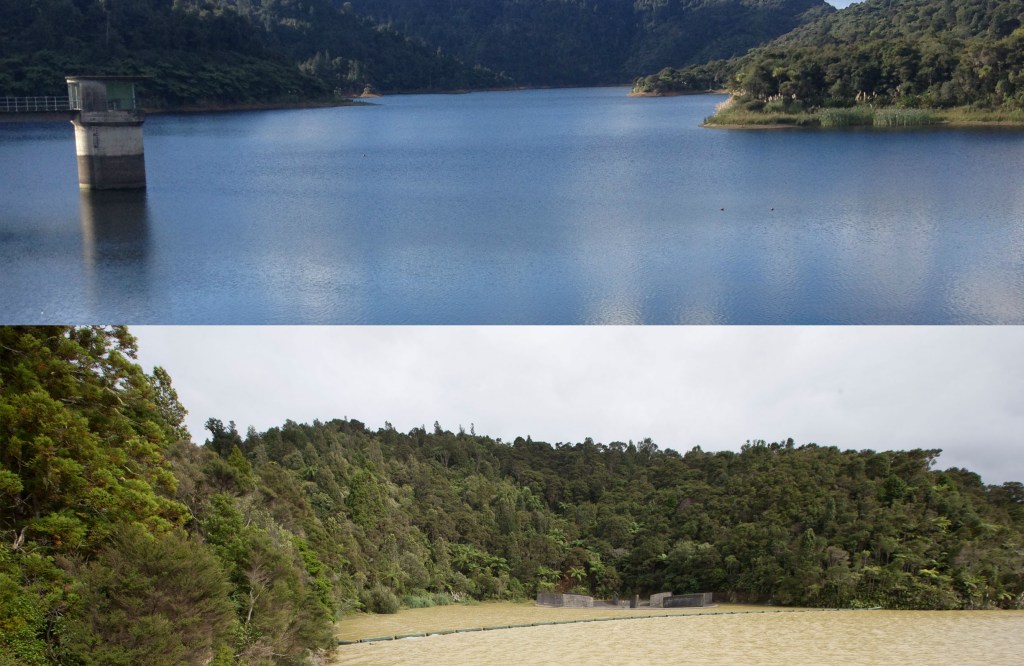
Watercare’s decision to close two water supply lakes in the Hunua Ranges in May 2014 after traces of herbicide (metsulfuron-methyl) were detected has been the subject of media reports this morning.
Auckland Council CE Stephen Town is confident public safety was never at risk but is reviewing the reporting procedures around potential drinking water contamination.
“I am confident that proper safety procedures were in place and were followed by the parties concerned.
“Watercare took all steps required to ensure that neither water quality nor water supply were put at risk.
“There remains a concern about who should have been informed of these events and when, and whether this should have been made public at the time.
“I will therefore undertake a review of council’s reporting procedures.
“Our organisation must be as open and transparent as possible – and that includes matters within the wider Auckland Council family that are in the public interest,” he says.
—-ends—-
And still my water when it comes in from the Waikato smells like a swimming pool…
A week ago I critiqued Watercare (who provide our fresh and waster water services in Auckland) on their decision around a recycled storm-water scheme in Stonefields. You can read it here: Patch Protecting or Genuine Concerns?
This morning I noticed (and a few others) the editorial for the Herald this morning commenting again on the recycled storm-water scheme. Lets take a look bit by bit from the editorial this morning shall we?
Stonefields, a village-style residential development in what was the Mt Wellington quarry, has branded itself with environmental “sustainability”. The basis of that brand was a dual water supply. Every house built so far has both a drinking-water supply and a “third pipe”, bringing surface water from a central reservoir to toilets and outside taps. The system may have saved water from the metropolitan supplier, Watercare Services, but saving water is not the supplier’s prime concern.
Many, in fact, will suspect the monopoly supplier’s refusal to operate Stonefields’ scheme as intended is motivated by the simple desire to maximise its revenue. Not so, says Watercare. The scheme, it says, would have cost Stonefields residents more than they will pay for the normal water supply. And since the groundwater collected for the third pipe would not have been treated to the same standard, it would have been charging those residents more for a supply of lower quality.
Common sense is probably on the side of Watercare. Surface run-off, especially from roads, is polluted. It was going to have to be treated as it was pumped from Stonefields’ collection tank to the reservoir, though not to a drinkable standard. The company says the cost of collection, treatment and pumping would have resulted in Stonefields residents paying five times the cost of Auckland’s potable water. And most of the third-pipe water would be flushed into the same second pipe, where it would need sewage treatment and disposal
……
“Many, in fact, will suspect the monopoly supplier’s refusal to operate Stonefields’ scheme as intended is motivated by the simple desire to maximise its revenue.” When you read the rest of the editorial I wonder but not help that is “bending the truth” to a wide degree.
What would be nice if the editorial posted some hard figures on the actual cost Watercare is purporting for the third pipe recycled storm-water scheme. Costs that include both the set and operations of such a facility in comparison to the normal set up we already get. Then for good measure some comparative costs from overseas as well as the private sector to see if the scheme is not value for money as Watercare (and the Herald) claim
I also note saving water is not Watercare’s main concern. Well no if it is out to maximise income and profits which is telling as we further get down the editorial.
Cost is not the only consideration. Enthusiasts for third-pipe water conservation ought to consider what would be lost. This is a country in which the water is safe to drink. To slake a thirst, we turn on the nearest tap without a qualm. That would change if not all piped water could be trusted. The outside taps at Stonefields were to carry a sign that the water was not safe to drink. Do we really want that?
The former Auckland City Council ought to have thought of all these practicalities before it invoked principles of sustainability and made third-pipe reticulation a feature of Stonefields’ development consent. Its own water retailer, Metrowater, was going to run the system. But for the Super City’s creation, and the bulk supplier’s takeover of the whole system, the true costs of “sustainability” might never have been known.
….
I assume whoever wrote this has never been around much as plenty of outside taps (not drinking fountains) even in urban Auckland carry the Do Not Drink sign above the said tap. And can someone tell me – who races to the garden hose and drinks out of it – regularly? So a really weak excuse here in that section of the editorial.
Thanks to the Waikato River, Auckland will never be short of water. There is no point conserving the water for its own sake if it must be replaced by a costly supply of inferior standard, no matter how interesting or exciting the environmental engineering involved.
…
I am quite sure the people of the Waikato – especially those who use or treasure the river will be quite comforted that Auckland will never be short of water thanks to Watercare drawing water from there and then pumping it to Auckland after it treated – NOT. I am aware Watercare are seeking consent to double the amount of water intake from the Waikato River to pump into a growing Auckland. This consent process has riled the people of the Waikato as the extra intake will no doubt put strain on New Zealand’s longest river. It is of note the lower Waikato is reliant on rainfall, Lake Taupo and the Waipa River for its water flow – and it is certainly not unlimited either. Just look what happens when our South Island hydro stations get dry years and the knock on effects downstream…
Now if you want a contradiction then check this last bit from the editorial
More water falls on Auckland than the city can use. Only a fraction of Stonefields’ storm water was to be channelled into the third pipe. Most would have drained to the Tamaki inlet. Reducing stormwater pollution of the sea around Auckland is the real challenge. Collecting tanks and treatment may be the answer, and if the water can be put to a cost-effective use, all the better. But recycling for a needless purpose at greater cost is not sustainable.
—-
Okay so more water falls on Auckland than we can use yet we get 10% of our total supply from the Waikato with Watercare wanting to increase that to 18% of total supply. Auckland also in 1994 suffered a drought which eventually led to the Waikato pipeline being built in the first place so that Auckland would not be faced with a similar situation again. So which way is it? We get enough rain that we do not need the Waikato, or is Auckland that large that we need the Waikato to supplement our dams.
In any case the real question that begs to be asked is ‘who actually wrote the editorial?’ Watercare or the NZ Herald themselves…
Stonefields was to be served by a third plumbing network.
New Zealand’s first environmentally sustainable public “third pipe” scheme, planned to serve thousands of homes with recycled storm water, has been plugged.
Rain falling on Stonefields – a redevelopment of a former East Auckland quarry – was to be fed to a storm water retention pond and treated to feed a plumbing network to toilets and garden taps.
However, despite the network being built at a cost of more than $7.5 million, municipal water supplier Watercare has rejected it on grounds of potential water quality and price issues.
Residents are disappointed..
“The chance of us all realising cost savings from using non-potable water supply and reducing our monthly water bills, including waste water charges, will be removed from us without consultation,” said the Stonefields Residents Association.
A Watercare spokesman said the decision was intended “to protect public health – treated storm water would not meet New Zealand’s drinking water standards and Watercare’s A Grade for water supply could be jeopardised by operation of the third pipe system.”
Watercare also said the cost of running the system would result in Stonefields residents paying five times more than the $1.34 per 1000 litres that Watercare would charge.
——ends——-
So Watercare are rejecting this “third-pipe” which is “treated” because of water-quality and price issues. Yet the water (which a savvy person could also connect a rain tank to as well) was to be used for toilets and garden taps rather than the taps we get our drinking water from. So you will have to forgive me Watercare but I never knew we needed A-grade water for the garden tap and toilet as I never knew I was going to be drinking out of them…
It’s not recycled black-water (water that has come from a sewerage plant) and the storm water is “treated” so what is the issue here?
The issue is most likely Watercare would be upset because they might get a drop in revenue especially around the 80% waste-water charge will honestly stinks. I know from the 100% fresh water I draw from the Watercare mains does not end back down the sewer pipes at the 80% level – especially in the Summer – yet I get hit for it.
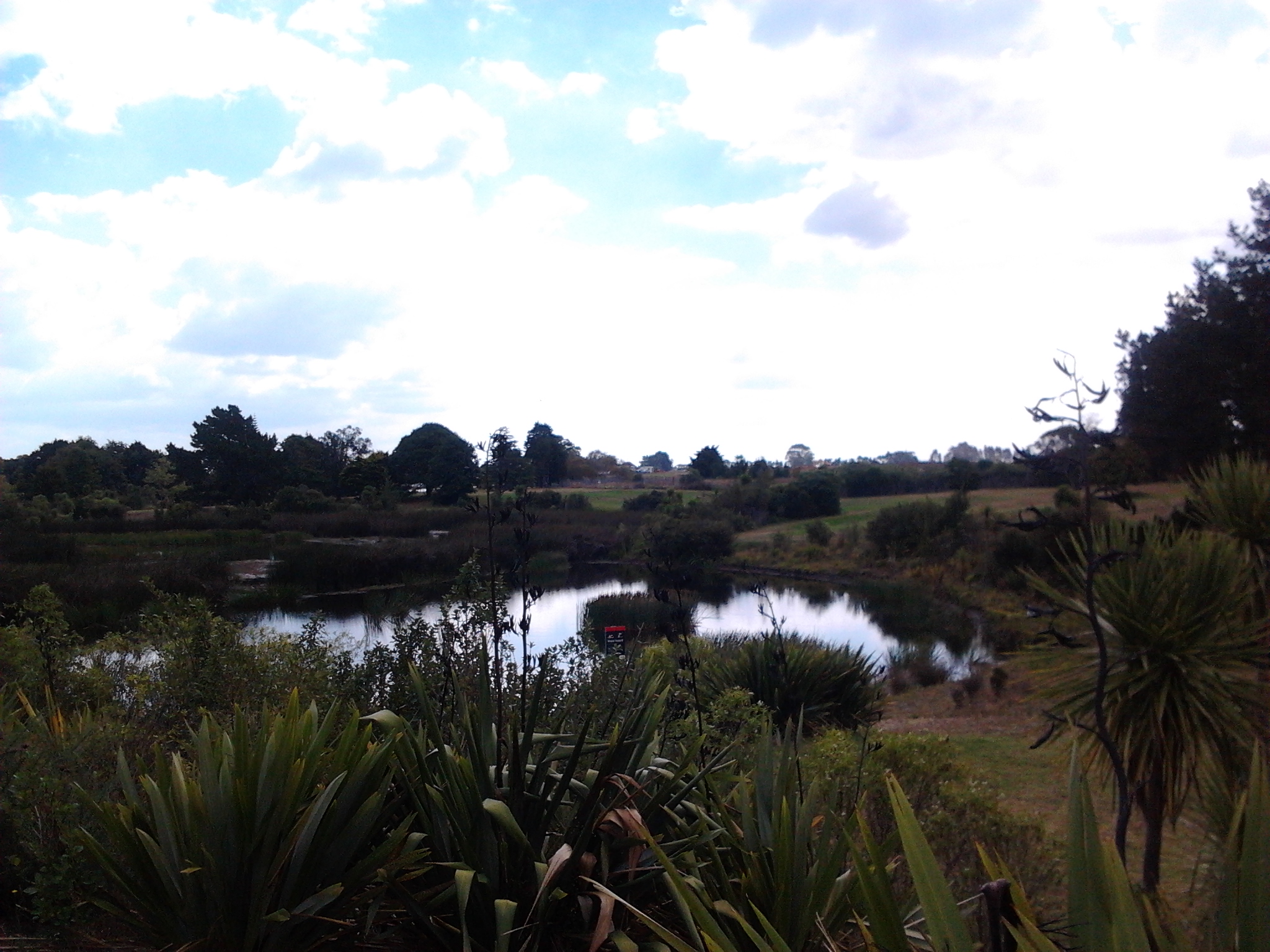
I know here where I live in Papakura there is some storm-water ponds that also act as a “lake” for the local park that could be potentially used in a scheme that Stonefields would have got until now.
At the same time I thought Auckland was meant to be an Eco-City and recycling treated storm water for non drinking purposes would have been a good step in reaching those “eco” goals.
Roll eyes material this is – really.
Looking over storm water pond to North Western flank of the park. New Social Housing development to occur behind that flank
 Talking Southern Auckland