Tag: Wynyard Quarter

Let’s Try This with Manukau

Start Small – Then Work to Large


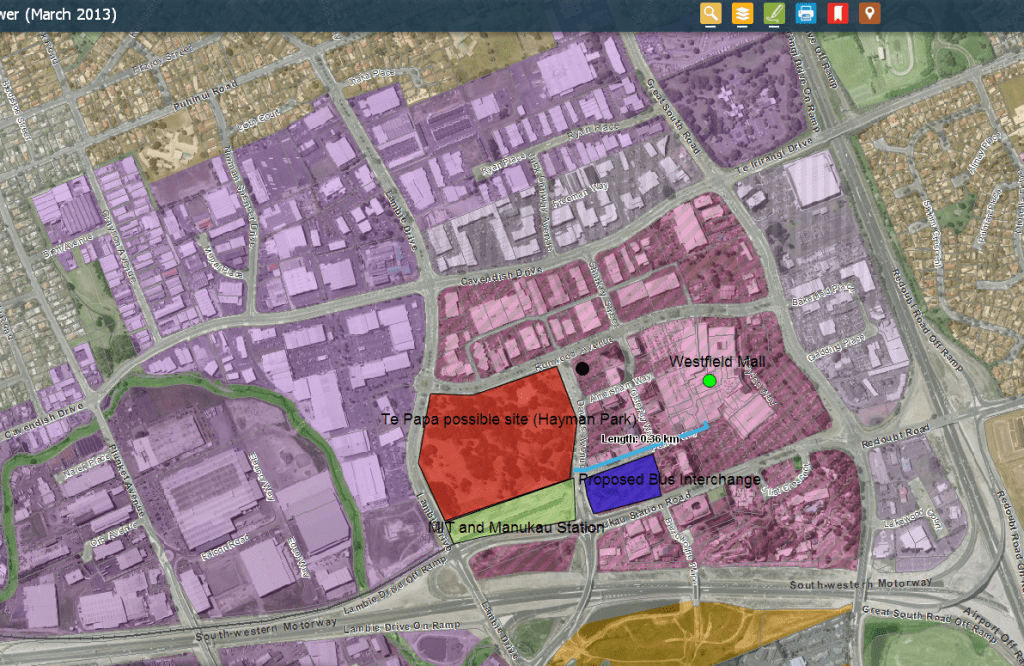
As we know, Manukau is in the pipeline for receiving Te Papa’s Auckland facility after a joint announcement by the Minister of Arts and the Mayor of Auckland. Interestingly enough the harshest of critics towards the facility in Manukau would be the ones who would naturally support – although apparently they prefer Wynyard Quarter.

However, their claims can be easily refuted by either (or all of) one of three counter-claims:

  1. Perceived inaccessibility at Manukau compared to Wynyard Quarter– when they have no qualms in travelling to malls and beaches from far-flung places in the sprawling city. And travelling cross city should be efficient and seamless once the Congestion Free Network is up and running (also see Point Three in regards to independent tourists who love to explore entire cities – not just the CBD Tourist Trap)
  2. People seeing South Auckland in a negative light – e.g Auckland’s poor “ghetto.” Umm no. South Auckland is a culturally rich and diverse place with great people. Yes some are less well off than others monetary wise but the South as noted is one cultural melting pot. I also live in South Auckland and have no qualms being here.
  3. Concentrate everything in the CBD at the detriment of the suburbs. For heavens sake there is more to Auckland that the CBD and as both experience and Geography have taught me, Free Independent Travellers (locals and tourists) travel. So when they travel – they will naturally trundle down to Manukau to explore because that is what FIT’s do – EXPLORE! 

I have further commentaries on the positives of Te Papa coming to Manukau in my respective three posts:

  1. Te Papa Coming to Manukau – Auckland
  2. Te Papa in Manukau

  3. Why Te Papa North Should be In Manukau – NOT Wynyard Quarter


Just a reminder to readers that the Te Papa North Facility is not just housing Te Papa. It is in fact a joint facility with: Te Papa, Auckland War Memorial Museum, and The Auckland Art Gallery all operating out of the Manukau facility. I also believe there will be storage and research operations carried out at the facility as well.

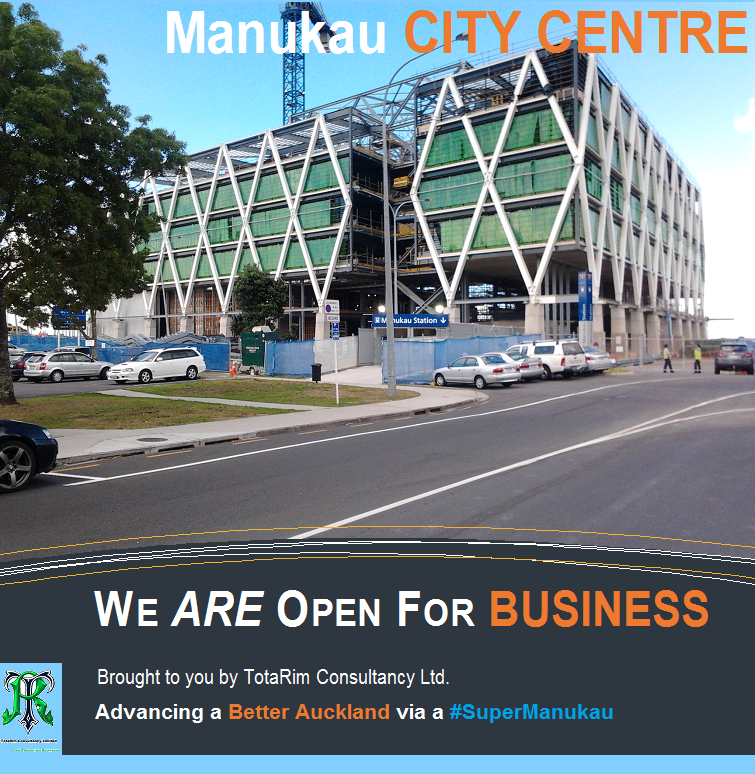
So with Te Papa North on the way to Manukau this might be a good time to really start looking at restoring the love to the Manukau City Centre area.


Urban Renewal in the Manukau (Super) Metropolitan Centre – One Step at a Time

Those following the Manukau Super Metropolitan Centre concept commentary know that there are active efforts (from my end at least) to bring the Manukau City Centre out from its 1960’s auto-centric past, into a 21st Century people-centric city.

Te Papa North is another cog in the great machine to “restoring the love” (as Deputy Mayor Penny Hulse said) to the heart of Southern Auckland and my home (probably why some of the more astute readers can see an emotional attachment from me here).

But no amount of urban renewal in Manukau will work until we get the place flipped over from ‘Car-First’ to ‘People-First.’ By that I mean making the streets people (and cyclist) friendly.

To flip streets over into people friendly shared spaces can be done in small steps on bit at a time. Auckland Transport are already starting with Davis Avenue in making that pro-people (rather than pro-car).


The Auckland Transport Davis Avenue Project

Once Davis Avenue is done my next recommendation would be Ronwood Avenue that runs east-west through the heart of the Manukau City Centre Area.

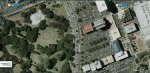
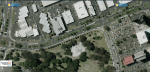
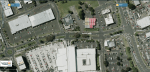
This gallery shows what I am referring to:

You can see narrow lanes going each way with on-street parking and very wide grass centre medians on Ronwood Avenue. Traffic volumes vary depending what is going on at the two roundabouts at the west end and in the centre of Ronwood Avenue.

Basically what you do is transplant what Auckland Transport has done to Davis Avenue over to the entire length (except for the small piece at the Great South Road end which can stay as is) and drop the speed limit to 30km/h. If you go one step further you could turn the pieces of this upgraded Ronwood Avenue in to Shared Zones like Fort Street in the CBD. One thing though is that depending on the new bus routings from Auckland Transport, Ronwood Avenue might need one or two bus stops to allow buses to exchanges passengers who might not want to go to the upcoming Manukau interchange.

Once Ronwood Avenue is complete with its upgrade my next choice would be Sharkey Street that connects to Ronwood Avenue (and Cavendish Drive). After that then we can look at some of the rat-runner roads like Cavendish Drive and Lambie Drive and get them more transit and people friendly then they are now. After that I think we start hitting some of the existing building sites in the Manukau City Centre area and bring those sites into the 21st Century as pro people not pro car sites.


One small step at a time. While others might have abandoned Manukau for flights of (elitist) fancy such as Wynyard Quarter and dumping literally everything of worth and value in the CBD, small steps are being taken in restoring the jewel in the crown of Southern Auckland – the place its people call “home.”
Click for full resolution

Quay Street Nuts Ctd

Follow Up on Quay Street


After yesterday’s initial post on Quay Street Nuts, I had a few discussions with others as well as a general head scratching session last night on the Quay Street issue. Basically I came to the same conclusion as I did yesterday in which I said:


So from what I can gather unless my English and interpreting documents some what out of whack, these incoming changes have been signalled well in advanced in three sets of plans (The Auckland Plank, The City Centre Master Plan, and The Long Term Plan 2012-2022). Whether I agree with the changes or not is a different story although it can be seen above in my comments to the Facebook thread.

In short I have no issue with the Quay Street works, but as I said:

“I think the problem is that this part of Quay Street flipping over to a boulevard is somewhat too soon without actual alternative in place. Stanley Street and State Highway 16 is not somewhat of an alternative heading from the east seeming our engineers can not phase traffic lights for peanuts” 


Outside of that issue, I am not having major issues here with Quay Street (west) although I am looking at alternatives here (not whole scale Quay Street west – just some minor tinkering to smooth the works transition). As for Quay Street east, I already drew up a plan for that and submitted on it. However works in that sector are not due to after the CRL I believe, so still time to keep the dialogue going there.


Oh if you are wondering what I meant about sticking the boot in at that particular Hearings Panel; it means I strongly disagreed with Parnell and do not want that station built, was not overtly fond of Quay Street work so soon in the game, and as for the CRL – well you all know how I advocate for that mega project on a delayed timetable. But as I said, there was both constructive criticism and as I said singing the praises too. So I am not always a grumpy old fart :P

Due credit is give when it is due – such as Councillor Wood is about to find out.


George will still get his due credit tomorrow when he goes into bat for the 380 Airport buses at tomorrow’s Transport Committee meeting.


Just to provide clarification here on Quay Street-west and Quay Street-east as they are treated as two distinct entities by both Auckland Council and the CCO’s as well as myself. Quay Street-west is Quay Street from the Viaduct Harbour through to the Tangihua Street/Tinley Street/Quay Street Intersection (where the Z petrol station and port entrance is); while Quay Street-east is from that same intersection through to the Stanley Street/Tamaki Drive/Quay Street intersection.


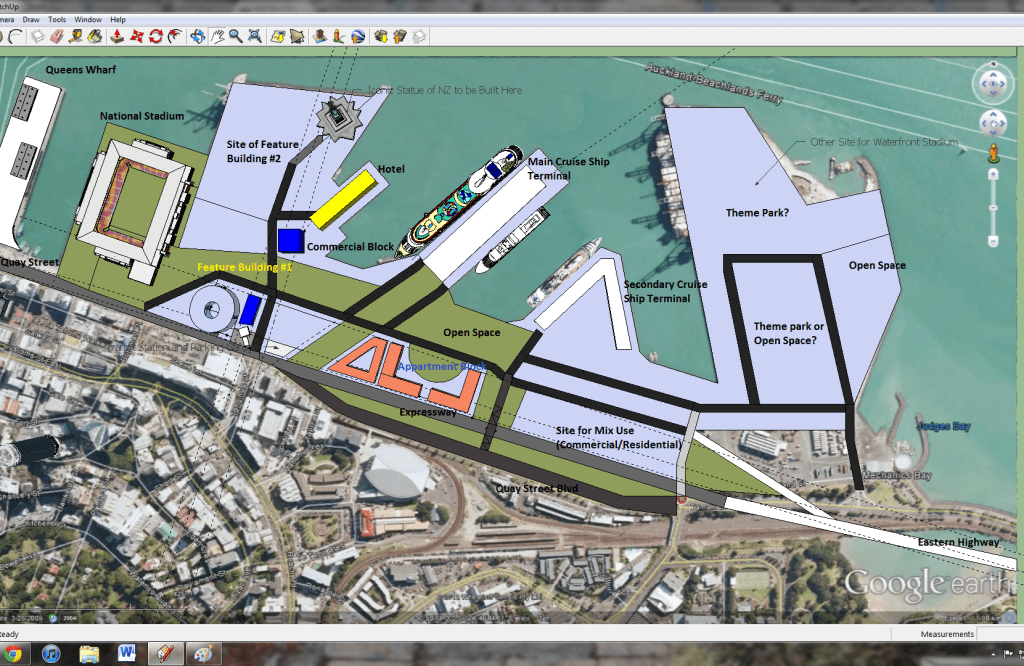
Further explaining: with Quay Street-east; that is being “dealt with” in my Auckland Water-Frontier work as I create a boulevard and an expressway in that section of Quay Street. This run of commentary on Quay Street-west is where this post (and the current “angst” from Orakei) is focusing on (again mentioned above).


I also had a read of a few letters to the Editor in the Herald this morning which were somewhat scathing of basically Orakei (mainly the Councillor, Local Board Chair and the Tamaki MP), while one was supportive of light rail along Tamaki Drive. And again after a ponder I would also tend to be in agreement with Mr Sheehan of Milford and his letter to the editor as well as Mr Broome’s letter to the editor on Light Rail – although I would look into the timetable of that. I would look at the light rail timetabling plan (for roll out) due to the fact I had mentioned something similar in the Wynyard Quarter section of my submissions where a light rail line would run from Wynyard Quarter to (as of now after some progression post-submission) east end of The Auckland Water-Frontier project zone.


And where does all this bring me too? It brings me to politely disagree with Orakei and their assertions around Quay Street and offer support behind Ludo Campbell-Reid and the works soon to start on Quay Street-west (although I can withdraw that support too).

A respected former centre-right councillor did raise with me:  “I think its more the lack of communication than the vision.” My reply to that was: “The question though  is where (the lack of communication). I found it in three sections of the City Centre Master Plan, a section of the Long Term Plan and sections in the main Auckland Plan. Heck even I was aware of Quay Street west (although I paid little attention to it as I was focused on Wynyard Quarter and Quay Street east) when writing submissions and having frank discussions with Ludo, Cathy Casey, and George Wood in the hearings panel. I am of the current opinion Quay Street might have snuck up on some more quickly than first anticipated”


So the issue in my eyes with Quay Street-west is basically done and dusted with works soon about to begin – of which I have as said many times above and before, no problems with. I might email Ludo Campbell Reid around some minor “transitional” concerns with Quay Street-west to endure traffic movements are smooth and not heavily disrupted pre CRL however to seek some reassurances.


References


Letters to The Editor


Reference to City Centre Master Plan

http://www.aucklandcouncil.govt.nz/EN/planspoliciesprojects/plansstrategies/ccmp/Pages/home.aspx#ad-image-0


Waterfront Issue Back Again

Auckland Apparently Wants Their Waterfront Back – Again


It must be another slow news day at the NZ Herald with them running a story based on a survey about Auckland’s Waterfront. Either that and credit is due to keep this matter at the front of civic leaders minds.


From the NZ Herald:


Aucklanders’ plea: Give us back our waterfront

By Michael Dickison

5:30 AM Monday Sep 24, 2012
Wynyard Quarter and the World Cup gave us a taste of harbour fun… now we want more.

More than three-quarters of Aucklanders questioned in a Herald poll want more wharf space opened up to create world-class public areas on the waterfront.

Local authorities have responded by saying bringing Aucklanders to the harbour area around the end of Queen St will be the next chapter in the city’s development.

A thousand Herald readers have given their views on the waterfront, presenting a wide range of ideas that reflect their pride in the Waitemata Harbour.

Ninety-six per cent of respondents said the waterfront was important for the city.

The Herald today starts a five-part series investigating options for a more vibrant, people-friendly waterfront.

Tourism Industry Association chief executive Martin Snedden, who oversaw last year’s Rugby World Cup tournament, said this was the city’s chance to get it right.

“Right here, right now, Auckland has a wonderful waterfront opportunity,” he said.

It needed people’s support to give it “character, heart and buzz”.

Reader views focused on bringing more public attractions to Queens Wharf and its vicinity.

More than three-fifths did not like the wharf’s current facilities. It has the Cloud and Shed 10 for generally exclusive events – but otherwise is mostly vacant space.

About the same number wanted the adjacent Captain Cook Wharf to become public space.

Ideas for the waterfront stressed the importance of making it accessible to everyone, including families and pedestrians.

Suggestions for achieving this ranged from markets, parks, festivals, walkways and fishing spots to sports fields, art galleries, convention centres and stadiums.

“It’s entirely understandable that people want more access to the waterfront, and over time we’ll make more wharves available,” said Ports of Auckland spokesman Matt Ball.

“It is our ambition to release Captain Cook Wharf and to open Marsden Wharf for public access.”

But the ports company would have to replace the existing facilities on the wharves first, Mr Ball said, and that could take 10 years.

The Auckland Council’s policy planning manager, Ludo Campbell-Reid, said authorities acknowledged that the waterfront had a problem where the city met the sea.

“The surprising thing is there’s no place on the waterfront that’s necessarily for pedestrians,” he said. “You have to go left or you have to go right. You don’t go down the middle.

“We’re competing with the world every day for jobs and investment, and the waterfront is our biggest opportunity.”

The central wharves would be the next area to be worked on, following the opening of the Wynyard Quarter.

Auckland architect and urban planner Graeme Scott said Waterfront Auckland, the council’s waterfront agency, had listened to submissions and put together a good blueprint.

One problem was having too many passive concrete areas, he said.

“Queens Wharf is a good example of what’s wrong with hard paving and buildings. If there are thousands of people on Queens Wharf, it’s fantastic. But if you walk out there mid-week or Sunday morning, it’s not a very nice place to be.”

The Herald poll was taken during the first week of September, assisted by Nielsen Research.

Last year’s opening of Wynyard Quarter and Rugby World Cup festivities opened the eyes of thousands of Aucklanders to new waterfront possibilities.

Since then, local authorities have been issuing plans sketching out possible developments, in line with Mayor Len Brown’s plan to make Auckland the world’s most liveable city.

And a review of the waterfront’s long-term future is being made after a public outcry against expansion of port facilities.


You will need to see the actual Herald article for the graphic attached at the bottom of their story.


But my question is ‘Why are we raising this again – when this has been asked in The Auckland Plan and subsequent documents despite their apparent short-comings?’


Never-mind as to be honest Thank You NZH for keeping the issue bobbing along and in our minds – because it needs to if we want our Auckland Water-Frontier.


The Herald is asking for ‘your views’ on this as well. Well my views can be seen here at BR:AKL through The Auckland Waterfront Index which lists my commentary on both the Port of Auckland and opening our Waterfront to turn it into our Auckland Water-Frontier. The work and graphics on both my projects is still a work-in-progress but none the less you can see what I am pitching so far.

Yes it is bold, but we need bold here for the sake and vibrancy of a 21st Century Auckland.


Now then, time to pester the Herald with my indexes again 😛

Auckland Parking Regime Change


Changes to Parking in Auckland CBD


A little while ago I had commented (and submitted to Auckland Transport) that there was consultation taking place for the impending parking regime change in Auckland CBD. Well Auckland Transport released yesterday the final version of the regime change after the consultation (some 700+ submissions including mine) which can be read below:


From Auckland Transport:


New initiatives for City Centre Parking Zone

Last reviewed: 20/09/2012 8:12 a.m.

Media release: 19 September 2012

A new City Centre Parking Zone, along with some other new parking initiatives, will be introduced by Auckland Transport in mid-October.

Auckland Transport’s Chief Operating Officer, Greg Edmonds says: “As Auckland’s population continues to grow, we are committed to delivering convenient access to parking both on and off street as part of the transport mix which includes public transport, walking and cycling.

“The main objective for Auckland Transport in changing the management of on-street and off-street parking in the City Centre is to prioritise short-term parking over long-term parking in an area of the city which has a high degree of visitation for business and leisure activities.”

The proposal for the creation of a new zone and associated pricing went out to public consultation in June this year.

Auckland Transport received 718 submissions on the proposal and has made changes as a result of that feedback.

On-street parking prices will remain unchanged at $4 per hour for the first two hours in the core CBD. After two hours prices will increase relative to the zone, the purpose of this is to prioritise short term (less than two hours) parking on streets.

The scheme will commence with three parking zones rather than the two initially proposed with lower prices around Union Street and Wynyard Quarter. There will be no time limits on any of the zones.

Auckland Transport will also introduce a ten minute “grace period”, which effectively means free parking. It will also remove most P5, P10 and P15 restrictions for on-street parking. The grace period will allow the removal of short-term parking restrictions as people will be able to stop anywhere for ten minutes before payment is required.

“This is a customer friendly option allowing quick pick-ups and drop offs and extends parking options for the likes of couriers and delivery companies,” says Mr Edmonds.

Auckland Transport will also extend paid parking from 6pm to 10pm in the central CBD area. This will improve access for visitors to premium on-street parking in the city in the evenings for leisure activities and reduce congestion during the evening peak.

Additional changes as a result of public feedback include; reducing peak casual hourly rates to $3 an hour in Auckland Transport’s Civic, Downtown and Victoria Street car parks. The current rate is $5.50 per hour for the first two hours and $4 or $5 per hour thereafter.

Mr Edmonds says “Car parking buildings are also a good option, particularly at night, because they are well-lit and have security measures.”

In a further effort to encourage off-street parking in the CBD, a daily maximum charge of $17 per day will be introduced in Auckland Transport parking buildings for longer stays. The daily maximum currently sits at $29.

Both on-street and off street parking prices will be reviewed after six months.

The revenue impacts from these changes are not known at this stage but Auckland Transport expects it to be revenue neutral.

Chief Executive of Heart of the City, Alex Swney says: “For many years parking has been seen as a major reason not to come into the city. We see today’s announcement as a significant change in approach to parking in the city. It recognises the ‘moving feast’ of parking demands of our businesses and their customers. It’s a major step forward and we are sure we will be looking back in a year and see significant improvement as a result.”

Mr Edmonds said the changes will be implemented from mid October 2012. Details of the changes will be communicated to the public through the Auckland Transport website  and through a public information campaign closer to the date.
Map of the Proposed Zone (PDF 4.7 MB – please allow time for download)


The Map can be seen in the embed here:


Personally all things considered especially per my submission to Auckland Transport on the parking regime change, I am quite happy with how the final product turned out. Of course still work to be done – but happy with the outcome.


Well done to Auckland Transport 😀

(even I can praise AT when warranted)


References


PARKING CHARGE CHANGE FOR CBD


ALTERNATIVE TO CENTRAL CITY PARKING ZONE REGIME  (basic form of my submission to the regime change)