Consultation Soon From Auckland Council Long-term Plan workshops continue Auckland’s elected members met yesterday for the fifth in a series of workshops to consider council priorities for … Continue reading Long Term Plan Workshops Continue
Consultation Soon From Auckland Council Long-term Plan workshops continue Auckland’s elected members met yesterday for the fifth in a series of workshops to consider council priorities for … Continue reading Long Term Plan Workshops Continue
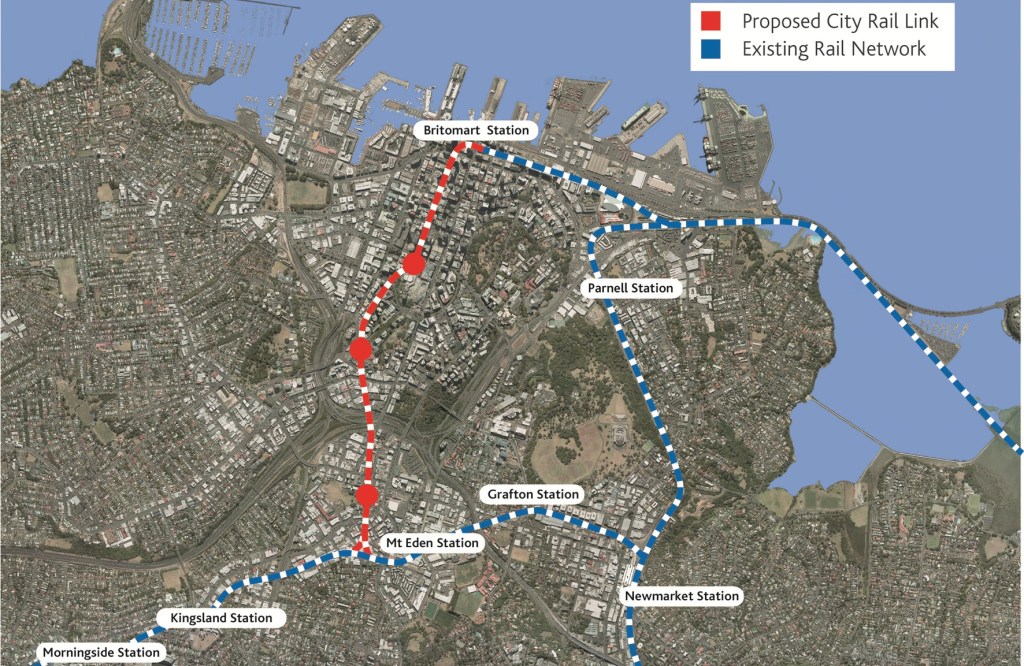
An idea I have also had for a few years now as well Michael Barnett who is the head of the Auckland Chamber of Commerce has said some … Continue reading Barnett Thinks Outside the Square With the City Rail Link
Okay this one is more for your Unitary Plan wonks (like me) but it pays to keep an eye on Unitary Plan Hearing Panel proceedings to gauge the debate and reactions on the Proposed Unitary Plan.
Last night I saw from the Unitary Plan Page (the one the Hearings Panel runs) a Procedural Minute from the Chair – Judge Kirkpatrick in regards to the Further Submission process recently completed.
Before I embed the material just a note on the Hearings Panel and relevant information:
From the Unitary Plan Independent Panel Procedures Page:
Some of the important things to note about the hearing process are listed here.
Source: http://www.aupihp.govt.nz/procedures/
—–
Meaning anything I post in regards to the pre hearings or hearings is public information unless stated otherwise.
The “Procedural Minute” that was recently issued in regards to Further Submissions (that recently closed)
The Letter of the upcoming Pre Hearing Conference
From what I can gather the Memorandum of Counsel is on the Further Submission process, the complexity of the Unitary Plan, and Auckland Council’s large submission to the Unitary Plan. The applicants have asked the Hearings Panel in this case for an IT expert and independent planning consultant to assist people through both the Unitary Plan and the Unitary Plan website. While the pre hearing is to go ahead it seems the Panel will decline this request by the applicants (hmm I could have done that for them having waded through all 7,000 pages of that cumbersome document a few too many times).
However, it is to note that we could see the Hearings grind down if pre hearings and hearings get stuck on the complexity of the Unitary Plan let alone anything else including rezoning at site specific level.
As for my submission I had five oppose it and one in support. Going to be fun times ahead
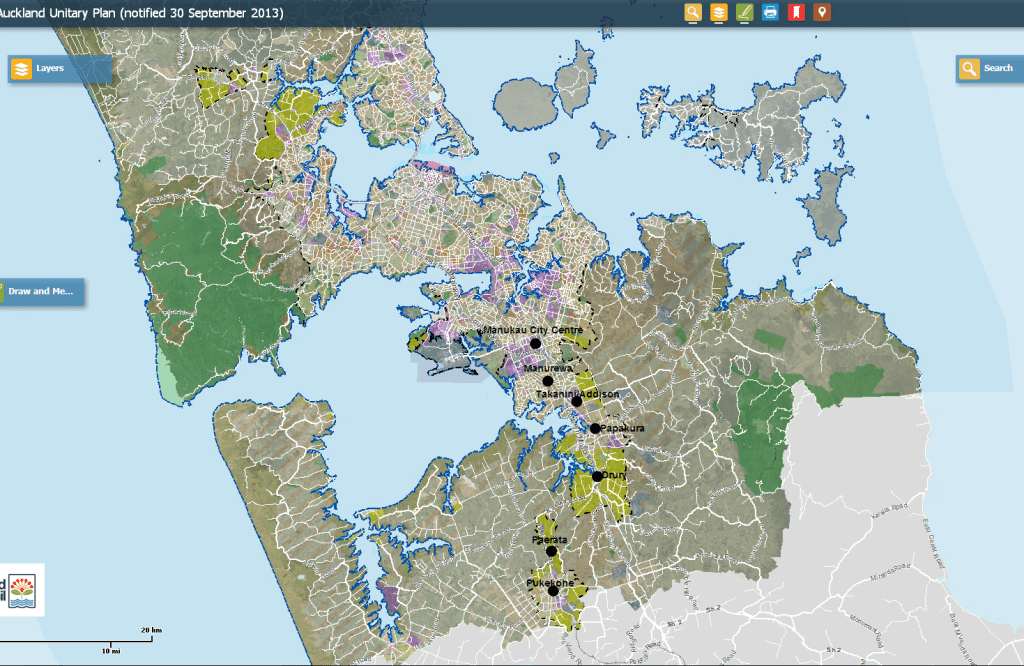
Just as the Deputy Mayor prescribes However, the debate over up and out continues. I did catch the piece from Macro-Business earlier today over Auckland’s up and out debate. … Continue reading A Little Bit Up and a Little Bit Out
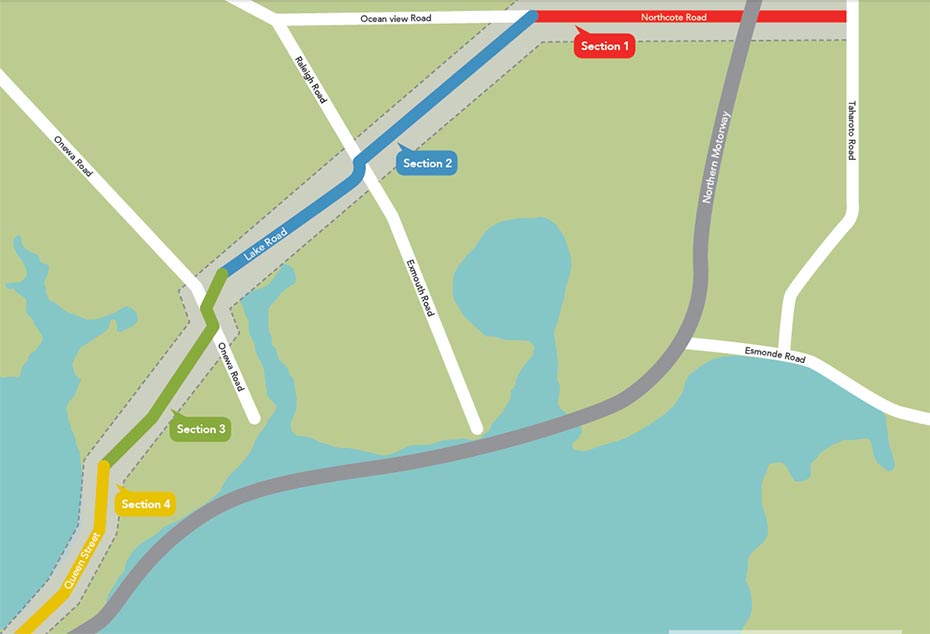
Consultation under way. Route will connect to eventual Sky Path as well From Voxy.co.nz New cycle route proposed for North Shore Monday, 28 July, 2014 – 12:51 A … Continue reading New Cycle Route for the North Shore
I have seen a bit of activity, chatter and news going around about our Electric Trains. If you are wondering why they are not running at the moment on the Onehunga Line my Electric Train Fleet Grounded [updated] post gave the heads up on it.
An extract from TVNZ stated:
Fault prompts electric train replacement on Auckland network
Published: 1:15PM Wednesday July 23, 2014 Source: ONE News
A power fault has led to Auckland’s new electric trains being replaced on the Onehunga Line.
Auckland Transport has stressed the faults had not resulted in any safety issues.
The power fault has occurred twice in the last 24 hours and while it could take several days to fix timetables will remain unchanged.
Auckland Transport chief operations officer Greg Edmonds says the organisation intends to get to the root of the issue.
“So as not to inconvenience customers we have decided to run diesel units,” he says.
Mr Edmonds also says issues such as this are expected while phasing in a new train fleet.
….
——
Source: http://tvnz.co.nz/national-news/fault-prompts-electric-train-replacement-auckland-network-6036157
After some checking and some chats in regards to the EMU fault I came up with a theory into what MIGHT be causing the issues with our electric trains that has resulted in the grounding of the fleet. Now I stress this is a theory in what possibly might have occurred from deductions and observations. Naturally when such a theory is presented the relevant authority would carry out tests to either prove or disprove the theory. Now we know according to Auckland Transport’s Chief Operating Officer Greg Edmonds that equipment is being installed on the two substations that feed the juice into the electric network for the trains to see if they can find the fault. I hope they do however, I theorise that the fault while found, it can not be remedied if Auckland Transport and Kiwi Rail have done cost cutting with the infrastructure thus we will have continual issues until the proper remedy is in position.
Our New Electric Trains Breaking Down in Peak Services? [Updated])
http://www.bettertransport.org.nz/forum/viewtopic.php?f=1&t=2460&start=2760
http://www.bettertransport.org.nz/forum/viewtopic.php?f=1&t=1653&start=3520
Power quality
From Wikipedia, the free encyclopedia
Power quality determines the fitness of electrical power to consumer devices. Synchronization of the voltage frequency and phase allows electrical systems to function in their intended manner without significant loss of performance or life. The term is used to describe electric power that drives an electrical load and the load’s ability to function properly. Without the proper power, an electrical device (or load) may malfunction, fail prematurely or not operate at all. There are many ways in which electric power can be of poor quality and many more causes of such poor quality power.
The electric power industry comprises electricity generation (AC power), electric power transmission and ultimately electricity distribution to an electricity meter located at the premises of the end user of the electric power. The electricity then moves through the wiring system of the end user until it reaches the load. The complexity of the system to move electric energy from the point of production to the point of consumption combined with variations in weather, generation, demand and other factors provide many opportunities for the quality of supply to be compromised.
While “power quality” is a convenient term for many, it is the quality of the voltage—rather than power or electric current—that is actually described by the term. Power is simply the flow of energy and the current demanded by a load is largely uncontrollable.
Mr Edmonds said special measuring equipment had been installed at both of the electrification system’s two power supply substations, and on the trains themselves, ready for simulated services to be trialled last night.
Power quality issues (so dirty power) also give harmonics issues which have been mentioned before again here: http://www.bettertransport.org.nz/forum/viewtopic.php?f=1&t=2460&start=2760 (I think one page back from where that one will open). More on harmonics can be seen here: http://en.wikipedia.org/wiki/Harmonics_(electrical_power) (extract below)
Harmonics (electrical power)
From Wikipedia, the free encyclopedia
Harmonics voltages and currents in an electric power system are a result of non-linear electric loads. Harmonic frequencies in the power grid are a frequent cause of power quality problems. Harmonics in power systems result in increased heating in the equipment and conductors, misfiring in variable speed drives, and torque pulsations in motors. Reduction of harmonics is considered desirable.
…
Effects
One of the major effects of power system harmonics is to increase the current in the system. This is particularly the case for the third harmonic, which causes a sharp increase in the zero sequence current, and therefore increases the current in the neutral conductor. This effect can require special consideration in the design of an electric system to serve non-linear loads.[2]
In addition to the increased line current, different pieces of electrical equipment can suffer effects from harmonics on the power system.
Motors
Electric motors experience losses due to hysteresis and losses due to eddy currents set up in the iron core of the motor. These are proportional to the frequency of the current. Since the harmonics are at higher frequencies, they produce higher core losses in a motor than the power frequency would. This results in increased heating of the motor core, which (if excessive) can shorten the life of the motor. The 5th harmonic causes a CEMF (counter electromotive force) in large motors which acts in the opposite direction of rotation. The CEMF is not large enough to counteract the rotation, however it does play a small role in the resulting rotating speed of the motor.
And that is my theory behind the situation resulting in the costly grounding of our electric train fleet. The theory stems from the simple fact that currently only two of the four or five substations that would feed the electrified rail network power as well as filter the power to prevent dirty power and over voltage have been built. We only have 50% of the total supply potential and filtering (or protecting) capacity installed for a 25,000 volt system. Thus because of the reduced capacity to filter, protect and supply we get these problems with just SIX electric trains running let alone the full 57.
So the question is what will Auckland Transport do? The remedies that I have seen are quite costly if we are to prevent the entire EMU revenue service fleet being pulled again like last week.
Something that could have been in theory very easily avoided!
In the technical first stage form of a geo-technical survey I caught this earlier on Twitter One guess what they are drilling for! pic.twitter.com/IoCWFWlcH8 — Christopher Dempsey (@Christodemp) … Continue reading City Rail Link Under Way
I will let the others talk about the Holiday Highway and so on.
But I shall leave you with this straight out of the USA; home of abandoned malls, abandoned strip malls and now this
A shame I and my children have to carry this can from my parents’* generation who seemed not quite having a grasp on transport, planning and social economics…
*not all from the Baby Boomer generation are bad with their economics. Sadly though they get tarred by the bad decisions made by their associates…
From Auckland Council
Auckland Council is in the process of reducing the number of its council buildings in the central city from seven to three to save money and create more efficient and productive work spaces.
The council purchased the former ASB Tower at 135 Albert Street in July 2012 for $104m and staff are presently moving in. The move to 135 Albert Street results in savings of about $2.7m a year over the next 10 years. Over the next 20 years, the savings will be over $100m.
A decision on future accommodation had to be made as leases on rented buildings were coming up for renewal.
Purchasing 135 Albert Street was the cheapest of all options examined, which included staying in existing buildings, building a new building or purchasing an alternative existing building.
Savings are being realised through exiting leases on rented offices, operational efficiencies, better utilisation of space and reduced time travelling between offices. Staff productivity and effectiveness are also expected to improve as teams and groups work more closely together.
In the long term, approximately 2400 staff will be accommodated in 135 Albert Street, including space for elected members.
Some departments that were in Bledisloe House have already moved to 135 Albert Street, enabling staff in rented office space, such as on Hereford Street, to move to Bledisloe House or Albert Street.
As part of the current work to upgrade Bledisloe Lane, the customer services centre and reception presently in the ground floor area of the Civic Administration Building will be moved into the ground level of Bledisloe House.
These works sit within existing renewal budgets.
—ends—
Consultation starts January From Auckland Council LTP workshops underway Auckland councillors today met for the fourth in a series of workshops to consider council priorities for the next … Continue reading Long Term Workshops Underway
 Talking Southern Auckland