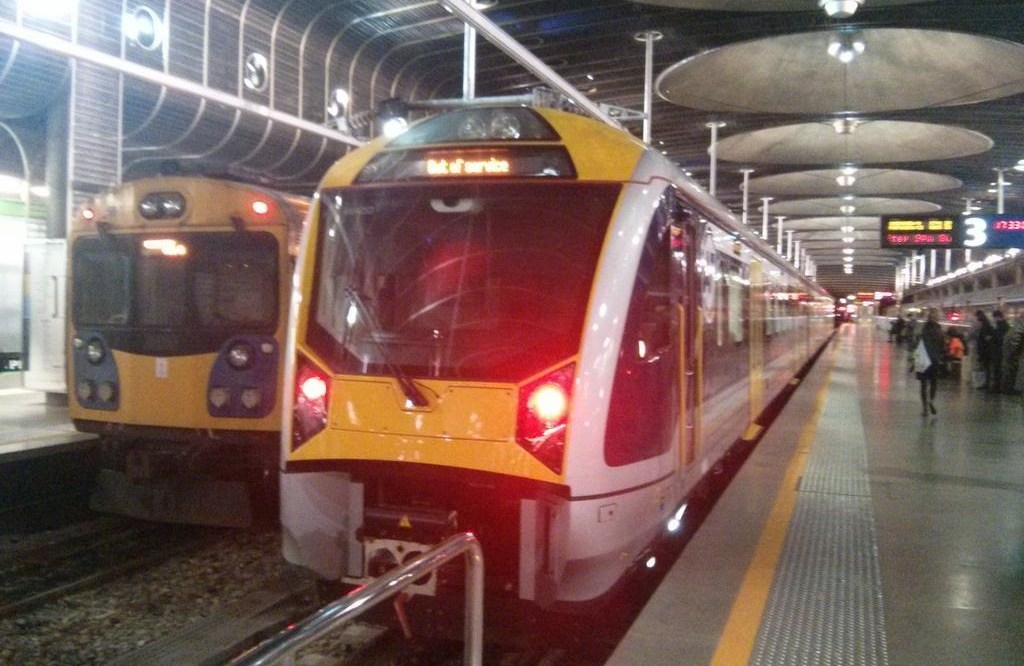
All Three Requests Acknowledged. Now Awaiting Formal Replies

Source: pic.twitter.com/IUHNR2DboJ
[Update] An update on where things are with three Local Government Official Information and Meetings Act (LGOIMA) filed with Auckland Transport. All three LGOIMA’s have been acknowledged and are working through the processes at the moment.
The Local Government Official Information and Meetings Act requests currently filed
Awaiting response.
From: Ben Ross
July 31, 2014
Dear Auckland Transport,
I am enquiring about the recent “intermittent power fault” that
grounded the Electric Train (EMU) fleet from Wednesday 23rd July
until the evening services of 31st July.
Specifically please I am seeking the following information about
that grounding:
1) What caused the intermittent power fault that lead the eventual
grounding of the EMU fleet on 23rd July.
2) How was that intermittent power fault caused that lead the
eventual grounding of the EMU fleet on 23rd July.
3)Why did the intermittent power fault happen when possible smaller
versions of the fault occurred ever since the EMU’s began revenue
service on the Onehunga Line in late April. These smaller faults
causing EMU’s to shut down and often force cancellations or delays
of other services such as seen on the 21st and 22nd of July. In
light of that could have the intermittent power fault been
prevented if proper tests were carried out before the EMU fleet
went into revenue service on the Onehunga Line
4) What did Auckland Transport (and partners – if applicable) do to
fix the fault to allow EMU’s to resume revenue services as of 31st
July
5) Will the fix mitigate against any future intermittent power
faults that could cause groundings of the EMU fleet
6) Is Auckland Transport looking at other mitigation techniques
apart from the fix to prevent future intermittent power faults
grounding the EMU fleet again
7) How many substations were built to power the electrified rail
system and the EMU’s
8) How many substations WERE PLANNED to be built to power the
electrified rail system and the EMU’s.
9) If less substations were built than planned then why was this
the case AND could the lack of substations be a mitigating factor
that caused the intermittent power fault
10) Is Auckland Transport investigating whether the 110kv National
Grid line that follows the Onehunga Line from Penrose to Onehunga
Station could be causing the interference thus intermittent power
fault with the EMU’s.
If not why is Auckland Transport not investigating this.
If so what are the results or will we know the results publicly.
I look forward to your reply
Yours faithfully,
—————————-
Request for Post City Rail Link Operations Plan
Awaiting response.
From: Ben Ross
August 01, 2014
Dear Auckland Transport,
In light of the media coverage over the City Rail Link changes with
Newton Station to be dropped and alterations to Mt Eden Station I
was wondering what the train operating plan would be once the City
Rail Link was complete.
Furthermore why was the Post CRL Operation Plan not released out to
the public domain after the media briefing about the CRL changes.
Yours faithfully,
[Note: the graphic on Auckland Transport’s draft rail network operations once the City Rail Link was released soon after the LGOIMA was sent. However, it will still be interesting to see what AT replies with and if more information comes out in light of my request]
———————
Modelling on the Manukau South Link
Awaiting response.
From: Ben Ross
August 07, 2014
Dear Auckland Transport,
I am enquiring about The Manukau Rail South Link (the rail link
that would allow Pukekohe/Papakura to Manukau services directly
without the need for a transfer as current at Puhinui Station)with
modelling done.
I do acknowledge that Auckland Transport are working through the
processes with Auckland Council over the Manukau South Link and
whether it should be finally built or not. That said I am not
seeking Auckland Transport’s position on the Manukau South Link
(unless you wish to give it) but rather seeking the modelling and
(if done) the business case on the Link.
Specifically if the Manukau South Link is or were to be built and
operating:
How many trains per hour would be running using the South Link in
the: peak, off-peak week days, and weekends?
How many passengers is AT predicting (via the modelling) to use the
trains that would go to Manukau via the South Link in the: peak,
non peak and weekends
Would AT use the new EMU fleet, the existing diesel fleet
(especially if Pukekohe has not been electrified yet) or a mix of
both
What is the cost of build the Manukau South Link (both just the
link (track and wires) itself and any “compensation” to Port of
Auckland for the loss of their siding (at the north end) at their
Wiri Inland Port Facility)
Do Auckland Transport have a business case drawn up for the
Manukau South Link and/or has it been presented to Auckland Council
as of yet? If the business case is drawn up is able to be released
into the public domain?
If all T’s are crossed and all I’s are dotted when would AT like to
have the South Link built and operating ideally.
Does Auckland Transport have the funding currently available to
build the Link or does AT need to go to Council for extra funding.
I thank you in advance
Yours faithfully,
—————
In regards to the LGOIMA on the Manukau South Link: Even if Auckland Transport and/or Auckland Council reject it the least I can do is to try to get the reasoning and logic out and back to the South Auckland communities, Local Boards and Councillors who have pushed for this. I am aware of a public announcement from Auckland Transport over the Manukau South Link (amongst a few other things) is due later on this year. However, I am preempting along the forewarned is forearmed.
I will update next when new information from the LGOIMA’s come through.


 Talking Southern Auckland