Actually not a lot From Auckland Council: What Aucklanders want from downtown spaces…variety, quality – and lots of it Running and relaxing, celebrating and quietly contemplating the harbour … Continue reading Waterfront Auckland – What We Said
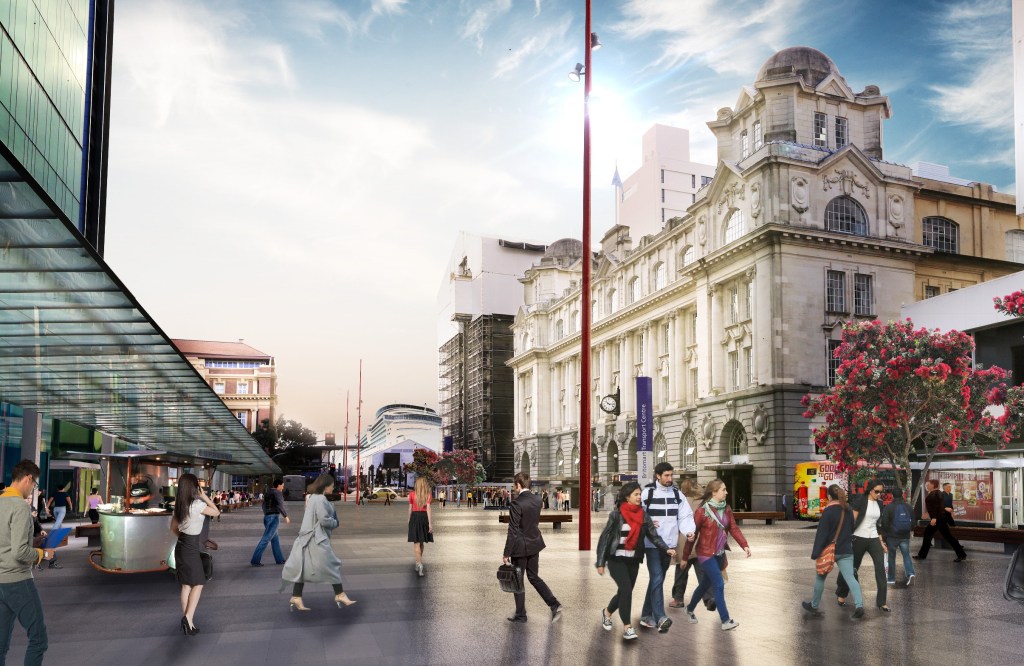
Actually not a lot From Auckland Council: What Aucklanders want from downtown spaces…variety, quality – and lots of it Running and relaxing, celebrating and quietly contemplating the harbour … Continue reading Waterfront Auckland – What We Said

Let’s hope the Weather plays ball rather than play bomb From Sunday until about the 20th January Talking Auckland goes in Summer Series mode. This means the commentary takes … Continue reading Prelude to the Summer Series 2014/2015

What the opposition had to say + the Auditor General’s Opinion Yesterday I ran the Council presser and a couple of Main Stream Media articles on the Governing Body … Continue reading And From The Opposition

After debate and re-litigation we have a budget for our input next year And so after our theatrics, the re-litigation, the Auditor General being comfortable in her opinion, and … Continue reading Long Term Plan Adopted for Consultation
Includes a 5,000 person survey Today the Governing Body meets to adopt the draft 2015-2025 Long Term Plan for consultation early next year. The podcast gives a quick summary … Continue reading Governing Body to Adopt Long Term Plan Draft For Consultation
Originally posted on Vernon Tava:
Today the Local Board was informed that the hearing panel on the Notice of Requirement (NoR) for the Pohutukawa trees (I’ve written about this in detail…

Investigation and Design I will do my best to keep you apprised of the Pocket Park idea for Lot 59 in Manukau City Centre. Recap: Pocket Park in … Continue reading Further Update on Manukau Pocket Park
Statistics New Zealand has reported that the housing dynamics as well as other indicators in Auckland are now pretty much unique compared to the rest of New Zealand. Of course and being a realist this is expected (even the negative indicators) in New Zealand’s sole international city of sizable comparison.
From Stats NZ
Auckland housing now very different from the rest of NZ |
Auckland’s housing has changed markedly over the past two decades as the city reacts to its growing population, with more multi-storey homes, greater density, and fewer unoccupied homes all making it very different to the rest of the country, according to the latest research from Statistics New Zealand.17 December 2014
Housing in Auckland: Trends in housing from 1991 to 2013 uses the latest 2013 Census information, showing that in the seven years between the last two censuses, Auckland’s population grew by 8.5 percent, faster than the number of dwellings, which increased by 7.6 percent.
Statistics NZ researcher and report author Rosemary Goodyear says the aim of the report is to give agencies working in the housing area in Auckland information they need. “We hope this type of information will be useful to both policymakers deciding where services might be valuable, but also to developers deciding where to focus their efforts.”
“We’ve found that since the 1990s, housing in Auckland has changed so much that it’s now distinct from the rest of New Zealand. There are more multi-storey dwellings, lower rates of home-ownership, more renting, and house prices have risen to higher levels than in other parts of New Zealand.”
“It is not only young people who have been affected by the fall in home ownership,” Dr Goodyear said. “There have been substantial drops in home ownership for Aucklanders aged in their 30s, 40s, and 50s since 2001.”
Dr Goodyear says Statistics NZ worked closely with agencies in Auckland to find out what information they wanted to know about housing in the region.
One of the key findings of the report is that since 2006, building consents in Auckland are lower per head of population than in the rest of New Zealand. In 2013, there were 358 building consents per 100,000 people in Auckland compared with 423 per 100,000 for New Zealand overall. However, the number of building consents issued for new dwellings in Auckland has increased since the low point in 2009 to reach almost 7,000 in the year to March 2014.
The report also found that dwelling density had increased significantly in Auckland between 2001 and 2013, from 85.5 to 102.0 dwellings per square kilometre. In 2013, the most dense area units (Auckland Central East and Auckland Central West) had over 5,000 dwellings per square kilometre.
“Levels of crowding have remained persistently high in Auckland,” Dr Goodyear said. “In 2013 almost half of crowded households in New Zealand were in the Auckland region, compared with just over a third in 1991.” Over 200,000 people in Auckland, including around 63,000 children, are now living in a crowded household. Crowding was highest among Pacific peoples, with 45.3 percent of Pacific peoples in Auckland living in a crowded household in 2013.
Read the report – Housing in Auckland: Trends in housing from the Census of Population and Dwellings 1991 to 2013.
—-ends—–
This shows with our Unitary Plan that we need to make sure our master planing document is not loaded up with anal development controls that restrict as well as make developments cost prohibitive. Flexibility is the key to make sure that both consents are available in timely manners and crowding is reduced through the supply of all housing typologies being efficient. Something again development controls bung up.
I suppose we will know how the Unitary Plan will shape out come 2016 when the Hearings Panel makes it recommendations to Council.
Yesterday in rather windy conditions Auckland Transport launched the new public transport livery we will be seeing across the buses through out Auckland.
From Auckland Transport
16/12/2014 02:14 p.m.

Auckland Transport has unveiled its new look for public transport in the city.
At a ceremony in Auckland the Deputy Mayor, Penny Hulse and Auckland Transport Chairman Dr Lester Levy launched the AT Metrobrand which will be phased in over three years, starting with LINK services and the Northern Express.
The single brand identity will be differentiated by colour for different types of services and will gradually be applied to buses, trains and ferries.
Auckland Transport’s General Manager Marketing and Customer Experience Mike Loftus says a single identity will give Aucklanders and visitors a clearer understanding of what public transport is on offer, and how buses, trains and ferries serve different areas.
“Most metropolitan cities have a single brand network that is easy to recognise and enables clear, consistent communication with customers.”
“Currently in Auckland there is no single identity, we have a variety of brands and looks. Customers relate to buses by the operator name rather than the wider public transport network”.
Auckland Transport’s Group Manager Public Transport Mark Lambert says having a single public transport network will ultimately build public confidence in the developing and improving PT system. “Knowing that all the services are integrated and part of the same system will help grow patronage”.
The implementation of the livery is already underway and budgeted for the electric trains.
Costs for the bus fleet will be kept to a minimum through:
Mr Lambert says Auckland’s bus operators are aware of the changes and are working with Auckland Transport.
The Auckland Plan looks to double public transport trips from 70 million in 2012 to 140 million in 2022. The Auckland Plan’s priorities for Auckland’s transport system include “a single system transport network approach that manages current congestion problems and accommodates future business population growth to encourage a shift toward public transport.”
———-
Source: https://at.govt.nz/about-us/news-events/at-metro-brand-makes-its-debut/
Costs of the rebrand noted in red above. And I believe the yellow on the front of the buses is to act as a safety feature in being bright and attention catching before someone asks.
More and more projects being shunted from the Long Term Plan I have already reported back in November that some public transport projects were being used as potential political … Continue reading More Projects as Political Weapons to the Long Term Plan?
 Talking Southern Auckland