Of which is something I have come to expect of this Government
Yesterday the Government (through Dr Nick Smith) announced the next phase of the RMA reforms for its legislative agenda.
From the NZ Herald:
Nick Smith announces 10 dramatic changes to Resource Management Act
5:57 PM Wednesday Jan 21, 2015 – Isaac Davison
Housing Minister Nick Smith. Photo and Credit / NZME.
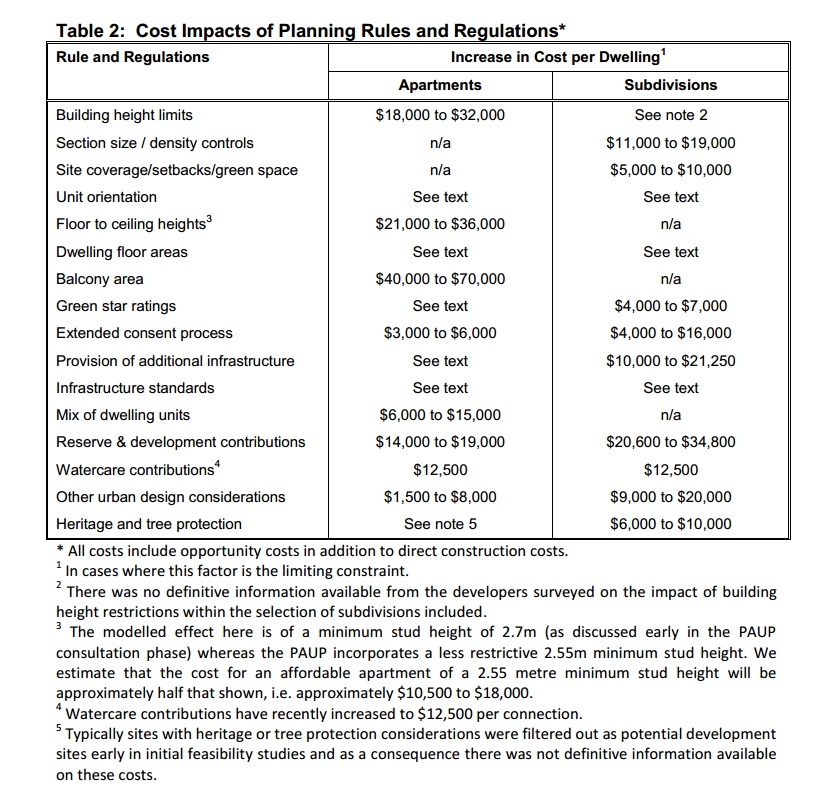
The Government has outlined its plans to dramatically reform the Resource Management Act, armed with new research which showed environmental regulations added $15,000 to the cost of a new home and $30,000 to the cost of a new apartment.
The high-level reforms were designed to reverse the skyrocketing price of housing in New Zealand, which the Government has blamed squarely on the costs, delays and uncertainties caused by the laws which govern how this country’s environment is managed.
In a speech in Nelson this evening, Environment Minister Nick Smith said overhauling the RMA was critical to addressing housing supply and affordability and encouraging economic growth, while also managing the environment.
He outlined ten areas for change, which he aimed to have passed into law after full consultation by the end of the year.
Dr Smith’s speech coincided with the release of a working paper commissioned by Treasury and the Ministry of Business, Innovation and Employment (MBIE).
…..
Nick Smith’s RMA reforms
1. Add management of natural hazards
2. Recognise urban planning
3. Prioritise housing affordability
4. Acknowledge importance of infrastructure
5. Greater weight to property rights
6. National planning templates
7. Speed up plan-making
8. Encouraging collaborative resolution
9. Strengthening national tools
10. Internet for simplicity and speed
Stuff explains the 10 points in a bit more detail:
Although light on concrete policy, the speech highlighted a series of material changes Smith said were crucial:
– Adding clauses covering the management of major natural hazards, referring to the Bexley subdivision in Christchurch which did not consider the impact of liquefaction even though the risk had been clearly identified
– Creating an explicit recognition in the legislation of the urban environment, with Smith claiming the report appeared to be designed “for a Garden of Eden” before cities were built
– Giving an explicit recognition of the need for affordable housing, with current rules tending to support more expensive development
Other changes proposed by Smith included forcing councils to use templates in developing planning rules, with Smith noting that New Zealand has “50 different definitions” for how to calculate building heights.
During his speech Smith used as a backdrop 80,000 pages of resource management plans from across the country.
“If in a single pile it would stand ten metres tall and probably require a resource consent for breaching local height restrictions. This mountain of red tape well illustrates the need for an overhaul of the Resource Management Act.”
Smith also said he was “of the view that economic growth, jobs and exports need recognition” in the legislation.
“The idea that the only consideration in resource consenting is protection of nature is naive. This is not the National Parks Act.”
National can already count on the support it needs to pass the legislation, but only barely. ACT’s sole MP David Seymour has said the RMA has a strong anti-development bias and needs to be overhauled. Together with National’s 60 MPs, Seymour gives National a majority in the House.
National’s two other support parties, United Future and the Maori Party have warned they will oppose changes which would undermine protection of the environment.
Timed with the speech was the release of a report commissioned by the Treasury which claims that the current act was adding $30,000 to the cost of the average apartment and $15,000 to the cost of the average home.
“If you extrapolate this study over the past decade, the RMA has reduced housing supply by 40,000 homes and added $30 billion in cost,” Smith said.
National pledged to reform New Zealand’s environmental law when it came to office in 2008, establishing the Environmental Protection Agency in 2009 to handle “nationally significant consents”. Since then it has passed several pieces of legislation specifically to bypass the RMA, including legislation allowing special housing accords, in a bid to force more land onto the housing market in an attempt to boost supply.
I have not seen the reform papers so I have no idea what National has in mind. From what I have heard United Future, and the Maori Party have bowed out already leaving just National and flunky ACT to pass the legislation. So the Prime Minister is not get the cross-party support he was looking for.
The Mayoral Office has replied with the following:
Mayor welcomes ‘pragmatic’ proposals to reform RMA
Mayor Len Brown has welcomed a review of the Resource Management Act announced today by Environment Minister Nick Smith.
“From Auckland Council’s perspective, there is considerable scope to improve the RMA, in particular streamlining the complex processes councils are required to work within, reducing duplication and providing more affordable housing,” Len Brown said.
“I particularly welcome recognition of the needs of cities and urban areas, including housing and infrastructure, which the current legislation doesn’t cover well.
“Auckland Council is working closely with the government and we have had significant input into this discussion. We welcome the government’s desire to seek broad support for any legislative changes.”
Responding to an independent report by Motu Economic and Public Policy research also released today, the Mayor said:
“This report represents one part of the picture – the perspectives of property developers and some of the challenges they face, but it doesn’t balance that with the benefits to the community.
“The reality is that Auckland Council is doing a huge amount to improve the experience for developers – speeding up processing times, working more collaboratively with them, and processing a far higher number of consents than in the past.
“But we are also focussed on quality urban development, better links to transport and more housing choice. These are all of the things that will contribute to a more liveable and affordable city, and that Aucklanders are clear that they see as a priority.”
Current Building activity in Auckland
Land developers and builders are all currently highly active across Auckland. For the year to 30 September 2014, 7366 new homes were consented – up from 5647 in the previous year. This was the highest annual total for any year to September since 2006.
New dwelling building consents last November (967) were the highest since December 2005 and of those, apartments hit a high of 442 units
In the past three years, the volume of consents granted has increased by 20%. Council processed roughly 14,000 resource consents in the past year and 19,000 building consents.
Over the last few months, 98% of all consents have been processed within statutory timeframes (compared to 89% at the time of amalgamation and 95% in 2013).
——Ends—–
I will continue on with Auckland development commentary will a look at more Unitary Plan commentary from Bob Dey.
With specific note (the report from page 28 was scathing on NIMBY’s and anyone who supports micro-detailed development controls which at the moment need to be stripped from the Unitary Plan texts:



 Talking Southern Auckland