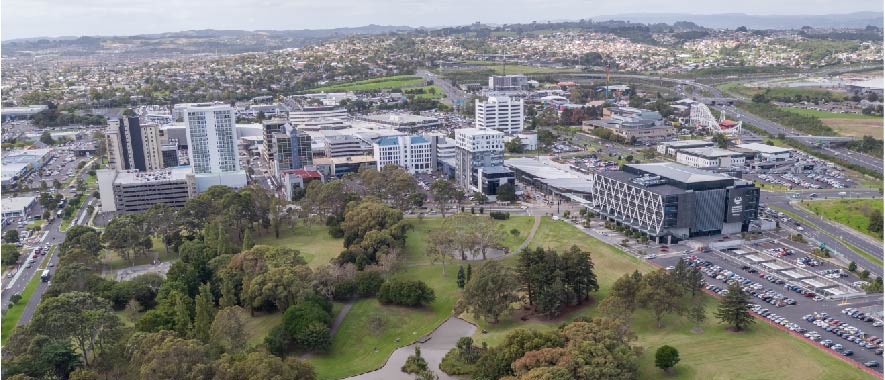
Reclaiming our streets, storage is vs productivity
New Zealand has gotten rid of Parking Minimums via the National Policy Statement – Urban Development. And the good news is no one wants it back either when the NPS-UD was open for submissions again late last year. So with that out of the way how would market-led parking work on urban development and housing yields. And if Minimum Parking was still there how it might have impacted such yields (aka why it was daft).
Reclaiming our Streets, the hidden of costs of parking part one
Moving the Parking Needle
1. Executive Overview: The Shift Toward Market-Led Parking Paradigms
The urban development landscape is pivoting from rigid mandatory parking minimums to a market-led supply paradigm—a transition that represents a fundamental yield optimization strategy for modern developers. Historically, “one-size-fits-all” mandates forced a static volume of vehicle storage onto every project, regardless of transit proximity or actual demand, effectively depressing land value. This strategic pivot toward “right-sized” development acknowledges that land-use efficiency and housing affordability are directly compromised by excessive parking requirements. By moving away from mandates, municipal policies now allow the market to determine parking supply based on site-specific variables—Capital Expenditure (Capex) constraints, land value, and transit accessibility—ensuring that valuable urban footprints are utilized for their Highest and Best Use (HBU) rather than as unproductive asphalt.
| Feature | Mandatory Parking Minimums | Market-Led Parking Supply |
| Supply Determination | Fixed mandates based on peak “Boxing Day” demand. | Determined by developers based on yield, cost, and demand. |
| Pricing Transparency | Costs “bundled” into rent/sale; hides the subsidy. | “Unbundled” pricing; users pay directly for storage. |
| Land-Use Priority | Prioritizes vehicle storage as a development prerequisite. | Prioritizes “active” revenue-generating GFA. |
| Transit Integration | Parking mandated regardless of transit quality. | High-quality transit (RTN) acts as a functional substitute. |
Strategic Takeaways for Development Yield
- Capex Mitigation: Removal of mandates allows for “parking-free” or reduced-parking typologies, significantly lowering upfront construction financing requirements.
- Yield Optimization: Developers can optimize Gross Floor Area (GFA) for active revenue generation (retail/housing) rather than passive, low-return storage.
- Transit Substitution: Leveraging proximity to Rapid Transit Networks (RTN) allows developers to internalize the value of public infrastructure while passing savings to non-car-owning segments.
- Spatial Productivity: Eliminating the “concrete wasteland” effect of oversupplied lots increases the overall density, footfall, and commercial vitality of urban projects.
Understanding the macro-economic burden of the status quo is the prerequisite for leveraging these new policy flexibilities to unlock project feasibility in high-value corridors.
2. The Economic Burden: Quantifying the Cost of Artificial Supply
Parking requirements impose severe financial externalities that compromise project internal rates of return (IRR). Parking is not merely an amenity; it is a high-cost infrastructure burden that competes directly with housing density. When mandates force developers to provide supply beyond market equilibrium, it creates a “hidden tax” on development, inflating costs for both the developer and the end occupant.
The Cost-Per-Stall Analysis Construction typologies dictate the severity of the fiscal impact:
- Surface Parking: Costs a minimum of $4,200 per stall. Crucially, it consumes significant land area, which in high-value urban centres represents a prohibitive opportunity cost in terms of lost GFA.
- Parking Garages: Construction costs escalate up to $37,000 per stall, requiring deep capital reserves and creating complex financing hurdles.
The “So What?” Layer: Impact on Affordability and Feasibility These infrastructure costs translate directly into a barrier to entry. Research indicates that mandatory parking adds approximately 10% to housing prices. For affordable housing developers, the “tens of thousands of additional financing dollars” required per unit can effectively kill a project’s viability. This is particularly regressive for low-income residents, the elderly, and those with disabilities, who are disproportionately forced to subsidize the vehicle storage of others through inflated rents.
Revenue Efficiency: The Trader Joe’s Yield Model Institutional data from the investment firm JLL confirms that a market-led approach represents a superior economic use of land. The grocer Trader Joe’s utilizes a model of smaller stores and limited parking footprints. By prioritizing turnover over storage, they achieve sales of approximately $1,734 per square foot—nearly double the $930 per square foot generated by competitors who prioritize large, sprawling car-centric designs. From an HBU perspective, smaller, nimbler footprints with less parking are significantly more productive assets.
Transitioning from this macro-economic burden requires a geographic-specific management framework to match policy with transit readiness.
3. Strategic Tiers: A Framework for Spatial Readiness
The “Tiered Parking Management System” serves as a tool for matching parking policy to transit accessibility. For the developer, geographic context dictates the aggressiveness of parking removal and the corresponding opportunity for density.
The Three-Tier Hierarchy & Management Focus
| Tier | Readiness Level | Management Focus | Park and Ride Strategy |
| Tier 3: City & Metro Centres | High | Initiative-taking: Reduce private vehicle use for all travel. High charges and space reappropriation. | Priced/Time regulated (2–4/day). Commuters pushed toward transit. |
| Tier 2: Town Centres & Mixed-Use | Moderate | Initiative-taking: Reduce vehicle use for commuter trips. Shift long-stay to market pricing. | Priced/Time regulated (2–4/day). Demand-based annual fee updates. |
| Tier 1: Residential & below | Low | Responsive: Actions taken only for specific safety/demand issues. Supply largely unchanged. | Priced/Time regulated (2–4/day). Redevelopment requires business case. |
The Priority Scale: Kerbside Allocation Within these tiers, the allocation of the public realm follows an 8-point priority scale. Developers must recognize that vehicle storage is now a residual priority:
- Safety (Non-negotiable prerequisite)
- Property Access (Preserving existing movement)
- Movement of people (PT, walking, cycling)
- Public space improvements (Seating, plantings)
- Mobility parking
- Specialty parking (Loading zones, car share, EVs)
- General vehicle parking
- Overflow parking (from new developments)
The “So What?” Layer for Developers In “High Readiness” (Tier 3) areas, the city is actively phasing out long-stay parking. For developers, internalizing parking costs is now an absolute necessity. Proximity to transit is the primary leverage point; projects that fail to adapt face significant risk as the city will no longer provide a “parking safety net” on public streets.
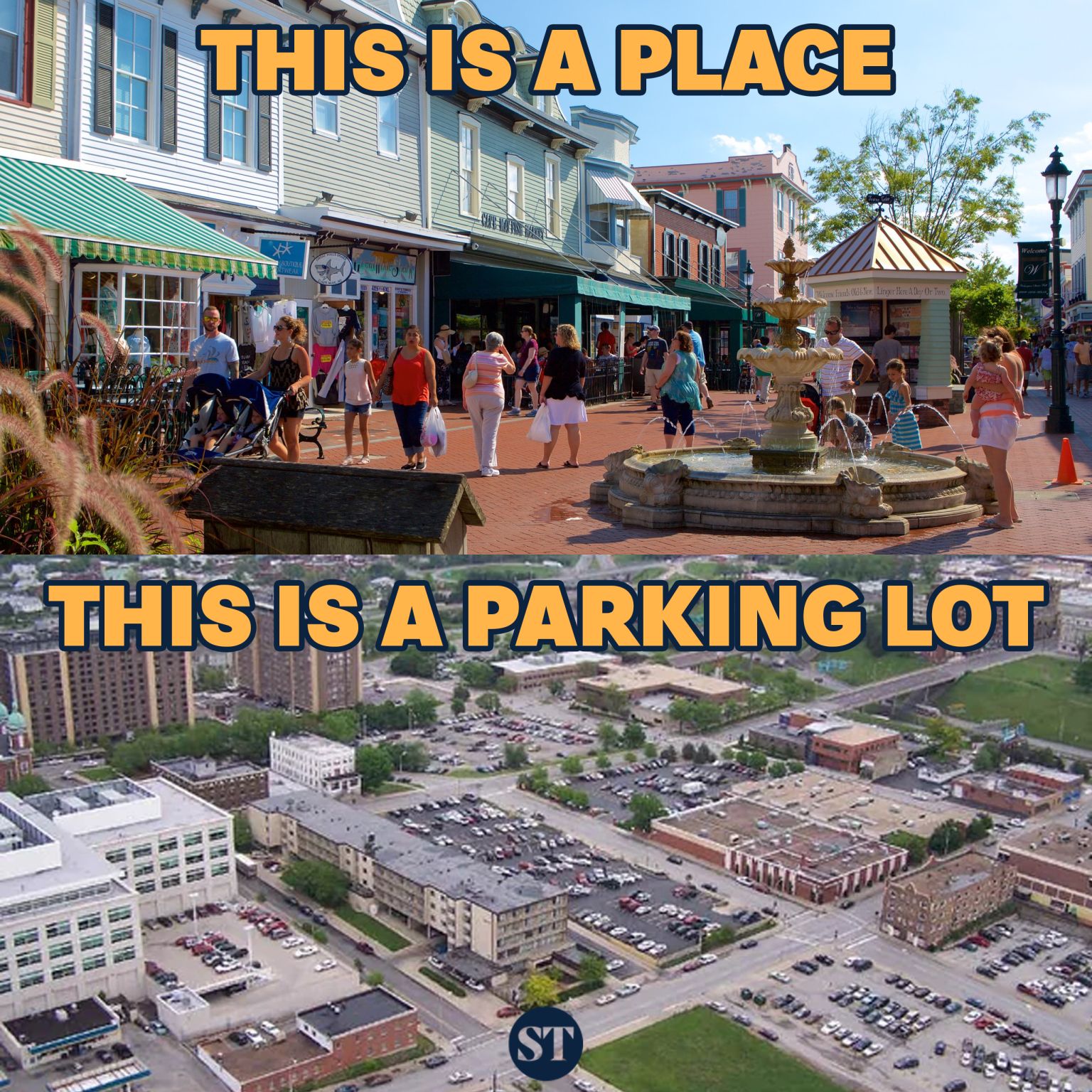
4. Repurposing the Kerb: From Vehicle Storage to Strategic Movement
The “Strategic Transport Network” (STN) comprises the city’s most valuable public land assets. Under modern parking principles, these corridors are managed for the movement of people and goods, not the stationary storage of private property.
The Priority Pivot on the STN Per Parking Principle IV, vehicle parking is the lowest priority use of space on the STN. Kerbside lanes are being systematically repurposed into bus lanes, cycleways, and footpaths. This shift follows Principle XIII, which states that parking on the STN will be removed “except under exceptional circumstances.” This delivers quantifiable network benefits:
- Increased Capacity: A single bus lane can transport four times as many people per hour as a traffic lane.
- Capex Efficiency: Using existing kerb space for transit improvements avoids the “daunting costs” and multi-year delays associated with property acquisition and road widening.
- Negative Externality Mitigation: Reducing car-centric infrastructure improves safety and removes the noise and pollution that depress adjacent land values.
Policy-Driven Liability: Development “Overspill” The most critical insight for developers regarding “overspill” (Priority 8) is that it is essentially a policy-driven liability. If a developer under-builds parking, the city will not “bail out” the project using public streets. Furthermore, residents of properties consented after September 30, 2013, are strictly ineligible for residential parking permits. Developers who fail to communicate this risk to buyers/tenants face significant long-term litigation and vacancy risks.
5. Spatial Transformation: Reclaiming Land for Higher Value
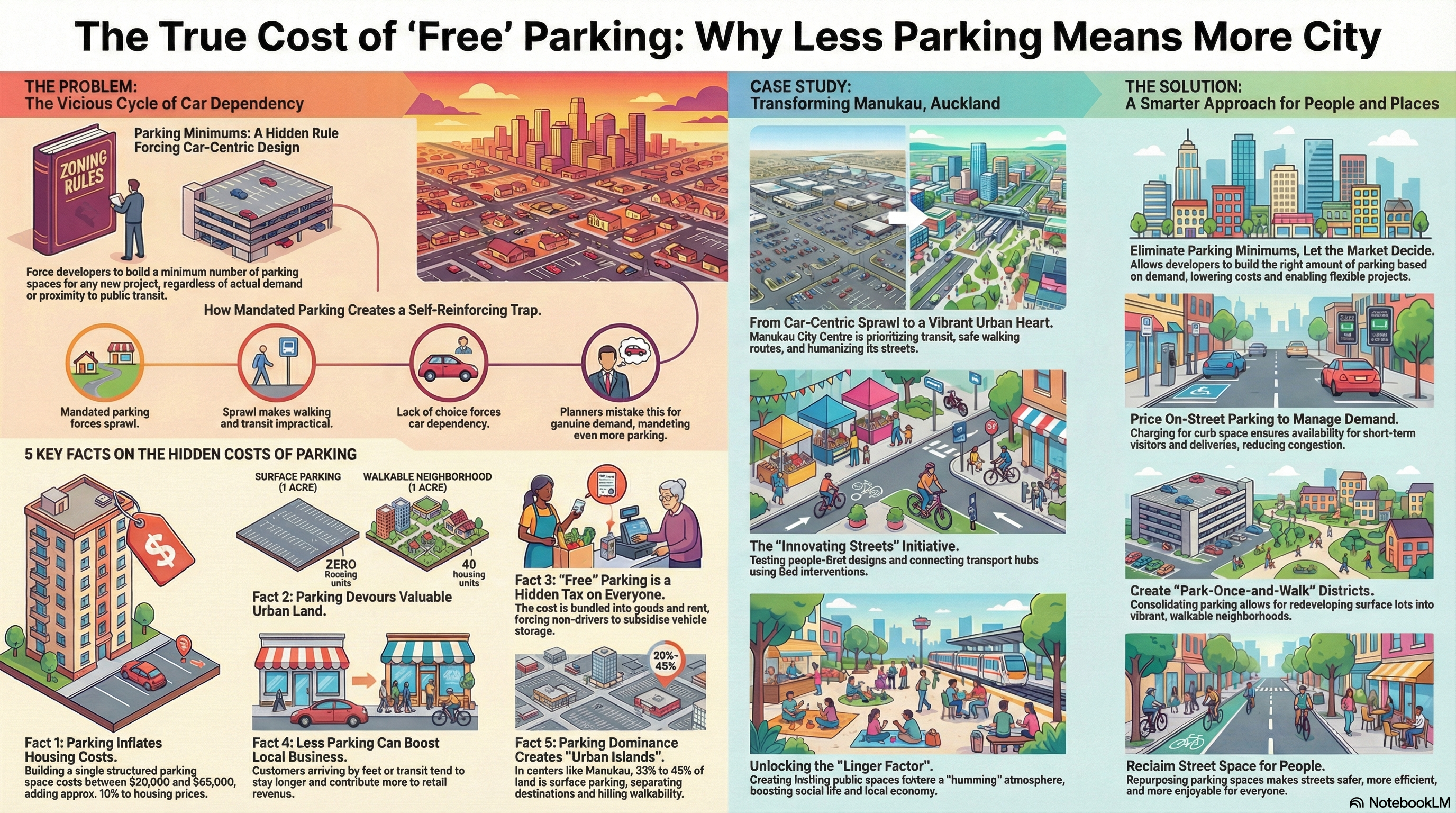
Excessive parking creates a massive opportunity cost, locking land into low-yield vehicle storage. Historical analysis of Manukau City Centre (circa 2010) reveals a “high volume of parking lots” and four-lane high-speed roads (like Station Road) that functioned as barriers to density. Reclaiming this land allows for the creation of an “8-80 people’s city”—an environment safe for ages 8 to 80.
The HBU Reappropriation Menu By converting “concrete wastelands” into active revenue-generating or social assets, developers and planners can realize higher returns:
- Commercial Vitality: Converting parking lanes into outdoor dining zones with street furniture and retail markets.
- Public Space: Reclaiming asphalt for gardens and green spaces that manage flooding and enhance property premiums.
- Micro-mobility Assets: Dedicated loading zones and bike/scooter hubs that support “last mile” delivery and logistics.
The “So What?” Layer: Enabling Sensitive Infill, the removal of mandates is the primary catalyst for “sensitive infill.” Previously, developing small building sites was “expensive and inefficient” because parking requirements consumed the entire footprint. By eliminating these mandates, previously non-viable small sites can be transformed into high-density housing, fighting urban sprawl and optimizing urban land value.
6. Conclusion: The New Developer Mandate
The transition from “Boxing Day madness” design—sizing for 1% peak demand—to “right-sized” average-use design marks a new era in urban economics. The most successful future developments will be those that treat parking as a strategic variable to be optimized for maximum yield.
Actionable Strategies for Planners and Developers:
- Unbundle Parking: Charge for parking separately from rent or purchase prices to ensure financial transparency.
- Prioritize Transit Substitution: Leverage proximity to RTN hubs to mitigate Capex on parking and maximize residential/commercial yield.
- Optimize for Turnover: Shift to high-turnover models in retail to support vitality and “park-once” district dynamics.
- Permit Eligibility Warning: Meticulously verify the September 30, 2013, cutoff date. Ensure all feasibility studies reflect that post-2013 developments have zero claim to public kerbside storage.
The future of urban real estate belongs to those who prioritize human movement and land-use intensity over the storage of private vehicles. Projects that embrace this optimization will dominate the walkable, high-value environments that modern capital demands.

 Talking Southern Auckland