Auckland Council’s Governing Body today made a decision to postpone the passing of the Air Quality Bylaw. The proposed bylaw aims to manage indoor fires to reduce air pollution and meet National Environmental Standards for Air Quality (AQNES).
Councillors agreed that further discussion was needed with the government to meet their legislative requirement and garner support for the large number of Aucklanders this bylaw will affect.
Councillor Calum Penrose, Chair Regulatory and Bylaws Committee says, “We have over 80,000 households in Auckland that currently use open fires and old wood burners. We would like the government to work with us in providing people with clean heat alternatives and support the more vulnerable in our community whose only form of heating is open fires.”
Cr Penrose recognised that the proposed bylaw needs to be put through to meet the AQNES and also for the overall health of the wider Auckland community – 110 people dying a year from illnesses due to fine particle emissions from indoor fires is another vital reason to rectify this problem.
The proposed Air Quality Bylaw will go back to the Regulatory and Bylaws Committee in February 2015 with further clarification on support for alternative heating options. The overall timeframe of an indoor fire ban in late 2018 is not expected to change.
—Ends—
And I bet all the Government will do for “support” on alternative heating options is garner the big stick rather than rebates and subsidies. So might as well get the Bylaw through and be done with it. We have until 2018.
The new Bylaw to place restrictions and bans on pre 2005 wood burners in Auckland homes has been kicked into touch – February 2015 looking at Twitter and MSM reports.
Council is due to release more details later on today.
No matter the delays however, the City is still faced with the inevitable. We either get the Bylaw in ourselves under our own steam or have it done for us by the Ministry for the Environment.
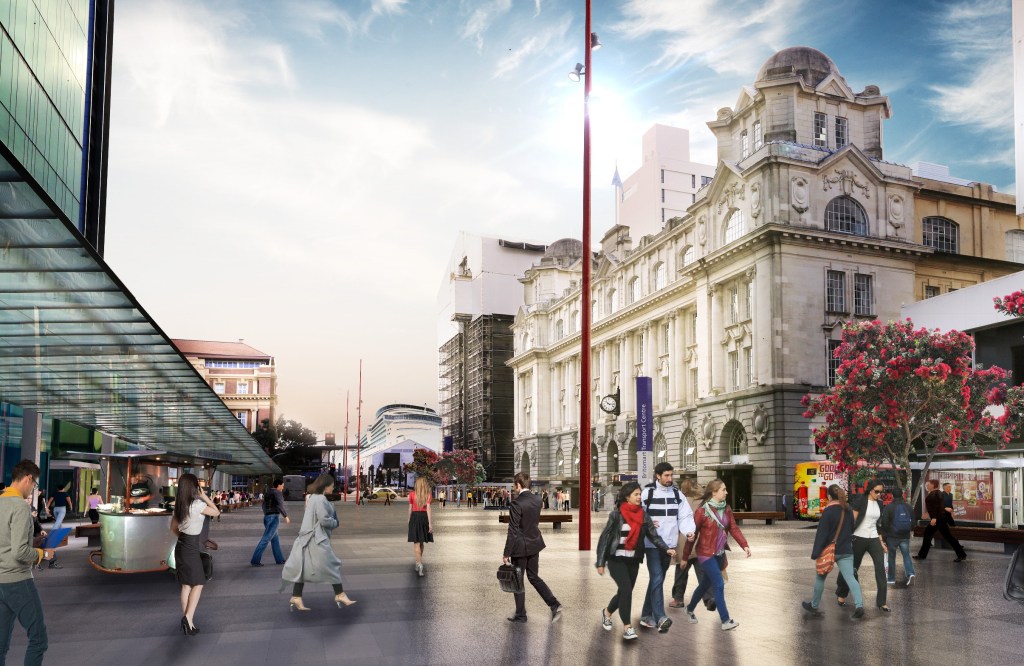
Have Your Say as part of the Downtown Framework Time for some public input on Downtown public spaces. From Auckland Council: Aucklanders asked to help shape downtown public … Continue reading Help Shape Downtown Public Spaces
From Auckland Council (seeming this particular issue did cause debate while we still have deaths on the water from those in boats under six metres owing to people not wearing lifejackets)
Aucklanders respond well to lifejacket rules
Auckland’s Harbourmaster is hailing the first weekend of the council’s new rules on wearing lifejackets as a success.
Harbourmaster Andrew Hayton says staff from his office visited several boat ramps to inform people about Auckland Council’s new navigation safety bylaw which came into effect for Labour weekend.
“What was pleasing was that most people were aware of the rules and more importantly, were wearing lifejackets.
“The job has just begun so our staff will be out on the water throughout the summer to ensure people are well informed and know the rules and their responsibilities.”
The new bylaw requires everyone on a vessel of six metres or less to wear a lifejacket and that they can only be removed if the skipper determines that it is safe to do so.
The council is also simplifying signs at boat ramps, to help with greater understanding and compliance.
For more information on Auckland Council’s Navigation Safety Bylaw go to aucklandcouncil.govt.nz/harbourmaster
—ends—-
Stay safe out on the water. Still too many preventable deaths often from not wearing lifejackets or not being equipped properly. 6 hours in a lifejacket being hot and uncomfortable sure beats being dead a very long time….
Waitakere Local Board proceeding with project From the Waitakere Local Board via Auckland Council: $19m Lopdell Precinct and new gallery unveiled A civic opening ceremony and free family … Continue reading Lopdell Precinct and New Gallery Unveiled
All About Auckland Looks at the Debate The All About Auckland Show has been covering the Valuations, and Rates debate. You can see the full video here: Valuations and Your … Continue reading Valuations and Your Rates
One thing that I will ping National on is that some Ministers (Joyce, Smith, and even English at the moment (which is a shame)) thinking only on one dimensional terms rather than three dimensional terms.
I do not know what it is with Centre Right Parties here, Australia, the USA, and the UK when it comes to the difference between physical and social infrastructure. They can see physical infrastructure no problem but social infrastructure it seems they can not simply understand for the life of them.
Social infrastructure is as critically important as the physical infrastructure. If you lack the Social Infrastructure at State level we return to the Classic Liberal era of 19th Century Britain and the wild economic swings that would bring about Social Liberalism and the Welfare State up until the 1990’s.
Let me put it in a final form. A society that disconnect will prompt civil unrest and later wars. History has shown that to us again and again.
One of the key responsibilities of incumbent upon Government is the provision of infrastructure.
This includes building railways roads, hospitals, power grids and policing, which forms an intrinsic part of our social infrastructure.
This government has been big on building.
It has spent unprecedented amounts of money on building transport infrastructure, things such as roads and railway lines as it sees these things, quite rightly, as the arteries, veins and capillaries of the New Zealand Economy. This is well and good, but over the last six years the National Government and its allies, which include the Maori Party, has consistently failed to acknowledge the historic and contemporary under-investment in social infrastructure.
To answer a question that the Government has only just noticed, but has been around for decades, Bill English has announce that the Government is looking to sell state houses. The logic seems to be that selling state houses…
Again with the upcoming Fire Place Restrictions After our favourite journalist Bernard Orsman actually quoting the fact that pre 2005 wood burner restrictions stems from a Ministry for the … Continue reading Fire Places – Heated? Actually No
I rather think not looking increasing patronage in our Auckland libraries. Libraries will evolve as e-book technology continues to rise but the library will still be a community hub where information, literature, and good place to have a read or scan on the Internet can happen very freely. Also Libraries act as Auckland Council repositories for official documents that come out for consultation from time to time.
Rebekka and I still use the library despite being Digital savvy alot.
Data connectivity is intrinsic to most of our daily lives. The place which exists in almost every community large or small, rural or urban, is the public library. Ben Lee argues that not only do libraries provide free access to data, but they do so in an environment which is trustworthy and neutral, geared to learning. Access to digital technology increasingly overlaps with access to opportunity and it is important to recognise the role public libraries already play (and have always played) in keeping the gate to knowledge open.
In a recent Financial Times article about e-books and Amazon Prof John Kay casually dismissed public libraries as being doomed alongside printed books. He observed that readers might miss the “comfortable ambience” of libraries and likened library users to nostalgic steam train enthusiasts, but essentially his view was no harm would come if libraries disappeared. This blog post is based on my original response to that article.
It is not just library sceptics like Prof Kay who portray public libraries as more about printed knowledge than digital knowledge. Those campaigning to save libraries from spending cuts often point to the sacrilege of removing book shelves more than the inequality of the information divide and its conjoined twin, the digital divide. Free access to written knowledge as a route to a better life is what galvanised support for the first publicly-maintained libraries; not reading for the sake of reading. In 1852 Manchester opened the UK’s first free lending library and in his address at the grand opening, with Charles Dickens as guest of honour, Sir John Potter, Mayor of Manchester and main benefactor said:
We have been animated solely by the desire to benefit our poorer fellow-creatures. It is the duty of those who are more favoured by fortune than they, to do everything in their power to afford additional means of education and advancement to those classes.
W.R. Credland’s The Manchester Public Free Libraries (1899) a copy of which has been digitized by the Internet Archive project
In other words the purpose of the library was to enable the poor to build better lives.
It would be a damn shame for Council to be doing library cutbacks in the 2015-2025 Long Term Plan due to Council financial mismanagement and wrong spending priorities….
I suppose this is a lesson on not giving a Public Authority a “lead” on a public art project as this Herald article from Bernard Orsman shows below:
Cost of State House sculpture rocketed to $1.9 million
5:17 PM Friday Oct 24, 2014 – Bernard Orsman
A leaked drawing of the State House Sculpture by artist Michael Parekowhai. Source: NZ HeraldA leaked drawing of the State House Sculpture by artist Michael Parekowhai.
The cost of the State House sculpture on Auckland’s Queens Wharf blew out to $1.924 million before being scaled back to $1.5 million, papers show.
Documents released under the Official Information Act to the Herald show the original plan was for the project to be finished in the first few months of this year. The completion date was later revised to February 2015 and is now some time beyond that.
Auckland Council announced plans for the sculpture in March last year, to be funded by a $1 million donation from Barfoot & Thompson, marking the company’s 90 years in business.
With $800,000 budgeted for a crystal glass chandelier made in Venice to be enclosed within the house, the project came under review and the budget was scaled back to $1.5 million in July 2013.
Images of the sculpture have been shared with councillors but not the public, causing widespread criticism.
In February, Parekowhai told council public art manager Carole Anne Meehan he did not want early concept drawings and photos of a model to be “distributed publicly by anyone attending” a council meeting.
But several images were leaked to the Herald. They show a typical state house with external stairs leading to a platform offering multiple views of the chandelier filling the interior.
They also show a skylight, to allow cruise ship visitors berthing at Queens Wharf to peer inside the brilliantly coloured and intricate glass garden of native birds, flowers and insects inside the house that will glow softly at night.
A council source said if the council wanted to stuff up the sculpture it could not have done a better job.
Today, council chief operating officer Dean Kimpton said there was no fault with the process, but acknowledged it would have been better to have released images earlier.
He said the design had gone through a number of iterations, saying images and construction dates would be made public in mid-December.
“It is what it is. The design process has taken longer … and we have got a great result from Michael [Parekowhai]. I think the public are going to love it. I’m not anticipating a public backlash,” he said.
Asked about ratepayers underwriting up to $500,000 after the cost ballooned above the initial $1 million budget, Mr Kimpton was confident of attracting sponsorship once images, a story to wrap around it and a building deadline were made public.
He confirmed rumours that other suppliers were being considered for the chandelier, including glassworks in the United States and New Zealand, “but it is likely to be constructed in Italy”.
The documents show that Parekowhai was recommended “after careful consideration” as the “only candidate” for the artwork in late November 2012 after a shortlist of 11 potential artists, whose names were redacted, was drawn up.
Said Ms Meehan on November 26, 2012: “This is the right moment for a significant commission for Auckland by him [Parekowhai], as national and international recognition of his work is climbing.” She also recommended moving the sculpture from the cityside of Queens Wharf, a location “sabotaging” its potential, to the water’s edge at the end of the wharf.
The latest breakdown for the $1.5 million project, includes $705,000 for the chandelier, $415,000 for the building, an artist’s fee of $225,000 and $155,000 for a contingency and development costs.
A council document, dated May 15, says the project is a given and will not go out for public consultation in the new 10-year budget.
The whole thing seems Gold Plated and an absolute disaster in handling since day one! Misinformation and lack of clear concise information from Council is certainly not helping either and this will feed on to other projects whether it be public art or something else.




 Talking Southern Auckland