Category: Politics

The Politics behind the issue or of the day

Legitimate Concerns with the Unitary Plan?

What Do you Think?


With the Unitary Plan feedback due to close on Friday, we are still getting rumblings on the Unitary Plan popping up in the media. This particular one came up in the Herald this morning – and was not written by Orsman (meaning I will pay attention):

Support for draft plan ‘fading fast’

By Wayne Thompson

Local boards urge mayor to slow things down as ‘enhanced engagement process’ causing confusion.


Mayor Len Brown was urged to slow down the process. Photo / NZPA

EXPAND
Mayor Len Brown was urged to slow down the process. Photo / NZPA

Support for the draft Unitary Plan is “melting faster than snow in sunshine” amid widespread anxiety over intensive housing proposals, say the leaders of three local boards from Orakei, Manurewa and Hibiscus & Bays.

In a joint statement, the leaders say the 11-week so-called “enhanced engagement process” for the pre-notified new rule book for growth has confused the public and lacks credible evidence of the effects of higher-density zoning.

Public comments on the draft plan will be accepted up to 5pm on Friday and so far 3000 individual comments have come in.

However, Orakei Local Board chairwoman Desley Simpson predicted a low response from the usually outspoken eastern suburbs people.

Most people were “in the dark” about the council’s disclosure, after nine weeks of presentations, that 70 per cent of the area was proposed for a mixed housing zone, with a maximum height of three storeys instead of two.

They would have wanted a say if they had known that was the case, she said, and urged Mayor Len Brown to slow down the process, which is scheduled to produce a final draft version for public consultation in September.

Manurewa Local Board chairwoman Angela Dalton called on the council to show its evidence in favour of planning for 7000 extra houses in the area. The board’s own market research – presented to the council – showed it was unlikely to happen.

You can read the rest of the article over at the Herald.

There are several messages cropping up here:

  1. Participation in the Unitary Plan process thus far
  2. Evidence on Council’s methodology behind aspects some zoning like Mixed Housing Zones and the Centres (especially in Town and Local Centres)
  3. The next round of engagement with the Unitary Plan


In the case the of participation, the best way to hear the rumblings is listen to this (it is free but you do need to register first) http://www.allaboutauckland.com/video/2253/cr-wood—unitary-plan-notification-delay/1

After that I would recommend reading my “Skewing of the Unitary Plan” in regard to the demographic skewering of Unitary Participation to see where we are at (and the imbalance as well)

With regards to “Evidence on Council’s methodology behind aspects some zoning like Mixed Housing Zones and the Centres (especially in Town and Local Centres);” I have seen a post from Phil McDermott that covers aspects of this and will repost his thoughts later today.

In regards to the next round of engagement with the Unitary Plan; it will be with Local Boards and Key Stakeholders (I got ranked as a Key Stakeholder by Council in regards to the UP – whether I participate in this next round is yet to be seen) around June-July. This is per the resolution moved by the Auckland Plan Committee this month. What this next round with entail and how much effect it will have in reshaping the Unitary Plan is yet to be seen.


So legitimate concerns with the Unitary Plan or full of wind? Comments below. My own opinion currently is; allow the May 31 deadline to pass. However, I am interested to see what this next round with Local Boards and Key Stakeholders will entail. More to the point will that particular round have any real grunt in getting changes through in reshaping the UP…

Time will tell


Time for a Debunk?

I will let you read this first as I would like your comments as you have heard enough of me on this particular matter.


DISCLAIMER: The email originating from the particular Local Board member does not reflect the view nor opinion of the Eden-Albert Local Board. The email below is to be taken as a reflection of the the particular individual’s view only

Ben

Managing Director of TotaRim Consultancy Limited

———

Got forwarded this from someone that has originated from the Eden-Albert Local Board.

Take a read and leave your comments below. If you really want to know my comments then please wait for my full feedback currently being written up for the Council on the Unitary Plan

———-

Subject: Unitary Plan Important Please read and pass on
Date: Sat, 25 May 2013 18:15:35 +1200
Dear fellow Stakeholder in Auckland’s future,
This is lengthy but worth the read  and please submitt I am sending this to you because I know you and thought you would like to know the implications ..
This has been put together by some one else but I agree with all it say.       Pauline Anderson Your Local Board member for Albert Eden
Read the following email text, then copy it and email it to (or share this page with) any and every Aucklander you know ! This is IMPORTANT – this “plan” has the potential to wreck our city for everyone – and once it is done there will be no going back!!

I am writing to you as a personal contact because I have become deeply concerned about the future effects of Auckland Council’s draft Unitary Plan.

I want to alert you to these issues and persuade you of the need to act FAST, BEFORE IT IS TOO LATE!

The deadline for submissions is next Friday 31st May and the plan runs into thousands of pages. Given the 31st May deadline you don’t really have time between now and then to read and understand the Plan in detail.

However this email will give you the key points of concern, tell you what you can do and help you to do it.

But I stress: you/we must act before the deadline or it will be too late!

If we do nothing it will be assumed that we are happy and the plan will be fast-tracked through implementation by our elected representatives.

The impact upon you, your city, your neighbourhood and your homes could be severe and will be final!

Why?

Well the provisions of the plan are set to change the rules about what can be built in more than half of the city’s residential areas.

How this directly impacts you will depend on which “zone” your property is in. There are several zones but if your house is in either the Mixed Housing or the Terraced Housing and Apartments zone then you have got a problem ! To find out which zone your property is in go to

http://acmaps.aucklandcouncil.govt.nz/unitaryplan/FlexViewer/index.html

to view the Council’s map.

The viewer is not very user-friendly but if you put your pointer onto the map it will change to a hand and you can then zoom in with a double click and move the map to locate your actual plot.

· If your plot is shaded in the “brown paper” colour you are in the Mixed Housing zone.
· If it is in the “Amber” colour you are in the Terraced Housing & Apartment zone.
· If your house is in the off white colour your enjoyment of your property will not be directly affected by the plan unless your property is close to the border with one of the other zones.

…but since we all stand to suffer indirectly as a result of the plan you might want to read on anyway!

Firstly the direct impacts:
If you are in the Mixed Housing zone then your height-to-boundary rules are gone and the plan will allow construction of 10 metre high three storey multi-occupancy apartment blocks. Go to

http://auckland2040.org.nz/?Issues

and scroll down the page to see what this might look like.
If you are in the Terraced Housing and Apartment zone then your height-to-boundary rules are gone and the plan will allow construction of rectangular multi-occupancy apartment blocks with, dependent upon the width of frontage, in the worst case no effective height limitation. Go to

http://auckland2040.org.nz/?Issues

and scroll down the page to see what this might look like.

WARNING:

In both zones your right to notification of and objection to such developments will be removed –
the decision will be made between the Council and the developer independently of what you may think.

In both zones your right to appeal to, and have your objections heard
by a higher authority (the Environment Court) will be removed.

So the first you might know of a multi-storey development starting three metres away from your boundary could be when the diggers start up – and there will be basically nothing that you will be able to do about it! The plan is specifically designed to allow this sort of development to take place without the hindrance of objections by people affected. New blocks will be allowed to shade your windows and garden from the sun, block out your views, increase traffic in your road or down your shared driveway etc. etc. and there will be absolutely nothing you can do about it!

ACT NOW!
IF YOU ARE IN EITHER OF THESE ZONES AND YOU DO NOT OBJECT BEFORE 31st MAY 2013
THE COUNCIL WILL ASSUME THAT YOU ARE HAPPY WITH ALL ASPECTS OF THE PLAN!

Indirect Impacts:
And what about the indirect impacts of such a development “plan”. Well these will affect everyone right across our city. That is because the “plan” does not stipulate where development will take place; it is designed to allow developers free rein to build high intensity (i.e. high rise apartments) housing anywhere within the new zones without the hindrance of objections from neighbouring property owners and these areas are spread right across the city.

But what the plan doesn’t do is take any account of the extra load of all the additional families and people who may move into an area where development takes off; that is because the Council, with this plan, does not impose any sort of planned approach to manage the roll-out of such developments to allow local infrastructure (e.g. Roads, sewerage, schools, parks, public transport, swimming pools, libraries, etc.) to support all the extra people to be put in place. And that means that it cannot predict where developments will actually be built – that will be left entirely up to the developers – and they will have more or less free rein to build what they want, where they want and when they want, right across the city whether the infrastructure is ready or not.

I do not know how such a free-for-all constitutes a “plan” and I am deeply concerned that what will actually occur will be years of mayhem. If you think the traffic problems in your suburb are bad now, just think what they will be like if multi-occupancy blocks start appearing all over the place with each new family expecting to have a couple of cars! Let alone the question of where their kids are going to go to school or providing adequate emergency services, etc., etc. etc.

The conventional approach to development is to put in the services such as roads, sewerage, water and power first and to work to a plan which provides for the other services such as schools, hospitals; public transport and green spaces to be provided before or at least at the same time as the houses start going up. Where new housing is to be built upon existing infrastructure as is being proposed here, then to avoid creating infrastructural problems down the track, the development plan should include updating and enlarging of that infrastructure at least at the same time as the housing is being developed if not before, but definitely not after the event.

So even if your home and family are not directly affected by the new building rules you will more than likely suffer from more cars on your streets, longer commutes, bigger class sizes in your kids’ schools, more foot traffic, more noise and possibly years of disruption as the Council and the other services providers go round and round upgrading services that are simply not up to the job for the number of people who will be using them.

No matter how they try to sugar-coat this draft plan (and they are trying very hard with the considerable resources at their disposal that you pay for with your rates), the fact is that it is not really a plan at all, but an attack on the established rights of a subset of the population of Auckland to allow uncontrolled and uncontrollable development in the Council’s chosen upwards direction and the impact will be felt by all of us if it is allowed to proceed.

So what can you do about it?

Firstly let me say again: Doing nothing is the same as saying that you are happy with the plan!

If you do nothing the plan will be pushed ahead as Len Brown put it “fast, fast, FAST”.. And while the council strategy is to persuade you that it is a “just a draft” if you do not tell them in no uncertain terms what you do not want in any plan, they will only take out of the draft the bits that they do not want in their plan not the bits you don’t want in it – and you can guess which bits they will leave in!

The only chance you have of influencing the outcome is to object. The following are some things you might like to object about worded so that you can copy them straight into the Council’s online objection form:

I/We oppose the Draft Unitary Plan residential provisions and request Council to:
· Rethink the plan and allow more time for residents to understand, consider and if necessary oppose it. The current plan is far too long for anyone to understand in its entirety, let alone laypeople who are not familiar with the wording of such documents in the time that has been allowed under the current proposals.
· Change the wording of the plan to allow a right of consultation and objection about proposed developments to all affected homeowners and a right of appeal to a higher authority such as the Environment Court.
· Revise the plan to prevent the proposed scattergun approach which permits multi-storey/high density apartments to be developed throughout the city.
· Determine the ability of roading and other infrastructure (e.g. schools, sewers, public transport) to support and accommodate intensification before permitting intensification.
· Focus apartment building into key areas where the prices for apartments that are built will be affordable (rather than million dollar plus apartments e.g. ones with million dollar views) and where the city’s environmental appeal will not be adversely impacted and encourage comprehensive planning for each of these areas.
· Re-evaluate the projected population growth used as a basis for the plan based upon census information and consider other ways of reducing population growth in Auckland rather than just accepting that the projected growth is an inevitable fact.
· Change the plan to respect and not override existing determinations of the Environment Court and other such agencies.
· Remove the Council’s discretion to allow buildings of any height to be built.

The Council’s online objection form can be accessed by going to
http://www.aucklandcouncil.govt.nz/EN/planspoliciesprojects/plansstrategies/unitaryplan/Pages/theunitaryplanonlinefeedbackform.aspx.

To complete the objection form:
copy (highlight them and press Ctrl & C at the same time) the objections you want to raise from the list above;
2. click on the online form link;
3. scroll down the form to the section entitled “Please provide your feedback on the aspects of the draft Auckland Unitary Plan you would like to see changed and why (please attach a separate document with your feedback if required)”;
4. click in the box on the form;
5. paste (press Ctrl & V at the same time) your objections into the form;
6. add your other details and any other objections you want to make;
7. when you’re done click the “Submit” button.

Before you start doing that, please can I ask if you will do something else which is just as important and will only take a few moments?
Please will you forward this message to (or share this page with) as many other Aucklanders as you can, so that they can consider the ramifications of the plan & if they wish send their objections too?
To forward the email:
1. click the “Forward” button in your mail software;
2. replace my name with your own;
3. type or paste the email addresses of up to 10 Aucklanders you know into the “To:” field, and
4. click the “Send” button….
(N.B.. all the right people in central and local government will have been targeted by the time you get this – so you don’t need to send it to them too, unless you want to because you know them personally!)

Then you can go back to click the links above to send your own objections – but remember they have to be received by the Friday 31st May deadline.

Regards,

Pauline Anderson Albert Eden Local Board Member
Facilitator Mt Albert Business and Community Groups Assn
Hm: 09 8467 402 Mob: 021 770799
74 Mt Albert Rd, Mt Albert, Auckland 1025

———

Yes I have noted that anything on the RUB which affects the South and West is rather silent…

Also the above provides irony abound especially after my “Skewing of the Unitary Plan” post this morning.

Sigh

Dr Smith and the NIMBY’s

So a Fish Hook?


cats_fail-14143

I am getting the Herald delivered free on a five-week trial thanks to the AA. You can comment on the irony of the situation later but the word free and word worm-food have relevance here.

So upon reading the A-Section of the Herald (was looking for Orsman after a menacing Facebook remark he made last night on his page) I found this about Dr Nick Smith:

I wonder what he means “lower quality developments” for Auckland and affordable housing.

Would it be the quality like my ex-army house made of treated wood and brick built in the 70’s. It is basic with basic fittings provided in the house but huge potential to upgrade as the resident saves up and upgrades the dwelling (like what we are doing with our home).

Or (and most likely) something like the quality of the Hobson Street rabbit hunches that the NIMBY‘s bark on about that leak like a sponge and are of poor quality (forcing off an expensive virtual rebuild). History (and this hurts when it spells the truth) I believe tells us those rabbit hunches were “signed off” by the C&R dominated former Auckland City Council in 2004 (while the Mayor at the time – Banks wanted a stop to it before he got chucked out because of the Eastern Highway). Oh dear I see irony abound here folks…

For further irony I need not remind Auckland that it was the then National Government of the 1990s that removed the requirement of treated wood for new houses (saving costs to the consumer apparently) and now most of them leak worse than a sponge and have rotted away to such an extent that if your repair bill was not sky-high, your house was basically condemned. As for the old Auckland City and Manukau City Councils that signed off on these disasters as well, I believe both were Centre Right dominated as well in most of that period. If you want me to drive a further boot in the situation who do our conservatives (and NIMBY’s) vote for traditionally.

And before someone sends a flaming comment right back I ask you reflect upon yourself and remember you get what you either ask/vote for or deserve (to the point my generation have to pick up the can from your mistakes).


Now the onus is on the Minister Dr Nick Smith to clearly define what he means by “lower quality development.” Because unless you plan to return to building leakers and crap like those Hobson Street apartments, then under the current situation with constructions costs artificially high building a quality basic house like mine would be near impossible for under $300k all up (including land).

Hmm with Northern Regional National Party Conference this weekend, I wonder what is being schemed or parroted in the hallways and theatre rooms…


The Karaka Collective Presentation

Musings on the presentation


I have been meaning to get this piece up onto the blog for a while about the Karaka Collective presentation recently. I have not got the Physical Powerpoint presentation on me but, will chase it down from the Collective and upload it to the blog ASAP.


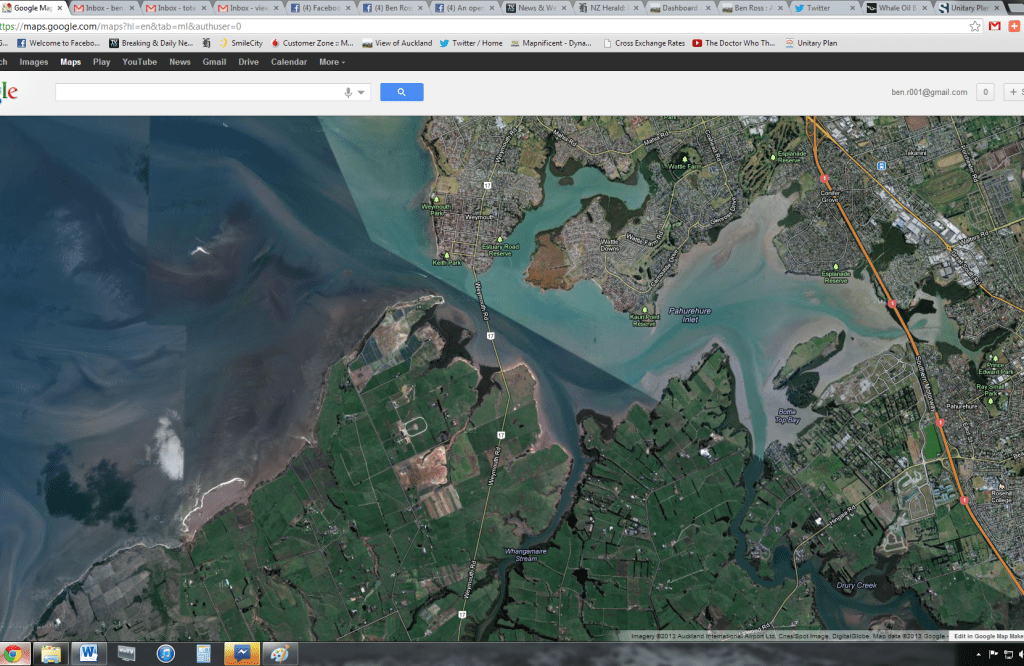
On May 13 at Karaka Hall, Peter Fuller representing the Karaka Collective gave a presentation of the Collective’s “submission” and vision for Karaka West and Karaka North. This also included the Weymouth-Karaka Bridge which seems to be causing enough upset from both sides of the harbour.

I have been asked for comments on the meeting as I was there. These are my thoughts and some responses to queries I got asked which covered both the physical presentation and the subject matter at hand:


The meeting in itself was civil and hats off to residents knowing the issue is both passionate and a sore issue (for both Karaka and Weymouth).
For the presentation it was too long and should have only be at maximum 10 minutes for the matter presented. Anything beyond a 20 minute mark in presentations and you lose the audience. I nodded off at the 20 minute mark to which I decided to go over and start talking to Councillors Fletcher and Penrose on the matter at hand.

I would have recommended to follow what is called a split presentation when giving a talk on material that can be quite heavy or quite extensive.

The split presentation format I used for the Auckland Plan Committee last week in my Manukau Presentation ( https://voakl.net/2013/05/15/the-manukau-presentation/ ) had both a short power point presentation covering the main points and a “booklet” with all the information at hand.

Both the presentation and the booklet is sent to the committee in advance for advanced reading leaving me to go over briefly the main points of my argument. The committee with the booklet in hand then asks questions they might have. It was a useful technique and allowed maximum time for the main purpose; questions or what I like to call dialogue if executed properly.

Peter Fuller should have split the presentation with both a short 10 minute brief covering the main points, followed by a booklet with all the finer details for further reading – and had it released a week in advance. Bloggers like myself would have picked up on this and both republished the information and ran commentary on it.

Although in saying that there is a risk of preempting the Collective’s presentation of information and allowing the residents to form questions before hand. Or allow bloggers like myself to take control of a debate and frame the argument. Risks but risks the Collective will have to take if they want their plan to progress. Also something a particular Herald journalist and elected representatives on the North Shore find out too when they get debunked for utter misrepresentation of information. So the remedy is simple; tell the truth from the beginning and you have nothing to fear. Tell a porker and don’t expect much forgiveness from people nor bloggers in return. The Collective were being honest and their ambitions known.

While the material in Fuller’s presentation was too long and too heavy with the presentation too full of planning and officialdom jargon. It could also be taken that the information presented in a way that was talking down to everyone in the room. So a patronising effect that will chill residents and elected representatives

As for the questions they were pretty good, as for the answers they were not. Fuller was okay with the answering but the other two that were land owners I had real issue with. Their answers were put in a way of both putting down the room and issuing a challenge to the room to “meet them” in the Environment Court which is likely where this issue will end up. I have taken note from Brigid her comment which was (it is public):

“I was at that meeting and there seemed to be a difference between how Bruce Wallace envisioned a Weymouth-Karaka link and what Peter Fuller showed in his presentation. Bruce Wallace seemed to be wanting de facto motorway that would get him quicker to and from the airport and lower congestion on SH1 so he could get to work in under 20mins. However Don McKenzie the traffic expert on the Collective team said any Weymouth-Karaka link would not lessen congestion. And Peter Fuller spoke of a 60-80k Te Irirangi Drive/Te Rakau Drive equivalent. ”


This folks is what you call an effective “Buggers Muddle” – that is a pile of different answers that basically contradict each other to the point oxymoron becomes the norm. Three different answers that would have three very different consequences on that particular bridge. Not entirely confidence material nor helpful for both Auckland Transport and NZTA if they ever decided to run with the project. So lets look at the points individually:


  • Bruce Wallace seemed to be wanting de facto motorway that would get him quicker to and from the airport and lower congestion on SH1 so he could get to work in under 20mins.

Umm no and won’t happen. Auckland Transport and NZTA would have to overcome hell and high water from Southern Auckland to get a de-facto motorway put in and the bridge built. The Benefit Cost Ratio would be below 1.0 owing to the massive environment (physical and social) consequences (mainly negative) to the entire area of the de-facto motorway proposal. The “motorway” would not lower the congestion on State Highway One especially when the Greenfield areas get built up. The only way to bet congestion on State Highway One is to 6-lane the motorway all the way to Drury interchange, get the rail service more effective and efficient, and development some large employment centres close to home (Manukau, Wiri and Drury). If one wants a quick trip to the airport then may I suggest throwing your support and money behind the Airport Line from Manukau Station to the airport. Coupled with the EMU’s you could be there in well 30 minutes without the traffic crap on the roads…


  • However Don McKenzie the traffic expert on the Collective team said any Weymouth-Karaka link would not lessen congestion.

Excuse the language but No Crap Sherlock. It will not lessen congestion any where. All that bridge will do is cause rat running through an established community causing misery and literal hell. Yes I see Weymouth has the strip to allow a 4-lane road but it is now too late for the road. That road and bridge should of been built 50 years ago to 4-lane specifications before Weymouth took firm settlement. The settlement could of then be built around the road and bridge rather than the community now being built around the road. As I said the only way to lessen congestion is what I mentioned above. Through in a proper Regional Public Transport Plan and I would say you could remove all together 33% of the cars off the road at a minimum while still allowing transit choice


  • And Peter Fuller spoke of a 60-80k Te Irirangi Drive/Te Rakau Drive equivalent. “

So an expressway option. Last I looked that the communities around Te Irirangi Drive were built in a way that they were mitigated from the most serious aspects of that road. That is the road was built around the community with green shelter belts and lane ways to access the houses (that is no house has a direct driveway access to Te Irirgani Drive in the new sections of that road). The older sections at the Manukau end of the road and along Te Rakau Drive which do have direct driveway access to the road show the implications of planning not done properly. What we see in the older sections of Te Irirangi Drive with direct driveway access rather than green belts and lane ways off the road is what we would get in Weymouth. Not fun for the residents nor particular safe for an 80km expressway either… It is of note that the Manukau end of Te Irirangi is at 60km/h while the new Botany sections are at 80km/h. That 80km/h section has the greenbelt and lane ways shielding the houses from the road. I wonder if the Collective would be willing to stump the cash up to retrofit Weymouth Road with those lane way shields if they want their bridge built. Probably not, so I wouldn’t want a 80km/h expressway either without the proper mitigation in position FIRST.

In regards to Bruce Wallace (seem to remember him rather well for some odd reason), I don’t particularly care if one has had issues with the old Councils. Most of us would have had crap from the legacy Councils so we know what it is like (Manukau Station being a pet peeve for me with the old Manukau City Council that I am still trying to fix up with the current Council). But what I do care is them short circuiting the RUB process and apparently trying to buy their way into outcomes favouring them via the Unitary Plan.

I did ask the final question for the night regards to the Collective supporting existing and new infrastructure projects before backing the Weymouth Bridge. Those projects include Glenora Road Station, Spartan Road Station, the Manukau Rail South Link, the RPTP with the bus routes and so on. While they said they would and might have done so (meaning I need to dig up submissions), I highly doubt it unless they prove me wrong over the next 7 years.
In saying that I am working on my submission to stave off that bridge as long as possible through a formation of a new regional park on the Karaka side. This has been mentioned before in this blog before

The submission will go up on my blog as soon as its finished.

Otherwise the meeting was handled well by the residents from a group short circuiting the processes the rest of us have to go through via claiming it is for the good of Auckland.


Those were my thoughts in the presentation. As I point out to the Collective, those ARE MY THOUGHTS AND INTERPRETATIONS of that presentation. If the Collective differs to my interpretations they are free to share a guest post – that is less than 2500 words and in plain English. Graphics help and can be facilitated easy into the blog.


In the mean time people do not forget your submission to the Unitary Plan in before May 31 – 5pm


Lessons from British Columbia in Electoral Races

Lessons too with The Unitary Plan


This particular article was given to me via Facebook and has some very poignant lessons on elections, and “selling” the Unitary Plan:

B.C. election offers lessons for politicians everywhere

From advertising strategies to mobilizing young voters, politicians have a lot to learn.
By: Michael Byers Published on Thu May 16 2013


The main thrust of the article was going on about an incumbent long thought to lose only to win and cause a large shock that even caught the premier out. Tactics and some sober reminders were also pointed out which I should go through point by point in regards to the UP but, touching on the mayoral race as well.


From The Star.com

Christy Clark’s re-election was a political shocker of seismic proportions. Nobody saw the victory coming: neither the pollsters, nor the pundits, not even the premier herself.

Across Canada, across the electoral spectrum, politicians and their advisers are scrambling to understand what occurred. Here’s an initial assessment, from my vantage point close to the front lines.


  • Positive campaigning is about demeanour, not substance. It’s about conveying optimism and empathy, about connecting with potential voters and inspiring them to turn out. Christy Clark did this well; Adrian Dix did not. And you never, ever, say that you’re running a positive campaign. Just do it!

Speaks for itself with a mayoral campaign. As for the Unitary Plan it is one of the things I try to do when running balanced commentary on this vast document. Yes I will go into attack mode (as Orsman and some conservatives find out quickly) but, that is going to be covered in another point in this post. Yes The Clunker can reign confusion and anxiety but the idea is not to go cause a self-fulfilling prophesy and fuel those negative emotions. Empathy for those that have anxiety (which is legitimate) and optimism for that despite a lousy hand from the Unitary Plan as it stands now, things CAN get better. I suppose empathy and boundless optimism with the Unitary Plan is what is keeping me from going off the deep end for this long as it stands. At the same time real alternatives are being crafted and presented for which all are being received favourably by most sides of the spectrum (you can never impress a NIMBY if you push change or even progress (so some battles you can never win)). All from running a positive campaign approach


  • Incumbents have to be held to account. Barack Obama’s “yes we can” campaign was leveraged explicitly on eight years of Bush administration failures. The B.C. NDP should have campaigned hard against the major scandals from the B.C. Liberals’ 12 years of power, including the deceptive introduction and shamefaced retraction of the HST. They should have campaigned against British Columbia having the highest child poverty rate in Canada, and against Clark’s personal proximity to the scandal-ridden sale of B.C. Rail.

Again this speaks for itself if one wishes to run against Len. As for me with the Unitary Plan and holding those to account; well the Penny’s (Hulse and Perrit) will get me asking questions if I am lost or don’t like something in particular with the Unitary Plan. Pretty much standard “operations” with a civic body and a planning document. Depending on how such questions are answered will influence whether I go positive or on the attack. Thus far I have not needed to go on the attack against the Penny’s. However holding Local Board Members and Councillors’ feet to the fire is something I will do more readily in regards to the UP. Those like Angela Dalton and Desley Simpson seem to be the exception rather than rule in not having to hold their feet to the fire. Why? Because they do their job and display empathy to all despite the UP being not the easiest document out there. And because both Angela and Desley do their job properly (and extended to Calum Penrose, Mike Lee, Sharon Stewart and Chris Fletcher) I get along with them well when sorting out the crap hand dealt to all of us with the Unitary Plan. We might not all agree but that is democracy and makes for healthy debate and stronger resolutions.

However with the good comes the bad. And there are those I will be holding their feet to the fire over the Unitary Plan. I do not tolerate scaremongering or deliberate misrepresentation from elected members on aspects of the Unitary Plan. The Three Storey House and Walk Up Apartment issue is the most recent case where I have (and rather sadly) gone on an attack path against some of the elected members (which ironically is our more conservative members who have an infamous name that has the word blue in it). This attack has happened because of their deliberate misrepresentation over the three storey housing issue which the subject matter has always been in the Unitary Plan. It would have helped if those particular members actually read their own legacy District Plans which formed the new rules  in regards to three storey buildings in the Unitary Plan

So people will be held to account where required – pure and simple with no apologies for it…


  • Attack ads work, at least if they are directed against real weaknesses. Adrian Dix did change his position on the Kinder Morgan pipeline halfway through the election campaign. He did wrongly backdate a “memo-to-file” while serving as chief of staff to an NDP premier in 1999.

Attack ads don’t work in NZ too well. Whale Oil and David Farrar would be the better people for opinions on this. But yes to me they do work when executed right and as part of a multi-prong campaign. Especially when an opponent has real actual weaknesses. This also applies with the UP when I go on the attack.


  • Never show up at a shootout with a Nerf Gun. Attacks have to be countered, and strongly, before they cause lasting damage. This can require launching a retaliatory attack — ideally, again, one that is directed against a real weakness.

Well no ahem Sherlock. Anyone with half a brain should know that. It is also like taking a knife into a gun fight – you will not win… Speaking of which I am listening to a Morning Report piece on the Unitary Plan where this bullet point I am commenting on comes into effect. If a journalist is on to it which they were in this piece, showing up to a shoot out with a Nerf Gun is only going to hurt and it did. As for the bullet point in itself, something that needs to be learned in NZ. Although I measure I will try to use if I get caught in a shootout (to varying degrees of success)


  • Most people, rather than voting on detailed policies, make their choice on the basis of some broader narrative. The economy matters, but detailed solutions — like Adrian Dix’s beloved “skills training” — do not. The people who are hurting most in tough economic times are also those who, because of a lack of time, education or civil engagement, may be most receptive to simple messaging.

Yep as I learned that in Political Marketing at the University of Auckland. It is also the reason why I get friends to assist me to simplify my documents on the Unitary Plan so that is not only easy to read but encompasses a broader narrative for the readers out there.


  • Progressive parties need to address the felt desire of many progressive voters for cross-party electoral co-operation. A clear commitment to introducing proportional representation immediately upon being elected could help to draw third party supporters toward any progressive party with a real chance of winning. Unfortunately, the B.C. NDP believed it could win successive elections within the “first past the post” system. Federal Liberals and New Democrats please take note!

Take note those seriously running for office. Failure to do will get you buried. I wonder if this particular bullet point rings out why the Centre Right, Local Government lot in Auckland have been failing with the Super City. It could very well be a lesson for them to take note before the Centre Left increases its majority further.


  • Pollsters have trouble accounting for lower turnout among some parts of the population. Young people are still not voting, and inspiring them to do so is the single greatest challenge facing progressive political parties today. Twitter and Facebook are no replacement for face-to-face relationship-building. Christy Clark lost her own seat because of a young and energetic B.C. NDP candidate who forged thousands of personal connections the hard way.
A pet problem in getting sections of the population to vote. Still Len managed to pull it off and might very well do so again in these elections with nothing impossible in this stage of the game. As for the Unitary Plan and face to face relationship building; it is the main reason why I headed out across the city to listen to the UP community meetings and gauge people’s views on it. The jetsetting around the city meeting different people has helped frame commentary on the Unitary Plan. The relationship building is also helping when drawing up those alternatives and then putting them out there for people’s thoughts. I supposed the measured successes of the Special Character Zone, and the Manukau as The Second CBD of Auckland work has resulted in the face-to-face relationship building. Seeing faces is often best compared to seeing “Facebook.”


  • There are no second chances. The key organizers of the B.C. NDP campaign were the same people who lost the 2009 provincial election. The campaign manager was Brian Topp, who was the early front-runner in the 2011-2012 federal NDP leadership race. With all due respect to Dix, who would have made a remarkably good premier, politicians who want to win cannot allow friendships to shape their choice of campaign teams.

Hmm Banks got a second but not a third chance however, with the UP there is no second chance once it goes into full operation. The bullet point makes a sober reminder when assembling teams to advance any project. Surrounding yourself with Yes-Men that pander to your ego and maybe Small Man Syndrome is going to be the fastest way to be both attacked by all sides and fail at the same time. You always need strong teams and teams that have people who will either go outside the square in thinking or disagree with you if something is utter crap. These kind of teams are winners and serve a reminder to both those with the Unitary Plan and those running for office the stakes in getting this aspect oh so wrong.


So we have sobering lessons from Canada that apply here in Auckland. I recommend having a deep thought session about this while I go debunk a piece said on Radio NZ this morning.