Constructive Criticism of The Southern Initiative I was out West yesterday while the Auckland Plan Committee met today in Town Hall (for the final time of this Council Term). What … Continue reading The Southern Initiative – Why it Needs Geographers
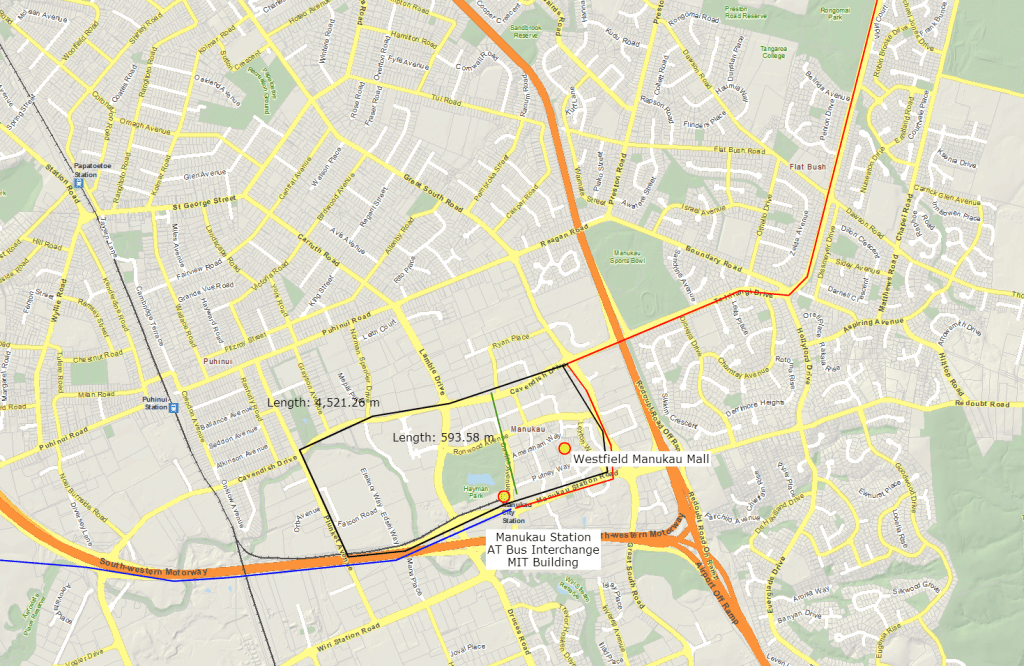
Looking at Transport Planning and Design
Constructive Criticism of The Southern Initiative I was out West yesterday while the Auckland Plan Committee met today in Town Hall (for the final time of this Council Term). What … Continue reading The Southern Initiative – Why it Needs Geographers
As we know, Manukau is in the pipeline for receiving Te Papa’s Auckland facility after a joint announcement by the Minister of Arts and the Mayor of Auckland. Interestingly enough the harshest of critics towards the facility in Manukau would be the ones who would naturally support – although apparently they prefer Wynyard Quarter.
However, their claims can be easily refuted by either (or all of) one of three counter-claims:
I have further commentaries on the positives of Te Papa coming to Manukau in my respective three posts:
Just a reminder to readers that the Te Papa North Facility is not just housing Te Papa. It is in fact a joint facility with: Te Papa, Auckland War Memorial Museum, and The Auckland Art Gallery all operating out of the Manukau facility. I also believe there will be storage and research operations carried out at the facility as well.
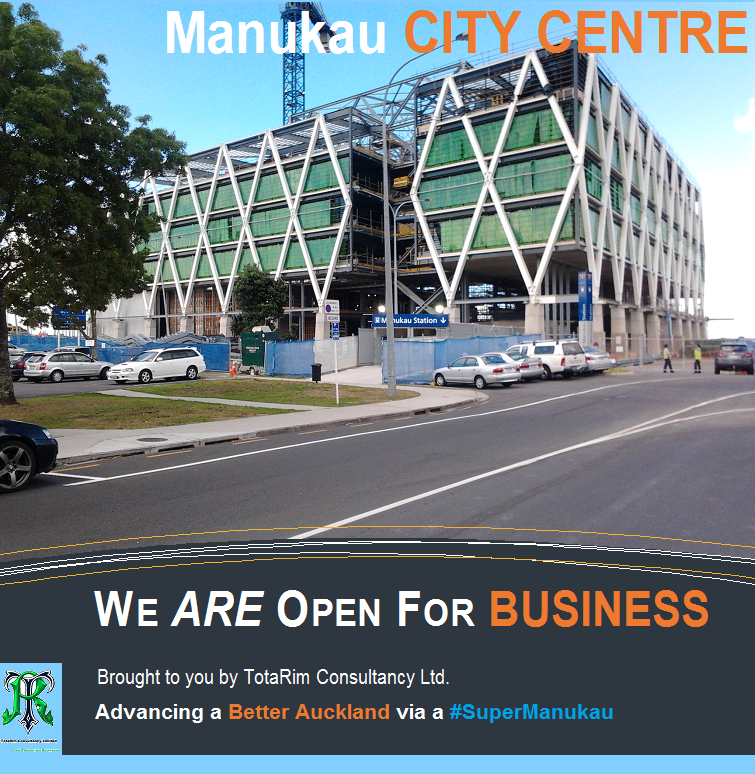
So with Te Papa North on the way to Manukau this might be a good time to really start looking at restoring the love to the Manukau City Centre area.
Those following the Manukau Super Metropolitan Centre concept commentary know that there are active efforts (from my end at least) to bring the Manukau City Centre out from its 1960’s auto-centric past, into a 21st Century people-centric city.
Te Papa North is another cog in the great machine to “restoring the love” (as Deputy Mayor Penny Hulse said) to the heart of Southern Auckland and my home (probably why some of the more astute readers can see an emotional attachment from me here).
But no amount of urban renewal in Manukau will work until we get the place flipped over from ‘Car-First’ to ‘People-First.’ By that I mean making the streets people (and cyclist) friendly.
To flip streets over into people friendly shared spaces can be done in small steps on bit at a time. Auckland Transport are already starting with Davis Avenue in making that pro-people (rather than pro-car).
Once Davis Avenue is done my next recommendation would be Ronwood Avenue that runs east-west through the heart of the Manukau City Centre Area.
This gallery shows what I am referring to:

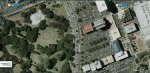
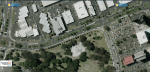
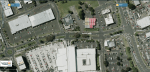
You can see narrow lanes going each way with on-street parking and very wide grass centre medians on Ronwood Avenue. Traffic volumes vary depending what is going on at the two roundabouts at the west end and in the centre of Ronwood Avenue.
Basically what you do is transplant what Auckland Transport has done to Davis Avenue over to the entire length (except for the small piece at the Great South Road end which can stay as is) and drop the speed limit to 30km/h. If you go one step further you could turn the pieces of this upgraded Ronwood Avenue in to Shared Zones like Fort Street in the CBD. One thing though is that depending on the new bus routings from Auckland Transport, Ronwood Avenue might need one or two bus stops to allow buses to exchanges passengers who might not want to go to the upcoming Manukau interchange.
Once Ronwood Avenue is complete with its upgrade my next choice would be Sharkey Street that connects to Ronwood Avenue (and Cavendish Drive). After that then we can look at some of the rat-runner roads like Cavendish Drive and Lambie Drive and get them more transit and people friendly then they are now. After that I think we start hitting some of the existing building sites in the Manukau City Centre area and bring those sites into the 21st Century as pro people not pro car sites.
One small step at a time. While others might have abandoned Manukau for flights of (elitist) fancy such as Wynyard Quarter and dumping literally everything of worth and value in the CBD, small steps are being taken in restoring the jewel in the crown of Southern Auckland – the place its people call “home.”
I have been watching the developments of this since it broke into the Main Stream Media recently. This being the Serious Fraud Office poised to investigate Auckland Transport after irregularities its consequences spill from AT to now the main Council.
The most recent piece from the NZ Herald:
Senior council workers in probe
By Bevan Hurley
A corruption inquiry at Auckland Transport has widened as a manager under suspicion has gone on sick leave.
The senior staff member is one of at least three Auckland Transport employees to have their computers seized as part of an internal inquiry into roading contracts.
The Serious Fraud Office is poised to step in. The usual $2-million threshold for an SFO inquiry would not be required due to the high public interest, a spokeswoman said.
Auckland Transport manager Murray Noone was fired last week after an internal investigation found “serious conflict-of-interest and performance issues”.
Noone was running a private consultancy business, Preside Consulting, while working for Auckland Transport.
Auckland Council member Wayne Walker said serious questions around contracts to large contractors had been raised. “The tendering process is increasingly shutting out the small and medium-size players,” he said.
…
You can read the rest over at the Herald site.
My only comment to this mess over at Auckland Transport is this: “Why-o-why?” It does not make life easy for the small or medium fellows that is for sure. And the saying goes: Bigger is not always better.
Yesterday Mayor Len Brown and Auckland Transport head Dr Lester Levy unveiled our brand new first Electric train at the new Wiri Depot.
I will let Matt from Auckland Transport Blog do all the “speaking” from his experience yesterday at the event: Our First Electric Train.
What I will make mention of is the planned roll out of the new EMU’s across the Auckland network over the next two-year period. From ATB who got it from Auckland Transport:

Essentially from what I have learnt (and this can change so Auckland Transport if I do have this next bit wrong can you let me know and I shall correct it ASAP) this will be the roll out plan Line by Line:
The roll out of the EMU’s is the following:
1) Onehunga Line
2) Manukau Line
3) Southern Line and Eastern Line
4) Western Line
5) Pukekohe (this is dependent on when Pukekohe gets electrified (if it is done by the end of next year then Pukekohe will join the Southern and Eastern Lines at number 3)
The Onehunga Line was chosen first as it is the shortest line to test the new EMUs on. Then the Manukau Line is next soon after that.
The reason those two lines were chosen first was two-fold:
1) Retire the ADK class DMUs from the fleet first up
2) Free up the ADL DMU’s for Pukekohe runs and extra Southern Line runs
The West is last as they have the DFT 6-car sets which hold the most passengers in the diesel fleet. As more EMU’s come on stream the DC-4 (and 5) car sets will be sent west to add more frequency until all the EMU’s are here to replace them.
——-
Of course with Pukekohe due to be electrified (and two new stations added in that area (Drury and Paerata), the City Rail Link on its way, the Mt Roskill Spur Line under active consideration, and the Manukau Rail South Link due to be reported on in November I think Auckland might want to be taking another option of 15 more EMU’s to give some residual capacity (especially if we start top-and-tailing the consists to get EMU-6 car sets). But I suppose we will have to wait and see what “options” Auckland Transport take on more EMU’s.
In any case, can not wait to ride on these new machines once they are in operation from Papakura.

Work Carries on Behind the Scenes An update of where things are heading with advancing a #SuperManukau With the Local Government Elections under way until October 12 (election day) … Continue reading Update On #SuperManukau
I caught this on Twitter last night while at the launch of (Deputy Mayor) Penny’s Hulse’s campaign launch in Henderson last night
Photo Credit: Port of Auckland
Hi @mayorlenbrown, your new train set has arrived at your port 😉 @AklTransport pic.twitter.com/cEjV9J5JpV
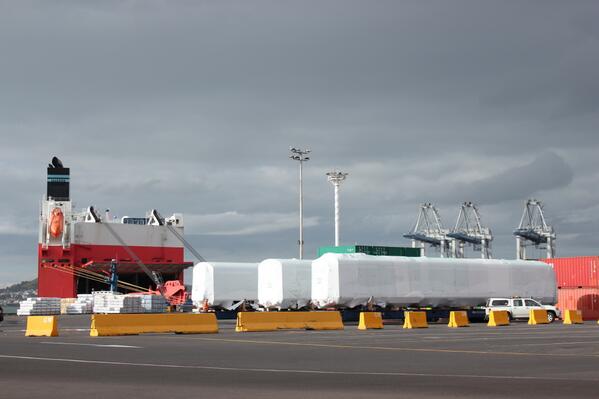
That is the two motor units and the middle “trailer” unit that will make up our first EMU commuter/metro train.
The consist will head down to the new Wiri Depot for extensive testing before it will come into service next year. Exciting times ahead.
Mayor Len Brown was also at Penny Hulse‘s campaign launch last night and I was able to deliver him the good news of the EMU arrival after seeming it on Twitter (thank you POAL for the Tweet and photo).
I can safely say there was excitement all round after the announcement.
Talking Auckland will be looking back at the journey of electrification and will produce a series of it very soon.
But for now Auckland takes one step closer towards the 21st Century with its transport system
Towards a Comprehensive Plan – Turning Manukau into a Super Metropolitan Centre and Looking After Southern Auckland Work continues in advancing Manukau into a Super Metropolitan Centre. This work … Continue reading Continued Advancement with Manukau and Southern Auckland
And so campaigns get under way with the nominations for Local Government Elections 2013 closed as of Friday 16th August. You can see the full PDF version of who is running for what HERE. The guys over at Generation Zero and Auckland Transport Blog I believe are converting that PDF over into an Excel format chart – why? I have an idea but will let them tell you 😉
I had noted a bit of attention in the last 72 hours in the form of prodding me to run for either Local Board or a Council Ward seat. Some were also asking why I was not running for either position.
I had made a decision during the Unitary Plan feedback process (March 16-May 31) not to run for a Council position but rather focus on TotaRim. TotaRim being my consultancy business that advances #BetterAuckland projects amongst other things.
Council is like a tent and that tent includes the elected representatives, the bureaucracy and the Council Controlled Organisations (CCOs). One decides whether they can make their contribution to Auckland either inside or outside the tent.
I decided for the 2013 elections to stay outside the tent and continue to advance a #BetterAuckland (including #movingauckland and #SuperManukau) . That means I will be around for another three years in continuing the push to achieve this via TotaRim.
This means TotaRim and myself working with willing and cooperative elective representatives of the Centre Left and Centre Right factions of Council. Yes, that can be “interesting” some days, but I must say it has been a good three years. Let’s hope the next three years will be as good too in pushing for a #BetterAuckland. Although TotaRim and myself are bi-partisan in our work, it seems some are still quite partisan in their thinking/politics:
Interesting you say this Ben because there is a rumour I hear that you were helping Palino with Unitary Plan policy in the early stages of his campaign before he had to remove you? What is Hulse and the rest of your friends at Council going to think when they hear this?
The person who said that links back to here http://www.palinoformayor.co.nz/ while the comment came from here http://louisoutlook.wordpress.com/2013/08/15/evaluating-john-palinos-unitary-plan-policy/
Rather interesting comment given that I believe in Free Enterprise and was approached first by Palino. As for being ‘removed’, I did earlier mention willing and cooperative ‘representatives’. I was approached to scope out the task at hand at the request of Palino but no contract was entered upon completion of scoping. It was his choice not to continue business for whatever reason he chooses. I respect his decision to do so – this is the nature of free enterprise.
The following has been stressed by Council more than once with the Unitary Plan and its processes:
From my Facebook update in regards to Slowing Down the Unitary Plan
Only one problem with Centre Right people when they say that – it can not be slowed down any more than what it is. I think they have forgotten three things:
1: Section 32 analysis still needs to happen on the Unitary Plan and the Governmentwill be watching this closely to make sure it is robust. We should get more details on this tomorrow
2: The Central Government actually has a limited time frame on the Unitary Plan before notification actually must occur – a three year process in itself. If we – The Council and Auckland blow that time frame via slowing down the Unitary Plan process then Government will take over and that does no one ANY good
3: “I’ll work to slow down the Unitary Plan and make sure we get it right for Maungakiekie-Tamaki and our future.” A Patch candidate using that language with no focus on the region. As a Ward Councillor you not only have your ward but all other wards as well. You make decisions for the region, the Local Boards look after the local. So be wary of those who are patch focused (usually the Centre Right) as they will re-cause the fragmentation the old Auckland City Council area saw for countless decades. This will come at great expense to the other Wards…
Monday there is a briefing on the Unitary Plan thus far and where to next with it. The briefing will: “cover key issues identified in the informal feedback, interim directions and an update on the next steps in the process.”
I will be in attendance at that briefing and will deliver full commentary on Tuesday for your consumption.
As readers would know, August 28-30th is where the Auckland Plan Committee will make final decisions on the Unitary Plan before setting a date when the plan goes for formal notification.
I assume this briefing (to the media) will be an extensive one. Yes, I will be asking questions as well.
Talking Auckland: Blog of TotaRim Consultancy Limited
TotaRim Consultancy
Bringing Well Managed Progress to Auckland and The Unitary Plan
Auckland: 2013 – YOUR CITY, YOUR CALL
Two notes before I start this post in reply to The Vote NZ’s supposed debate that occurred on Wednesday night:
On Wednesday night The Vote NZ decided to hold a debate on whether Auckland was sucking the life out of the regions (everywhere else) and what should basically be done about it.
I did not bother to watch as it turned out as I predicted: a Duncan Garner (the host) led JAFA bashing session of New Zealand’s largest and most powerful city. Then again I can’t expect much else out of Garner and his ineptness most days of the given week.
Look, I’ll keep this post brief; Auckland is not sucking the life out of the regions, Wellington is. That is the current Neo Conservative John Key led Government is with Steven Joyce as the Minister of Everything (Business, Innovation and Employment) and Gerry Brownlee as the Minister of Transport.
“Pick winners.” $30m subsidy for Rio Tinto’s Aluminium Smelter yet nothing for Solid Energy and Huntly. Interfere with the free market through getting in the road and picking winners through subsidies – most times the winner being sold overseas soon after or failing and needing prop up. If a company fails in the free market it usually (if there was demand) will rise again from the ashes and continue on. Let the private individual decide not Government. Our Neo Con Government also does not really have a regional development strategy in place to help the regions grow. Now it can do that in two ways: infrastructure upgrades, or either a Crown Research Institute or tertiary education facility somewhere near by. Businesses naturally flock to these areas including large and often heavy industry through complementing each other.
Our Neo Con Government can not build our transport infrastructure to save both itself and NZ. While our State Highways do need to be maintained do we need to binge on the gold-plated Roads of National Significance? Of all of the RoNS that are there (7) I can only think of two that were needed at all – the Western Ring Route (under construction) and the Victoria Park Tunnel. Both in Auckland and both needed to assist Auckland move. For the rest, like the Holiday Highway, better and less expensive safety upgrades and bypasses can be built (like the Maramarua State Highway 2 bypass) rather than 4-lane motorways. Ironically I just saw this as I was writing this post: Motorway benefits debated. A virtual drain on both Auckland and the rest of the nation’s regions. As for other forms of transport, we need major investment in road and coastal shipping as well.
We do hear the regions wail that they do not get their taxes they send to Wellington in the form of investment and blame Auckland for getting the “lion’s share.” News to the regions, Auckland does not even get all the tax it sends down back to the city into the form of investment. For every dollar we send down especially in transport and fuel levies, anywhere between 65-75cents comes back to Auckland in transport investment. That hurts us as much as it hurts the regions.
First of all Auckland does not suck the life out of the regions. Auckland like Fonterra is a powerhouse. However, Auckland is also massive and of critical mass in size and population. Realise though, especially those who are quick to bash Auckland – which can contribute up to 40% of New Zealand’s GDP (great if Fonterra takes any more whacks), Auckland and the regions are interdependent on each other. Not one over the other and independent of the other – interdependent! If one fails the other also fails.
Wikipedia: The sub-national GDP of the Auckland region was estimated at US$47.6 billion in 2003, 36% of New Zealand’s national GDP, 15% greater than the entire South Island.[54]
In my honest opinion the Government should be doing this:
Stop picking winners and sending money to places like Rio Tinto. It does nothing for the regions nor Auckland. It only helps a few and most likely an elite few at that. Allow the free market to work, create, burn, destroy, and recreate out of the ashes. Private individuals are responsive to the needs of others and often the economy, not the cumbersome Government.
People in a free market situation also move naturally to areas best suited to them and their requirements. For some that is Auckland and its offerings, others the regions and its offerings. When the Government does not interfere the movement of people and capital moves naturally, balancing itself between the interdependent regions and Auckland. Our Government has upset this natural balance.
Sure, the Government can help with education and mentoring people along BUT, no hand outs.
Realise this for moving goods efficiently and economically:
Plan and build for this. This means upgrading the North Auckland Rail Line and building the Marsden Line to serve the North Port in Northland which is growing. Reopen the Napier-Gisborne Line as it can move logs much better and in higher volumes than trucks can. Make sure our coastal shipping facilities and inter-modal transfer (boat to train or truck) are in tip top shape. These water haulers move vast amounts of cargo in the most cost effective and efficient manner possible over a long distance.
Building the infrastructure also has a bonus effect: people wanting to set up a business to utilise that infrastructure and its benefits. This means that if the regions are well served by good roads (not gold plated ones), good rail connections and/or good coastal shipping connections then people, business and industry will naturally come and invest in that particular region (providing the government is not “picking” winners).
In building the infrastructure and as a flow on effect, neighbouring Local, City and Regional Councils start working together and plan growth and cooperation with each other – benefiting all. This working together between each other seems to be happening between Auckland and Waikato (although the Government is NOT building the complete infrastructure suite of road and rail).
It got mentioned to me that Auckland Council and Environment Waikato are talking and planning ways to set about achieving cooperation in planning as both areas continue to grow. Effectively what is being looked at is population load sharing – people move naturally out of Auckland and live in northern Waikato and work in Auckland. However, they might do their shopping in the regional town centre or even Hamilton city. This kind of movement is normal and seen internationally. It seems wise as Auckland grows to have the Waikato help us out in return for population load sharing. Both Waikato and Auckland win on all fronts: economic, social and physical.
In fact I might do some commentary on that this weekend – the Auckland-Waikato partnership and population load sharing. It does have effects on Manukau as well as an interesting issue,
This is easy; for every dollar we send down to Wellington in transport levies we get the same dollar back for transport investment – for regions and Auckland. Not for Holiday Highways but for actual transportation infrastructure suited to moving whatever we need to move to wherever most efficiently.
While not the full spiel and hot air of The Vote NZ, this is a quick look into what I think is happening and should actually be happening.
Not too much here – most likely because I did not cover these issues in my submission to the Unitary Plan. However, for your reading:
Draft Unitary Plan proposals for sustainable design, including green building rules for new residential and commercial developments, were topics covered at yesterday’s Unitary Plan workshop.
Discussions included the proposals for a Homestar six-star rating (or equivalent) for new developments with five or more dwellings, and a GreenStar five-star rating for new office and industrial buildings.
Councillors and local board chairs agreed to consider retaining the six-star rating for homes but reduce the rating for office and commercial buildings to four-star. Council staff were also asked to look at a different approach for certain industrial buildings.
Extensions to quarry zones and quarry transport routes were also covered. The draft Unitary Plan quarry zone provides for regionally significant mineral extraction such as aggregate products for infrastructure projects.
Six regionally significant quarries currently have over 2000 truck movements a day and the Unitary Plan process will consider if controls may be needed.
Ends
 Talking Southern Auckland