Update: And both Bekka and I are back in Auckland after two weeks away in Australia. Was a great time away and the credit card was not damaged that much after “contributing” to the Aussie economy. Early night tonight and back into things slowly from tomorrow
Colonel Hogan and Hypotenuse are all well too and glad to see us back
———————————————————————————————————
I am at Sydney Airport waiting to board my flight home. It has been a good time away in Aussie relaxing and contributing to the Aussie economy – although I am not going to like the credit card bill next month
BR:AKL will be partially back tomorrow as I complete the photo dumps into the blog and back at full capacity on Monday with commentary to resume on transport and the Unitary Plan.
So hang tight folks til Monday
Although from messages received while away it seems that Auckland needs its backside either kicked or saved again.
Then again in Aussie politics the ALP with Gillard at the helm are buggered…
BR:AKL On Holiday From tomorrow until March 23rd I will be away on holiday with Rebekka to Sydney and Brisbane. BR:AKL will also be pretty much on holiday … Continue reading Holiday Time
It has been 10 long years since the last Sim City game was released in the version called Sim City 4. I still play SC4 today and have two large regions going with different populations and urban development strategies.
March 5, Electronic Arts released their new version of Sim City – called Sim City and well IT GOT PANNED big time for server failures and limited city sizes (amongst other things). This piece from the Herald says enough about the new Sim City without delving into specific game review sites.
It’s likely to go down in the annals of gaming history as one of the biggest blunders by a gaming company ever. Amidst a significant amount of hype and growing gamer expectations, EA launched the latest version of its SimCity genre. Since then, nearly everything that could go wrong has gone wrong and the gaming communities’ condemnation has been both swift and brutal.
Sadly this gaming equivalent of a multi-car pile-up was probably avoidable. The problems have stemmed largely from SimCity’s online only requirements – access to the Electronic Arts servers is mandatory before the game will function. This was always had potential for problems, and in a pre-launch closed beta, access to EA’s servers quickly became problematic. Bizarrely, even though this was clearly going to be a deal breaker, EA pushed on, continuing with the mandatory internet access requirement and launching the city building/management title.
Unsurprisingly once the title began to sell, things quickly turned to custard. The servers EA had installed simply didn’t have the capacity to handle the sheer demands being put on them, and this effectively rendered the Sim City unplayable, making gamers who’d forked out $100 for the title hopping mad.
…
You can read then rest of the article over the Herald.
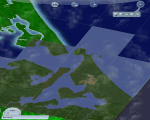
Being a Sim City fan, running two regions, and a veteran over at the fan site Simtropolis; I have been watching the new Sim City unfold through chat and even a live feed and I feel under-whelmed by the latest creation. Server issues aside, the issues which are making me hesitant in shelling out a hundred bucks for this new ultra urban development is the limit of the city size (see map below – or for those playing SC4 the new SC size is the same as the old small tile from SC4) and transport options tied to zoning.
However knowing the history with SC4 before expansion packs and “modding” occurred, this new SC version has the potential to be great – but just not now. And so EA, I will be waiting around 6 months for you to get your crap sorted before purchasing the game.
Oh and when I do, I already have the urban development methodology in mind. I am in a good mood to give the two fingers up to the New Urban Congress and their “smart compact city” development and go right ahead in replicating my first SC4 city – Solaria. Solaria being home to four million sims across a mega sprawling city with commute times that most cities in the world would envy. Just to put the extra boot in (as the city is still growing some 10 years later) Solaria is basically Auckland on steroids with a high density central core, supported by multiple satellite cities/cores, and plenty of sprawl going out in all directions until you start hitting rural land on the flanks. Just for good measure Solaria has an actual world class transit system while the highway system is errr yeah well a work in progress :P.
But hey if the central tile – Imperial Command District which is that high density core of 1.2 million sims packed into an area of 16.8km2 and still has a mesa and lake in it, but is an actual walkable city then I think I have outdone most real cities in the world. And by walkable city I mean 75% of all commutes in IPC are done by walking as the primary mode (it means that also the sims can be walking to a transit stop as part of the journey OR walking solely to their destination). Also the commute time in IPC is an average of 30 minutes to cross the tile with is 4,096m by 4,096m with a lake and mesa in the middle of it (meaning you have to “loop around”). It takes using the graphs and normalising it to cross the region East to West as it is connected at both ends one hour by motorway and 35 minutes by high speed rail when on express mode.
Just of note I had been participating in a Twitter chat with Maxis on the SC13 issues. Sadly not getting a lot out of them so it will be definitely a six month wait until I get the game…
City Still Reeling from Thursday’s Motorway Disaster
I am still seeing reports all over the main stream media and social media on the traffic chaos from Thursday’s crash on the Newmarket Viaduct right in the afternoon peak. Pretty much the city is still reeling from what can be described as an absolute disaster as buses, cars and trucks were basically going nowhere in Central Auckland. In the end walking and trains (for those who could use them) proved to be the fastest method of transit on Thursday afternoon.
The Herald ran a piece this morning on the Thursday disaster:
Auckland’s worst traffic gridlock for years was caused by an extra squeeze of pressure on a stretched transport network – and it is not over yet.
Although the city has struggled through its busiest traffic week of the year, culminating in Thursday’s chaos after a serious crash closed all four southbound lanes of the main motorway out of town, Auckland Transport warns of a difficult weekend.
It is urging Aucklanders and their visitors to consider using public transport or share car rides with friends or neighbours as hundreds of thousands of people throng to a raft of events over the weekend.
Commuters stewed in traffic queues over three successive afternoons, but the longest were caused by the cascading impact of a 2-hour closure of Newmarket Viaduct’s southbound carriageway at the height of Thursday’s peak travel period.
The viaduct is the country’s busiest section of motorway, normally carrying 7000 southbound vehicles an hour during afternoon peaks, and the closure from a serious crash could not have come at a worst time for what the Transport Agency acknowledges is a highly sensitive urban traffic network.
…
Not only that, but Auckland Transport says this was already the busiest traffic week of the year, as students hasten to the first classes of term joined other commuters trying to make an earnest start back at work from the summer holidays.
The phenomenon known as “March madness” happens every year, and tends to ease off after the first frenzied week, but Automobile Association traffic spokesman Phil Allen says he has never seen a worst example of gridlock than on Thursday afternoon.
…
You can read the rest over at the Herald
The point I am raising here is that unless we get on top of the transport situation, Thursday is only going to repeat itself more often and will absolutely cripple the city as we move towards two million people.
This week alone I had written several transport related posts that interlink to Thursday’s chaos:
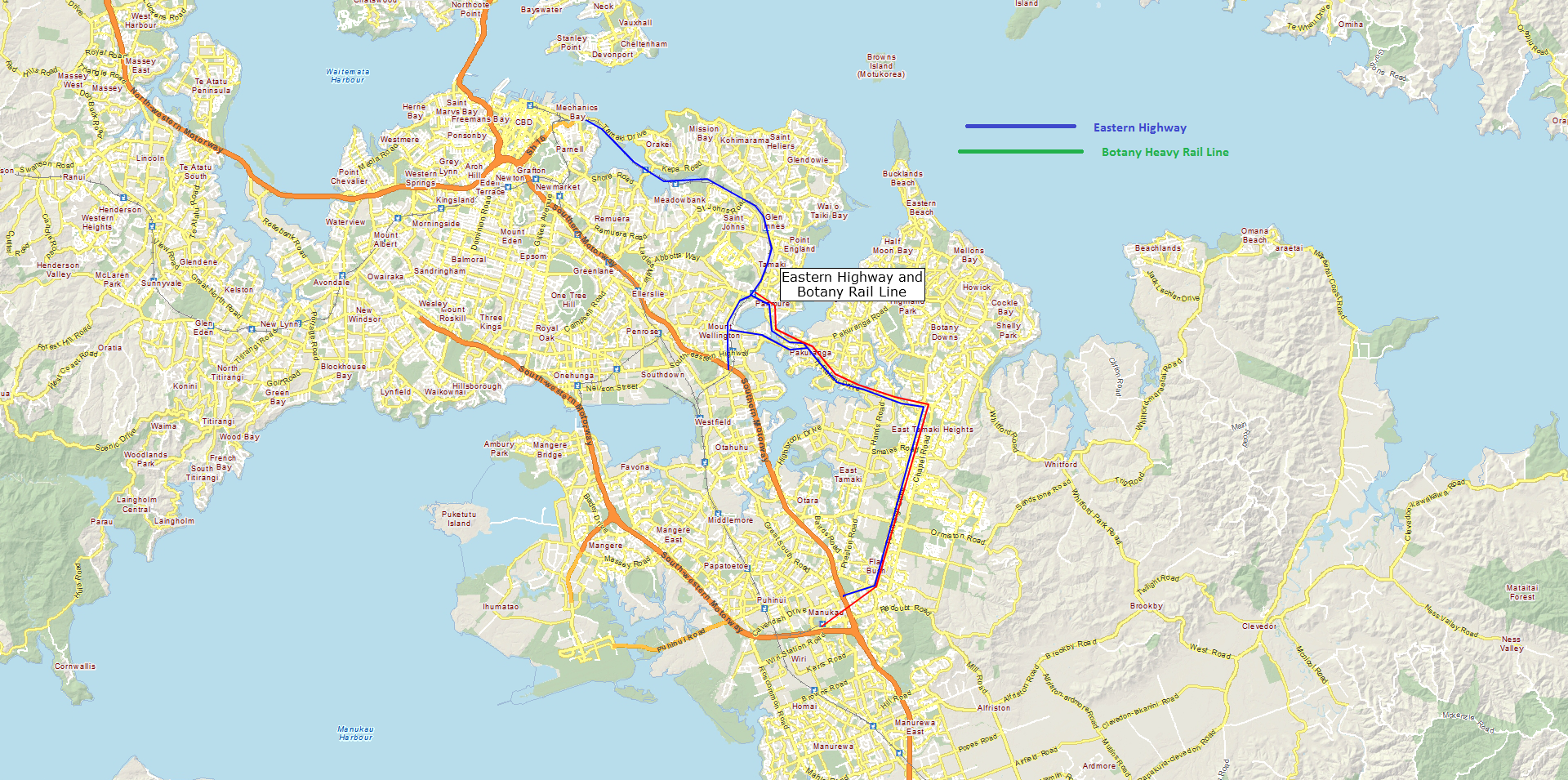
A post on how if the Eastern Highway and the Botany Line were built in 2004, a fully operational and high-capacity back up route for trucks, buses, cars and trains (the trains tapping into the currently unreached East Auckland) in and out of the CBD bypassing State Highway one could have alleviated some if not a lot of the mess from a blocked State Highway One
This touched on an interview on Radio NZ with Auckland Transport Chair Dr Lester Levy and how rail patronage is going to be some two and a half million passenger trips below forecast ending June 30. Full trains mean an easier run on the motorway, empty trains as they currently are mean a blocked State Highway one – and I have seen both situations.
This weekend would have been a perfect opportunity to showcase our public transport system with an absolute diverse range of events including Pasifika Festival in Western Springs and Around the Bays tomorrow which bring out countless residents and visitors today. You would think rather than operate our infrequent weekend timetables today, Auckland Transport would go out of their way and actually run a full Friday timetable for buses and trains to help getting people out of cars and freeing up the roads. Further more you think our fares would be affordable to also get people into public transport. This means actually selling the old Rail Family Pass right across the rail network rather than Britomart, Newmarket and New Lynn; and allow that Pass to be used freely on bus shuttles from Britomart and Morningside to Western Springs for Pasifika. I even called on AT for reasons why this is not happening:
This post mentioned that despite Thursday I can feel confident and excited on a new leaf being turned for our transport system – for the better. That this new leaf and evolution will be led by private citizen initiatives rather than public civic institution led and that in time Auckland will actually have an integrated transport system that we all understand.
What will my next commentary be on March 25? I wonder with Auckland’s Transport
Shapeauckland.co.nz – Unitary Plan Portal The Auckland Council has put the word out and the blogs and Twittersphere shall oblige – to spread the word that our master rule book, … Continue reading The Unitary Plan
Progress After building upon the previous successes with more results coming from the Transport Committee on Wednesdsay and on Thursday with the Strategy and Finance Committee, I am quietly … Continue reading Going Forward
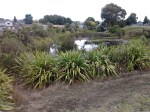
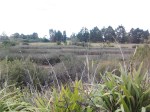
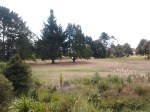
We (Rebekka and I) had discovered a hidden gem right here in Papakura while going about our daily walks. Tucked away behind a sports field near the SAS base is a little slice of (green (well brown because it is so damn dry)) paradise of open fields, trees and even a pond (well storm water facility). The park while tucked away is actually quite heavily utilised by local residents as they too go about their walks and/or give their dogs exercise. Here are some pictures of this hidden gem from when we went on our walk yesterday:
Entrance to the sports ground as well as the park
Looking south towards Papakura Town Centre and the storm water pond
Looking over marsh land towards to the north end of the Park. The SAS base can also be seen
Looking South West back to sports fields main carpark which Council recently upgraded
Looking towards club house and sports fields
Looking back east along trail
Northern Flank of park
Looking northwest towards new Social Housing development (in distance)
Looking over storm water pond to North Western flank of the park. New Social Housing development to occur behind that flank
Northern flank of main park
The park is a nice place and will be extra valuable as that new social housing development (as well as any other Green or Brownfield developments near by) takes hold and the families need somewhere to “relax” or “exercise” – seeming their tiny land sections won’t allow them.
I quite enjoy this hidden gem although it does need a spruce up from our Local Board.
Maybe a few benches, rubbish bins, a playground, and some trails wouldn’t go a miss to turn this gem into a shining gem for our local community?
So what hidden gems do you have in your community?
And so it happened, an accident on the southbound lanes of the Southern Motorway (State Highway One) on the Newmarket Viaduct causing absolute gridlock for hours on end – and it even delayed the start of the Breakers game to boot.
You can see (what is most likely to have been caused by hopeless driving Auckland is known for) the accident and its absolute chaos from the NZ Herald along with a bonus video
Inner-city Auckland traffic was brought to a virtual standstill last night after a motorway crash – gridlock that the Automobile Association described as the worst it had seen.
A van crashed into the back of a truck in the southbound fast lane on the Southern Motorway at Newmarket at 3.50pm, seriously injuring a man.
More than two hours later, traffic on almost all of the city’s arterial routes was gridlocked, with buses backed up in city streets and motorists reporting speeds of less than 10km/h.
Journeys that normally took 15 minutes were taking more than an hour.
Automobile Association traffic spokesman Phil Allen said he had never seen traffic so bad in central Auckland.
Are you sick of Auckland’s traffic problems? Send us your commuting tales of woe and any ideas you have on how to fix Auckland’s traffic jams here.
The association launched traffic-mapping technology on its site 18 months ago. Routes marked in black show where traffic is moving at under 25 per cent of the speed limit.
…
You can read the rest and watch the video over at the NZH.
I was fortunate enough to have returned from the success at the Strategy and Finance Committee ahead of that traffic disaster yesterday however it is going to highlight a rather sore point?
Would of the much vaunted four lane Eastern Highway expressway coupled with cycle-ways and even the Botany (heavy rail) Line alleviate some (not all but some) of the chaos yesterday by giving a viable bypass for those heading south out of the CBD. Those coming from the north would have used the Western Ring Route (State Highways 16 and 20) if it had been completed by now as an extra backup.
The Eastern Highway and Botany Line basically followed this trajectory before its mothballing in 2004
Eastern Highway and Botany Line
Click for full resolution
I have the original EASTDOR report into the four options available for the Eastern Highway and will get them uploaded when I return from Australia.
But for now just ponder to yourself; The Eastern Highway – that critical back up for the CBD we now miss.
Of course I am waiting for the fringe brigades from both the pro road, and pro public transport and nothing else to pipe up and basically kill the debate before it starts…
Just remember folks – the Eastern Highway provided an absolute full suite of actual integrated transport options such as: road, freight way, bus priorities, cycle ways and even heavy rail to a part of Auckland not served by rail as of current. I suppose I could have the last laugh after the project was mothballed in 2004 and how (as it would have been completed by now) it could have made a pure crap day just that slightly bit better for those stuck last night…
Last month in my “ROAD PLAN CONCERNS” post I had noted Auckland Transport‘s continued progress on moving towards the construction of the 4-lane “bypass” from the Manukau Motorway Interchange (with State Highway 1) along Redoubt Road, down Mill Road, around the back of eastern Papakura and reconnecting with State Highway One near Drury.
The respective post had a commentary piece from the NZ Herald as well as links to the Auckland Transport web portal on work thus far with this new four lane corridor plan. Also of mention was: the said corridor is both close to home (being in Papakura and five minutes away from the southern end of the soon-mentioned corridor) and I often use to skip-pass a section of the Southern Motorway when it backs up (usually in the afternoons) BR:AKL will take a look at the situation, then later on post an alternative proposal to the scheme.
Now I will resume working on that alternative proposal and will publish after my return from the Australian holiday starting next week. Work on the Manukau Rail North Link situation (which resulted in a compromise and win) as well as a pending mega project had taken much of my time recently however most of that is now finished (for now).
This morning however, I note Councillor George Wood picking up on comments from Mayor Len Brown (who lives 30 seconds from the said corridor) on his support for the corridor project.
A four-lane highway that would connect Manukau with Drury has the backing of mayor Len Brown.
The Redoubt Rd-Mill Rd corridor needs land that is now occupied by homes and farms to progress.
Auckland Transport is finalising the route the $246 million first stage of the Redoubt corridor will take. It is an alternative arterial route to the southern motorway.
The road is expected to take more than 20 years to complete and has been subject to opposition from local residents’ groups.
Mr Brown has to declare a conflict of interest whenever decisions are made about how the project will move forward because he lives in the area.
“I’m in the way of it.”
But as leader of the city he supports the idea.
“It’s critical that we get this work done.”
There is a strategic need for the growing communities of Papakura, Alfriston and East Tamaki to be able to connect through the eastern side of the isthmus, he says.
Mr Brown says he is concerned about the effect plans for the 20-year project appear to be having on people’s lives.
But progress on new infrastructure needs to happen now, he says.
…
You can go see the rest of the article over at Stuff
But you can see the Mayor has thrown his support behind this large and long-winded project. With the corridor inching at a snail’s pace and seeming unable to be stopped in its entirety the next step (and I am aiming to try this through the alternative proposal) to mitigate against the worst of effects from the corridor and aim for a full integrated transport package.
Pragmatism and Compromise Wins the Day With Manukau Just a quick mention to Strategy and Finance Committee Chair – Councillor Penny Webster after some concerns on voting pragmatically … Continue reading Success with Manukau North Link








 Talking Southern Auckland