Tag: Auckland Council

Unitary Plan Hearings Under-Way

Day One Begins


From Auckland Council

Hearings on shaping Auckland’s development underway


New Zealand’s largest planning review gets underway in Auckland today with an Independent Hearings Panel beginning its deliberations on Auckland Council’s  Proposed Auckland Unitary Plan.

The hearing is before Environment Court judge, David Kirkpatrick who chairs the Panel, and seven panel members. There are also 15 mediators and facilitators who will help resolve issues through expert conference and mediation.

The Proposed Auckland Unitary Plan sets the rules about how the Auckland region will develop over decades, including what can be built and where, and how to protect the environment and Auckland’s built and cultural heritage.

More than 9500 submissions were made on the Proposed Auckland Unitary Plan.  The Panel will consider the views of submitters – plus a further 3500 submitters who have responded to the original submissions – over 74 topics.

Judge Kirkpatrick said the hearing is the biggest ever in New Zealand planning history because it involves the Regional Policy Statement and both the Regional and District Plan documents all wrapped up  in one document.

“There’s been a huge number of submissions and a high level of public participation – and that’s a good thing for such an important document,” said Judge Kirkpatrick.

He said the requirements of the Local Government (Auckland Transitional Provisions) Act made this hearing different from the traditional adversarial planning hearing. The Act has a requirement that the Panel use pre-hearing processes and mediation to help identify the most appropriate planning position for the Auckland region.

“So there’s a large level of the ‘Good of the Auckland region’ objective here rather than simply saying which side wins and which side loses,” said Judge Kirkpatrick.

“With the complex issues involved we have to have a very clear high-level regard for the sustainable management of the resources of the whole Auckland region. If we adopted a solely technical approach to our task we would ‘miss the wood for the trees’.”

He said the Panel is working to an extremely tight timeframe to complete its report to Auckland Council by July 2016 on changes it thinks should be made to the plan.

The Panel will be working through a process ‘from the general to the particular’.  It will start with the Regional Policy Statement issues such as rural/urban growth, residential and industrial growth and higher level transport issues. It will then deal with the more specific rule-based issues and then move on to the site-specific changes.

“It’s important that we have integration between the higher-level objectives and strategy of the plan and the methods on the ground,” said Judge Kirkpatrick.

“We could compromise a policy very easily by simply by having exceptions to the rules which give away its validity.”

Judge Kirkpatrick said the Panel is endeavouring where possible to come to decisions on issues when the Panel hears from submitters.

“It’s better that we do it when we hear from people, but we acknowledge that as we go through we are likely to have to go back and reconsider some of the things we have decided.

“We need to make sure that our decision-making has been consistent throughout and that the recommendations we are making to Council produce an integrated set of planning provisions.”

—————————-


The Hearings’ Order Paper


The Unitary Plan Independent Hearings Panel website can be found here: http://www.aupihp.govt.nz/


Talking Auckland will keep a roving update from the Hearings Panel as relevant information comes to hand

 

Four Southern Initiative Projects

I am putting together some Southern Initiative posts reflecting on some good news finally for this project after four years of flak including of me.

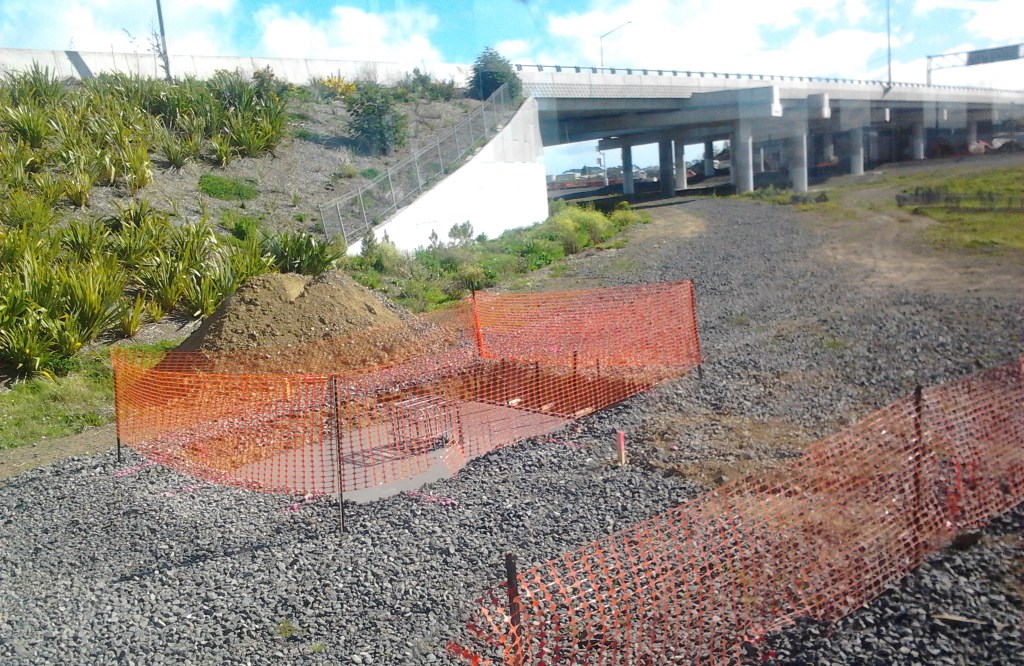
Four projects are under way covering different aspects of The Southern Initiative, those projects cover:
1) Social Infrastructure (enabling communities to participate in the Digital World)
2) Land Use Planning x2: The Otara-Papatoetoe Area Plan which is working through the motions before implementation next year, and the Spatial Priorities project the Auckland Development Committee will be working through. Manukau City Centre is one of those bigger Spatial Priorities that would be carried out
3) Physical Infrastructure from both NZTA and Auckland Transport

I will run these along side the Auckland Commute series that I have been running as I prepare to tie this all up.

More next week but good to see the Southern Initiative finally getting underway and some positive news

Progress from the Long Term Plan 2015-2025 Debate

Some Transport Projects Get the Chop, Others Stay


Some of the transport options remaining in the 2015-2025 LTP pic.twitter.com/86P6k4QGn3


That is from the Long Term Plan 2015-2025 presentation which is being given at the moment by the Mayor.

This list apparently shows capital funding options remaining for the above projects through the 2015-2025 Long Term Plan (still subject to consultation and final ratification).

So Walters Road gets grade separated, Takanini gets a new library (and possibly station if the developer at Takanini Village still wants to build it), and two new stations at Paerata and Drury. But some causalities were: Pukekohe Electrification, PENLINK, and a pile of roading projects.

The Mayor has stated rate rises will be at an average of 2.5% this year and moves to 3.5% after that. He has stated Council can go higher if the public want it. Councillor Cameron Brewer has said this LTP is an encouraging document to work on.


More as it comes to hand


Changing of the Guard at Council? Transformation Time

Could we see the eventual change of the guard with Auckland Council?


Prominent writer Bob Dey has penned together a rather thought-provoking post about a transformation a Council. Tomorrow he will post part two of this upcoming transformation but below is an excerpt of part one.

From The Property Report

Council transformation begins with a must-change moment

At what point does transformation begin? It’s most often a gradual process with occasional reference points where significant change occurs or is agreed.I saw transformation at Auckland Council last week. It’s by no means complete, though many battles have been waged to get the council to the point it reached by Thursday.

What’s different is that the council must change.

…

In short, I see change coming:

  • New councillors who are pragmatic, with an understanding of how businesses should be asked to operate, raising their profiles
  • The governing body working hard to establish smoother funding lines to the local boards
  • The governing body putting proposals to its commercial arms on how they should operate and what they should be targeting, not just waiting for the CCOs to put proposal to which the answer is yea or think again
  • More co-operation between council & Government, led by a council push to state its objectives forcefully, ending the era of lurching, politically motivated decision-making and also ending the era of central government dropping unfunded costs & tasks on local government.

Is this mere imagination? No, I think the moment of change has arrived. I’ll write in more detail about this tomorrow.

—-

Full post (and source) can be seen here: http://www.propbd.co.nz/council-transformation-begins-must-change-moment/


“New councillors who are pragmatic, with an understanding of how businesses should be asked to operate, raising their profiles”

Could we see a changing of the guard in 2016 (next Local Government Elections) with the Legacy Era finally and phasing out new Councillors (new blood who have never been an elected representative prior to the Super City being formed in 2010) coming in? We will soon see I suppose