Tag: Deputy mayor

2040 Has an Alternative

Thoughts and Comments?


2040 Auckland and the Character Coalition have released a statement and letter on their alternative for the Unitary Plan. Please not I am not endorsing or disagreeing (yet), just seeking YOUR thoughts on what they have to say.

From 2040 Auckland and the Character Coalition

Auckland Mayor Len Brown and Deputy Mayor Penny Hulse meet Auckland 2040 Group for

Urgent Talks about Unitary Plan


Auckland 23 May 2013


In response to mounting public outrage following Auckland 2040’s disclosure of the implications behind critical elements of the draft unitary plan, Auckland 2040 Founders Richard Burton and Guy Haddleton met this week with the Mayor, and Deputy Mayor for intensive discussions.


The meeting was constructive, with the Mayor willing to consider proposals put forward by Auckland 2040 for amendments to the plan. He also expressed a commitment to have a fair and meaningful dialogue with Auckland 2040 over the next few months, stating that the Unitary Plan would not be notified in September until 80-90% of the issues were resolved.


Following the meeting, Auckland 2040 has submitted their proposals in a letter to the Mayor and is now awaiting feedback.


Comments Richard Burton, “I look forward to the healthy public debate that will emerge from our proposal and our participation in on-going discussions with Council”


Letter to Auckland Mayor below:


22 May 2013


His Worship the Mayor


Our thanks to you and Deputy Major Ms P Hulse for taking the time to meet with Auckland 2040 and the Character Coalition yesterday. We were very pleased to read in the NZ Herald that you agreed with much of what we said.


A fundamental issue in looking at the future growth of Auckland is the extent to which Auckland is likely to grow over the next 30 years. That Auckland is growing and will continue to grow is undisputed; it is the rate and extent of growth which is at issue. Significant under or over estimation can have profound effects on future planning. We request that Auckland City:


  • Be completely transparent in revealing the statistical justification for Council’s 1,000,000 population increase forecast for the next 30 years


  • Reconsider the Auckland population estimate of 1,000, 000 additional population over the next 30 years to align with Statistics NZ Medium estimates. Overseas cities generally adopt the Medium estimate in planning for growth and then monitor that estimate over time, with adjustments up or down depending on actual growth. The High estimate as used by Auckland Council may overstate actual growth by as much as 50%. Overstating the population increase has serious implications on infrastructure and the need for high density intensification and or greenfields development.


The Draft Unitary Plan has been prepared on the basis of an additional 1,000,000 population over 30 years. Even if Auckland reaches such growth levels, it will not happen overnight but rather in a progressive incremental manner. It is thus logical to release land for intensification and green field’s development in a staged manner. To zone immediately 56% of Auckland’s residential areas for unrestrained, scattered apartment development is neither logical nor staged. Neither would immediate release of greenfields land sufficient for 400,000 people be logical or staged. Fortunately no-one is suggesting the latter.


We are not opposed to intensification, nor apartment development. We are opposed to scattered, un-planned, uncoordinated developments with no or inadequate consideration of urban character values, heritage values or infrastructure and no community consultation.


Certainty in an urban framework context is of fundamental importance to most people living in or buying into neighbourhoods. While alteration or addition of dwellings is largely accepted, structures introducing a different, more discordant building form are strongly opposed. Many residential areas have a mature character with established dwellings and streetscapes. Some have a dominant heritage character. Many of the most popular areas have had significant infill, but the infill is of a similar character to the existing housing so is accepted, albeit reluctantly in some quarters. Apartment buildings are a very alien building form in those streetscapes and the uncertainty of whether this form of development will occur in “my street” is what is galvanizing Aucklanders to object to Council’s proposals.


Auckland 2040 and the Character Coalition request that Council approach the Unitary Plan in a more planned and staged manner. Specifically Council should reduce the amount of land zoned for apartment development and instead have a more targeted focus providing development opportunities while preserving most of the existing residential areas.


If demand indicates more apartment zoned land is required, Council can undertake the appropriate neighbourhood or town centre studies with meaningful community involvement prior to release of more land for redevelopment. If full structure planning is required prior to release of greenfields land then why should not the same apply to intensification proposals within the existing urban area?


The following proposals should be considered in the context of the above statements. We request the Auckland Council give consideration to the following proposed amendments to the Unitary Plan:


  1. The introduction of a new residential Infill Zone which allows one and two storey buildings only and permits infill at a density of one unit per 350m2 net site area. This zone to be applied to the majority of the residential areas and in particular to residential areas which:
    1. Retain a strong residential character of 1 –2 story dwellings ,or
    2. Have significant heritage values, or
    3. Are close to sensitive environments such as the coast, lakes, volcanic cones, or
    4. Have been subject to considerable infill development, but which retain predominantly stand-alone housing, or
    5. Have topographical challenges which would tend to increase the adverse effects of apartment buildings


  1. The Mixed Housing Zone be restricted to areas in close proximity to town centers or selected arterial routes with good roading, public transport and infrastructure and which do not have the characteristics in (1) above.


  1. The Terrace House and Apartment Zone be confined to areas immediately adjoining inner city or Metropolitan Centres, plus the major town centres subject to (5) below.


  1. Development controls to be reconfigured to address adjoining property effects, and height limits to be restricted by full discretionary activity status, including public notification and affected party’s consents for exceeding height.


  1. That Metropolitan, Town Centre and neighbourhood studies be undertaken with community involvement to determine the most appropriate zoning mix after due consideration of existing urban character, heritage values, infrastructure and traffic. That Council reconsider town centre studies undertaken by previous council’s or Environment Court decisions affecting specific areas and incorporate the principal findings of those studies/decisions into the Unitary Plan.


  1. That should Council determine that additional intensification is warranted in the future due to increased demand, Council undertake structure planning of the areas where intensification is planned. Such structure planning should be similar in scope to that required for greenfields planning and have an aim of achieving a significant degree of community consensus.


We would welcome the opportunity to discuss these proposals in a constructive manner with Council and senior staff.


Yours sincerely,


Guy Haddleton, Auckland 2040

Richard Burton, Auckland 2040

Sally Hughes, Character Coalition


About Auckland 2040


Auckland 2040 is a newly formed grass roots organization of non political residents passionately concerned about the future planning and shape of Auckland. Its web site is www.auckland2040.org.nz


Comments and thoughts in the comment box below
 

The Unitary Plan is a Clunker

1854 Pages?


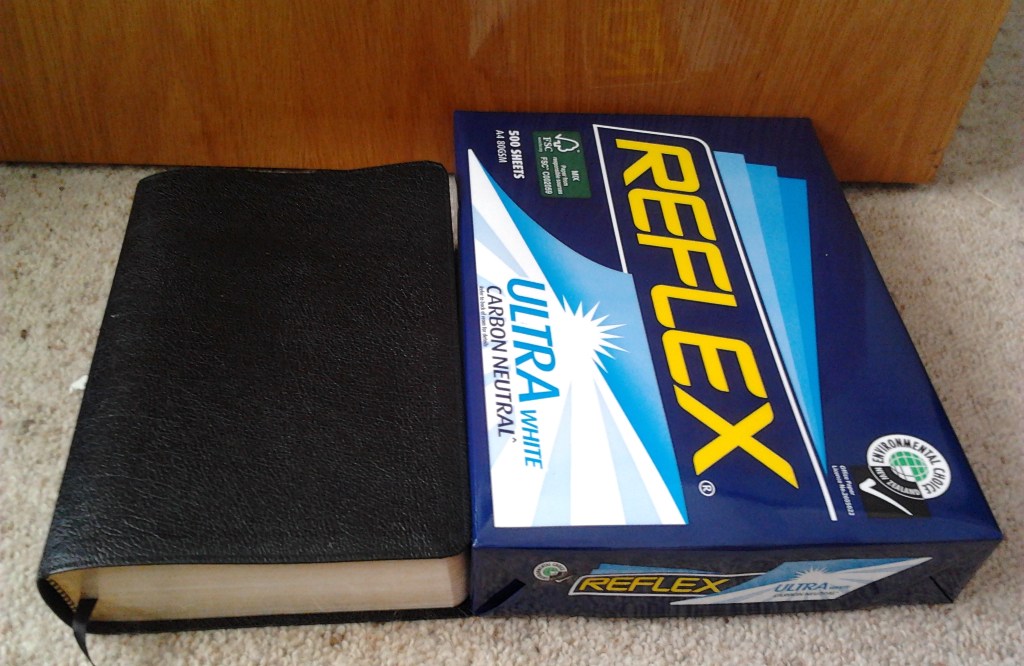
I have mentioned in the past that the Draft Unitary Plan was around 500 pages and it was larger than our largest Bible at home. Well it seems I got that number wrong as the Draft Unitary Plan actually stands at 1854 pages and takes Councillor George Wood two car trips to get the sole Council copy of this clunker to a public meeting.


1854 pages? What the flying heck Auckland Council, that is not a plan but just an actual dead weight to anyone and everything in the city. Maps aside, the idea was to get this clunker down to 100 A4 pages so that it was easy for everyone to read to access. Not just be a play thing for city planners and Environment Court Lawyers that costs us more money.


Bernard Orsman for the NZ Herald had this to say on the Clunker this morning:

Struggle to access copies of city plan

By Bernard Orsman @BernardOrsman

5:30 AM Thursday Mar 28, 2013


Navigating complex document online and finding a printed version proving difficult.

Many Aucklanders are struggling to find out if their neighbourhood is earmarked for high-rise apartments, heritage protection or the status quo in the new planning rulebook for the city.

The 1854-page draft unitary plan includes provisions for high-rise and multi-rise apartments and the nuts and bolts of what people can do with their properties.

But people are complaining about difficulty using the online version of the plan and trying to access 29 hard copies at local board offices, Auckland Town Hall and some libraries – about one copy for every 50,000 people.

At a public meeting in Mt Eden on Tuesday night, there was no material for locals to take away on the changes proposed for the suburb, only a single copy of maps to browse.

Birkenhead resident M. Carol Scott said in a letter to the Herald that she found the online document a “tortuously clunky process” and all she got from her local library was a brochure inviting her to “shape the world’s most liveable city”.

“Clearly, creating a Super City planning rulebook is a huge task, but how democratic is this process?” she said.

The Auckland Transport Blog said unlike the Auckland Plan – the 30-year blueprint for the city – the new rulebook was not a nicely worded document, but a complex, hard-to-use resource management document.


You can read the rest over at the Herald


Personally I am not finding the e-document that easy to use and I regard myself as tech savvy. Even with Bookmarks applied in Chrome and until I saved the PDFs to my hard drive, it would take several attempts floundering around different parts of the Unitary Plan site to get to the two areas I am focusing on at the moment: The Rural Urban Boundary addendum, and the Zoning Rules in an effort to get them simplified even further.  What is not helping is that you can read the PDF like the RUB material in question, but then you have five different maps showing “options” for the RUB rather than consolidating it as one PDF file. Thankfully I consolidated those maps into a single PDF and stuck it in Scribd last night – but heck that is annoying to do what the council should have done in the first place.


As a result in the Unitary Plan being a clunker and at over 1854 pages making it impossible to print – even if I did get the entire thing as a single PDF, getting a meaningful submission in is going to be an interesting task ahead.


However, I am off to the Papakura Local Board Unitary Plan session next month to see if I can make heads or tails of The Clunker before getting my submission in.


And now that I have that little rant off my chest this morning, my next Unitary Plan post will be on residential zoning. It’s Sim City meets Auckland Unitary Plan – here at BR:AKL


BEN ROSS : AUCKLAND

Shining The Light – To a Better Papakura (OUR home)
AND
To a Better Auckland – (OUR City)

Auckland 2013: YOUR CITY – YOUR CALL


Unitary Plan Problems

Could The Unitary Plan Actually Hinder Auckland?


Meaning to get on top of this particular topic for a while but have been busy dealing with literally a million other things.


Recently there was a Herald article from our Deputy Mayor Penny Hulse on the logic and reason behind the current tact of the writing up of the draft Unitary Plan before it goes out for consultation next year. Whale Oil – Cameron Slater has been keeping a close eye on this Unitary Plan development, especially around the fact that we could lose the right of appeal in the Environment Court on Unitary Plan decisions.


Lets take a look at Deputy Mayor Hulse’s remarks in the Herald:


From the NZH:


Penny Hulse: Plan will boost Auckland’s growth

By Penny Hulse


Council is working with Govt to speed implementation and ensure consultation.

This month, Auckland Council is starting extensive engagement on the region’s new planning rulebook – which will set out where and how our city grows for years to come.

It will determine how we protect our wonderful environment and built heritage and how we improve urban design.

This rulebook, called the Unitary Plan, is the next step in bringing the region together, replacing the various district and regional plans of the old councils with one document focused on delivering the vision of the Auckland Plan.

The plan’s role in protecting our environment, character and heritage, while helping meet our growing housing needs, is clear. Perhaps less obvious is just how essential it will be to our economy. And that’s important, because our economy needs action, fast.

Yes, there are many excellent, productive businesses across many industries employing many highly-skilled people throughout our region.

But consider a few basic truths. Our GDP per head is three-quarters that of Sydney or Melbourne: we’re each generating nearly $10,000 less – every year.

We lose too many talented workers overseas. Business growth is held back by too little space.

And our city’s sprawling layout and choking congestion means too much of our time and productivity chugs out of exhaust pipes on motorways.

On top of that, our shortage of affordable homes means too many families are spending too much of their money on rent or mortgages rather than seeing that money circulating through the productive economy or invested in new businesses.

So what can we do? Plenty.

A simple example. A refurbished train station will benefit existing homes and businesses. But if we enable more homes – and a wider choice of housing – near that station, along with more business development, more retail and other local facilities, then the bang gained from our buck will be far greater.

And that’s what we’re looking at, right across the city. Auckland Council has planned the biggest infrastructure investment in the city’s history, in everything from regional transport to local community facilities. As we develop the “compact city” that Aucklanders have asked for (loud and clear, through 18 months’ consultation on the Auckland Plan), we’ll ensure more people and businesses benefit from each piece of that investment.

It will mean “communities with stronger local economies: more customers for more local businesses, more people closer to more jobs, more sustainable facilities and livelier neighbourhoods.

We need to ensure land is available for development, with an extra 1400ha of business land needed over the next 30 years – the equivalent of 46 rugby fields a year. So one of the commitments we made in the Auckland Plan is to ensure an average of seven years’ forward supply of land, zoned and with bulk infrastructure in place.

All the evidence shows that bringing businesses closer together boosts productivity. Having related industries side-by-side stimulates the exchange of ideas and innovation, which itself creates more jobs and higher-paying jobs, while more attractive locations will be a magnet for further growth. This in turn will boost our city’s competitiveness in global markets. Our ongoing partnership with businesses is therefore essential as we develop the plan and then seek to implement it.

Then there are the other benefits of a simpler, consistent set of planning rules: less cost, less time and less hassle. Around 20,000 pages of existing plans – many more than a decade old – will be replaced by one, user-friendly online e-plan.

And, meanwhile, the economic boost from a building industry expanding from 2500 homes a year to our expected growth demands of nearer 13,000 – will be huge.

So we need to get on with it, but we also need to be smart. Which is why we want all Aucklanders to play their part, to help ensure the Unitary Plan protects what makes our city special, while delivering opportunities for growth. We are working with Government to find ways of speeding up the plan’s implementation and ensuring people can contribute. The last thing Auckland needs is for the plan to be held up in long legal processes where those with the deepest pockets tend to do best.

We have been developing the plan over the last 18 months, with input from businesses, environmental and community organisations, technical experts and other stakeholders.

This month begins a year of wider engagement. The intensive burst of workshops and forums over the next couple of months – with significant input from the local boards – will test the plan before its draft release in March, when we’ll be consulting right across the region.

I cannot stress just how important it will be for Aucklanders to have their say.

This is our chance to ensure the Auckland our children and grandchildren inherit will not only be more inclusive, sustainable, vibrant and beautiful – but also stronger and more prosperous as a result.

Penny Hulse is Deputy Mayor of Auckland.


And from a Right-Wing perspective – Whale Oil’s perspective of our Deputy Mayor’s article


From Whale Oil:


DO AS PENNY SAYS, NOT AS SHE AND LEN DO

by Whaleoil on September 26, 2012

Hypocrisy is a deadly label in politics.  These days hypocrisy oozes from every rotten pore of Auckland Council.

Deputy Mayor Penny Hulse is doing her boss’s bidding in Granny Herald, arguing for shit-box apartmentsaround train stations:

“A simple example. A refurbished train station will benefit existing homes and businesses. But if we enable more homes – and a wider choice of housing – near that station, along with more business development, more retail and other local facilities, then the bang gained from our buck will be far greater.”

This is a case of “live where I say, not as I live”.  You see, Penny herself does not live on the fourth floor of an apartment building above the train station at New Lynn.  She lives in tranquil Swanson, and a quick surf of Google Maps illustrates the kind of compact city living that she calls home.

This same double standard is practiced by Len Brown, who talks a good game: apartment living … compactness … public transport …. blah, blah, blah.  The only issue is another quick surf on Google Maps illustrates the spatial living arrangements that the Mayor enjoys, replenished with double garages (not a train station for miles).

So Penny and Len are involved in a game of seduction.  But it isn’t a seduction of ratepayers in Swanson or Flat Bush.  It’s called the seduction of Environment Minister Amy Adams, and the proposition is the removal of appeal rights, and the prize is a squalid Auckland based defined by tiny apartments.

The deputy mayor is all too keen to stress the importance of public input into the compact city plan.  But privately the strategy is to do the opposite: denying people appeal rights so they will be forced to live around train stations.  She figures it is better to crowd the masses on top of one another rather than have them migrate near those leafy retreats where hypocritical councillors live.


My reaction to all this? Rather scathing actually for many reasons. I will run another post of the Environment Court and the Unitary Plan later on (as I want to see this play out some more over the rest of the year first) but for the most part I disagree strongly with the following:

  • Compact City
  • Smart Growth
  • UN Agenda 21
  • “Solid” Urban Limits
  • Anything that will contravene my mix urban development ideals and proposals seen in my submission to The Auckland Plan

Why? Again for a more fuller explanation check my submission to The Auckland Plan, but in short it is these reasons found in my What Do I Stand For and Believe In – For a Better Auckland page – mainly the:

8) Stay out of my way: I believe in the following strongly “Individual Freedom -> Individual Choice -> Individual Responsibility (oh and do not forget the consequences)”   I am an adult who can make choices for myself (whether it was right or wrong), treat me as such rather than a child.

And that rule extends to where I want to live and in part Auckland’s urban development and choices as well (mainly people should (within reason) be free (yes I know of limitations) where to live and work).


I am awaiting for the Unitary Plan to come out in which I will be looking over with a very fine tooth comb before writing up an extensive submission back to Council on my thoughts of this “rule book of Auckland planning.” Needless to say that my submission to the Unitary Plan as well as any other submissions I have done since 2010 to either Auckland Council or Auckland Transport will also form the backbone of any policies for my campaign to Papakura Local Board next year.


But in the mean time you can (again) check my submission to The Auckland Plan below where I adopt the Liberal K.I.S.S rule for urban development, as well as this piece about Democrats against Agenda 21 (by the way if I was a US vote I would be a Democrat supporter and voter).


Submission to The Auckland Plan


Democrats Against Agenda 21


Note: My method while I do have ideology, values and beliefs is one: consensus, action and best of both worlds (if possible). Divisiveness is not my style but if a strong hand is needed especially in leadership – I can and am known to show it to see something through.