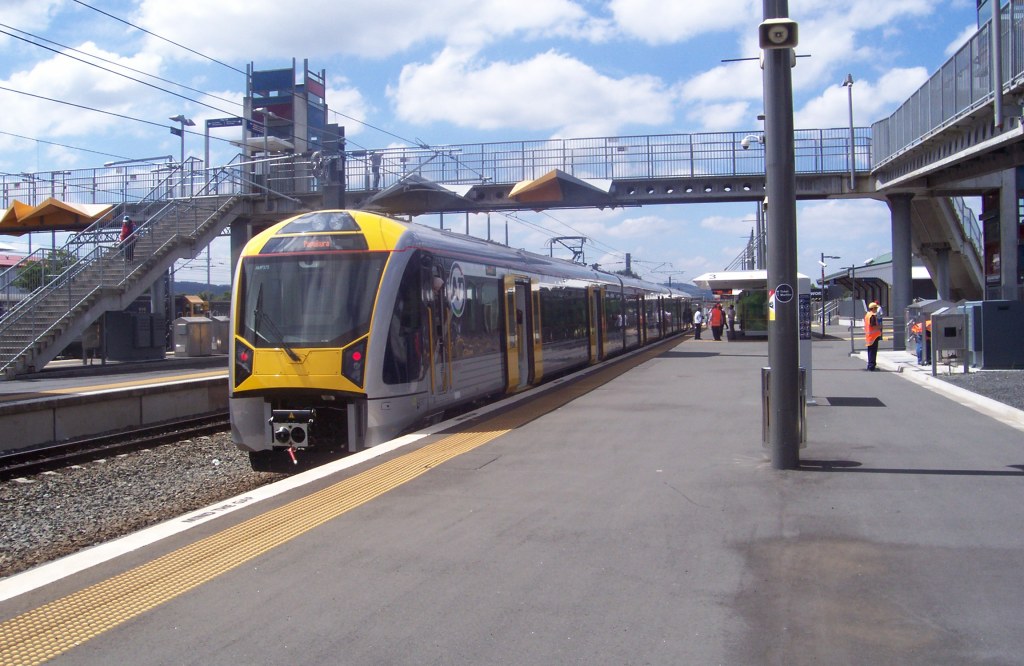
Growth continues at double figure percentages The Mayor made the announcement at the Auckland Conversations event earlier this week which drew a piss weak response from the audience. A … Continue reading Rail Passenger Trips Hit 13 Million
Growth continues at double figure percentages The Mayor made the announcement at the Auckland Conversations event earlier this week which drew a piss weak response from the audience. A … Continue reading Rail Passenger Trips Hit 13 Million
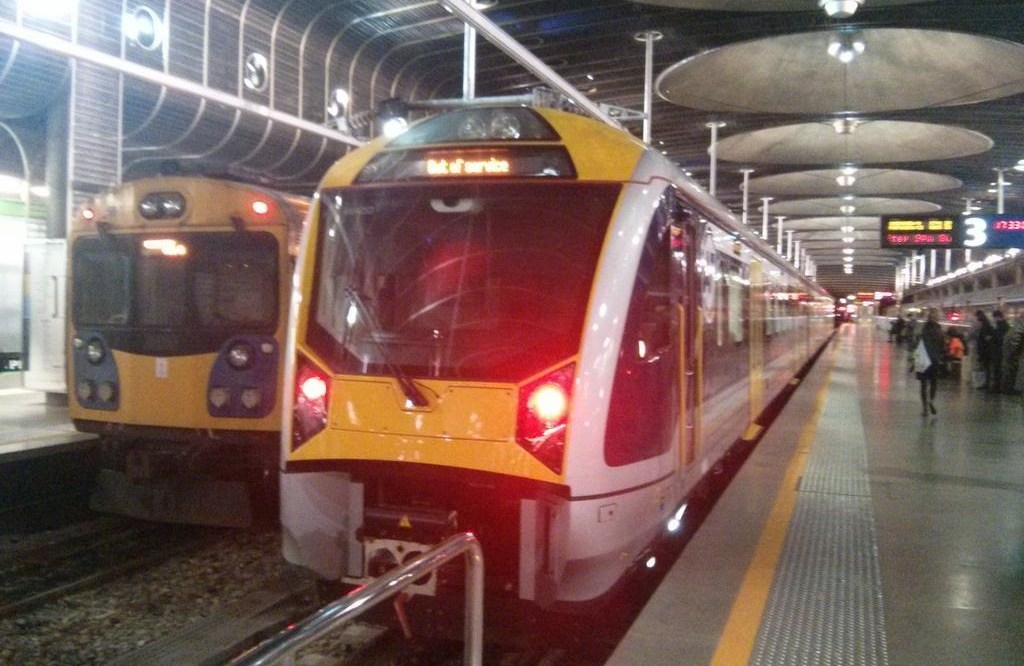
A look back Alex Burgess put together a complementation of the rise of the re-opened Onehunga Line, and the rise our our electric trains. You can watch the … Continue reading Rise of The Onehunga Line, and the EMU’s
It seems Monday the 18th the Electric Trains will start running on the Manukau Line in the off-peak periods as part of that limited roll out. They were meant to start plying the Manukau Line on the 13th but that never happened.
September/October is when the Electric Train fleet should be fully replacing the diesels on the Manukau Line both peak and off-peak. Or will they?
With the Long Term Plan 2015-2025 budget cuts from Auckland Council delaying the purchase of more Electric Trains (beyond the 57 already on order) to beyond 2025 will we see our diesels still plying the network post 2015 when the Electrics are fully rolled out? Something yet to be seen as the LTP debates continue.
[Update from Auckland Transport]
15/08/2014 04:18 p.m.
The roll-out of electric trains in Auckland steps up next week with the introduction of the new trains on the Manukau Line.
Initially electric trains will run on some off-peak services, they will be introduced to all services over the next month.
Auckland Transport’s Chief Operations Officer Greg Edmonds says the new trains have been very popular since their introduction on the Onehunga Line in April but with any transition we should be prepared for “teething problems.”
“We want to ensure our customers who use the trains to Manukau are getting a reliable service so we will be gradually increasing the number of electric trains over the next month.”
Meanwhile, testing continues across the rail network following an intermittent power fault which saw some Onehunga services affected. Mr Edmonds stresses there are no safety issues associated with the fault.
——-
Source: https://at.govt.nz/about-us/news-events/a-second-rail-line-going-electric/
Auckland Transport: “Acknowledged the problem had yet to be fully diagnosed – let alone fixed.” Continued coverage of our Electric Train and Rail System Fault that caused a 10 … Continue reading Electric Train Fault Believed to be Found. No Idea on Fix Yet
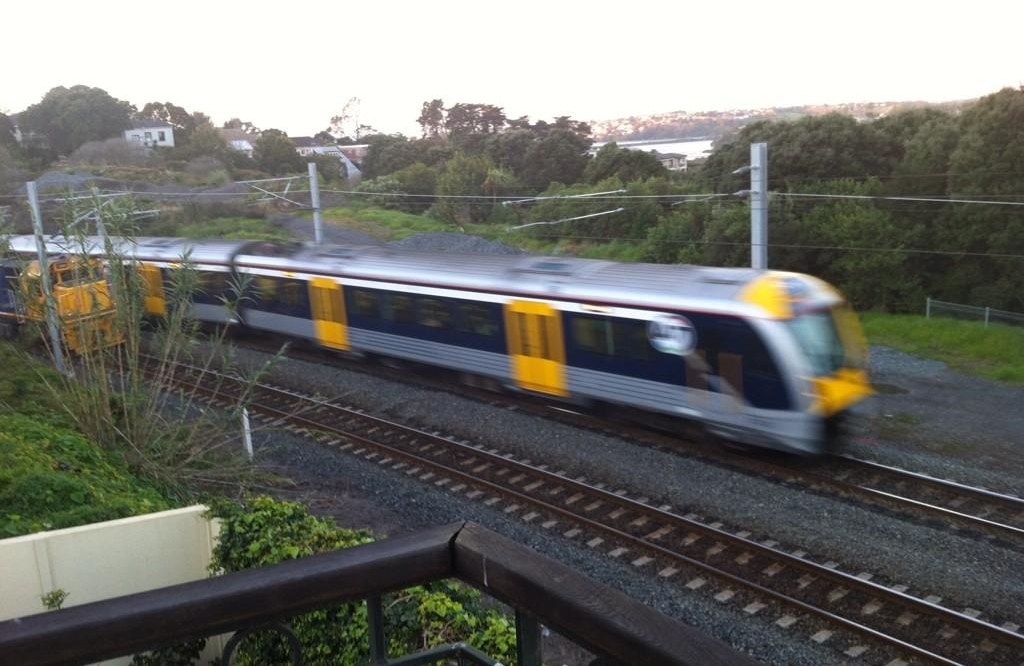
Investigation TO get under-way From the lack of notifications lighting up my Twitter feed right now would be an indication that the Electric Trains are running on the … Continue reading Latest Updates on the Electric Train Grounding Saga
Operating but there were delays I am still carrying out my usual checks on the Electric Trains running on the Onehunga Line after they went back into full … Continue reading Update on Onehunga Services Today
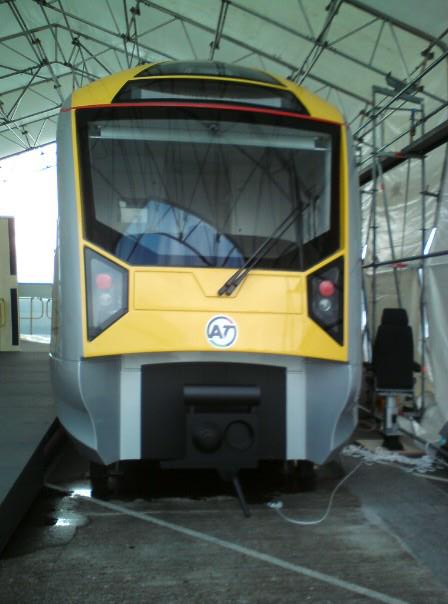
I will keep a running count until the Electric Trains are back in full revenue service on the Onehunga Line Every morning and every evening I check Twitter … Continue reading Day 11 and the Electric Train Fleet is Still Grounded
And Auckland Transport has no clue why Last week I ran a post on a theory why the Electric Train fleet was grounded. The theory’s premise was based on … Continue reading Day 10 and the Electric Train Fleet is Still Grounded
I have seen a bit of activity, chatter and news going around about our Electric Trains. If you are wondering why they are not running at the moment on the Onehunga Line my Electric Train Fleet Grounded [updated] post gave the heads up on it.
An extract from TVNZ stated:
Fault prompts electric train replacement on Auckland network
Published: 1:15PM Wednesday July 23, 2014 Source: ONE News
A power fault has led to Auckland’s new electric trains being replaced on the Onehunga Line.
Auckland Transport has stressed the faults had not resulted in any safety issues.
The power fault has occurred twice in the last 24 hours and while it could take several days to fix timetables will remain unchanged.
Auckland Transport chief operations officer Greg Edmonds says the organisation intends to get to the root of the issue.
“So as not to inconvenience customers we have decided to run diesel units,” he says.
Mr Edmonds also says issues such as this are expected while phasing in a new train fleet.
….
——
Source: http://tvnz.co.nz/national-news/fault-prompts-electric-train-replacement-auckland-network-6036157
After some checking and some chats in regards to the EMU fault I came up with a theory into what MIGHT be causing the issues with our electric trains that has resulted in the grounding of the fleet. Now I stress this is a theory in what possibly might have occurred from deductions and observations. Naturally when such a theory is presented the relevant authority would carry out tests to either prove or disprove the theory. Now we know according to Auckland Transport’s Chief Operating Officer Greg Edmonds that equipment is being installed on the two substations that feed the juice into the electric network for the trains to see if they can find the fault. I hope they do however, I theorise that the fault while found, it can not be remedied if Auckland Transport and Kiwi Rail have done cost cutting with the infrastructure thus we will have continual issues until the proper remedy is in position.
Our New Electric Trains Breaking Down in Peak Services? [Updated])
http://www.bettertransport.org.nz/forum/viewtopic.php?f=1&t=2460&start=2760
http://www.bettertransport.org.nz/forum/viewtopic.php?f=1&t=1653&start=3520
Power quality
From Wikipedia, the free encyclopedia
Power quality determines the fitness of electrical power to consumer devices. Synchronization of the voltage frequency and phase allows electrical systems to function in their intended manner without significant loss of performance or life. The term is used to describe electric power that drives an electrical load and the load’s ability to function properly. Without the proper power, an electrical device (or load) may malfunction, fail prematurely or not operate at all. There are many ways in which electric power can be of poor quality and many more causes of such poor quality power.
The electric power industry comprises electricity generation (AC power), electric power transmission and ultimately electricity distribution to an electricity meter located at the premises of the end user of the electric power. The electricity then moves through the wiring system of the end user until it reaches the load. The complexity of the system to move electric energy from the point of production to the point of consumption combined with variations in weather, generation, demand and other factors provide many opportunities for the quality of supply to be compromised.
While “power quality” is a convenient term for many, it is the quality of the voltage—rather than power or electric current—that is actually described by the term. Power is simply the flow of energy and the current demanded by a load is largely uncontrollable.
Mr Edmonds said special measuring equipment had been installed at both of the electrification system’s two power supply substations, and on the trains themselves, ready for simulated services to be trialled last night.
Power quality issues (so dirty power) also give harmonics issues which have been mentioned before again here: http://www.bettertransport.org.nz/forum/viewtopic.php?f=1&t=2460&start=2760 (I think one page back from where that one will open). More on harmonics can be seen here: http://en.wikipedia.org/wiki/Harmonics_(electrical_power) (extract below)
Harmonics (electrical power)
From Wikipedia, the free encyclopedia
Harmonics voltages and currents in an electric power system are a result of non-linear electric loads. Harmonic frequencies in the power grid are a frequent cause of power quality problems. Harmonics in power systems result in increased heating in the equipment and conductors, misfiring in variable speed drives, and torque pulsations in motors. Reduction of harmonics is considered desirable.
…
Effects
One of the major effects of power system harmonics is to increase the current in the system. This is particularly the case for the third harmonic, which causes a sharp increase in the zero sequence current, and therefore increases the current in the neutral conductor. This effect can require special consideration in the design of an electric system to serve non-linear loads.[2]
In addition to the increased line current, different pieces of electrical equipment can suffer effects from harmonics on the power system.
Motors
Electric motors experience losses due to hysteresis and losses due to eddy currents set up in the iron core of the motor. These are proportional to the frequency of the current. Since the harmonics are at higher frequencies, they produce higher core losses in a motor than the power frequency would. This results in increased heating of the motor core, which (if excessive) can shorten the life of the motor. The 5th harmonic causes a CEMF (counter electromotive force) in large motors which acts in the opposite direction of rotation. The CEMF is not large enough to counteract the rotation, however it does play a small role in the resulting rotating speed of the motor.
And that is my theory behind the situation resulting in the costly grounding of our electric train fleet. The theory stems from the simple fact that currently only two of the four or five substations that would feed the electrified rail network power as well as filter the power to prevent dirty power and over voltage have been built. We only have 50% of the total supply potential and filtering (or protecting) capacity installed for a 25,000 volt system. Thus because of the reduced capacity to filter, protect and supply we get these problems with just SIX electric trains running let alone the full 57.
So the question is what will Auckland Transport do? The remedies that I have seen are quite costly if we are to prevent the entire EMU revenue service fleet being pulled again like last week.
Something that could have been in theory very easily avoided!
I caught this Tweet last evening during the PM peak services:
I do expect faults to come up during electric train testing. I somewhat expect maybe one spitting the dummy in the peak services. But I do not expect two EMU’s to break down with apparently similar faults inside Britomart during the peak evening services (or morning if it was morning) causing the issues that happened (cancellations and apparent bus replacements).
So the question is Auckland Transport what will be done to prevent this kind of failure again. Especially as such failings or near failings have been noted as seen here: http://www.bettertransport.org.nz/forum/viewtopic.php?f=1&t=2460&start=2760
The last thing you want is two EMU 6-car sets fully loaded with 750 passengers each breaking down with that same traction fault but this time on the Southern Line (the busiest of all lines) during the peak services…
Come on Auckland Transport let’s get this sorted while the EMU’s are still on the Onehunga Line
It seems we are still beset with issues with the electric trains that should have been sorted in testing.
This from earlier this evening:
Looking at the replies to the Tweet it seems an ADL diesel unit (the predecessor unit that plied the Onehunga Line before the Electrics went into service late April) has been replacing the EMU’s on Onehunga runs owing to no Electric unit available.
September is when the Manukau Line is meant to get the electric trains running revenue services. I hope by then the issues are sorted…
 Talking Southern Auckland