New South Wales and wider Sydney Prepare with the Sydney Plan I am keeping an eye over on Sydney as the Alpha International City continues to embark on a … Continue reading Sydney Plan Gathers Steam
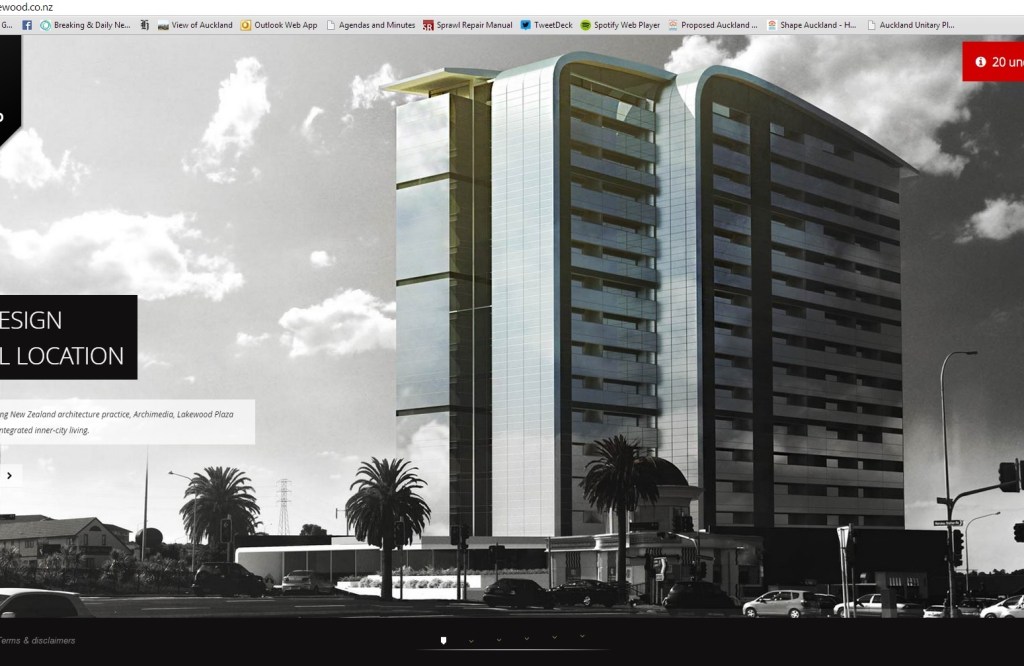
New South Wales and wider Sydney Prepare with the Sydney Plan I am keeping an eye over on Sydney as the Alpha International City continues to embark on a … Continue reading Sydney Plan Gathers Steam
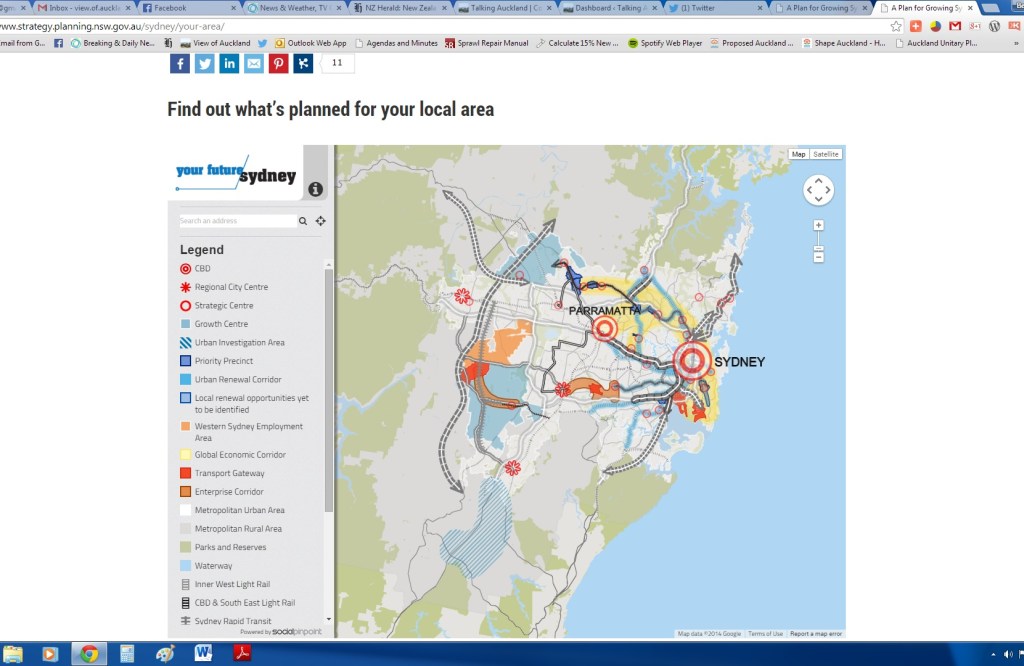
New South Wales Releases its own (Sydney) Plan After Sydney left Auckland for dead with a Transit Orientated Development that effectively paid for itself (https://voakl.net/2014/11/28/sydney-leaves-auckland-for-dead/) it seems New South … Continue reading A Plan For Growing Sydney
Apologies folks but no Sunday BBQ podcast today.
The final Sunday BBQ podcast for 2014 will be next Sunday and we will be taking a look at the year that was for our Mayor.
Tomorrow I will look at the new Sydney Plan (http://www.strategy.planning.nsw.gov.au/sydney/) which again Sydney has pretty much left Auckland for dead again after it did so with a transit orientated development recently.
Put it this way while Sydney’s plan is ambitious it can be delivered and it recognises a few realities that Auckland missed with her own.
More tomorrow
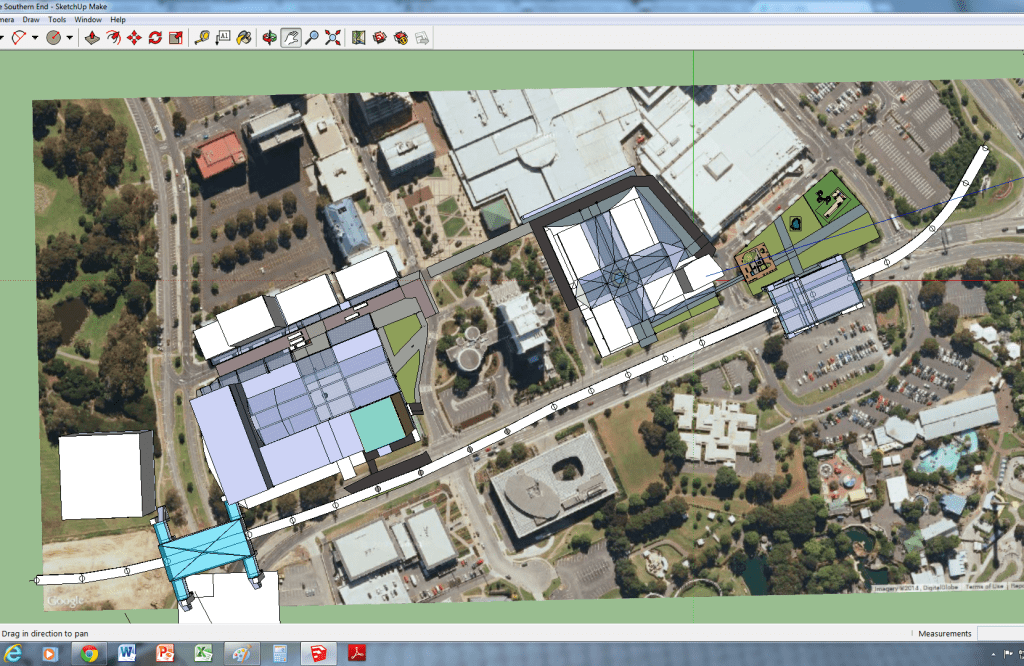
Sydney Shows What I have Told Auckland Council Needs to Be Done A Urban and Transport Infrastructure Led Development Yet again one of our more advanced cousins which in … Continue reading Sydney Leaves Auckland For Dead

Time for Auckland to Accept Density? Maybe Auckland and Central Government need to take a few pointers from the New South Wales Planning Minister on density. I shall leave … Continue reading Planning Minister Tells North Shore to Accept Density
We know the AT-HOP integrated ticketing scheme roll out by Auckland Transport for our public transport system has not been flash hot with delays and issues for the buses (trains and ferries when rather well). However, in Sydney their Opal public transport integrated ticketing scheme roll out is going surprisingly well and apparently ahead on time.
From Sydney Morning Herald:
Opal card use to be extended next week
- Date
- January 23, 2014 – 2:37PM
Transport Reporter
About half of all Sydney train passengers will be able to use Opal cards by the end of next week.
Transport Minister Gladys Berejiklian said on Thursday that the distribution of the public transport smartcard system is ahead of schedule.
From Friday, January 31, the Opal will be available at train stations between Strathfield and Redfern, Strathfield and Hornsby, Chatswood and Wyong, and on the Epping to Chatswood line.
Announcing the latest stage of the $1.2 billion ticketing system at Strathfield Station, Premier Barry O’Farrell and Ms Berejiklian said the government was on track to ensure the card could be used on all trains, buses and ferries by the end of the year. The light rail will be added next year.
“We are slightly ahead of schedule,” Ms Berejiklian said, “but I say that without being complacent.“If you look at the way other cities around the world and around Australia have implemented integrated ticketing, it hasn’t gone without problems. It hasn’t gone without glitches,” she said.
“Even though we’ve had great success to date, we will never be complacent.”
The Opal is already available on the eastern suburbs line to Bondi Junction, on the city circle line and on the north shore line to Chatswood, all Sydney Ferries, and two bus routes.
But the take-up of the card has been fairly slow. Some public transport users have been put off by the relative cost of paying with the card, which can be more expensive than using a monthly or quarterly ticket.
Others have been waiting for it to be extended to more train stations and buses.
Read more: http://www.smh.com.au/nsw/opal-card-use-to-be-extended-next-week-20140123-31atu.html#ixzz2rByd0PaX
…
Well done New South Wales State Government and Sydney city. But where Auckland will have an advantage (eventually) is on integrated fares something Sydney does not seem to be doing.
Continuing from the SMH article:
Experts have criticised the decision to continue to charge people different fares when they change from one mode of transport to another. But Ms Berejiklian said she did not think users of different types of transport should subsidise the other.
“We don’t think it’s fair that people who catch trains and buses should be subsidising people who catch ferries,” she said.
“Every mode of transport costs a different amount for the government to provide, and we want to make sure it’s an open and fair system.”
About 45,000 Opal cards have been registered, and the government has not yet said when it will stop selling paper tickets.
Mr O’Farrell said queuing for a ticket would be a thing of the past. “This is particularly great news for customers on the central coast,” he said.
Read more: http://www.smh.com.au/nsw/opal-card-use-to-be-extended-next-week-20140123-31atu.html#ixzz2rBzR2iw7
…
None the less next time I go to Sydney on holiday I’ll try out Opal and see how it goes (last time I used the old paper ticket system and that was not that bad – especially compared to our train paper tickets for the rail network here in Auckland).

Auckland is not the only one with planning battles on its hands It seems Sydney is going through the same NIMBY problems Auckland is going through when an … Continue reading Sydney has its NIMBY’s Too
Yeah-Nah There are not a lot of things I will agree with Councillor Cameron Brewer on but the Councillor’s calls on extending the Tram lines from Wynyard Quarter most … Continue reading CBD Trams

BR:AKL On Holiday From tomorrow until March 23rd I will be away on holiday with Rebekka to Sydney and Brisbane. BR:AKL will also be pretty much on holiday … Continue reading Holiday Time
In June last year I posted about Sydney and The Rail Fallacy – mind you it was in concern to passenger trains as I was drawing a warning in regards to the City Rail Link.
From last year:
Sydney and its Rail Fallacy
It seems Sydney has not quite learned from Auckland’s botched public transport system with multiple operators, seemingly a heterogeneous train fleet, disjointed fares and very disjointed timetables between the three p/t modes. Although Auckland is on the path in fixing the last three bits of that previous sentence, we will have some way to go yet before achieving a homogenous public transport operating system. But as I said at least we are going towards homogenous, because upon reading the Sydney transport article; they seem to be going in full reverse and heading to a heterogeneous system like we have. If you are wondering how Sydney has a rail fallacy; well it has not got a fallacy right now like other places, but heck it is heading to one and one it can avoid quite easy.
The Rail Fallacy will apply to the when the North West Rail Link (which is to be run as a PPP) is complete and opened in 2019, and most likely to the second Sydney Harbour is the New South Wales state governmentmanages to screw that up.
And for the definition of Rail Fallacy it is this:
THE CRL AND THE RAIL FALLACY
…
THE RAIL FALLACY
The Rail Fallacy was a formula given to me by a mentor on how to roughly calculate the “actual” cost and time to completion of a heavy rail or light rail project. The Fallacy was based on previous experience from projects in the USA and Scandinavia where rail projects were given a cost and time to completion by the Public Authorities. However by the end of the said project (if it was not scrapped) the final cost was higher and time to completion “delayed” compared to the original numbers given, with public confidence often not that high. Thus the Fallacy formula was derived on an average of 1.5x (one point five times) and can be applied to (usually) to any passenger rail project due to be constructed in the Western World.
Well yesterday its mentioned in the Sydney Morning Herald that Sydney and wider New South Wales suffered a rather large Rail Fallacy – although it was from a freight line rather than a passenger line.
From the SMH:
‘We wanted to make sure we got it right’: new rail line opens … three years late”
The first train line in Sydney to be paid for and built under the Rudd and Gillard governments opened on Monday, $700 million over budget and three years after it was promised to be finished.
The 36km Southern Sydney Freight Line will allow extra freight trains to run between Macarthur and Chullora in the city’s south west and will increase rail freight capacity along the entire Australian east coast.
This is an investment that’s been got right. This isn’t a loss to taxpayers. This is an investment that produces a return on that investment by getting it right.
But the project ended up being vastly more expensive to build than when it was first promised by the federal Transport Minister, Anthony Albanese, in 2009.
Getting it Right? That should of been done in the (proper) Planning Process which would of indicated rather clearly the upcoming complexity of the entire project
As for costs and time that is reflected below, but from my understanding the freight line came in at 3.5x over budget and three years (so 3x over the one year completion date) late from what was “promised” by the Federal Government.
More from the SMH:
At a press conference in Birrong to mark the start of operations on the line, Mr Albanese and the chief executive of the Australian Rail Track Corporation, which built the line, defended the blow-out.
The final cost was about $1 billion. When Mr Albanese announced the start of construction in February 2009, he put a figure of $309 million on the project and a completion date of early 2010.
“This is a pretty complex piece of work,” Mr Albanese said on Monday.
He attributed the delays and cost blow-outs to the necessity of moving utilities such as water and energy lines during construction.
Mr Albanese also said that the difficulty of operating on a live rail line – both freight trains and passenger trains on the adjoining East Hills line stayed running while the new line was being built – added to the challenge of the project.
“We wanted to make sure we got it right,” the Transport Minister said. “No corners have been cut. This has been got right.”
The Australian Rail Track Corporation is owned by the federal government. As with the NBN Co. it receives money from the federal government in the form of investments which do not come off the government’s budget bottom line.
Mr Albanese declined to criticise the ARTC for the more than three-fold increase in the cost of the project. According to figures provided to Senate Estimates, the ARTC spent almost $12 million in planning the line before construction even started in 2009.
“This is an investment,” he said. “This is an investment that’s been got right. This isn’t a loss to taxpayers. This is an investment that produces a return on that investment by getting it right.”
Mr Fullerton said the new train line, which will allow capacity for up to 48 freight trains a day to pass through the area and potentially to Port Botany, was the largest project the ARTC had undertaken.
“The original budget made some assumptions on how we could build a line over 36 kilometres adjacent to a metropolitan line but when we got into the project we realised that lot of the services covering off Sydney Water, a lot of the RailCorp services to do with signalling, electricity lines, all those sorts of things had to be relocated and that comes at a significant cost over 36 kilometres,” Mr Fullerton said.
The ARTC stopped work on the freight line in late 2009 and 2010. The benefit of the line is in allowing passenger trains and freight trains to run separately from each other.
This means that an existing eight-hour curfew on freight trains running during the morning and afternoon peak periods can now be lifted.
Mr Albanese defended the record of the federal Labor government in relation to transport in Sydney.
As transport minister, he has promised to build the Epping to Parramatta train line, though that pledge has been scuppered by the O’Farrell government which ranks it a lower priority. He has also agreed to fund a new freight terminal at Moorebank and another freight train line through Sydney’s northern suburbs, though both are still at the planning stage.
By the looks of it (and always seems to be the case) it that the project is a worthwhile one (this dedicated segregated freight line being an example) but the planning was just an utter disgrace and not done properly. And from the Sydney Freight Rail Line example some rather dodgy planning was done indeed. Costs underestimated (as always the case), time of completion underestimated (as always the case), scope of work underestimated (was with Sydney), complexity of the work at hand underestimated (usually the case), benefits delivered from project overestimated (although with Sydney and back here with the CRL this would be a case of benefits most likely being underestimated due to pitch of the benefits being wrong).
So a message to our resident Prude – The Mayor and Auckland Council, take heed of Sydney AND Canberra doing a ballsy and allowing a Rail Fallacy (and a large one at that with the multiple over 3.0) happen with a FREIGHT rail line (let alone passenger rail line projects like the Sydney North-Western Line proposals). Because while some call it scaremongering in what I write, I call it the utter truth from examples overseas gathered and an absolute warning on how to avoid The Rail Fallacy. And I give these warning so that mistakes from overseas are not repeated in regards to the City Rail Link mega-project. Because if the The Rail Fallacy does happen (and it has with Manukau – knocking confidence right out of Councillors and rail supporters) then support and confidence in further investment in rail (the other four lines to be built) goes right out the door.
Just of note The CRL already faces a tough pitch in giving ratepayers confidence in its multi-billion dollar project support; Whale Oils Rail Patronage post would be a testament to that (after by the looks it someone got a proverbial spanking over there) and The Rail Fallacy coming true with the CRL will do no one any favours. However if we get a Britomart situation where the project was in high doubt but is now a beacon (well all things considered too) of confidence restoration with rail investment and the CRL pulls off the same thing – then – well you figure out with further investment with rail.
So the stakes are high folks they really are…
 Talking Southern Auckland