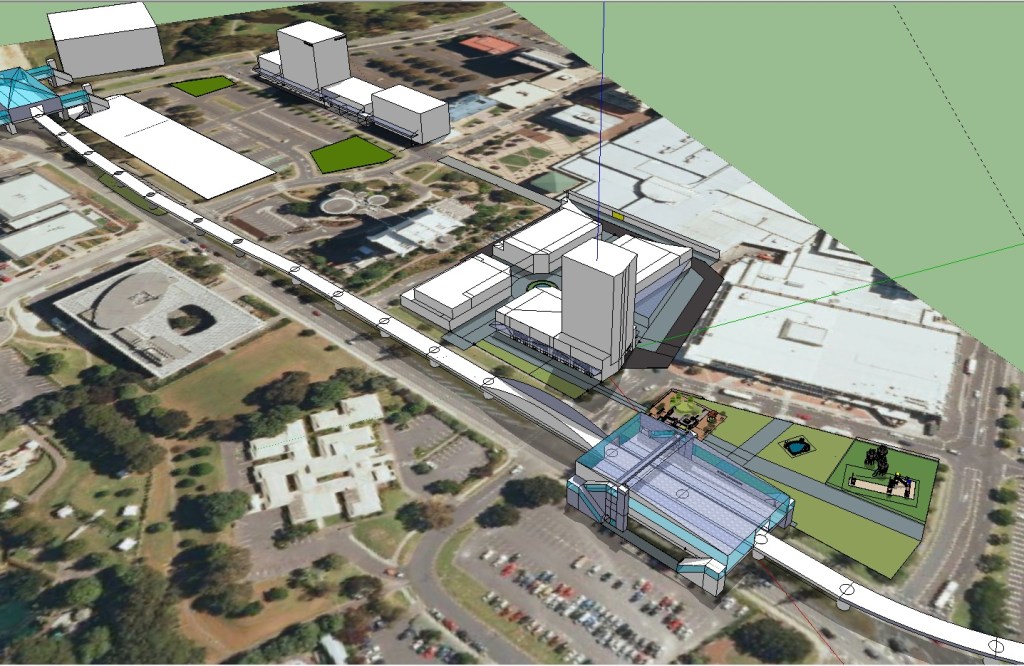
Minister wants to build houses in this location in Manukau City Centre Recently Housing Minister Nick Smith announced that the Government will release Crown Land to private developers for housing. … Continue reading Exclusive: Would You Want To Live Here? #AKLPols
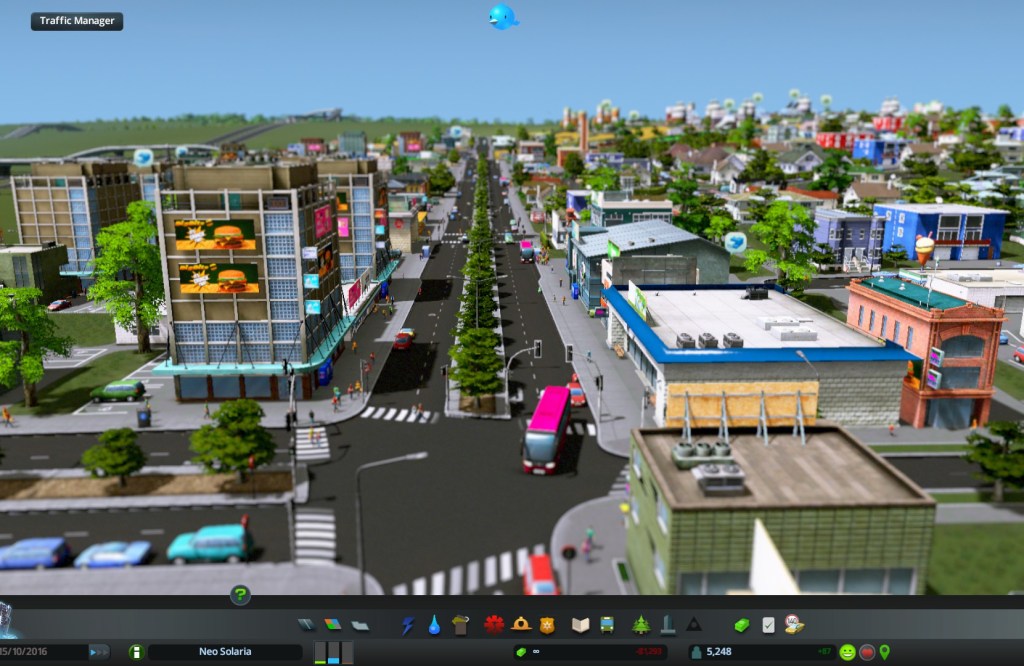
Transport Planning, Urban Planning, Watching a City Develop Well in Cities Skylines that is. In my downtime I will often hone my skills on the Cities Skylines game which … Continue reading Just Another Day in The City
West condemned to Commuter status unless it diversifies job base A running theme through the comments department over the last month (although I have brought it up in the past) … Continue reading West Auckland Needs Heavy Industry
I was forwarded the following article on the Dutch city of Nijmegen not only engineering to combat flooding but also using that engineering (and planning) to literally build a new city core as well.
An extract from CityLab:
A Dutch City Makes Room for Its River and a New Identity
Nijmegen is turning a flood-control project on the River Waal into an opportunity to redevelop its inner core.
NIJMEGEN, The Netherlands — In this city along the River Waal, this year marks the 20th anniversary of a scary event that quite nearly turned into a catastrophe.
Heavy rains upstream in France and Germany, where the river is known as the Rhine, sent a surge of water toward Nijmegen. The city of 170,000 people is protected by dikes. But as the waters rose and fear built that the dikes would break, many people and cattle in and around Nijmegen evacuated. Luckily, the dikes held, and after several harrowing days, the water level dropped again.
There’s two reasons why. First, Nijmegen is not simply raising or strengthening its dikes, which might seem like the obvious solution. Instead, it is moving some dikes back from the river, essentially creating a much wider floodplain. Into that floodplain, excavators and cranes are carving a new channel for the River Waal. That channel is broadening the river—and giving future floodwaters more room to flow without threatening the city.
The second reason is that all this engineering work is creating a whole lot more than flood control. Construction of the new channel also means that a new island is being made in the middle of the Waal. The island’s elevation is high enough in some spots that it will be possible to construct a whole new section of the city here, along with parks and nature areas.
Meanwhile, a new neighborhood is rising across the river from the city center, bringing some balance to the urban development on both sides of the river. And four new bridges are being built, connecting the new island to both sides of the river. When it is all done, Nijmegen will have a new urban heart in the middle of the very river that has occasionally threatened its existence.
“For the first time,” says Alderman Bert Velthuis, “the city center will actually be in the middle of the city.”
Never underestimate the Dutch in their creativity with planning and engineering. In saying that though they were quite amused and have taken up our own created term of #quaxing (in honour of our Dutch born Councillor Dick Quax) to recognise doing the shopping by active and public transport modes.
I caught last night while sitting in a Local Board meeting that the Auckland Regional Public Service and some areas of Auckland Council thought it might be a great idea to ban or (to better put it) restrict dairies in their operation or set up. This is meant to be in the name of fighting obesity.
Now to be clear the Dairy issue is entirely separate from the alcohol issue that is also floating around at the moment. But the issue at heart here is if something is wrong our first reaction should be to (over) regulate if not ban it outright. Umm no!
It is not our Council’s jurisdiction to decide what Dairies should sell nor to place bans on them either. What controls Council does have available is what zones it places down which will influence where a dairy can go. In short a dairy will usually establish itself in the Neighbourhood and Local Centre Zones, and maybe the Town Centre,and Mixed Use Zones. So if Council was so inclined it could use the Unitary Plan zones to influence where a dairy might go.
However, Council would be achieving more in tackling the obesity crisis if it got its act together on urban and transport planning. That is:
Lots of small parks within walking distance of residential neighbourhoods (rather than a gold plated big park some distance away that you need to drive to)
A pro-pedestrian streetscape and Town Centres so people are inclined to walk (our current environments are pretty hostile to walkers)
A decent all day, easily accessible and most of all affordable public transport system so a family might be able to ditch a car and save $7,800/year. That cash saved might be just able to allow the families to afford better quality foods.
Otherwise the rest belongs to the realm of Social Policy via Central Government. That being Decile 1-5 schools having kitchens for quality hot (and cold) meals, decent labour provisions allowing decent wages, and paying its Iron Price so families again might be able to ditch that car and divert that $7,800/year to a better food budget.
Also dairies do form two important functions to an urban environment and a lack of dairies in new subdivisions is telling. Dairies are usually within walking distance (or even cycling of you are up for some #quaxing) to get that bottle of milk and the loaf of bread. Otherwise here comes a car trip to a Town or Metropolitan Centre (thinking Botany here) just to get those two items. Great way to cause congestion (and further fuel health issues) there from an actual lack of dairies. Dairies especially in Neighbourhood or Local Centres also form a backbone to that Centre and the local community as well. We are meant to be encouraging community here not discourage it.
So bans and restrictions on dairies? Naff off. There are better tools available to fight the obesity situation!




 Talking Southern Auckland