Category: General

Everything else

True Train Power

Union Pacific Shows How to Haul a Freighter


If you have been ever inclined to protest because a Kiwi Rail freighter held you up then spare a thought if you were waiting for these true freighters to clear a level crossing


Union Pacific SD70 (their main locomotives) hauling a long train through a work area (you can hear the maintainers talking to the driver)

And that was just one SD70


Now for some multiple SD70 hauled freight

Just don’t have the volume too high when the train blasts by


And for our serious train fans here is a selection of Union Pacific locomotives of different classes in LA

http://www.youtube.com/watch?v=5N6UMn_kfCo


Some quick stats on the SD70 that Union Pacific uses:

SD70ACe

Kansas City Southern SD70ACe 4034 at Nichoals Yard in December 2009

The SD70ACes are similar to the SD70MAC; however, the model has been upgraded to meet Tier-2 EPA regulations. Production commenced in 2004.[1] SD70ACes are equipped with EMD’s 16-710G3C-T2 prime mover, rated at 4,300 horsepower (3,200 kW).[8] They are rated at 157,000 lbf (700 kN) continuous tractive effort (191,000 lbf (850 kN) starting). Braking effort is rated at 106,000 lbf (470 kN).[8]

Although mechanically similar to earlier SD70 units, the SD70ACe rides on a new underframe and uses mostly new sheetmetal above the frame. Electrical cables and air lines have been routed beneath the walkways on opposite sides, allowing for easy access by maintenance workers. The radiator on the locomotive is nearly as wide as the cab, the center hood section is a step down below the roofline, and the dynamic brakes have been moved to the rear of the hood; these changes are reminiscent of the SD80 and SD90 series. The SD70ACe uses the cab design of late-model SD90MAC units, which uses rectangular window glass and is externally different from the two cab variations used on earlier SD70M and SD70MAC units. In 2008, EMD standardized the isolated cab on subsequent SD70ACe’s after non-isolated cab units were restricted from leading on BNSF Railway due to excessive cab vibration. SD70ACe models are rated at 4,300 horsepower (3,200 kW). As of late, more than 1350 examples of this model locomotive have been produced. Purchasers include BNSF Railway, CSX, Ferromex, Kansas City Southern Railway, Montana RailLinkCVG Ferrominera Orinoco, Union Pacific,Quebec North Shore and Labrador RailwayBHP Billiton, Arkansas & Missouri Railway, and Norfolk Southern.

In January 2012, BNSF Railway announced the order of 10 SD70ACe-P4 locomotives. This engine would compete with GE’s popular ES44C4. These units will have a B1-1B wheel arrangement, unlike the ES44C4’s A1A wheel arrangement. They are set for 2013 delivery.

Source: http://en.wikipedia.org/wiki/SD70


As a comparison a EMD SD70 has 4,300 horse power behind it while our DL’s have a horse power rating of 3,600.

Source: http://en.wikipedia.org/wiki/New_Zealand_DL_class_locomotive


DL’s hauling freight


So next time you are stuck at a level crossing waiting for a freighter to pass by, remember you are not waiting for a long Union Pacific freighter to go through 😉

4,260 Submissions and Counting

Meanwhile there were only 1,947 Annual Plan Submissions


The numbers are rather telling with a bit of an imbalance with the two different submissions.

From Shape Auckland on the Unitary Plan

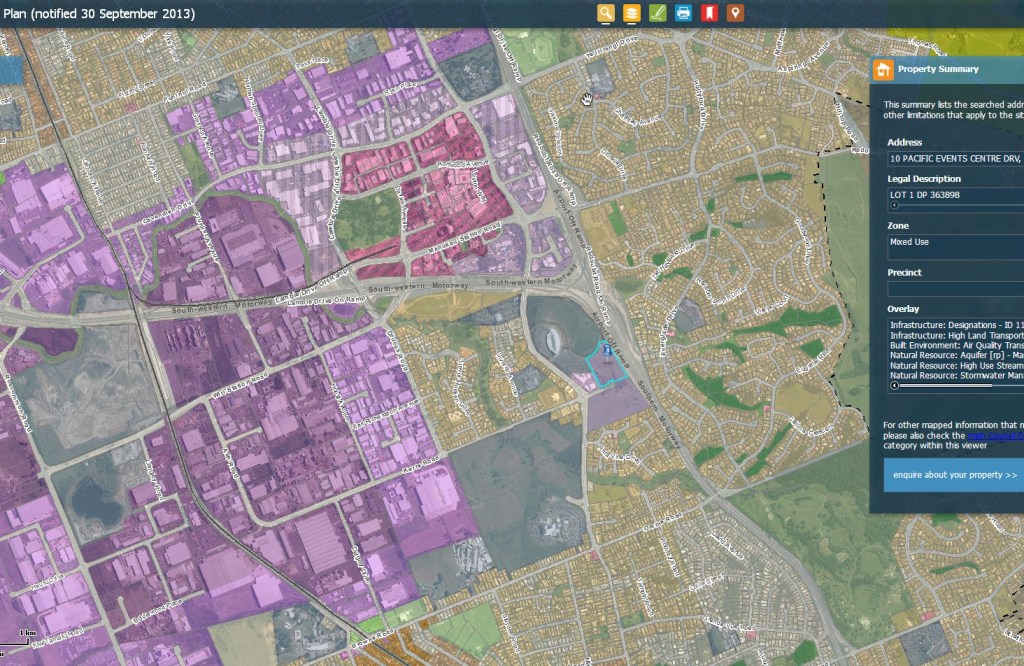
UNITARY PLAN SUBMISSIONS: 4,260 AND COUNTING

More than 4,260 submissions on the Proposed Auckland Unitary Plan have now been registered, with many more to come. As expected, the majority of submissions came in on the last week of the five-month submission period: through the online form, by email, by post or through libraries and council service centres. The closing date was 5pm on Friday 28 February.

Given the statutory process of individually registering each one, and assessing for duplicates or additions to original submissions, the tally won’t be known until closer to the end of the month.

Once registered, Auckland Council staff will go through each submission to summarise what decisions are being asked for. This is an extensive process, but we are aiming to be able to publish the summary, along with a full, searchable set of the submissions, online by the end of May. This will then start the process of further submissions.

As for further submissions

Further submissions

The five-month submission period for the Proposed Auckland Unitary Plan ended at 5pm on 28 February 2014. The council will publish all submissions online by the end of May, along with a summary report of the decisions requested in them. The submissions will be indexed and searchable by submission number, name, local board, and theme. The summary report will be publicly notified, marking the start of the further submissions period. During this period, people will be able to respond to the decisions requested by submitters, by stating either their support or opposition to particular points raised.

We will publish further details about this process closer to the time.

—ends–


Meanwhile with the Annual Plan (annual budget):

Source: Mark Thomas of Orakei Local Board

Over consulted again or bad timing having two submission periods together with Area Plan submissions to start soon as well…


More Taxes? No Thanks

Mayor Outlines Possible New Taxes


I saw this morning that the Mayor is effectively looking at a Poll Tax to either replace or supplement the current rating system (property tax) Council uses to raise revenue.

From Stuff:

Brown’s bold tax plan

Making all Aucklanders pay a council income tax may help elderly people in affluent areas who can’t afford their rates, mayor Len Brown says.

The current system is “inherently unfair” on people living on fixed incomes and paying high rates because of the value of their properties in areas like Devonport-Takapuna, Brown says.

Introducing an income-related tax for local council services that everyone pays is an option, he says.

Only property owners pay rates but the council is spending money on infrastructure and services for everyone, Brown says.

He believes the only way to mitigate the rates burden as property prices rise is to rethink how local government is funded.

Brown won’t express a view on what alternative might work saying he is “quite open minded”.

Options could include funding through income tax, GST, user pays charges, or bed taxes from hotel.

—-ends—-


Last time a poll tax got mentioned it cost Maggie Thatcher her Prime Ministership in 1990 to John Major. While we do need to think how Local Government is funded in New Zealand such as all GST collected from rates is given straight back to the Council rather than Central Government keeping it (Australia has a GST sharing arrangement between the Federal Government and the State Governments) I believe priority one is getting our expenses in line first.

Debt moving from 175% to 275% to me is unacceptable by all means. If we need to go that high then it seems it might be time to take the ruler and red pen over expenditure. I was given an alternative to how the budget should be set for Council by an elected representative once. The idea was quite intriguing in using a big massive white board at the back of the chamber where the Councillors meet (so where the food sits) with revenue down one side and expenditure (OPEX and CAPEX) down the other. Everyone can see it, everyone can comment on it, but the sole key requirement was you did the income first then the expenditure to match the income. Not the current method of do the expenditure first then find the income to cover it. With the board present it would serve as a constant reminder if you want something can the revenue cover it – if not what needs to “go” first. Pretty much this is what households and businesses do – or rather should do (our savings and debt is nothing to crow about)


So I am rather cool on the Mayor’s announcement on new funding mechanisms when our current budgets are disjointed as they are.


Just a quick note on another Orsman piece this morning I noticed he was going on about the City debt lifting by $74 million currently. A reminder that $60 million of that is the Colin Maiden Park purchase from the University of Auckland to ensure Auckland continues to have green space as it grows. So not as alarming as it was portrayed this morning as that $60m will continue to pay dividends for generations to come.


Council Looking for New Independent Hearing Commissioners

Calling those who want to help shape Auckland


Auckland Council is looking for new Commissioners to take up the reigns from mid-year. Note these are not Commissioners for the Unitary as they have already been appointed.

From Auckland Council

Applications invited for independent hearing commissioners


Applications are invited from qualified people to join Auckland Council’s pool of independent hearing commissioners.

A current “Making Good Decisions” accreditation by the Ministry for the Environment is preferred, and will be essential from 12 September 2014, along with skills in general planning or resource management law.

Applications close on 14 March 2014 for positions starting 1 June 2014 for a three year term, reviewable annually. 

The council currently has contracts with about 60 independent commissioners and these contracts are due to expire on 31 May 2014.  Under this review, the council is seeking to appoint about 40-50 independent commissioners.


Independent commissioners will sit as panel members, some as chairpersons.

They will sit on hearings for such purposes as resource consents, Section 357 objections, bylaw dispensations, reserve management plans, plan changes, special consultative procedures and notices of requirement.

Expertise in one or more of the following is required:

  • planning
  • resource management law
  • engineering (transport and infrastructure)
  • landscape architecture
  • ecology, biodiversity and environmental management
  • freshwater management
  • the Treaty of Waitangi and kaupapa Maori
  • community
  • coastal management
  • heritage and conservation management
  • urban design
  • air quality
  • rural planning and land management
  • waste management


Hearings Committee chair Councillor Linda Cooper said the council had been well served by independent commissioners in the first term. The opportunity now arose to review and refresh the pool as the council moved forward under the Proposed Auckland Unitary Plan and Resource Management Act changes.

“We are entering a new planning era providing great prospects for skilled professionals and I’m sure that will be reflected in the quality of the applicants,” she added.

Two selection panels, each comprising senior managers from the council’s Democracy Services and Regional and Local Planning departments and a member of the Independent Maori Statutory Board, or person nominated by the IMSB, will present a list of preferred candidates to the Hearings Committee in May 2014.


Applicants should apply via www.aucklandcouncil.govt.nz/careers including Curriculum Vitae, a copy of their accreditation from the Ministry for the Environment, and, if they wish to be considered for a chairperson role, an example of a recent decision they have written.

Further information is available from Elizabeth McKenzie on 09 307 7557

—ends—


So send your applications now and be at the leading edge of helping shape Auckland’s future