Tag: Auckland Council

Business for Tuesday in Regards to the City Rail Link

Respect the Citizenry
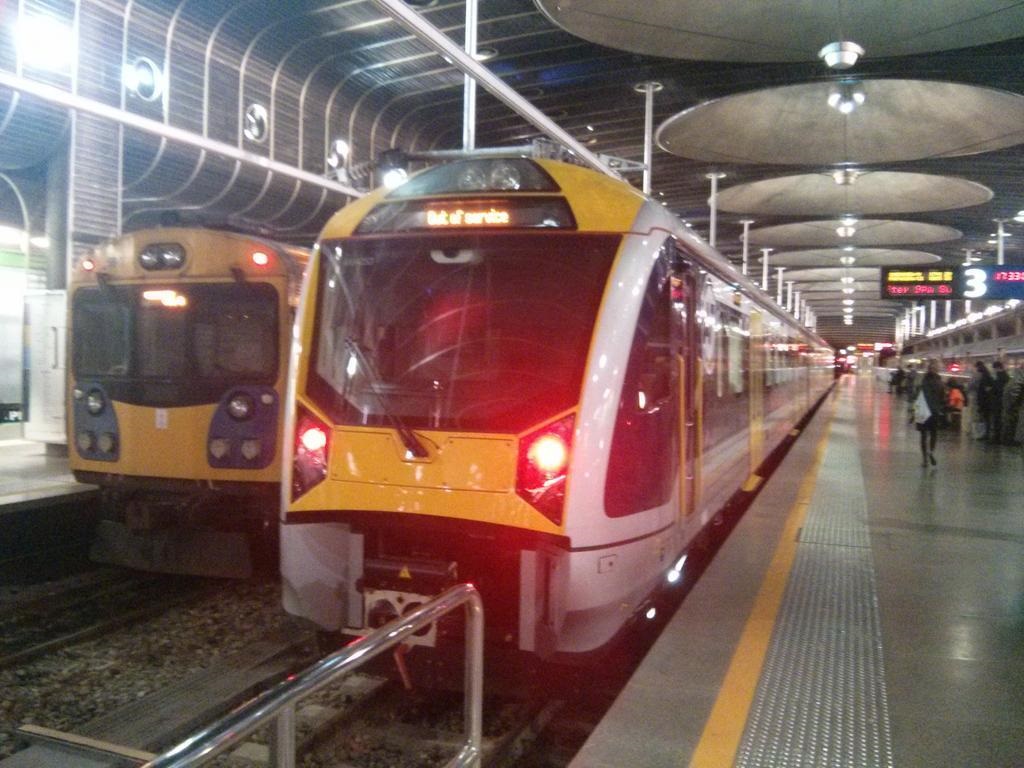
 

Electric Train at Britomart Source: pic.twitter.com/vjQZfMUeex
Electric Train at Britomart
Source: pic.twitter.com/vjQZfMUeex

On Tuesday the Governing Body will meet in an extraordinary session to work through the amendment the Mayor will be tabling around the City Rail Link

The Presser from the Mayoral Office on the Situation:

Mayor proposes amendment to CRL timing in draft LTP


Following discussions with Audit NZ, the Mayor is proposing an amendment in Council’s draft Long-term Plan 2015-2025 on the timing for construction of Auckland’s number one transport priority – the City Rail Link (CRL).

In its draft budget, Council has the CRL project commencing in 2015/16, based on an assumption government’s funding contribution for the project would also start next year, five years earlier than government has so far indicated.

On Tuesday 9 December, council will consider changing the assumption of timing of the government contribution to 2018/19. This will mean enablement works of $280 million will still take place in the first three years of the plan, but construction will not start until 2018/19. This will also delay the completion date to 2023.

Mayor Len Brown says:

“We have a track record of success with central government when it comes to the CRL – we have moved them from a position of total opposition to one of commitment for funding half the project from the year 2020,” says Mayor Len Brown.

“Yes, we still have to work with government on final timing, but I’m confident we can come to an agreement and get on and get this job done.

“I understand why Audit NZ feel that we need to take a more conservative approach to our financial projections and I am proposing that we develop the LTP based on a later timing of government contribution.”

Public consultation on the draft LTP begins January 23 next year. The final plan is due for adoption June 30, 2015.

—-ends—-


The Agenda with the financials:


Now our Deputy Mayor did say this in response: 

City RailLink to be put back by a couple of years. Disappointed that the government are taking so long to catch up with the Auckland reality which is that the link is vital to the economic future of our region. 30 years of waiting have made the 2-3 year delay tolerable but we have work to do with the relevant ministers to get the timing and the funding sorted.
….a deadend train station cannot generate the PT numbers without more trains in service! Auckland is 1/3 of New Zealand time the government treated us fairly.


My response was this:

Sorry to say Penny but the 2018 main project start date has long been predicted. Regardless of having the engineering capacity ready (which according to NZTA is 2018 any how by the looks of it) the extra three years would allow the financials that werent tolls or extra taxes to be sorted.

Recommendation: Pass a Notice of Motion on Tuesday that would allow no preference in funding options as “suggested” by the Council. But rather allow the ratepayers to pick an option of their own choice or creation (or even a do nothing) and the Governing Body to consider them all then put in place for the LTP in July next year.

Recommendation 2: Pass a Notice of Motion to overrule the Finance and Performance Committee in selling Lot 59 land in Manukau. Hold on to that land and allow the Development Auckland CCO to decide in September 2015 when it is onstream. I have a LGOIMA away with Council in anycase around the Manukau Interchange any how to see what the status of it is seeming AT is conflicted in either building it next year or having it delayed until 2021 owing to “budget cuts”

Note none of this disables the progress of the enabling works Downtown which should be budgeted for by now. But rather the main project in line with expectations and getting the actual alternative funding sources properly sorted (that yes I have presented on at the ADC in October)

Those Notice of Motions would respect the intelligence of the citizenry and allow us to decide how WE are to fund these transport projects. NOT what the Mayor wants and tries to shimmy on us through a perceived option of choice which is nothing but tokenism.


So if any Councillor has their wits about them they would introduce those Notice of Motions tomorrow and get them passed. Or Council will find a very hostile City come March next year when the Long Term Plan submissions close.

The Government has effectively come to the party, the Auditor General has made her ruling to which Council must oblige. Now respect our intelligence and allow us to choose the funding mechanisms freely seeming we are the ones in the end paying for it…


 

Amendment to CRL Start Date in the Long Term Plan

Mayor seeks amendment in Draft 2015-2025 LTP


A more surprising presser hit our inbox(es) late this afternoon. It is on the City Rail Link and the start date for the main project (i.e not the enabling works).

From Auckland Council – specifically the Office of the Mayor:

Mayor proposes amendment to CRL timing in draft LTP


Following discussions with Audit NZ, the Mayor is proposing an amendment in Council’s draft Long-term Plan 2015-2025 on the timing for construction of Auckland’s number one transport priority – the City Rail Link (CRL). 

In its draft budget, Council has the CRL project commencing in 2015/16, based on an assumption government’s funding contribution for the project would also start next year, five years earlier than government has so far indicated. 

On Tuesday 9 December, council will consider changing the assumption of timing of the government contribution to 2018/19. This will mean enablement works of $280 million will still take place in the first three years of the plan, but construction will not start until 2018/19. This will also delay the completion date to 2023. 

Mayor Len Brown says: 

“We have a track record of success with central government when it comes to the CRL – we have moved them from a position of total opposition to one of commitment for funding half the project from the year 2020,” says Mayor Len Brown. 

“Yes, we still have to work with government on final timing, but I’m confident we can come to an agreement and get on and get this job done. 

“I understand why Audit NZ feel that we need to take a more conservative approach to our financial projections and I am proposing that we develop the LTP based on a later timing of government contribution.” 

Public consultation on the draft LTP begins January 23 next year. The final plan is due for adoption June 30, 2015.

—-ends—-


The extraordinary agenda can be seen here:


In highlights to that agenda:

In the 2012-22 LTP we assumed central government funding would commence from the year 2015-16 and the financial data for the 2015-25 LTP has carried that assumption through. The consultation document has been written with three alternative scenarios set out for public consideration:

  • Option 1 – government funding starts in 2015/16 and project proceeds on original timelines
  • Option 2 – government funding starts in 2018/19 – enablement works only for next three years and then construction starting in 2018/19
  • Option 3 – government funding starts in 2020/21 – enablement works only for next three years, construction starts in 2018/19, backed by a firm commitment for government funding from 2020.
  1. While all three scenarios are described in the public consultation document the LTP financials are currently built on Option 1.
  2. Over the last couple of weeks, as staff have been preparing the consultation document for Governing Body sign off later this month, it has become apparent that Audit New Zealand’s view is that it would be more prudent to build the LTP financials on one of the alternative scenarios. In order to ensure we prepare a consultation document consistent with Audit New Zealand’s expectations, I am now proposing that we adopt Option 2 as the basis of our LTP financials.
  3. This option will continue to keep the pressure on the Government to contribute funding earlier than the current commitment, but gives more time for us to work with it to achieve a common view. It also allows us to keep faith with our private sector partners by progressing the enablement works. While it delays the construction timing by a couple of years it has only a relatively minor impact on the financial situation.

Scenario One

Financial information

$ million
Year ended 30 June
Prior years 2016 2017 2018 2019 2020 2021 2022 2023 2024 2025 Total
Capital expenditure 178 156 267 432 438 425 481 102 -88 2,391
Government contribution 0 167 133 216 219 200 194 51 -44 1,137
CRL related closing debt 163 155 295 528 778 1,047 1,318 1,343 1,271 1,243 1,215

Assumptions

  • Council proceeds with all project phases
  • Central government contribution from 2015/2016
  • Operational from 2020/2021

Financial impacts

  • Closing group debt of $10.5 billion
  • Interest to revenue ratio does not exceed 12%


Scenario Two

Financial information

$ million
Year ended 30 June
Prior years 2016 2017 2018 2019 2020 2021 2022 2023 2024 2025 Total
Capital expenditure 178 145 177 78 319 372 416 464 201 137 2,488
Government contribution 0 0 0 0 305 186 195 184 101 68 1,039
CRL related closing debt 163 316 510 614 658 882 1,081 1,340 1,428 1,490 1,487

Assumptions

  • Council proceeds with only investigation and design, land purchases and enablement works for the next three years (total $400 million)
  • Council funds the enablement works (about $280m of the $400m)
  • Central government contribution from 2018/2019
  • Full construction starts 2018/2019
  • Operational from 2022/2023

Financial impacts

  • Total capital expenditure is $97 million higher due to the inflation impact of spending later
  • Government funding reduces by $98 million due to the self-funding of enablement works
  • Closing group debt $272m higher than Scenario One ($10.8b)
  • Interest to revenue ratio does not exceed 12%
  • No difference to rates increases from Scenario One


……………


Again a simple explanation on how the City Rail Link works:

A Simple But Not Exhaustive Explanation of the City Rail Link

The City Rail Link and Auckland

As I explained to Rebekka’s dad the CRL works on the following premises:
As of current all Western Line trains run from Waitakere, Swanson and Henderson into Britomart on a trip that takes around an hour. Those trains must pass through Newmarket where there is a 3min stand down as drviers change ends to allow the Newmarket to Britomart leg of the trip.
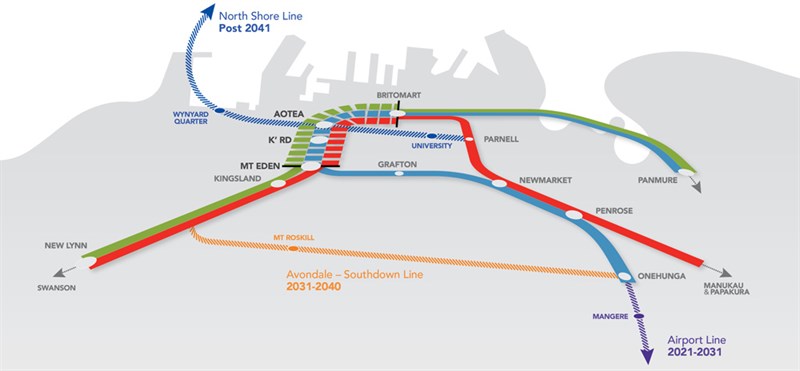
The Western Line as a result mixes with the Southern Line and Onehunga Line trains causing congestion. To make matters worse those trains then get caught outside Britomart as they mix with Eastern Line Trains causing delays and congestion.The CRL would allow Western Line Trains from Mt Eden to travel down the 3.5km tunnel to Britomart skipping Newmarket and thus not running into Southern, Eastern and Onehunga Line Trains as a result. We also get two new stations on the CRL including Aotea which is going to be the busiest being in the middle of the CBD itself.

Time savings go from 60mins to about 43mins there about from Swanson to Britomart via the CRL as a result. You will still get Swanson to Newmarket services that will then continue either on to Onehunga or even Papakura – the South to West services.As the Western Line services are removed from the Newmarket-Britomart leg this frees track space for Eastern, Southern and Onehunga Line trains allow their frequencies to go from 10mins to 5mins in the peak of peaks. This means a train from Papakura every 5mins in the peak if so needed. Result? Capacity increases and the allowances of new lines such as Airport and the North Shore (Botany would be serviced by a Sky Train concept).
That is how the CRL works – it services the bulk of Auckland….

………….


Comment

So a 2018 start date for the main project with the enabling works to start as soon as feasibly possible.

That date I have widely touted as a start date for the main project (2017-2018) since I wrote my Auckland Plan submission in 2011. The logic moving the main start date to 2018 in the agenda paper seems consistent in part to the reasoning I used for a 2018 start date for the main project.

It is good to see (although other questions on why so long to move the main start date to 2018 do come up) the Mayor seeking the amendment for the CRL start date via the 2015-2025 Long Term Plan. Now to get the true alternative funding sources that are not extra rates nor tolls sorted by 2018….

Next move falls to us the ratepayer and conversely the Government as well for their funding share…

Otara-Papatoetoe Area Plan Approved – And Ruled by Technocracy?

A Shame


As expected although one had to try (see: Council Fails South Auckland – Again) the Auckland Development Committee has adopted the Otara-Papatoetoe Area Plan into operation this afternoon.

While disappointing as the Area Plan is now nothing but platitudes backed up with very little funding for most of the projects listed in the ‘5-year’ project lists any how.


I will evaluate the situation in a podcast tomorrow as well as other happenings that came of the Committee today including this:


Ruled by a Technocracy we are….


One thing I will say though, if I do ever serve as an elected representative in the Auckland Council Governing Body technocracies is something I despise and that Area Plan would be fully reviewed and rebuilt – properly!….


New CCO Board Members Appointed

And they are


From Auckland Council

Auckland Council announces new CCO board appointments


Auckland Council has made four key appointments to the boards of Waterfront Auckland, Regional Facilities Auckland and Watercare Services Ltd.

Richard Leggat and Dr Susan Macken have been appointed to Waterfront Auckland following the retirement of Adrienne Young-Cooper and Kerry Stotter. Andrew Collow will join the Regional Facilities Auckland board on 1 December, following the retirement of Peter Stubbs. David Thomas joined the Watercare board on 1 November following the retirement of Susan Huria.

The appointments have been confirmed by the council’s CCO Governance and Monitoring Committee, responsible for all board appointments to substantive council-controlled organisations.

Committee chair Deputy Mayor Penny Hulse said all the new board members had the experience and skills relevant to the work they will be required to undertake.

“Andrew, Susan, David and Richard have the expertise and experience to make significant contributions to the boards they sit on and to the city itself.”

“David has a depth of senior level experience within large industry organisations and his knowledge of health and safety requirements will be most valuable to Watercare.”

Waterfront Auckland Chair Sir Bob Harvey says:  “Richard is a strategic thinker, is well respected and is very good at building effective relationships.  Susan has a depth of commercial expertise and experience particularly relating to higher level finance and risk matters and a good understanding of working in the public sector.

Regional Facilities Auckland Chair Sir Don McKinnon says: “Andrew will bring perspective and relevant background to the table.  He has been described as the ‘go to’ person for infrastructure and that is particularly relevant to RFA at this time”.

Watercare Chair David Clarke says: “David brings leadership and Maori cultural values, adding depth to the Watercare board.”

—ends— 


Environment Funding Dished

Funding or Grants allocated for Environment Projects


From Auckland Council:

$634,000 for Auckland’s environmental projects


Auckland Council has awarded $634,000 in grants through its Environmental Initiatives Fund (EIF) to 133 community projects which enhance Auckland’s natural habitat and historic heritage.

The fund supports local residents’ initiatives from the enhancement and conservation of important environmental and heritage sites to community-led projects.

The recommendations were approved by the Environment, Climate Change and Natural Heritage Committee today.

Councillor Wayne Walker, chair of the committee, says it is important that the council helps the community to care for Auckland’s natural environment and heritage resources.

“The Environmental Initiatives Fund is a really good way to help the community play an active role in looking after our environment,” he says.

“The way it is set up means we can fund a number of different projects that make a real difference to preserving our wonderful natural environment.

“From water storage tanks to coastal restoration programmes, there are a wide range of projects the council is supporting through this fund.

“We are passionate about ensuring our natural habitats are well-maintained and cared for. It’s fantastic to know that we have an active community who want to look after it and I am delighted that we have been able to support that work through this fund.”

Some of the 133 funded projects include:

  • $15,000 to Stephen Thomas to support the set up costs for the Rakino Community Nursery project, providing an on-island source of native plants for local restoration projects
  • $12,000 to Glenfield Community Centre towards painting the exterior of the Glenfield Mission Hall and installing sub-floor ventilation in time for the building’s centenary in September 2015
  • $1,300 for Bucklands Beach Intermediate for a coastal restoration project to provide a healthy habitat for threatened species
  • $3,000 for The Chapel Community Garden to establish a healthy garden to grow fruit and vegetables for the community, and teach people about gardening and composting
  • $5,500 to Michael Penn for native plants, site preparation and weed control to support re-vegetation in Warkworth.

Recommended grants range from $200 to $15,000. The average grant is $4,729.


—ends—-