Tag: environment

Council Banning or Restricting Dairies? How About NAFF Off

Better ways to control the “obesity” crisis

I caught last night while sitting in a Local Board meeting that the Auckland Regional Public Service and some areas of Auckland Council thought it might be a great idea to ban or (to better put it) restrict dairies in their operation or set up. This is meant to be in the name of fighting obesity.

Now to be clear the Dairy issue is entirely separate from the alcohol issue that is also floating around at the moment. But the issue at heart here is if something is wrong our first reaction should be to (over) regulate if not ban it outright. Umm no!

It is not our Council’s jurisdiction to decide what Dairies should sell nor to place bans on them either. What controls Council does have available is what zones it places down which will influence where a dairy can go. In short a dairy will usually establish itself in the Neighbourhood and Local Centre Zones, and maybe the Town Centre,and Mixed Use Zones. So if Council was so inclined it could use the Unitary Plan zones to influence where a dairy might go.

However, Council would be achieving more in tackling the obesity crisis if it got its act together on urban and transport planning. That is:

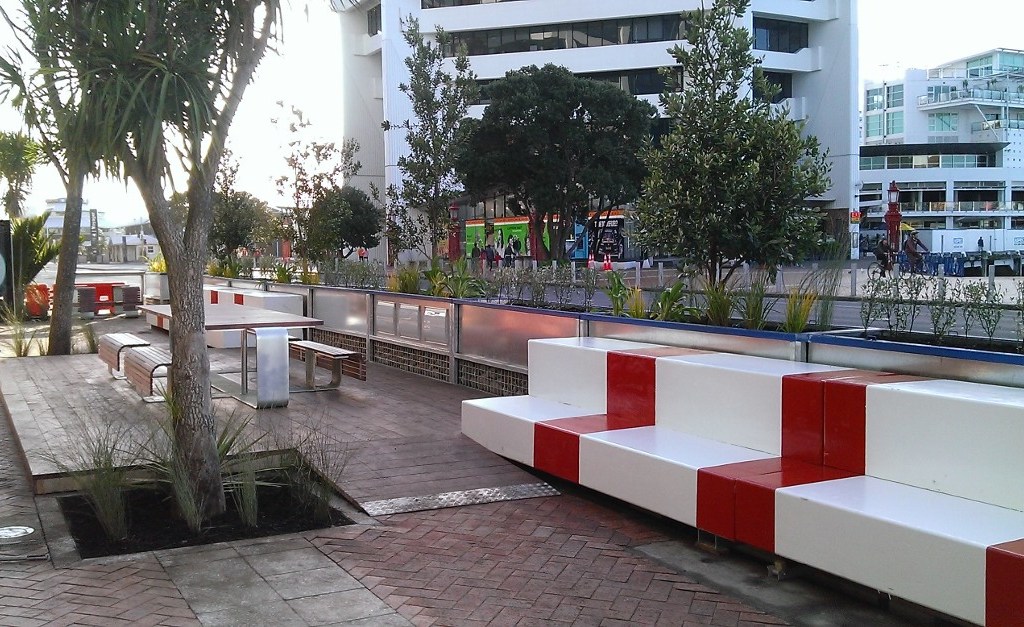
  • Lots of small parks within walking distance of residential neighbourhoods (rather than a gold plated big park some distance away that you need to drive to)
  • A pro-pedestrian streetscape and Town Centres so people are inclined to walk (our current environments are pretty hostile to walkers)
  • A decent all day, easily accessible and most of all affordable public transport system so a family might be able to ditch a car and save $7,800/year. That cash saved might be just able to allow the families to afford better quality foods.

Otherwise the rest belongs to the realm of Social Policy via Central Government. That being Decile 1-5 schools having kitchens for quality hot (and cold) meals, decent labour provisions allowing decent wages, and paying its Iron Price so families again might be able to ditch that car and divert that $7,800/year to a better food budget.

Also dairies do form two important functions to an urban environment and a lack of dairies in new subdivisions is telling. Dairies are usually within walking distance (or even cycling of you are up for some #quaxing) to get that bottle of milk and the loaf of bread. Otherwise here comes a car trip to a Town or Metropolitan Centre (thinking Botany here) just to get those two items. Great way to cause congestion (and further fuel health issues) there from an actual lack of dairies. Dairies especially in Neighbourhood or Local Centres also form a backbone to that Centre and the local community as well. We are meant to be encouraging community here not discourage it.
So bans and restrictions on dairies? Naff off. There are better tools available to fight the obesity situation!

Council Wanting To Improve Consenting Processes

Adequate in Belief but Room for Improvement (as always)

From Auckland Council:

Auckland Council agrees consents appropriate but wants improvements to process

 Auckland Development Committee today received a report which confirmed the council’s Paturoa Rd consents were appropriate, the correct rules and been followed and that the independent commissioners were right not to publicly notify the applications.

The Auckland Council will now build on existing measures to improve resource consent practices after the review of the process which rightfully allowed a property owner to fell a kauri tree so he could build on his Titirangi section.

The report said there were lessons to be learned about how local boards are involved in such decisions, consultation with iwi and the application of the Waitakere Ranges Heritage Area Act. Similar improvements to internal processes are expected.

Chief Operation Officer Dean Kimpton told the committee there was room for improvement.

“Let’s be honest – the process for these particular consents was ‘clunky’, they could be improved upon. They took longer than necessary – in some cases issues were slow to be sorted, and communications at times were inconsistent,” he said.  “We could and should have done better. We have previously advised council of our programme to streamline and improve development approvals, this application reinforces that need and our commitment to making it happen.”

Mr Kimpton also told the committee that council buying the land was not an option and that an independent process was being carried out with the local community and the land’s owners to try and find a solution for the site.

The report made several recommendations that were approved by the committee including:

  • Review process on how consent applications are provided to local boards and iwi and how feedback on applications is received. Similarly how to keep the applicant across key issues and progress.
  • Using clearer language that better describes the nature of applications as well as providing aerial photography and relevant information such as ecologist and arborist reports
  • Regular training and refreshers for resource consents staff on the Waitakere Ranges Heritage Area, its Act and how activities in that particular area are managed
  • Training for local board members on the resource consent process and the associated legal issues
  • Ensure the right triggers are identified in matters local boards have had a specific interest in.

The report noted staff considering the application thought the removal of the tree was regrettable but the best option because putting the house in any other place on the site would involve cutting down even more mature trees.

Committee chair and Deputy Mayor Penny Hulse said the report upheld the council’s actions in regards to the kauri tree and that while changes would be made to improve internal processes that particular consent could not be revoked by council.

On Ms Hulse’s recommendation, council will write to the Ministers for the Environment and Conservation outlining the complexities associated with balancing the protection of trees with the rights of property owners and suggesting staff from the ministries and council meet to discuss these issues further.

The committee also decided on a variety of measures to increase the effectiveness of its kauri dieback disease management programme.

The review conducted did not raise any specific recommendations for submissions to central government on its review of the Resource Management Act 1991.

—ends—

Message to Auckland Transport – SCRAP IT and START AGAIN

Time to do Redoubt Road and Mill Road Again

Auckland Transport might as well avoid another Pohutukawa Six situation and just go back to the drawing board with the Mill Road – Redoubt Road Corridor Project. Southern Auckland knows the corridor upgrade is needed but not at the four lane, multi lane roundabout de-facto motorway that is being proposed currently by Auckland Transport.

Opposition to the scheme continues to increase, an earlier report on the corridor upgrade which suggested it could be done more cheaply and with better safety benefits than the current proposal has been dug up, and we have this:

From the NZ Herald

AT accused of bullying couple to sell house

By Mathew Dearnaley 5:00 AM Tuesday May 5, 2015

Council denies pressuring elderly pair to make way for new highway.

Council property agents have been warned off “bullying” an elderly couple into a rush sale of their home for a new highway parallel to the Southern Motorway.

Eva and Yiannis Koumaki say they are very worried after receiving a letter offering to buy their home in Goodwood Heights, Manukau, by the end of this month. The five-bedroom double-storey home they built 38 years ago after migrating from Crete is among 64 houses and a motel Auckland Transport says must make way for the first stage of a $470 million-plus four-lane highway eventually stretching 18km from Manukau to Drury via the Redoubt and Mill road corridors.

The council body says the highway is needed to serve about 22,000 new homes planned over the next 30 years. The properties could be compulsorily acquired under the Public Works Act.

But the Koumakis, who acknowledge inquiring about an early sale of their home on hardship grounds, say they were dismayed to receive a letter on March 20 offering an unacceptable price for vacant possession of the property by May 29.

Mrs Koumaki said it was unfair of Auckland Transport to restrict its offer to a market price, as the threat of the new road over the neighbourhood had depressed property sales.

Her plight has been taken up by the Redoubt Ridge Environmental Action Group, which arranged for lawyer Dilki Rajapakse to write to Auckland Transport chairman Lester Levy asking for “harassment” of the couple to stop.

Ms Rajapakse told Dr Levy the Koumakis had been “subjected to a barrage of telephone calls and [visits from] unwelcomed officials from Auckland Transport on the pretext of ‘helping'”.

“The bullying tactics and harassment of my clients by the officials must be stopped immediately,” she wrote.

AT property chief Deborah Godinet promised to review the case while instructing her team to make no further direct contact with the couple.

…..

Source and full article: http://www.nzherald.co.nz/nz/news/article.cfm?c_id=1&objectid=11443195

Not on Auckland Transport by any means there. But then again the entire project is not on either especially for a 21st Century and The World’s Most Liveable City.

So how about we go back to the drawing board, get that old report out from the old Manukau City Council days and start over shall we?