Tag: Penny Hulse

Public Meetings on The Clunker

Preconceived Motions Do NOT Help Anyone


At times I have to play the devils advocate and go into bat for those I often would not. Last night at the Weymouth Public Meeting on the Southern Rural Urban Boundary and the Karaka-Weymouth Bridge, the poor planners pretty much got ambushed by some (not all – as I am being fair) of the Weymouth residents last causing the presentation to be cut short considerably. After talking to some of the other residents, then going one-to-one in front of the Unitary Plan maps with more interested residents  I can concluded (to my own opinion) some points out of that meeting:

  1. The majority of residents  have not read The Unitary Plan (I know it’s an 1854 page clunker but do what I do and read specifics to your area of concern (so anything south of Otahuhu)) at all including the Rural Urban Boundary Addendum. Meaning a minority have read at least some of The Clunker and (to be frank) showed in the line of questions they were asking. 
  2. Are not actually asking key players questions they might have on issues. The Karaka Bridge I would be hammering the AT Board for an answer until a resolution came out of there (sorry Christine I know that means more pressure but they need certainty in Weymouth)
  3. Someone in AT has shot their mouth off on the Karaka Bridge before the Board has made any firm decision on the bridge (I need to get a hold of that letter that particular resident had from AT)
  4. Majority of residents holding of preconceived motions – this comes from point one and they most likely not reading The Clunker. I really wanted to those residents holding a preconceived motions on the Karaka Bridge that at this point and time no FINAL decision has come out of AT (if it has then the Board is hiding something). Like the Eastern Highway the designation (if there is one for Karaka in the first place) has to be in the maps for all to see, this is in case NZTA decide to go run with the particular project and decide to build it. The only way to have the designation removed from a map for good is to get NZTA to remove the designation formally!
  5. If one does not know something, we will just go insult the planner anyway – not acceptable nor mature from residents who should know better. I don’t personally have time to rock up to public meetings to go learn something, talk to people, and enter dialogue if all some residents are able to do is fling insults. For your information South Auckland is anything south of Portage Road Otahuhu to the Franklin Local Board area in which it then becomes Counties Auckland. Overall the area is known as Southern Auckland! 


I wish I had my maps with me last night along with Councillor and AT Board Member Chris Fletcher‘s comment on the Karaka Bridge – as well as the RUB (as I had it in A4 colour) to help the planners. But I did not know the meeting would turn out the way it did, and I am hating to think how this is going to turn out in two weeks when the Mayor and Deputy Mayor trundle along.


This is Chris’s comment on the Karaka Bridge made recently:

Christine Fletcher There is strong opposition from the Karaka Residents I know to the proposed Weymouth Bridge. I am aware of a number preparing submissions in objection. It is a ridiculous proposal. It has no funding and does not appear in any planning document. Given that we don’t have sufficient funding for our existing and approved transport projects it is wrong to distress so many people on a proposal that will never go anywhere. Further evidence of the flawed thinking around the ill-considered Unitary Plan. You can imagine Penny Hulse and Roger Blakely playing with a big felt tip pen oblivious to the respective communities. I don’t think that I can attend that meeting but I will put you in touch with the independent planner consultant who is helping residents to draft their submissions.


I stress that Chris’s comment be read and taken into account. I also stress then grill the Deputy Mayor in two weeks on the bridge and how the heck it got there – but please residents; READ THE SOUTHERN RUB DOCUMENT FIRST PLEASE!


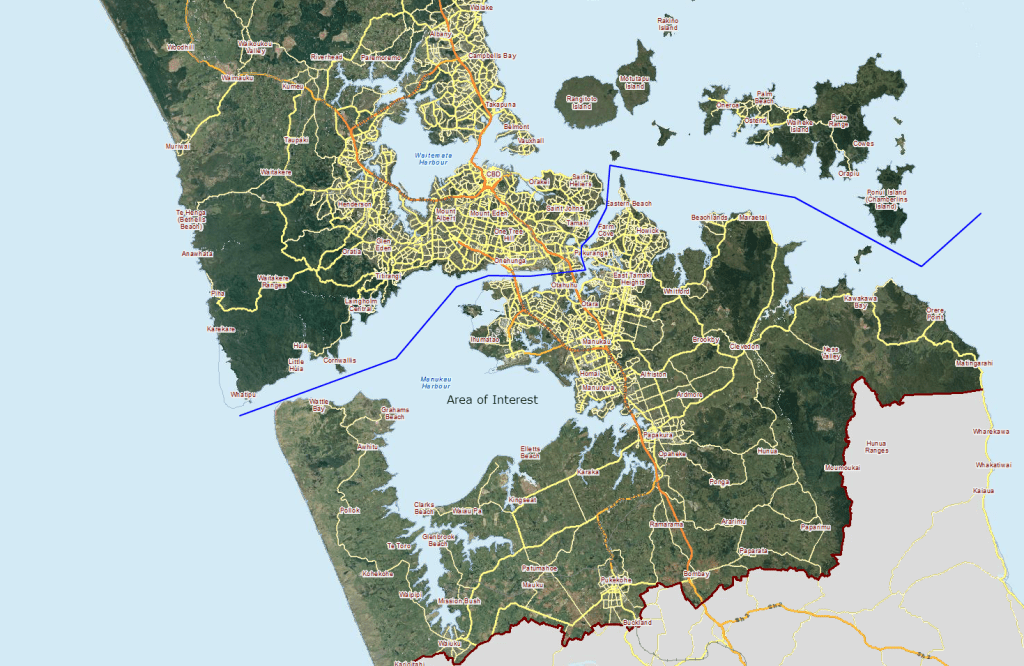
These are the maps on the Southern RUB last night that the residents would not have been able to see (yes you can print them):


I also stress the following point made in the maps:

  • Waste water treatment plant and transport link likely to be required


Emphasis on likely but not a “must” (although that treatment plant is going to end up as a “must”)


I am also going to reiterate what I said yesterday:

I have commented on this with my “THE RURAL URBAN BOUNDARY – SOUTH END“” post last week – briefly recapping:

Personally I am in favour of the Draft Southern RUB Options – Corridor Focus (Page 4 of the embed) which contains primary urban development to Drury and Karaka (Core’s K and D), along the State Highway 22 and North Island Main Trunk Line rail corridor, the North East Pukekohe flank, and the Pukekohe South East flank. This option keeps the main development either near existing development or along a transit corridor making infrastructure provisions (Drury and Paerata Rail Stations) and access more easier than the other options such as those that include Karaka North and West. Per The Unitary Plan there is an option to retain a green belt between Pukekohe and Paerata which would provide a wildlife corridor as well as park space. While development is kept away from the highly valuable Pahurehure Inlet which according to the maps contains colonies of wading sea birds. In any case that area slated as Karaka North and West if need be can be converted either into lifestyle blocks with strict covenants or over time into a new regional park and green lung for the ever-growing Auckland (which is what I would prefer Council would do (like an Ambury Farm or Puhinui Reserve set up)).

I have also noted as potential transport link from Whangapouri to Weymouth via a new bridge over the inlet as well as talk of a new waste water treatment plant. With me preferring the corridor option thus Karaka West and North not being developed – but actually wanting to be flipped over to lifestyle blocks or even better a regional reserve I can not see the need for a transit link through that area connecting to Weymouth. That link would create a rat-run from State Highway 20 at the Cavendish Drive Interchange, down Roscommon and Weymouth Roads (Route 17), over the new bridge, down the new transit link and through to State Highway 22 just north of Paerata rather than containing it to State Highways 1 and 22. That kind of rat running would lower the amenity of the new Greenfield developments and do nothing to solve congestion issues. As for the waste water treatment plant, well with Karaka North and West no longer under development you can away plop the new plant there out of the urban road but near the potential outfall site.


Submission wise I am going to follow through and “recommend” toAuckland Council that the Corridor Option for the RUB being the preferred southern Greenfield development options, providing there is:

  • A green belt maintained between Pukekohe and Paerata

  • New waste water treatment plant is built

  • That transit link over the Inlet is not built

  • What was labelled Karaka North and West either be allowed to be converted to Lifestyle blocks or even better a regional reserve seeming wading birds live in those areas

  • And that Auckland Transport will build the Drury and Paerata Mass Transit Interchanges (rail and bus station, and park and ride)


So what I am getting at in this post is the following:

  • Do your reading first and dump any preconceived ideas you have at the door
  • A submission simply opposing something is useless, you need to play the Council and AT at their own game and get an actual alternative across that is viable and a win-win for all. I have as seen in the above statement and is a card I am using in working with Council and the Unitary Plan that is a win-win for most (just not the land banker in Karaka West)


There is another meeting in two weeks time with the Mayor and Deputy Mayor being invited to be present at Weymouth School Hall. I will be present again and this with my maps and hopefully a clarification from Auckland Transport in that cursed bridge. In the meantime I am off to Milford tonight to go listen in on the intensification plans IN THAT AREA which is causing a certain amount of heart ache for residents over there.


One final thing: I know what the residents in Weymouth are staring down as I am staring down the exact same thing with the Mill Road corridor and the consequences it will cause (rat running being the main one) on the transport side. With intensification I also know what the Weymouth residents can be staring down as my house is up for re-zoning from Residential-1 to “Mixed Zoning”  (see my:  ) and the fact I am only 100 metres away from the Papakura Metropolitan Zone which allows buildings to go up to 18 stories high (economic conditions permitting). RUB wise I can also share the Weymouth residents concerns and the impacts that can actually cause. For me it affects the trains and State Highway One transport wise as more people need to be moved from the south. To the north of me I could be staring down 15,000 new houses if the RUB at Addison gets moved eastwards despite it being a floodplain. So Weymouth and Papakura are in the same boat here with The Clunker in all regards. I can understand anger and frustration but I do not tolerate preconceived motions nor insulting planners who are the messengers. You have a beef; take it with the Councillors and the Mayor…


What Happened Here

Democracy or Separatism?


While I was “fussing about” with transport matters this status came across my Facebook ticker. It is in relation to the “Hauraki Gulf Spatial Plan Project Steering Group” and how it passed on a split vote requiring the Chair – Deputy Mayor Penny Hulse to cast her casting vote to get the resolution through.

From Facebook – Michael Whybro’s Status (which was made under the “public” setting):


Well seems someone got the names of the Councillors out who voted on the Hauraki Gulf Spatial Plan Project Steering Group

What a pure buggers muddle in voting patterns and what happened to theCommunities and Residents Caucusing here?

SHAME ON 11 AUCKLAND CITY COUNCILLORS

Dear Councillors,

Well the result of the vote is now known and available for all the see. We can now shine the light on those who actually believe in equality and fairness but equally we can out those who are actually clear cut supporters of inequality, reverse racism, placating the activist minorities and ignoring the best interests of the vast majority of their constituents!

Thank you to the following Councillors who voted in favour of Resolution number APC/2013/4 which would have prevented the effective stacking/take-over of a the very critical Hauraki Gulf Spatial Plan Project Steering Group by local Maori (Mana Whenua) at the expense of all other races, cultures and peoples of Auckland. Thanks for your support for the normally silent majority:

Cameron Brewer
Dr Cathy Casey
Sandra Coney
Hon Chris Fletcher
Mike Lee
Calum Penrose
Sharon Stewart
Sir John Walker
Wayne Walker

Equally, the following Councillors voted in favour of Maori control of this very important Project Steering Group. These councillors have signed off on the racial selection of a small, activist, minority group now controlling all proposals and recommendations on the future management of the entire Hauraki Gulf which is one of New Zealand’s top natural treasures! Let’s not pull our punches, these local Iwi represent way less than 15% of the total population of the Auckland/Hauraki region and yet they are now effectively in charge of its future management and/or development! Thanks for NOTHING to the following Councillors:

Anae Arthur Anae
Michael Goudie
Ann Hartley
Penny Hulse
Des Morrison
Richard Northey
Noelene Raffills
David Taipari
Patience Te Ao
Penny Webster
George Wood

The fact is that these 11 Councillors, including the Chair, believe that local Maori who represent less than 15% of Auckland/Hauraki citizens and ratepayers are MORE important than the other 85% of us and I’m afraid that I for one take this as a major discriminatory and racist slap in the face to upwards of 1,000,000 non-Maori New Zealanders! Shame on you all. You need to explain yourselves – not that I believe this is genuinely possible …. racism is racism and discrimination is discrimination!

We all await your responses.

Michael

We do await the response to this situation and how the hell this situation ended up in a pure buggers muddle in a voting split amongst the Centre-Left and Right political factions. As I said what happened to the Centre-Right’s much vaunting Caucus-ing and “whipping” of votes in critical regards such as this one.


I am not amused and I bet most of Auckland isn’t either…


Unitary Plan Problems

Could The Unitary Plan Actually Hinder Auckland?


Meaning to get on top of this particular topic for a while but have been busy dealing with literally a million other things.


Recently there was a Herald article from our Deputy Mayor Penny Hulse on the logic and reason behind the current tact of the writing up of the draft Unitary Plan before it goes out for consultation next year. Whale Oil – Cameron Slater has been keeping a close eye on this Unitary Plan development, especially around the fact that we could lose the right of appeal in the Environment Court on Unitary Plan decisions.


Lets take a look at Deputy Mayor Hulse’s remarks in the Herald:


From the NZH:


Penny Hulse: Plan will boost Auckland’s growth

By Penny Hulse


Council is working with Govt to speed implementation and ensure consultation.

This month, Auckland Council is starting extensive engagement on the region’s new planning rulebook – which will set out where and how our city grows for years to come.

It will determine how we protect our wonderful environment and built heritage and how we improve urban design.

This rulebook, called the Unitary Plan, is the next step in bringing the region together, replacing the various district and regional plans of the old councils with one document focused on delivering the vision of the Auckland Plan.

The plan’s role in protecting our environment, character and heritage, while helping meet our growing housing needs, is clear. Perhaps less obvious is just how essential it will be to our economy. And that’s important, because our economy needs action, fast.

Yes, there are many excellent, productive businesses across many industries employing many highly-skilled people throughout our region.

But consider a few basic truths. Our GDP per head is three-quarters that of Sydney or Melbourne: we’re each generating nearly $10,000 less – every year.

We lose too many talented workers overseas. Business growth is held back by too little space.

And our city’s sprawling layout and choking congestion means too much of our time and productivity chugs out of exhaust pipes on motorways.

On top of that, our shortage of affordable homes means too many families are spending too much of their money on rent or mortgages rather than seeing that money circulating through the productive economy or invested in new businesses.

So what can we do? Plenty.

A simple example. A refurbished train station will benefit existing homes and businesses. But if we enable more homes – and a wider choice of housing – near that station, along with more business development, more retail and other local facilities, then the bang gained from our buck will be far greater.

And that’s what we’re looking at, right across the city. Auckland Council has planned the biggest infrastructure investment in the city’s history, in everything from regional transport to local community facilities. As we develop the “compact city” that Aucklanders have asked for (loud and clear, through 18 months’ consultation on the Auckland Plan), we’ll ensure more people and businesses benefit from each piece of that investment.

It will mean “communities with stronger local economies: more customers for more local businesses, more people closer to more jobs, more sustainable facilities and livelier neighbourhoods.

We need to ensure land is available for development, with an extra 1400ha of business land needed over the next 30 years – the equivalent of 46 rugby fields a year. So one of the commitments we made in the Auckland Plan is to ensure an average of seven years’ forward supply of land, zoned and with bulk infrastructure in place.

All the evidence shows that bringing businesses closer together boosts productivity. Having related industries side-by-side stimulates the exchange of ideas and innovation, which itself creates more jobs and higher-paying jobs, while more attractive locations will be a magnet for further growth. This in turn will boost our city’s competitiveness in global markets. Our ongoing partnership with businesses is therefore essential as we develop the plan and then seek to implement it.

Then there are the other benefits of a simpler, consistent set of planning rules: less cost, less time and less hassle. Around 20,000 pages of existing plans – many more than a decade old – will be replaced by one, user-friendly online e-plan.

And, meanwhile, the economic boost from a building industry expanding from 2500 homes a year to our expected growth demands of nearer 13,000 – will be huge.

So we need to get on with it, but we also need to be smart. Which is why we want all Aucklanders to play their part, to help ensure the Unitary Plan protects what makes our city special, while delivering opportunities for growth. We are working with Government to find ways of speeding up the plan’s implementation and ensuring people can contribute. The last thing Auckland needs is for the plan to be held up in long legal processes where those with the deepest pockets tend to do best.

We have been developing the plan over the last 18 months, with input from businesses, environmental and community organisations, technical experts and other stakeholders.

This month begins a year of wider engagement. The intensive burst of workshops and forums over the next couple of months – with significant input from the local boards – will test the plan before its draft release in March, when we’ll be consulting right across the region.

I cannot stress just how important it will be for Aucklanders to have their say.

This is our chance to ensure the Auckland our children and grandchildren inherit will not only be more inclusive, sustainable, vibrant and beautiful – but also stronger and more prosperous as a result.

Penny Hulse is Deputy Mayor of Auckland.


And from a Right-Wing perspective – Whale Oil’s perspective of our Deputy Mayor’s article


From Whale Oil:


DO AS PENNY SAYS, NOT AS SHE AND LEN DO

by Whaleoil on September 26, 2012

Hypocrisy is a deadly label in politics.  These days hypocrisy oozes from every rotten pore of Auckland Council.

Deputy Mayor Penny Hulse is doing her boss’s bidding in Granny Herald, arguing for shit-box apartmentsaround train stations:

“A simple example. A refurbished train station will benefit existing homes and businesses. But if we enable more homes – and a wider choice of housing – near that station, along with more business development, more retail and other local facilities, then the bang gained from our buck will be far greater.”

This is a case of “live where I say, not as I live”.  You see, Penny herself does not live on the fourth floor of an apartment building above the train station at New Lynn.  She lives in tranquil Swanson, and a quick surf of Google Maps illustrates the kind of compact city living that she calls home.

This same double standard is practiced by Len Brown, who talks a good game: apartment living … compactness … public transport …. blah, blah, blah.  The only issue is another quick surf on Google Maps illustrates the spatial living arrangements that the Mayor enjoys, replenished with double garages (not a train station for miles).

So Penny and Len are involved in a game of seduction.  But it isn’t a seduction of ratepayers in Swanson or Flat Bush.  It’s called the seduction of Environment Minister Amy Adams, and the proposition is the removal of appeal rights, and the prize is a squalid Auckland based defined by tiny apartments.

The deputy mayor is all too keen to stress the importance of public input into the compact city plan.  But privately the strategy is to do the opposite: denying people appeal rights so they will be forced to live around train stations.  She figures it is better to crowd the masses on top of one another rather than have them migrate near those leafy retreats where hypocritical councillors live.


My reaction to all this? Rather scathing actually for many reasons. I will run another post of the Environment Court and the Unitary Plan later on (as I want to see this play out some more over the rest of the year first) but for the most part I disagree strongly with the following:

  • Compact City
  • Smart Growth
  • UN Agenda 21
  • “Solid” Urban Limits
  • Anything that will contravene my mix urban development ideals and proposals seen in my submission to The Auckland Plan

Why? Again for a more fuller explanation check my submission to The Auckland Plan, but in short it is these reasons found in my What Do I Stand For and Believe In – For a Better Auckland page – mainly the:

8) Stay out of my way: I believe in the following strongly “Individual Freedom -> Individual Choice -> Individual Responsibility (oh and do not forget the consequences)”   I am an adult who can make choices for myself (whether it was right or wrong), treat me as such rather than a child.

And that rule extends to where I want to live and in part Auckland’s urban development and choices as well (mainly people should (within reason) be free (yes I know of limitations) where to live and work).


I am awaiting for the Unitary Plan to come out in which I will be looking over with a very fine tooth comb before writing up an extensive submission back to Council on my thoughts of this “rule book of Auckland planning.” Needless to say that my submission to the Unitary Plan as well as any other submissions I have done since 2010 to either Auckland Council or Auckland Transport will also form the backbone of any policies for my campaign to Papakura Local Board next year.


But in the mean time you can (again) check my submission to The Auckland Plan below where I adopt the Liberal K.I.S.S rule for urban development, as well as this piece about Democrats against Agenda 21 (by the way if I was a US vote I would be a Democrat supporter and voter).


Submission to The Auckland Plan


Democrats Against Agenda 21


Note: My method while I do have ideology, values and beliefs is one: consensus, action and best of both worlds (if possible). Divisiveness is not my style but if a strong hand is needed especially in leadership – I can and am known to show it to see something through.