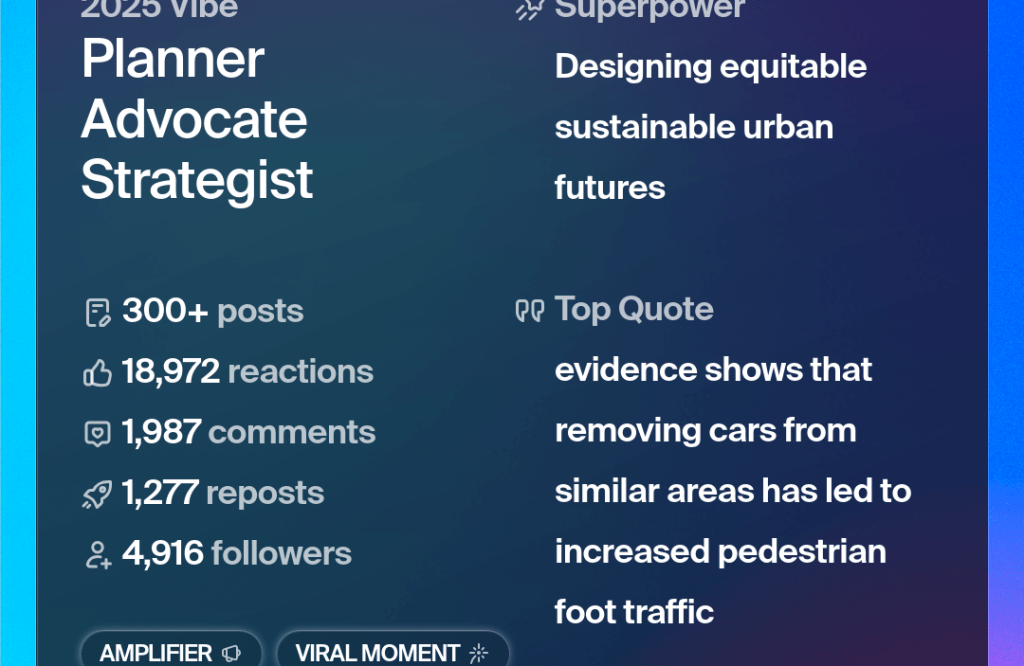
How the AI wrote my CV and LinkedIn profile as an advertisement on my planning capabilities
Previously I had asked Google LLM Notebook to write a blog post on my Planning capabilities. You can see that post here: Planning, Building, Experiencing: The Architect of the New Urban Operating System: A Profile of Ben Ross. This time I got Gemini to create a professional profile of my capabilities as a Planner. Below is what it delivered with some edits from me on clarity and New Zealand English. I have also included the Cinematic Video version at the bottom.
Executive Professional Profile & Suitability Analysis
Candidate: Ben Ross, Assoc. NZPI
Specialty: Urban & Spatial Planning, Policy Strategy, Transit Design, Urban Simulation
Experience: 12+ Years
Executive Summary
Ben Ross is an imaginative ‘Associate NZPI Urban Planner’ with over 12 years of industry experience, distinguished by his distinctive ability to bridge complex legislative policy with cutting-edge spatial technology and human-centric design. Throughout his career, Ben has proven himself as a highly adaptable and forward-thinking planning strategist. His expansive portfolio ranges from resolving intricate District Plan appeals at the local government level, to designing major transit hubs, and delivering macro-level public transport frameworks internationally. Recognized by his peers as being “Geared for Growth,” Ben grounds his professional practice in rigorous academic research, having previously contributed to the “Building Better Homes, Towns and Cities” National Science Challenge to analyse the systemic barriers inhibiting urban intensification.
As a thought leader and legislative advocate, Ben is actively at the forefront of modernizing New Zealand’s resource management system for a rapidly changing, post-oil-crisis world. He fiercely champions a “Public Welfare Supreme” model, prioritizing community well-being, objective mathematical zoning, and environmental resilience over subjective aesthetic controls. Furthermore, he is an industry discoverer in the integration of Artificial Intelligence and urban simulators into everyday planning practices. Whether navigating the bureaucratic complexities of civic administration, mitigating risks associated with legislative overhaul, or driving highly profitable, developer-friendly, transit-oriented outcomes in the private sector, Ben offers a transformative, future-proof approach to sustainable urban expansion.
Key Professional Exploits & Innovations
- Local Government Leadership & Policy Resolution: As a Senior Policy Planner at Waikato District Council (2023–2026), Ben played a pivotal role in navigating the district through critical regulatory milestones. He successfully collaborated with internal and external planners to resolve highly complex appeals regarding Draft Plan decisions, which directly enabled the District Plan to become Operative in Part in early 2025. He routinely provided strategic, evidence-based advice to multiple internal council teams and prepared high-level, synthesized briefings for Elected Representatives to facilitate informed civic leadership.
- Legislative Architect & Advocacy: Ben is a leading, authoritative voice in New Zealand’s transition away from the RMA. He authored a highly comprehensive, 170+ page blueprint for the Aotearoa Planning Bill 2025. In it, he advocates for a paradigm shift toward a “Public Welfare Supreme” model and the adoption of Japanese-style National Standardised Zones. This framework champions objective parameters (like Floor-Space Ratios and nuisance limits) over subjective character assessments. He also introduced the “Urban Dam” concept—a strict, non-negotiable geographical boundary designed to permanently contain and manage urban sprawl, thereby protecting rural hinterlands and ensuring infrastructure investments are concentrated and efficient.
- Transit & Human Experience Engineering: During his tenure as a Spatial Planner at Colab and Associates, Ben spearheaded major wayfinding and transit infrastructure projects, including comprehensive Ferry Terminal Redevelopments, NWBI, and the iREX interislander ferry replacement program for KiwiRail. He moves beyond basic logistics, utilizing deep spatial analysis and human behavioural insights to engineer seamless transit nodes. His work involves deploying intuitive signage, ground markings, and iconography to create human-centred urban areas, while simultaneously researching the commercial feasibility of Transit-Oriented Developments (TODs) for future Public-Private Partnerships.
- Global Training & Peer Review: Operating on a global scale, Ben served as a Lead Trainer for the International Association of Public Transport (UITP). In this capacity, he delivered world-class training sessions both domestically and internationally on topics such as “Designing Community Oriented Stations” and the “Funding of Public Transport.” He also co-led multi-level peer reviews for major transport authorities in the Middle East, including assessing the Land Transport Strategy and Riyadh Metro for the Transport General Authority in Saudi Arabia, and reviewing land mobility laws for the NEOM mega-project.
- Environmental & Public Health Mandates: Ben advocates the mandatory integration of green infrastructure into core urban design, refusing to treat nature as a mere aesthetic luxury. He is the architect of the “3-30-300 Rule” (mandating 3 visible trees per home, 30% neighbourhood canopy cover, and 300m maximum distance to a green space), treating the environment as a non-negotiable “Green Utility” for public health. He also actively champions the “Newcomer Principle,” which mandates that the party introducing a change bears the cost of mitigation, thereby protecting critical economic engines (like exclusive industrial zones and ports) from gentrification and reverse sensitivity complaints. This is backed by his strict “Red Line Policy” for mandatory hazard avoidance.
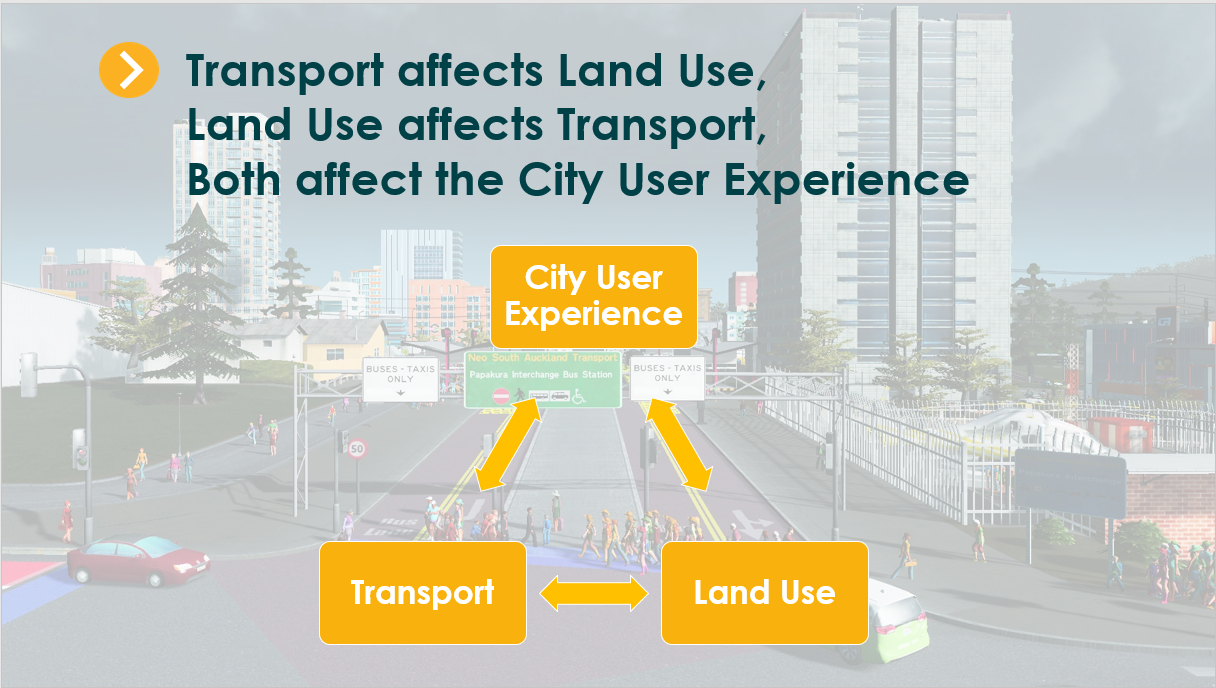
- AI & Simulation Pioneer (Virtual Urbanism): Uniquely positioned at the intersection of technology and spatial planning, Ben leverages Large Language Models (AI) to co-develop simplified, jargon-free planning frameworks (applying the “KISS” principle to complex policies). Furthermore, he actively tests real-world spatial plans, “Zoning 101” frameworks, and “Transit by Design” concepts using advanced urban simulators like Cities: Skylines 1 & 2. Through his virtual test-city, “Waikato” (which he scaled to a population of over 60,000), he bypasses real-world “political partisan pontification” to rapidly test the rollout of bridges, ports, and highways before allowing virtual residents (“Cims”) to move in. This transforms abstract, dry policy into highly tangible, dynamic 3D visualizations.
Suitability Analysis
I. Value Proposition for a Local Council Planning Department
For public sector leadership, Ben represents a stabilizing, forward-thinking force capable of managing rapid growth, building internal capacity, and safeguarding civic welfare during an era of unprecedented legislative disruption.
- Mastery of Legislative Transition: With the Resource Management Act (RMA) being entirely replaced by the upcoming Planning Act and Natural Environment Act (2026-2027), councils require visionary planners who do more than just read the new legislation—they need planners who helped shape it. As a key submitter and thought leader on these exact reforms, Ben is perfectly positioned to guide a Council’s strategic direction through this complex transition without losing operational momentum.
- Proven Track Record in Conflict Resolution: His frontline experience as a Senior Policy Planner at Waikato District Council demonstrates a proven ability to settle complex District Plan appeals and untangle bureaucratic gridlock. His capacity to translate dense planning legalese into clear, actionable briefings for Elected Representatives minimizes legal exposure and reduces administrative friction.
- Safeguarding Public Welfare & Climate Resilience: Ben’s core philosophy fundamentally aligns with the protective mandate of local government. His advocacy for the “Urban Dam” ensures highly efficient, concentrated infrastructure spending by halting endless sprawl. Simultaneously, his rigorous “3-30-300 Rule” and “Red Line Policy” ensure that urban densification never comes at the cost of public health, liveability, or exposure to environmental hazards.
- Internal Mentorship & Capacity Building: Ben has a recognized, documented history of mentoring junior planners through complex Resource Management transitions. Coupled with his background as an international educator for UITP, he brings an invaluable ability to upskill internal council workforces, ensuring the department remains resilient and adaptable.
II. Value Proposition for a Private Urban Planning Consultancy
For a private commercial consultancy, Ben is a highly strategic, revenue-driving asset who leverages advanced technology and objective planning models to accelerate project delivery, drastically reduce holding costs, and win unprecedented stakeholder buy-in.
- Advocate for ‘As-of-Right’ & Developer-Friendly Zoning: Ben’s aggressive push for Japanese-style National Standardised Zones is a massive commercial asset to private developers. By championing objective, mathematical, “as-of-right” zoning rules based on scale and nuisance (rather than highly subjective, heavily litigated neighbourhood “character” reviews), he helps clients navigate regulatory hurdles with absolute certainty. This philosophy directly accelerates consent processing, drastically reducing project delays and holding costs.
- Cutting-Edge Client Visualization (Urban Simulation): Ben’s expertise in utilizing urban simulators like Cities: Skylines offers a unique, highly lucrative commercial advantage. Instead of presenting clients, investors, and sceptical community boards with dry, abstract 2D blueprints, Ben can build dynamic, 3D illustrative models of proposed spatial plans, neighbourhood expansions, and transit hubs. This gamified, highly visual approach vastly improves client engagement and serves as an unmatched tool for winning public consultation battles.
- AI-Driven Efficiency and Margin Improvement: By integrating AI and LLMs to rapidly generate frameworks and translate dense planning requirements into the “KISS” (Keep It Simple, Stupid) principle, Ben significantly accelerates the drafting and ideation phases of spatial planning. This operational efficiency improves firm margins, allows for rapid iteration of master plans, and guarantees faster turnaround times for high-value clients.
- Transit-Oriented Development (TOD) & Infrastructure Expertise: Backed by his elite global experience with UITP and his localized success with Colab and Associates, Ben is uniquely equipped to lead lucrative, large-scale commercial bids for complex transit hubs, wayfinding systems, and high-density mixed-use TODs. He intimately understands how to design “Economic Engines” that integrate heavy infrastructure alongside thriving, human-centric commercial and residential spaces.
If you want to see my Planning capabilities at work here is my submission to the Planning Bill from earlier this year


