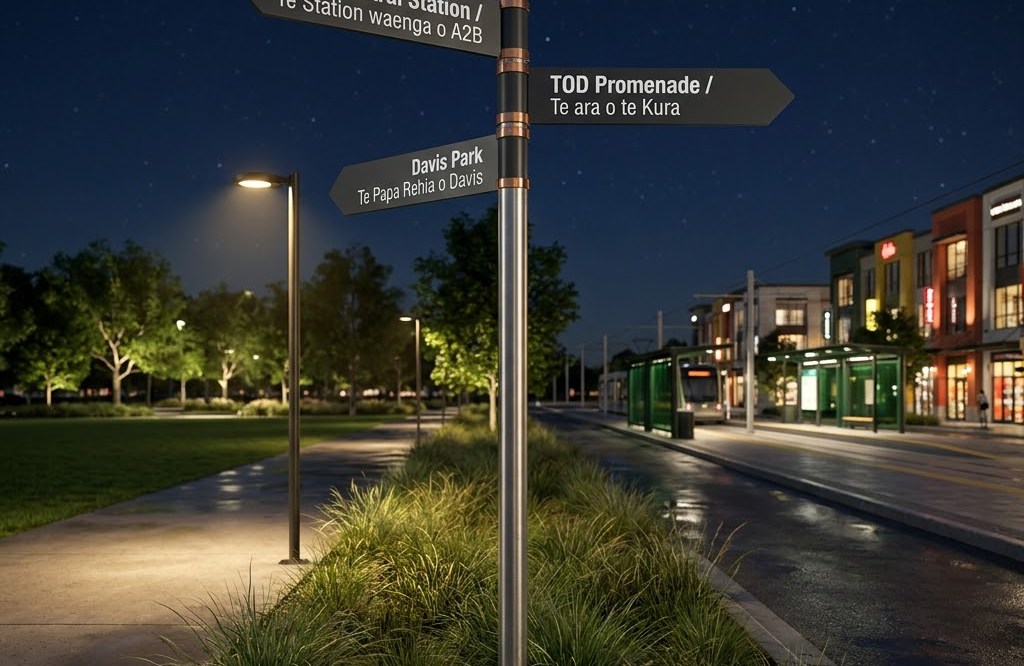
Strengthening Policy to have it flow more smoothly
When Planning Policy (and/or Rules that follow the policy) contradict each other it can mean very long dates with the Environment Court trying to reconcile said contradictions. As the National Policy Direction follows on from the Planning Bill, and Natural Environment Bill (soon to be Acts), it sets the central guidance for Planners and those who will interact with the Planners and Planning System through the subsequent Combined Plans (Spatial Plans and Land Use Plans). Thus when your central guidance document – the NDP itself has paradoxes and contradictions within itself, it will lead to some very different interpretations of your Combined Plans and those differing interpretations more often than not mean a very long time in the Environment Court to resolve them. Having your Urban Development section be in a state of paradox with the Infrastructure and/or Natural hazard sections were the big stand outs likely to have us before the courts for at least the next ten years to get settled case law. Not exactly the way I would have your new Planning regime kick off, especially when the paradoxes could be corrected this early on in the game.
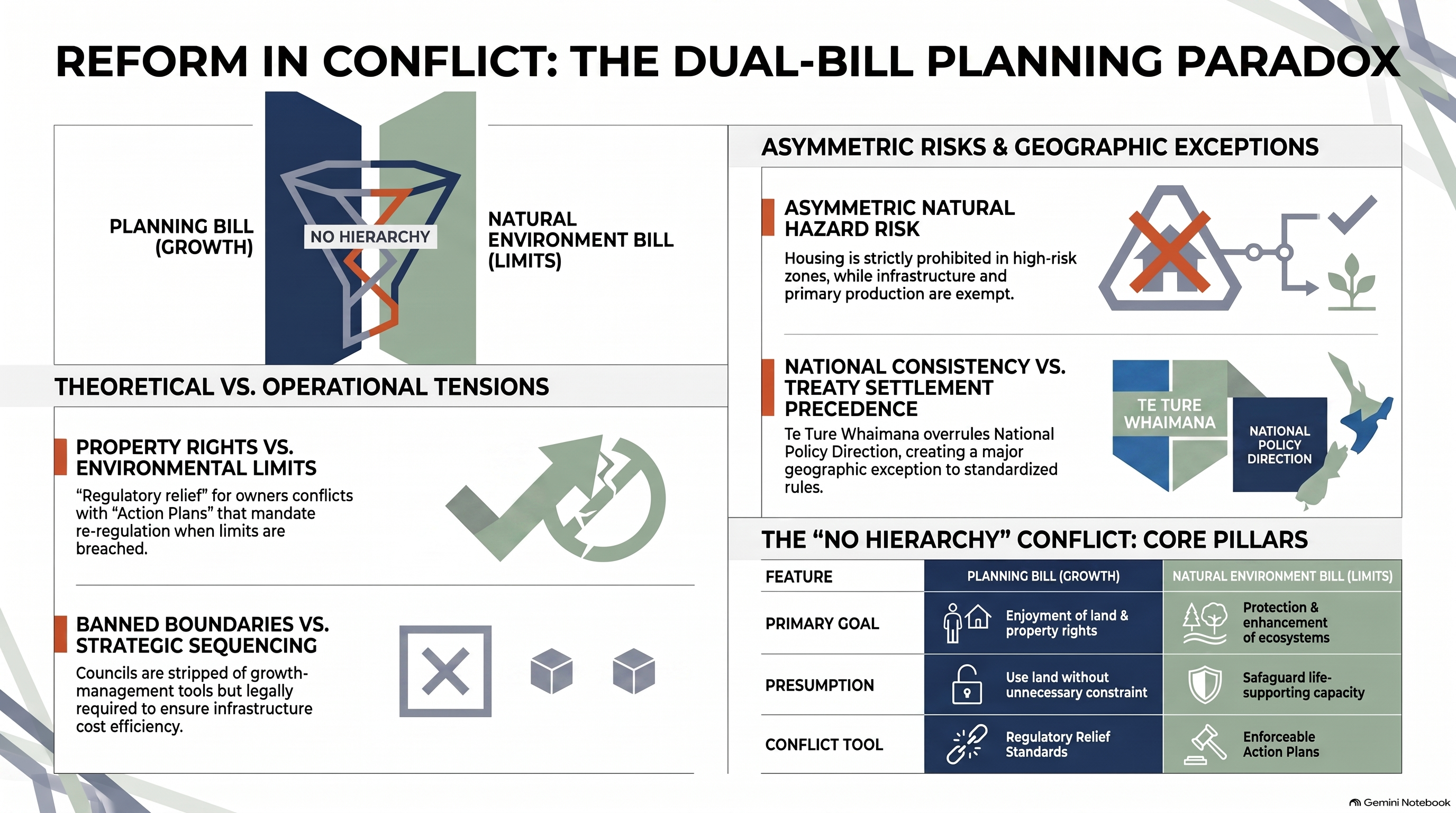
Thus, I have already pointed out the paradoxes with the Illustrative National Policy Direction here: Illustrative National Policy Direction = Confusion, Contradictions, and Paradoxes (But it can be fixed). So, can it be fixed as is or are we looking at binning the entire document? Despite what I would say is some glaring paradoxes (and the AI assisted Deep Dive was just as sharp) it can be fixed with some help from the Japanese. How? Ironically by reembracing the true Kiwi way of good old fashioned nation building, and the collective health and wellbeing of the nation fist.
Now, for those who follow me and my blog through the New Zealand Planning reforms will know my submission and advocacy is around Public Welfare Supreme. Public Welfare Supreme comes from the Japan Land Use Act 1974 (which also governs their standardised zoning system). The four pillars of Public Welfare Supreme from the Japanese and adapted to the New Zealand context can be seen below.
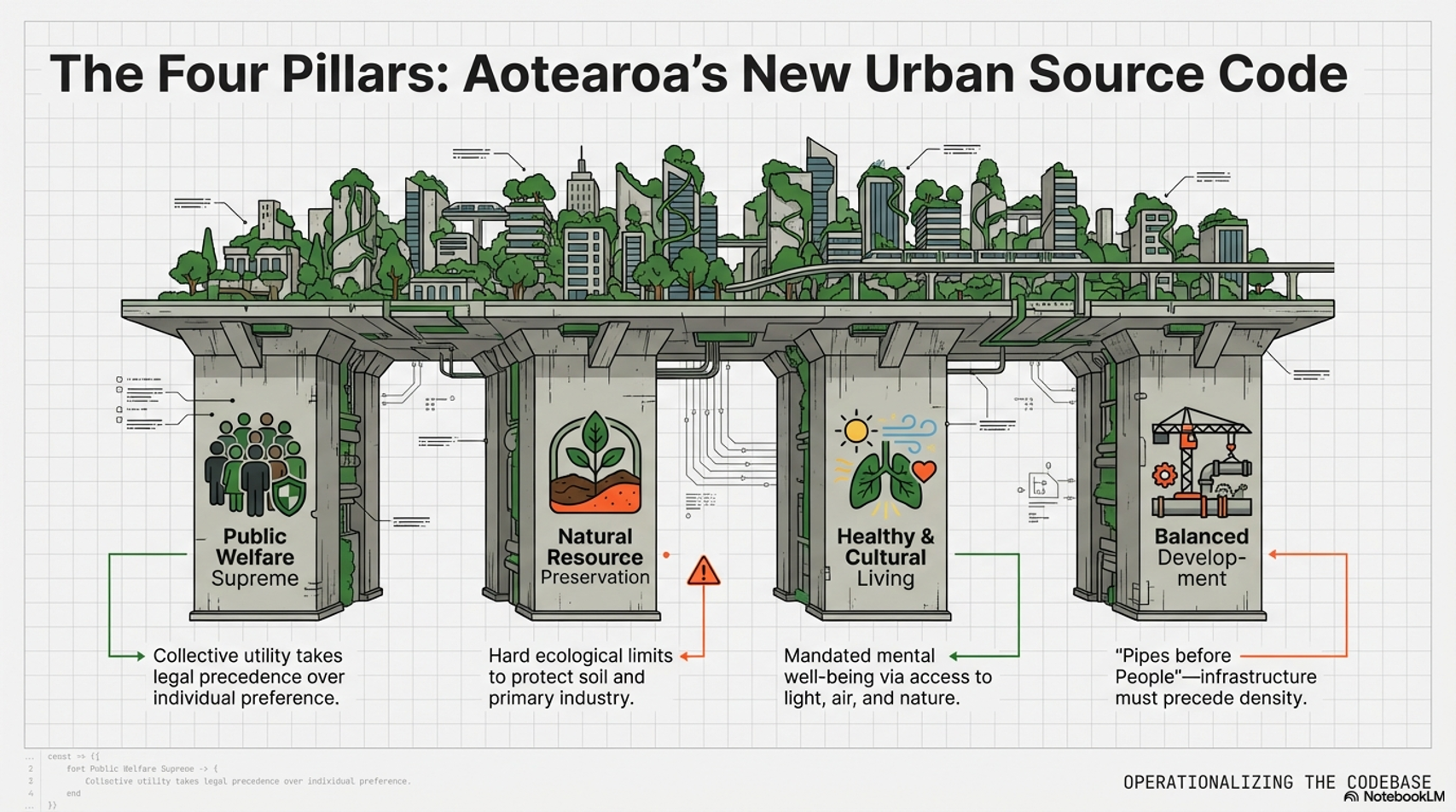
Bear the four pillars in mind as it heavily influences the reconstruction of the National Policy Direction.
Reconstructing the National Policy Direction
With help of the AI/LLMs I got Gemini Notebook to summarise, find the paradoxes, then format the document with the Strike Throughs and new text that makes up the new NDP. For those not involved with New Zealand Planning, when rewriting Policies, Objectives and Rules the following standard is typically done to meet the requirements of both the law and the Environment Court:
- Strike Through in Red to note deletion
- Green (or Red) Text for replacement if there was a previous deletion
- Underline for entirely new text such as a new object, policy or rule inserted
With that you can read the updates to the National Policy Direction I made below. It will be used as the foundation for my feedback to the Ministry on their Illustrative National Policy Direction (which can be found at the bottom of this post).
Summaries, Debates and Deep Dives
Using the AI, I produced two audio overviews, and a video outlining the paradoxes and fixes to the National Policy Direction document.
The Deep Dive would be the podcast version of the changes I have made to some of the NPD document.
The Debate looks at whether to keep the NDP as it is or whether the reconstructed version following Public Welfare Supreme would be better.
The video is a visual summary of the paradoxes and attempts to fix them so the NDP is more coherent between the different moving parts.
Remembering the idea behind the reconstruction of the NPD is to try and remove as many paradoxes and contradictions from it as possible. The NDP is the central guidance document that influences the creation and interpretation of the Combined Plans. Thus if your guidance document does not match up with itself it means without fail those long cases in the Environment Court to get clarifications via case law. A guidance document that flows properly between its different parts should minimise the chances and need for the Environment Court to intervene later on. And this is what hopefully my feedback could achieve. Whether the Ministry and by extension the Government actually follow on and through is another matter entirely.


