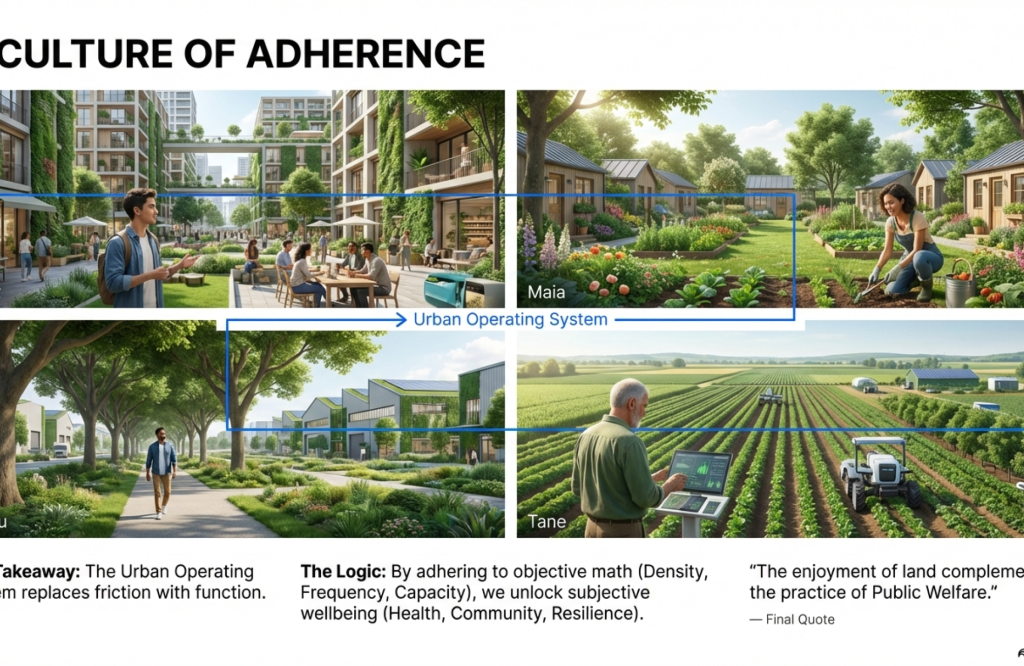
Submission well received. Maia, Alex, Kahu and Tane the stars of the submission. National MPs very quiet
Note: Document Dump also in this blog post as central repository point
Yesterday afternoon I gave my presentation to the Environment Select Committee on my submission to the Planning Bill. You can see the video below as I gave my summary then faced robust questions from Labour and Green MPs. Where the Government MPs were apart from the Chair’s comments (to which I extend thanks) was concerning as if I wonder they are paying attention.
The oral submission focused around Public Welfare supreme and its four pillars, Newcomers Principal (Reverse Sensitivity), and the missing Standardised Zones which are not due out until the end of 2026!
The questions in the end focused around how Public Welfare Supreme would work (this was a cue and hint for the Government MPs to probe around the practice given how I wrote Clause 4 or the Purpose of the Planning Bill, but they decided not to take it), codifying the 3-30-300 rule through Schedule 2, and acknowledging the Standardised Zones are missing. The Standardised Zones I will touch on in a moment.
The full submission
The clauses to be amended in the Planning Bill are from Page 152. These amended clauses formed the basis of yesterday’s presentations and answers to Select Committee questions.
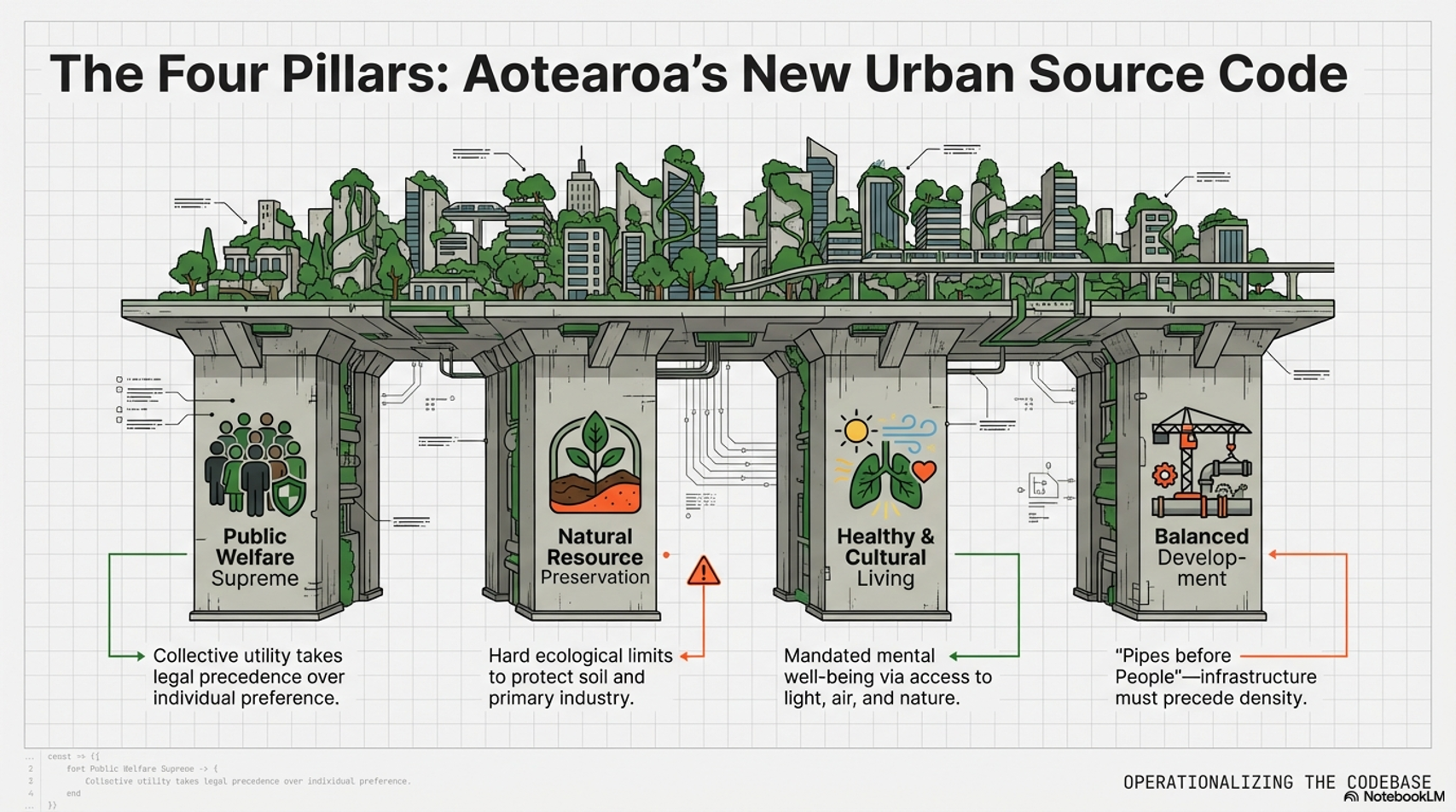
Public Welfare Supreme
With Public Welfare and its four pillars being the central tenant around my submission (and Select Committee questions) these infographics summarise Public Welfare Supreme, and the 3-30-300 rule in practice for both urban and rural areas. It does borrow from the Japan Land Use Act 1974 and would be the second pillar of how I see the Planning regime (the other pillars being the Private realm, and the Standardised zones. Remembering under Clause 4 – the Purpose your private land is there to be enjoyed but it not to inhibit the Public Domain nor others through Public Welfare supreme. In other words like Social Liberalism, free enterprise and the market exists, but a safety net is there to capture the less fortunate while regulations prevent exploitation of others and/or the public domain.
Here is Public Welfare Supreme and its pillars of Public Welfare, Natural Resource Preservation, Healthy Cultural Living, and Balanced Development
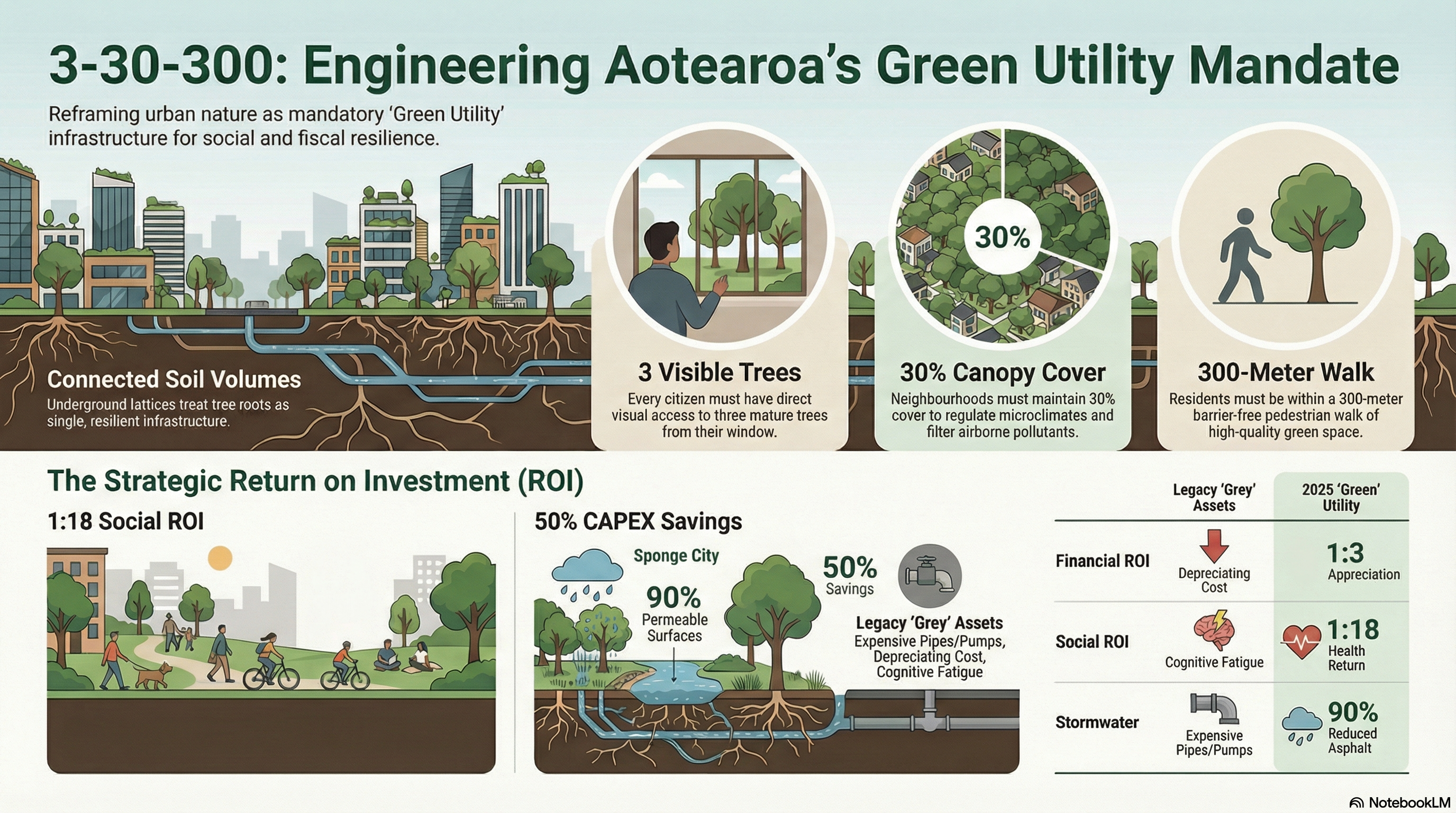
The 3-30-300 Green Infrastructure Mandate
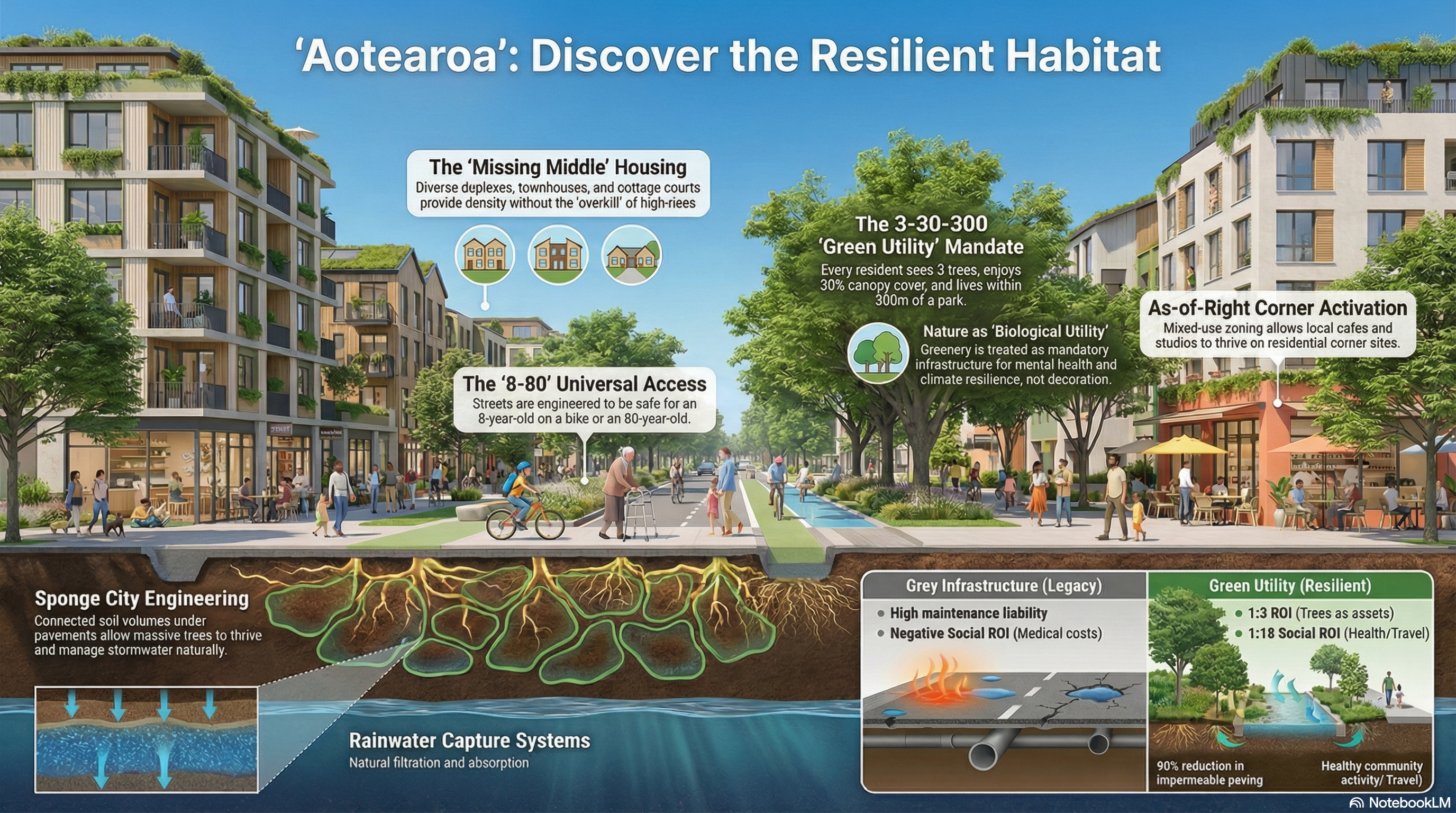
The 3-30-300 rule is an example of Public Welfare Supreme. It effectively doubles as a mental health check and balance, as well as building resilience into our urban and rural areas through increasing climate events such as storms and excessive heat. 3-30-300 also heavily utilises Green Infrastructure over Physical Infrastructure (particular stormwater) in terms of infrastructure investment and upkeep.
The Rules in Practice
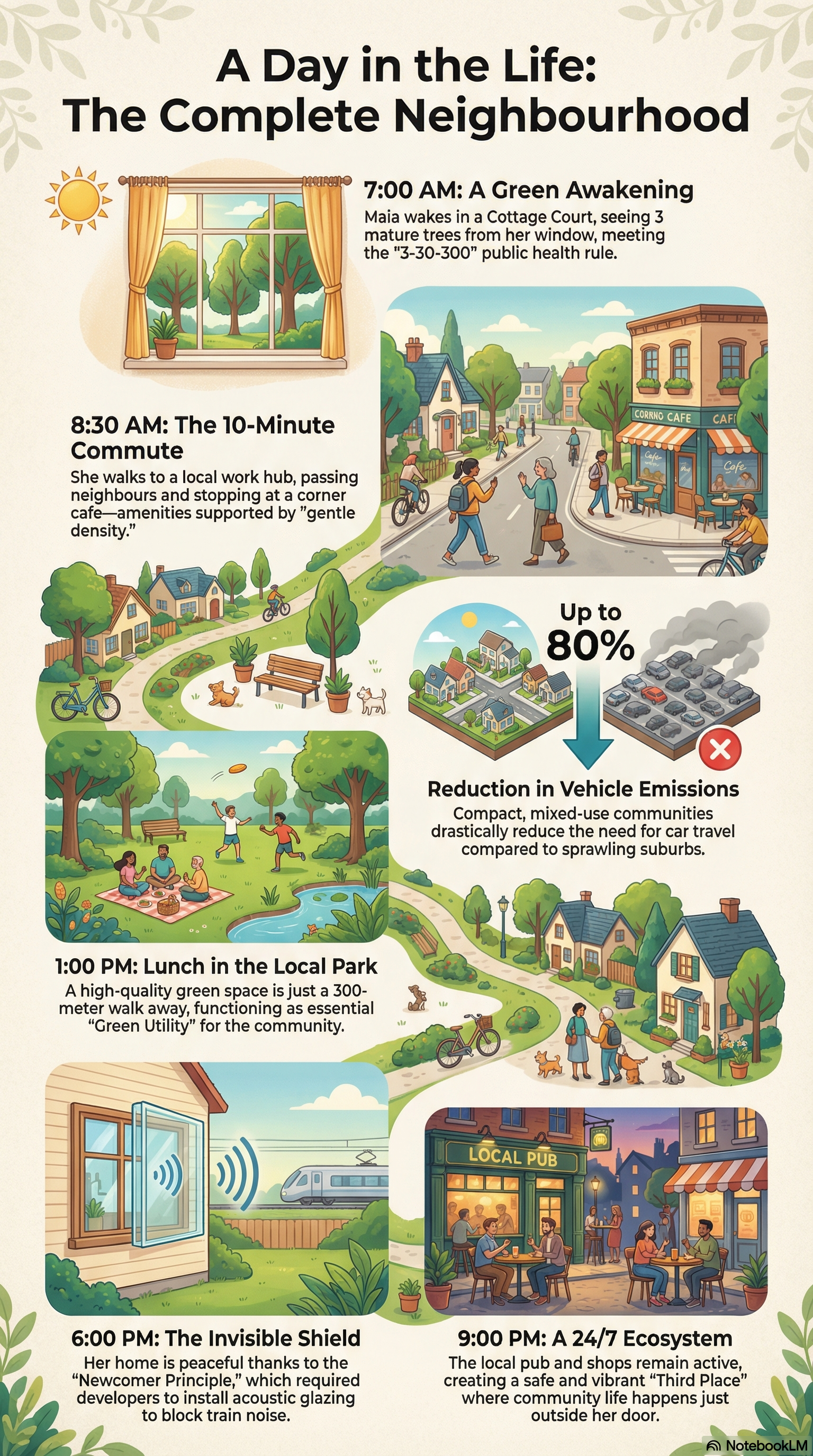
I got asked about the rules in practice. Unfortunately a 10 minute slot doesn’t given justice to telling a yarn about how your submission would work in practice. I would honestly need half a day to workshop each of the Parts and Schedules of the Planning Bill submitted on, then the four major spatial forms of urban, suburban, rural and industry. The infographics below give a very high level overview of my submission in practice. In the submission itself I created the characters of Maia, Alex, Tane and Kahu to each tell their story of life under my proposed Planning Bill. I will also have a document dump at the bottom of this post with how my Planning Bill would work in practice under each of the four spatial forms. I’ll even put in a tourism campaign based on it as a bonus!
The different spatial forms emulating Public Welfare Supreme including the 3-30-300 Green Utility Mandate
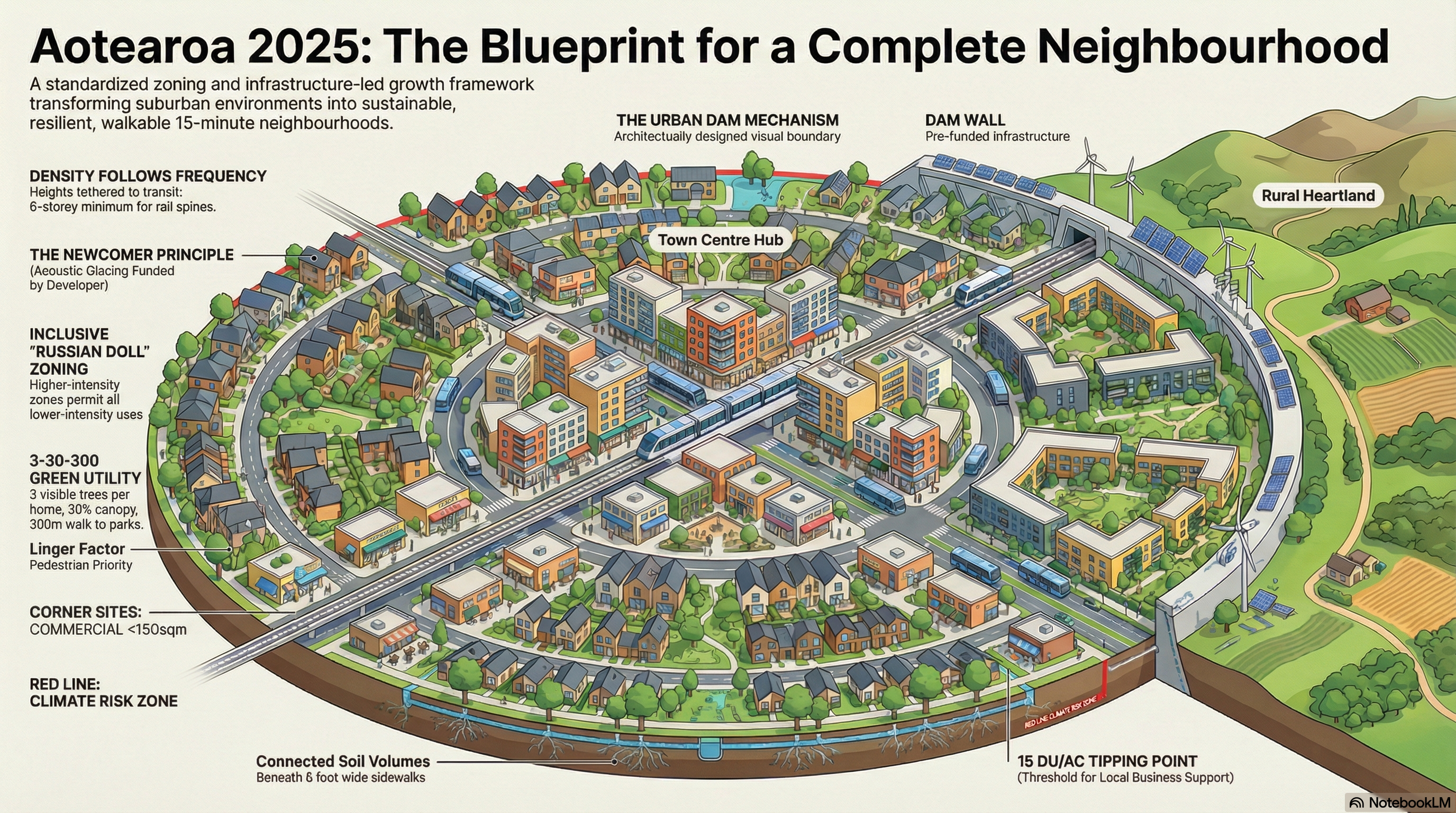
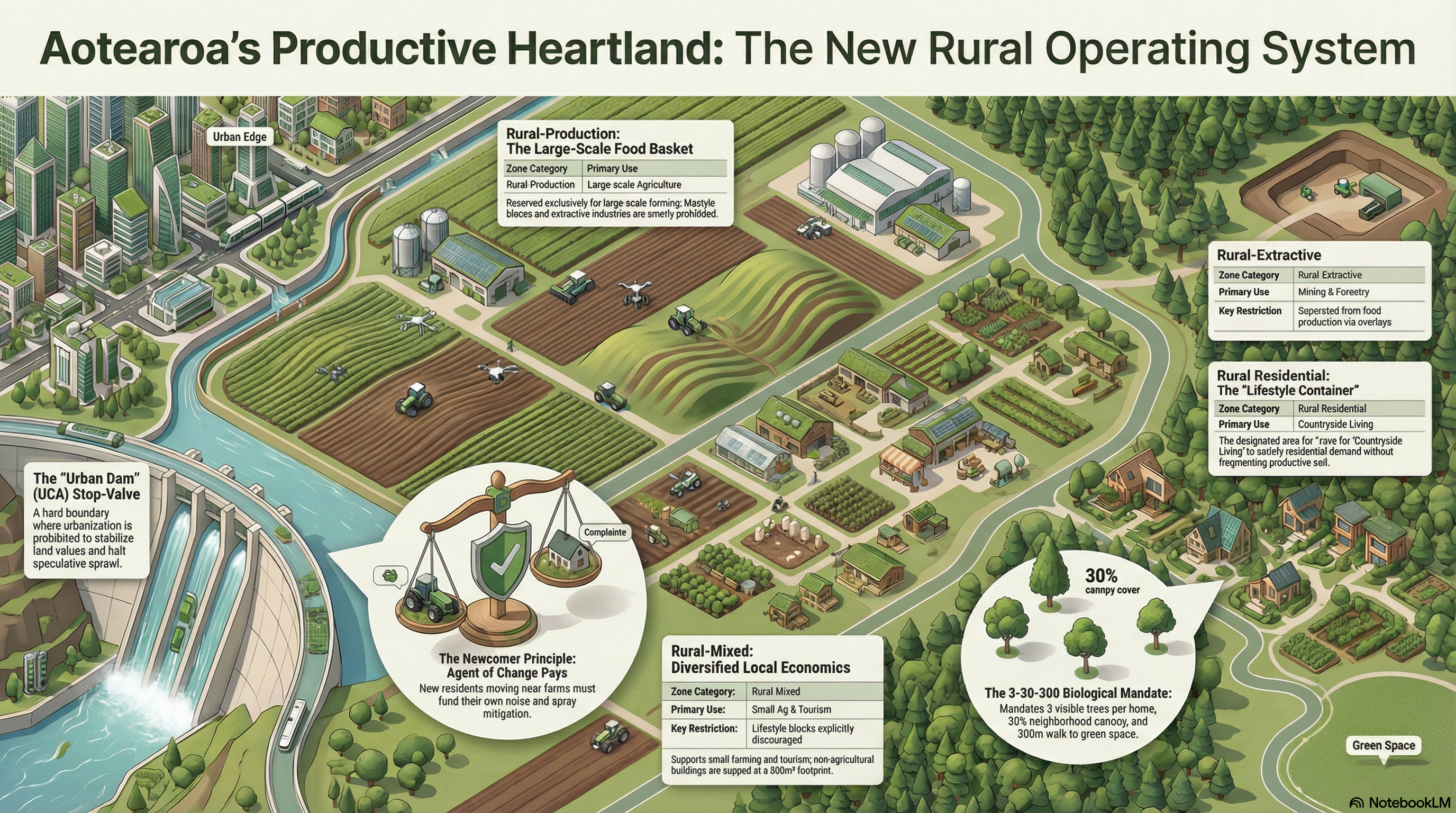
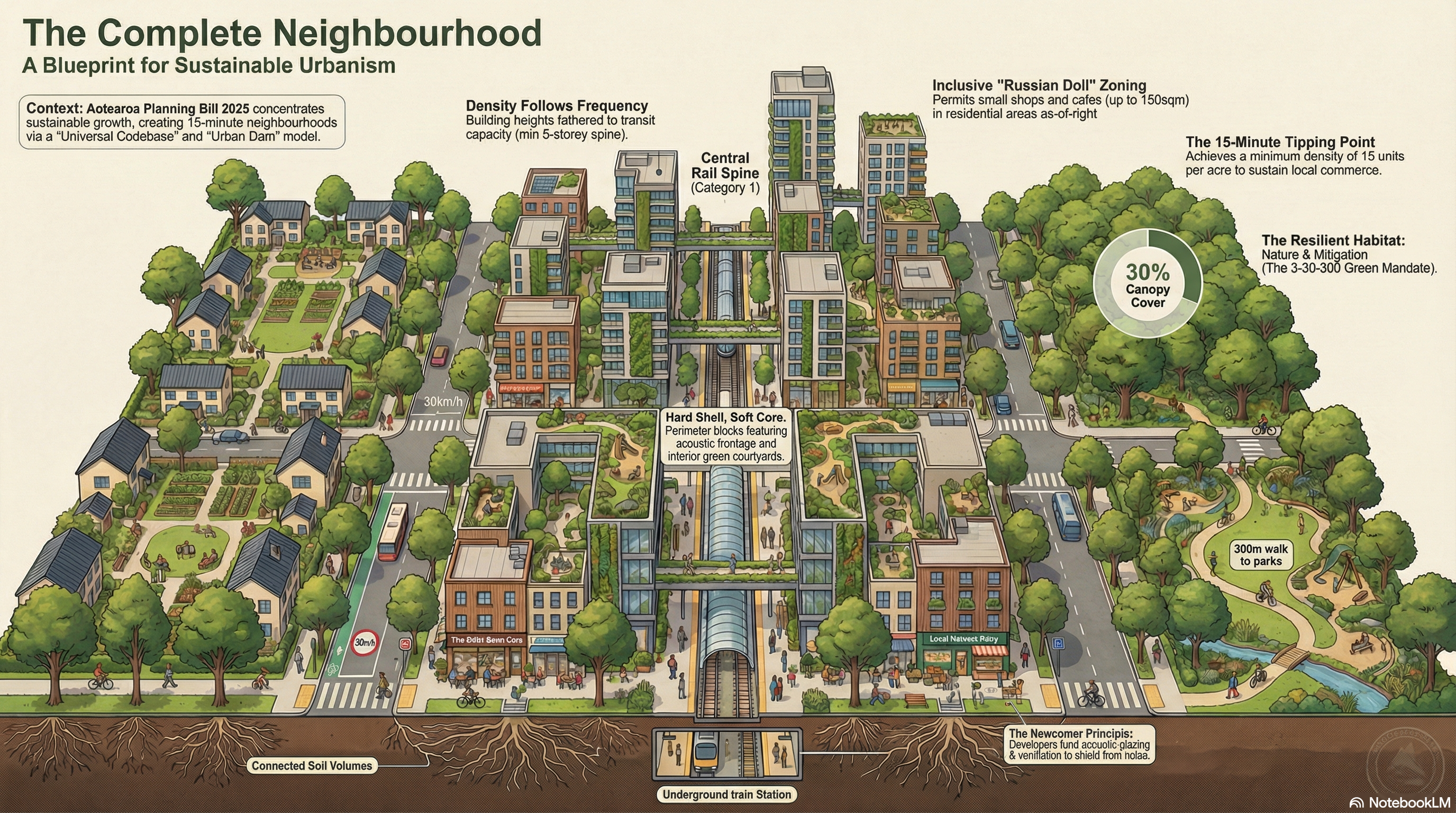
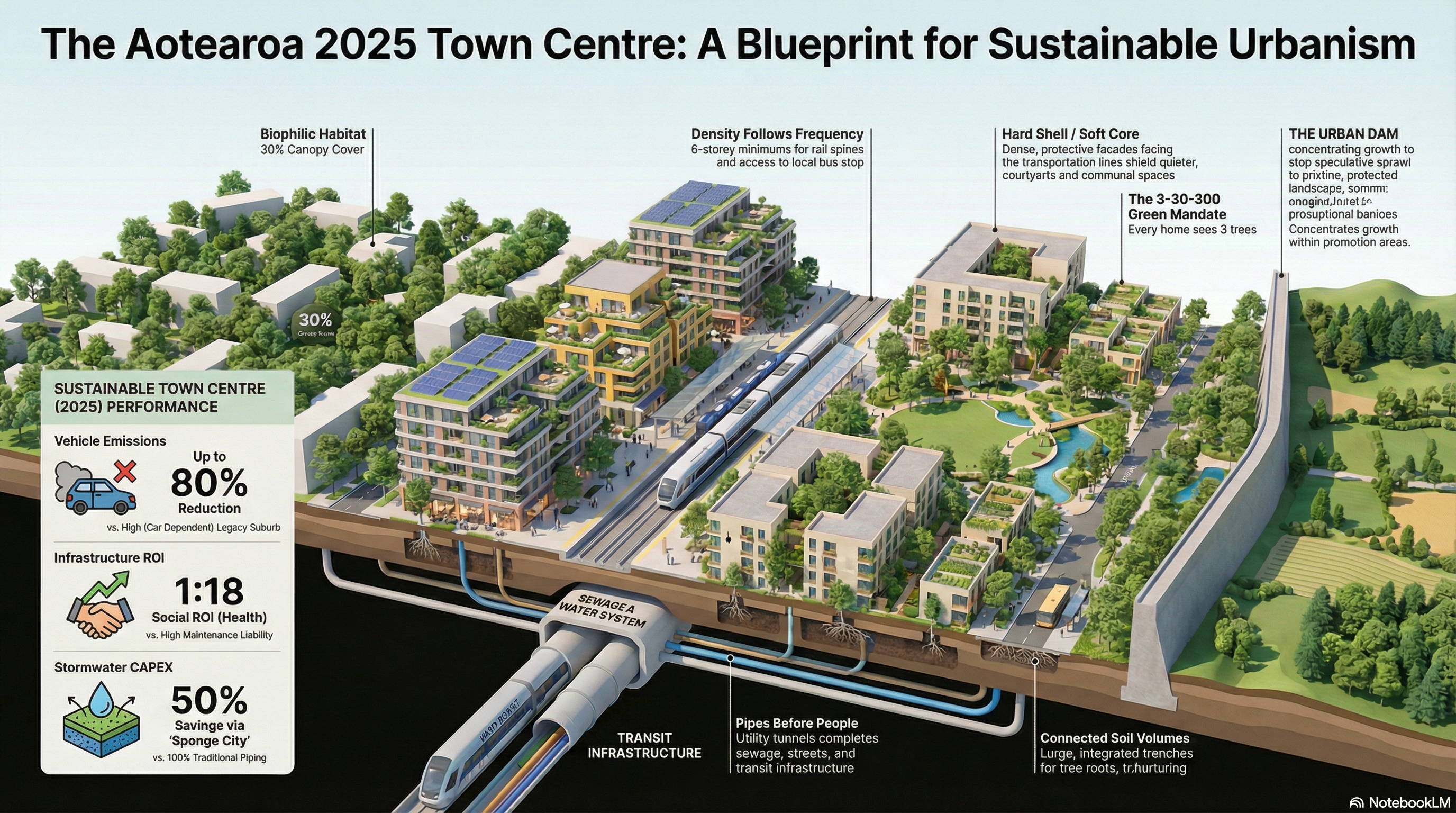
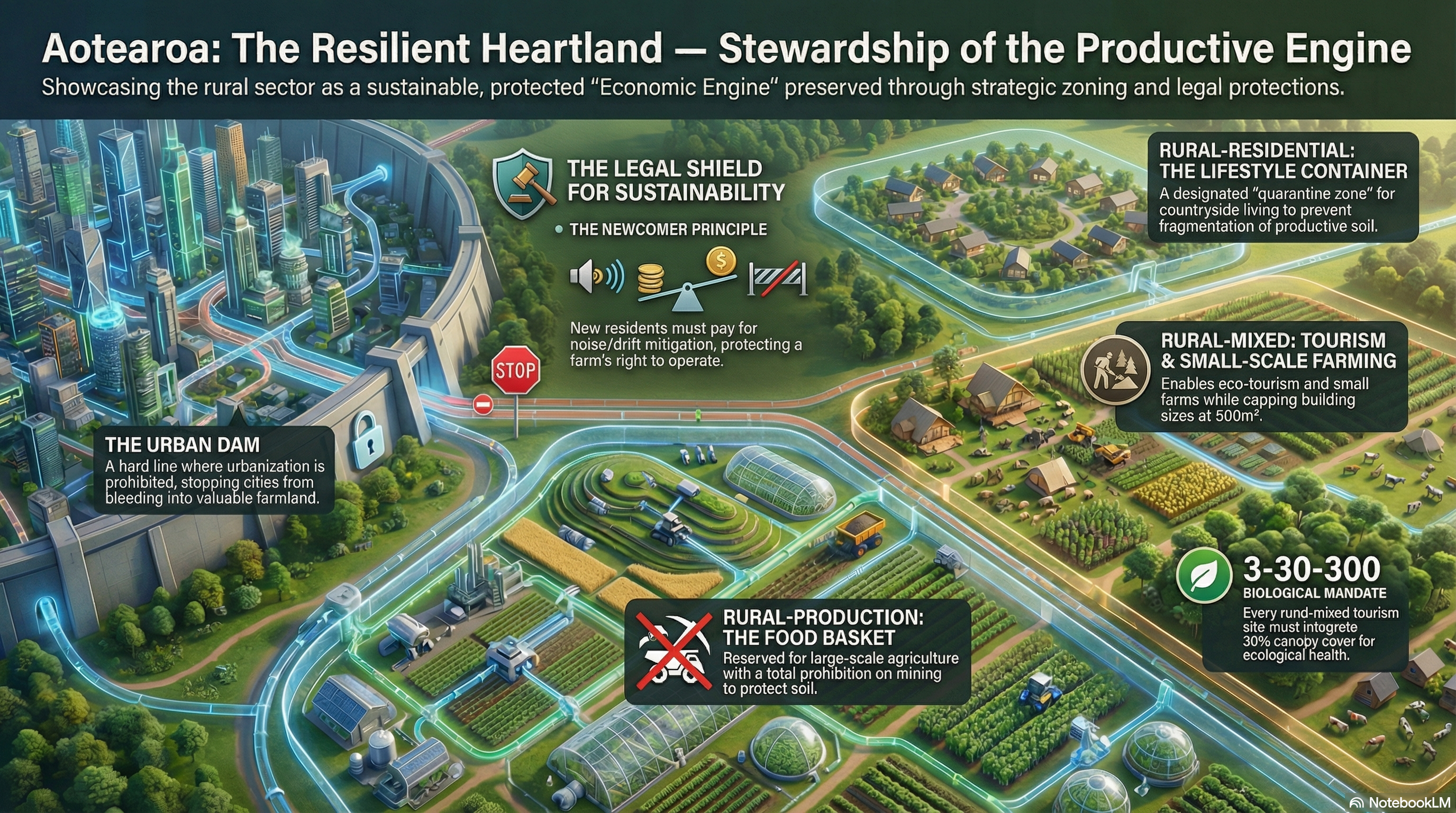
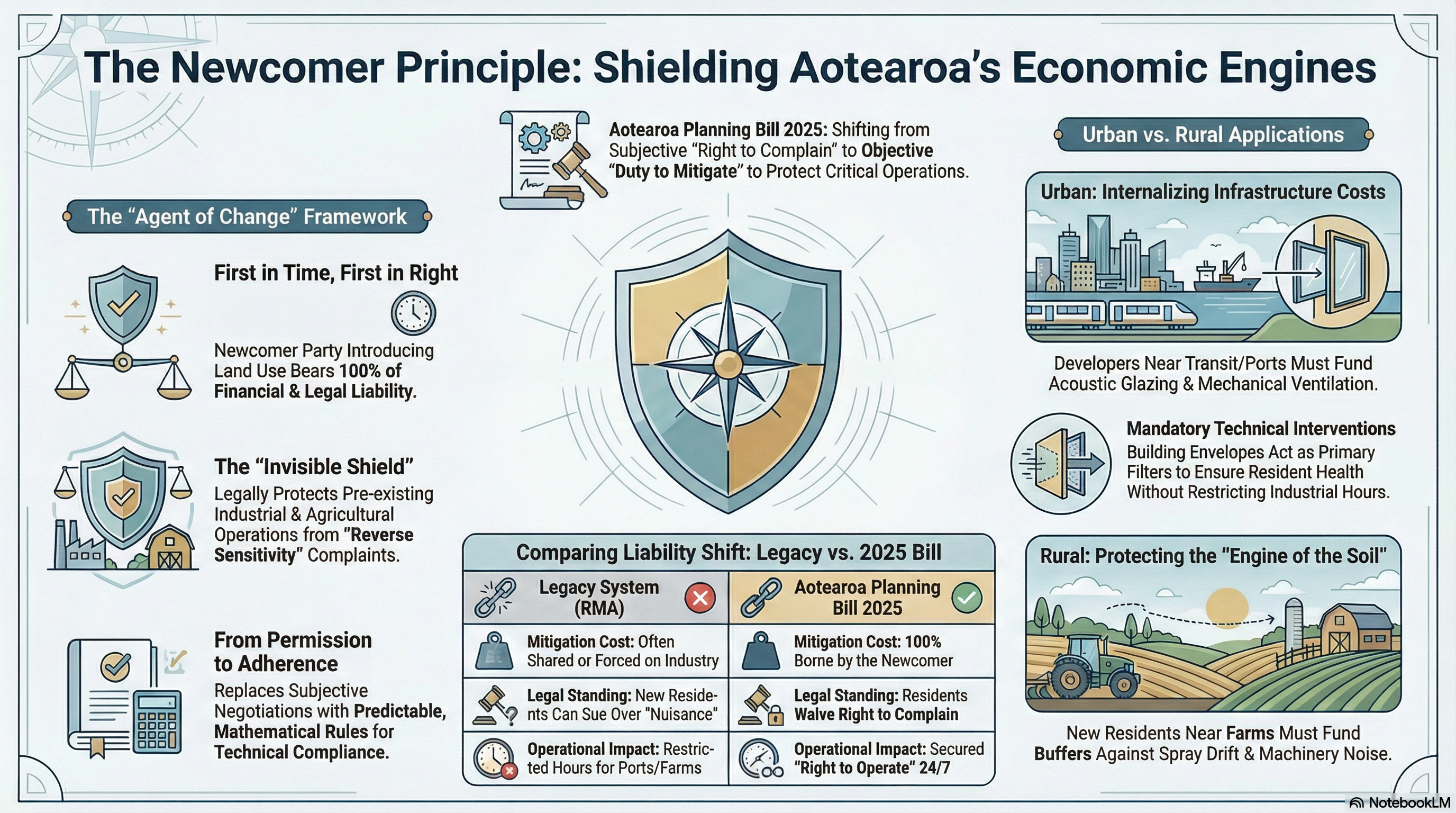
Note: The Newcomers Principal also makes its way in. This addresses section 24 of the Bill around Reverse Sensitivity. As I said in my oral submission to the Select Committee the way it works is that the Agent of Change coming into an area faces the full cost of preventing reverse sensitivity triggered by their development.
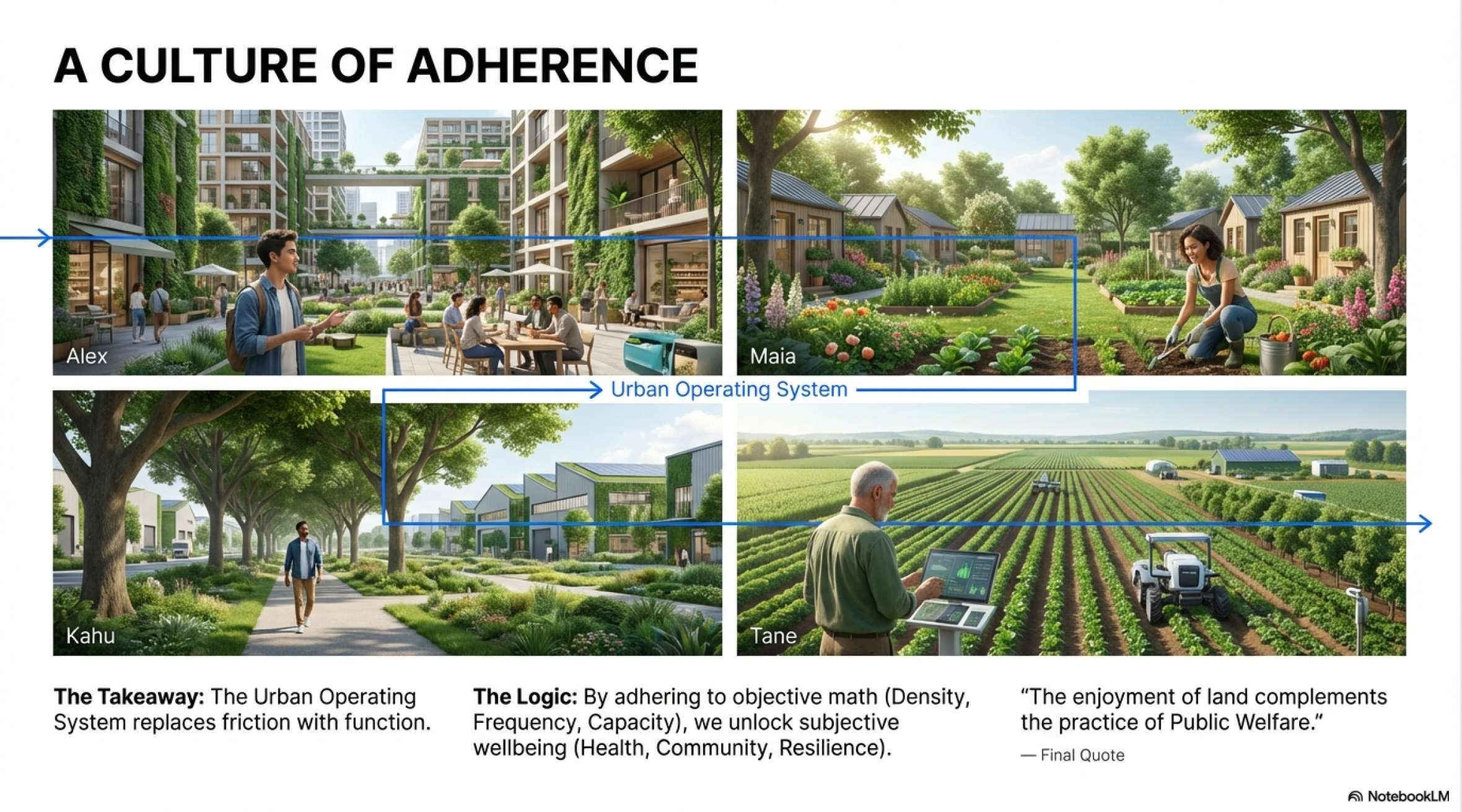
Maia, Alex, Tane, and Kahu: The stars of my submission
Their addition was last minute into my submission but the addition of my four AI generated characters became the stars of my submission as they told their story in how the Planning Bill would work. Their stories also told me the Select Committee read the submission as they got referenced more than once. A note for me next time I do a submission to use diagrams and my AI generated characters to tell their story.
So, a big thank you to Maia, Alex, Kahu and Tane, my story characters in my submissions who told their stories on how the Planning Bill using Public Welfare Supreme would affect them day to day! As 10 minutes never long enough to tell their story so I hope I did them all justice today.
Their stories. You can see each of the characters’ stories that I used below. They are also at the front end of the main submission.
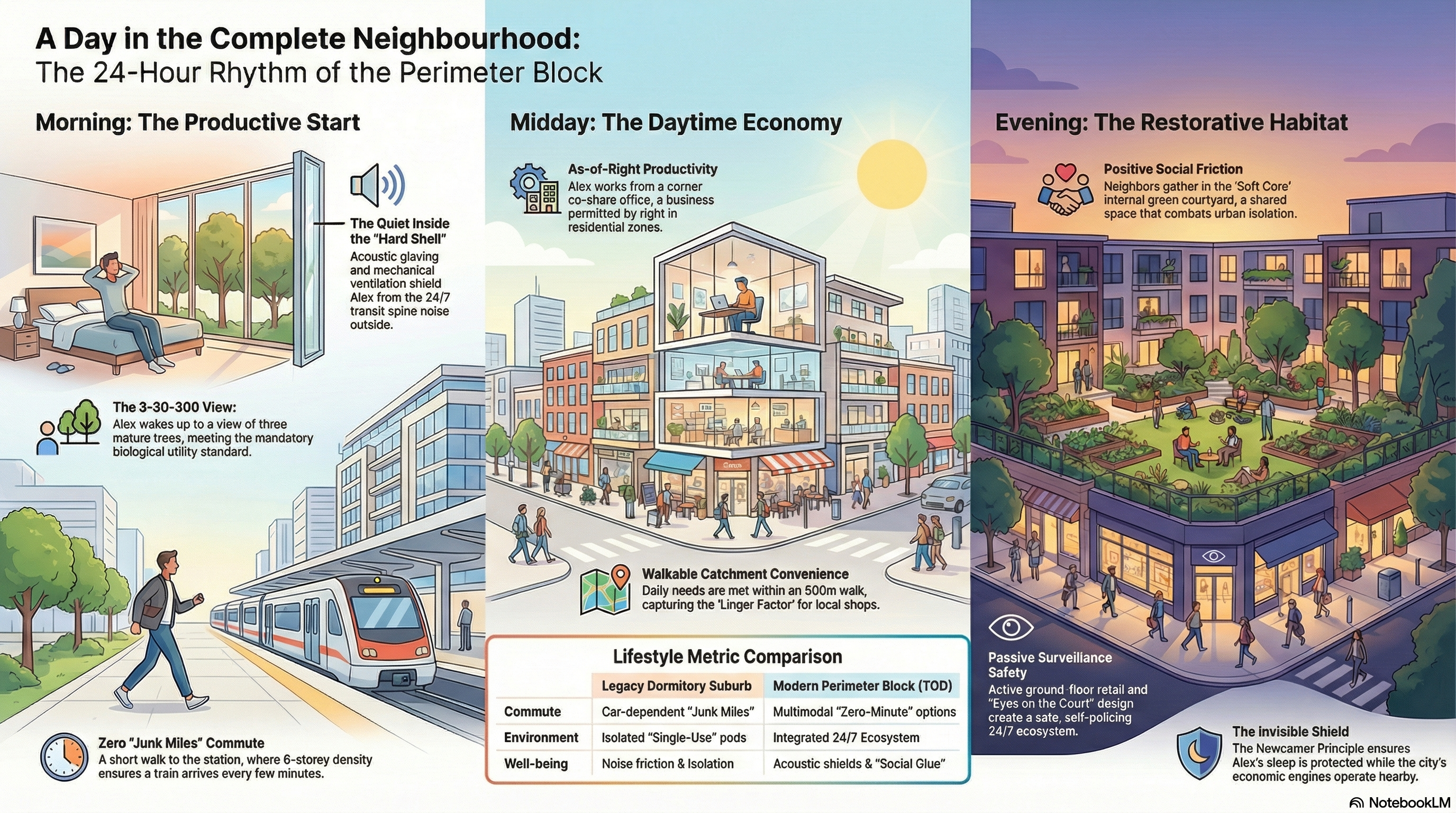
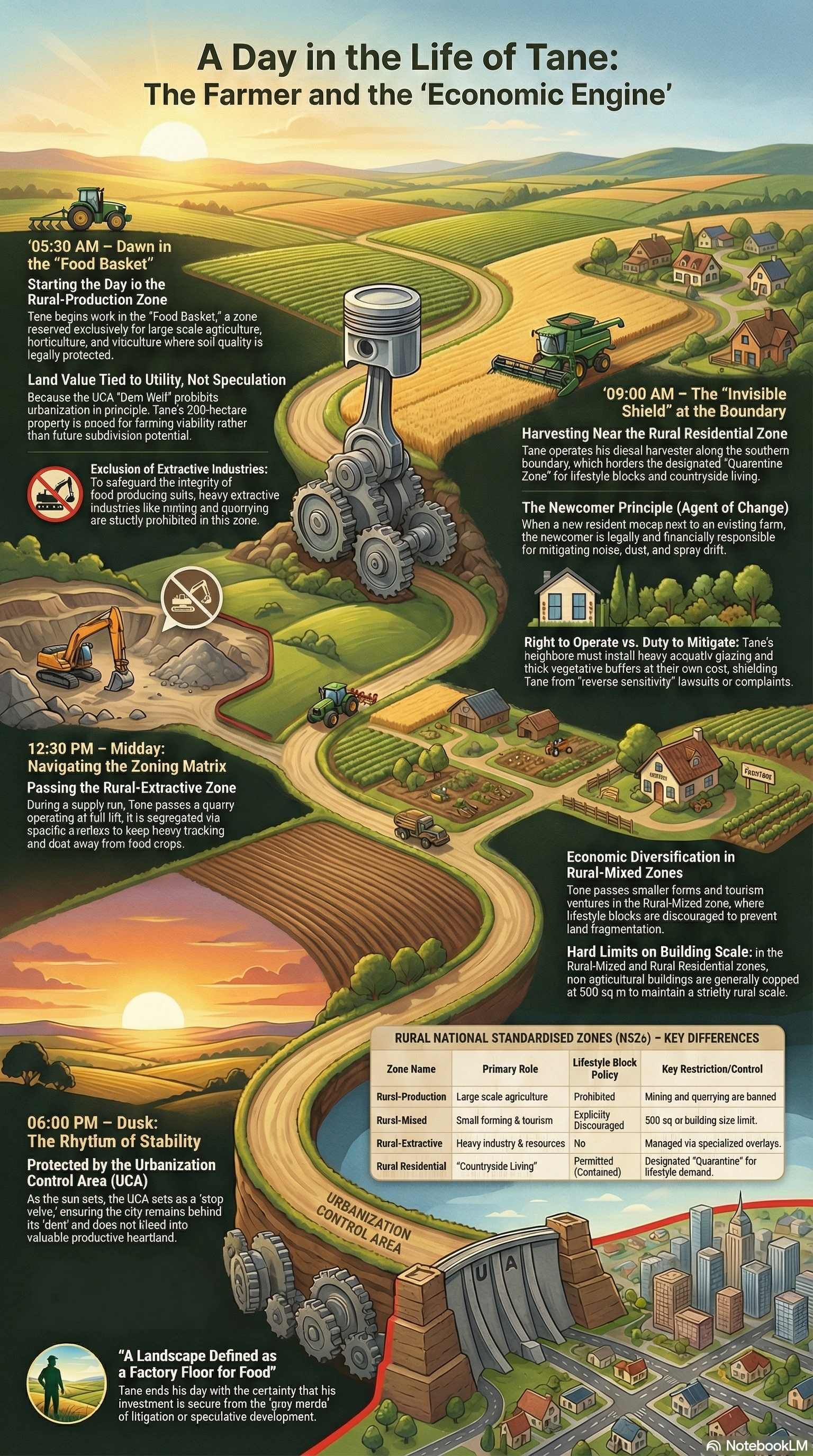
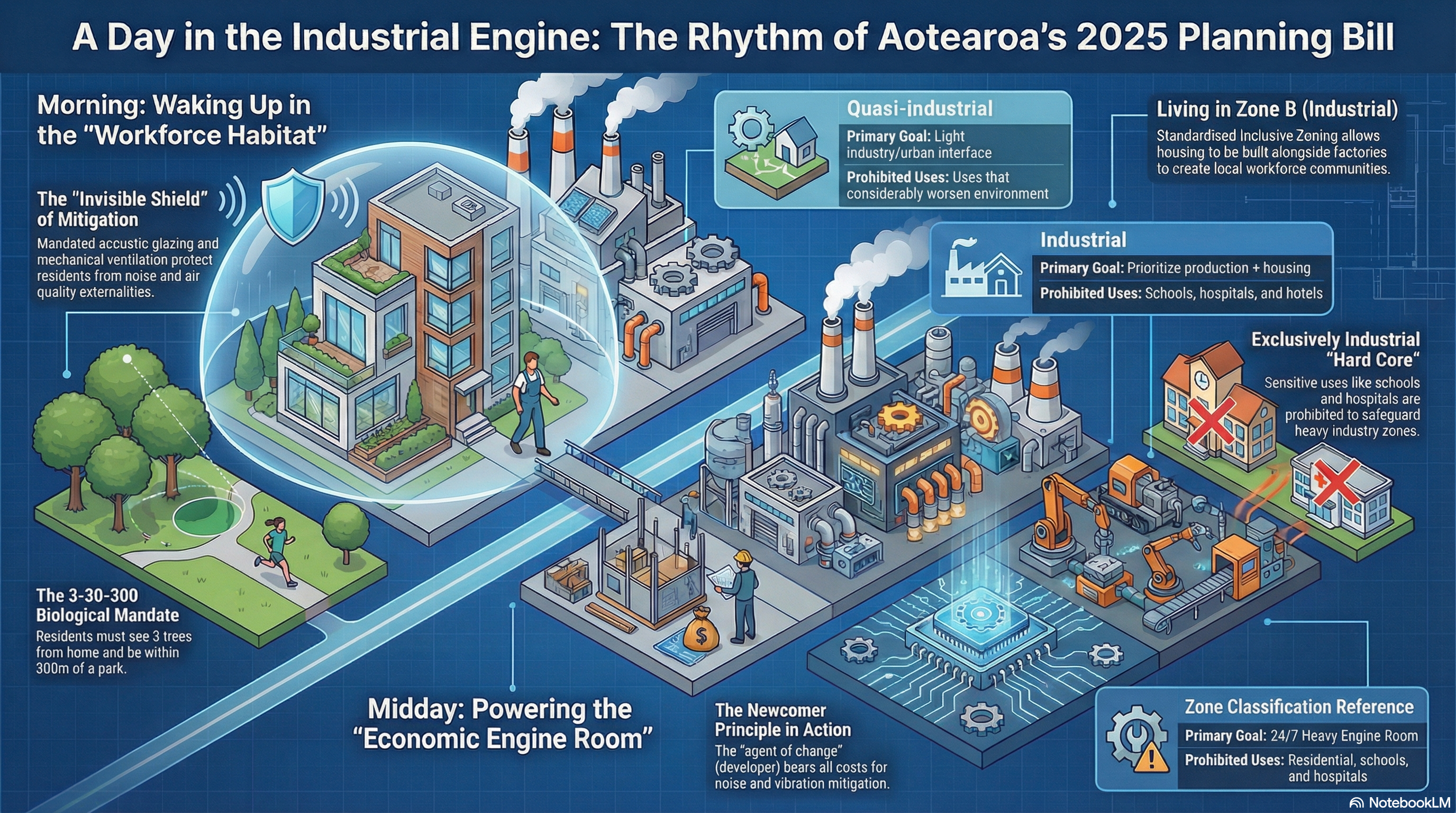
The missing Standardised Zones
Those zones. Zones whether you love or hate them they exist as they act as the interface between Planners, and everyone else wishing to use the Planning system for land use activities. And with the Reforms we are meant to get a new set of Standardised Zones that every Council across the Motu would use rather than they create their own as present. However, we have a problem as I see it.
Where my oral submission concluded on yesterday after robust questioning from Labour and the Greens (again the silence from the National MPs has me concerned given I do support most of the private sector provisions) is that the Planning Bill as it stands in Parts 1, 2, 3 and Schedule 2 (which my submission covers) covers Private Property as one pillar. BUT from the Bill we have missing Pillar 2 – The Public Domain (for which if you do not have then Private Property simply wont exist in the regime), and Pillar 3 – the Standardised Zones.
The Standardised Zones as I have mentioned is the public interface of the entire land use side of the Planning system, and where everyone else will interact with the Planners typically. Consequently in my opinion Pillar 3 – those Standardised Zones which binds Pillars 1 (Private Realm) and Pillar 2 (the Public Realm) together is missing from legislation. Any faults the Standardised Zones reveal from the Planning Bill will make updating the Planning Bill very hard and time consuming. It also means we can not test the robustness of Pillars 1 and 2 given Pillar 3 – the zones binds those two other pillars.
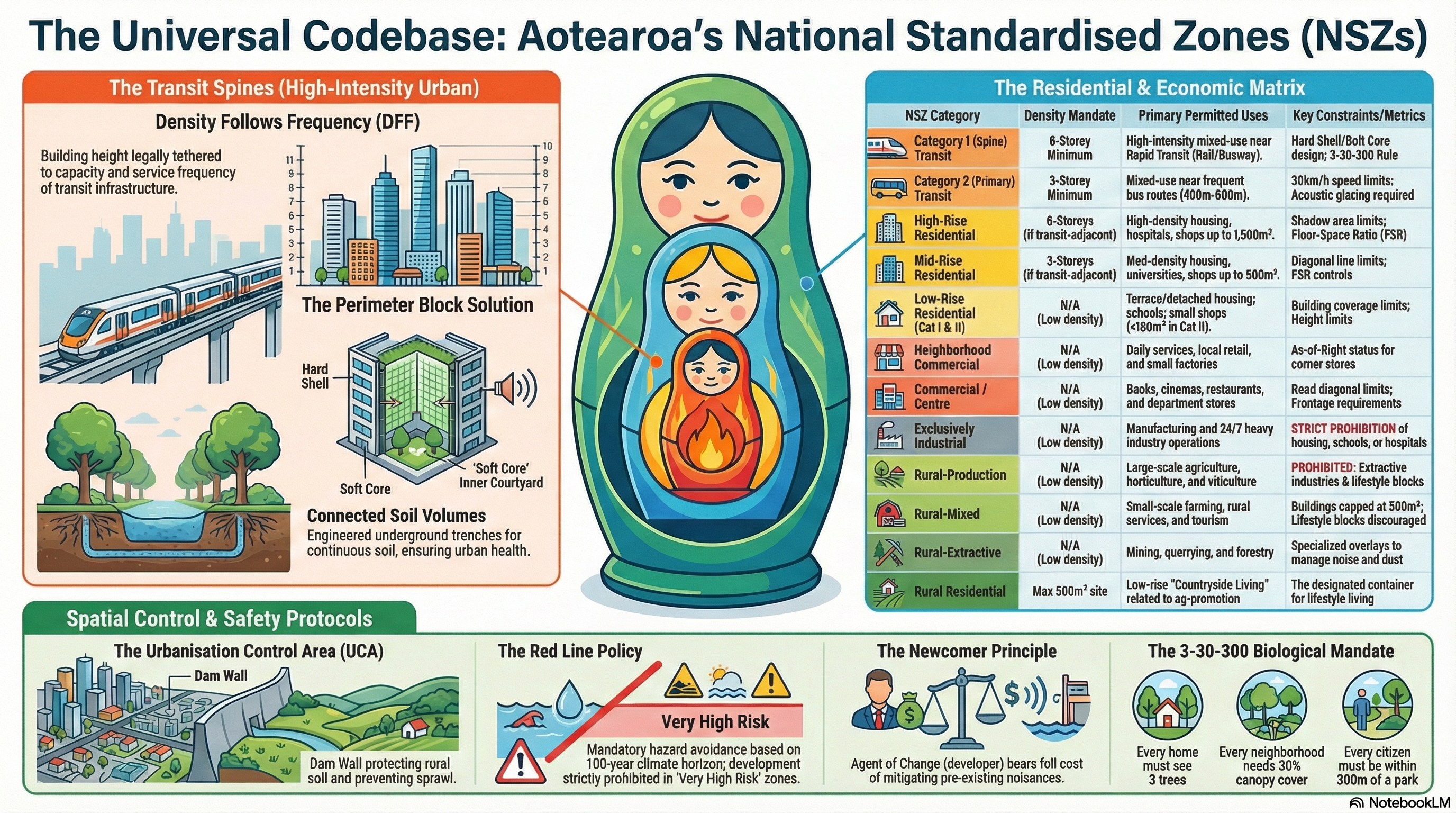
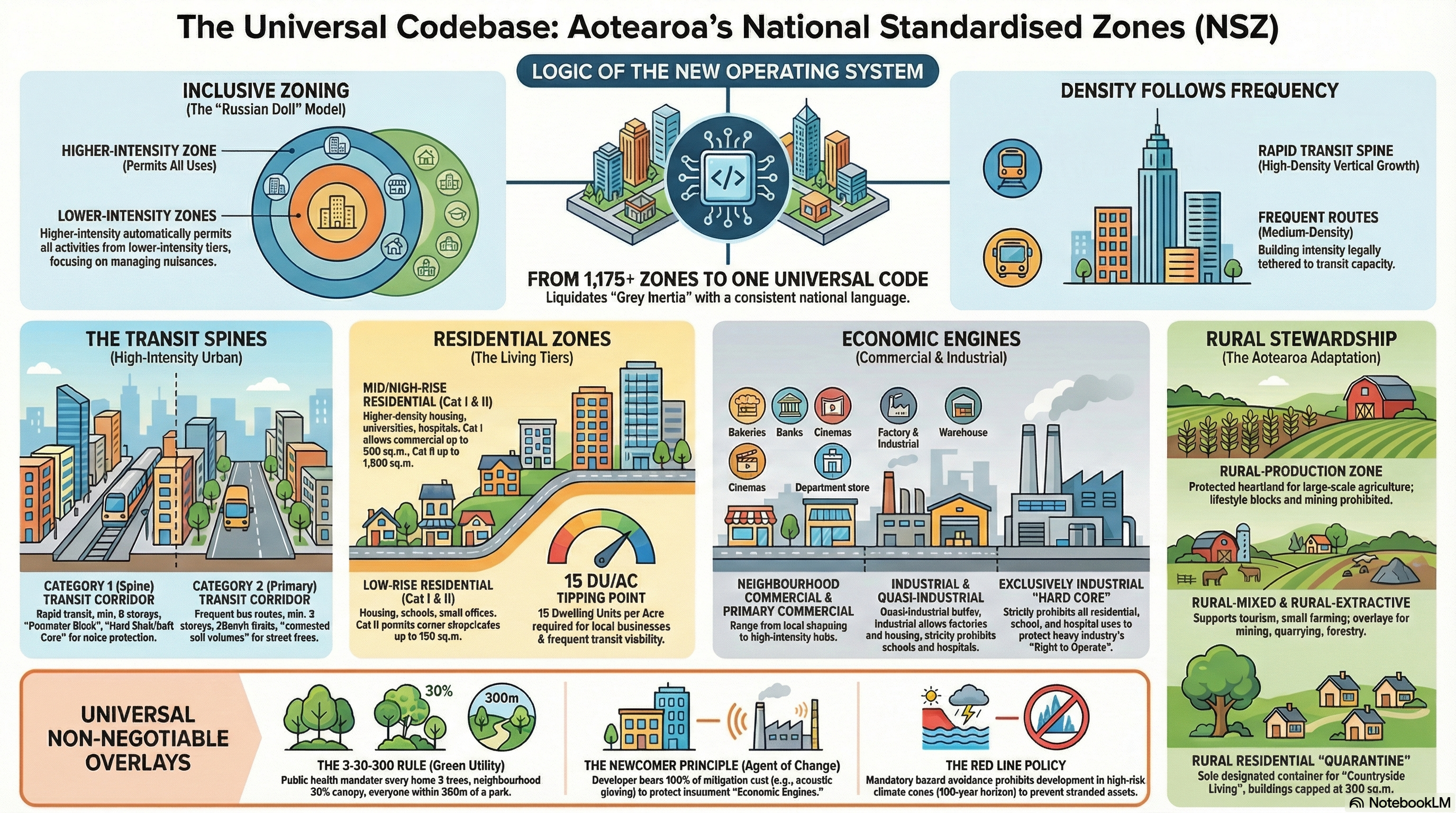
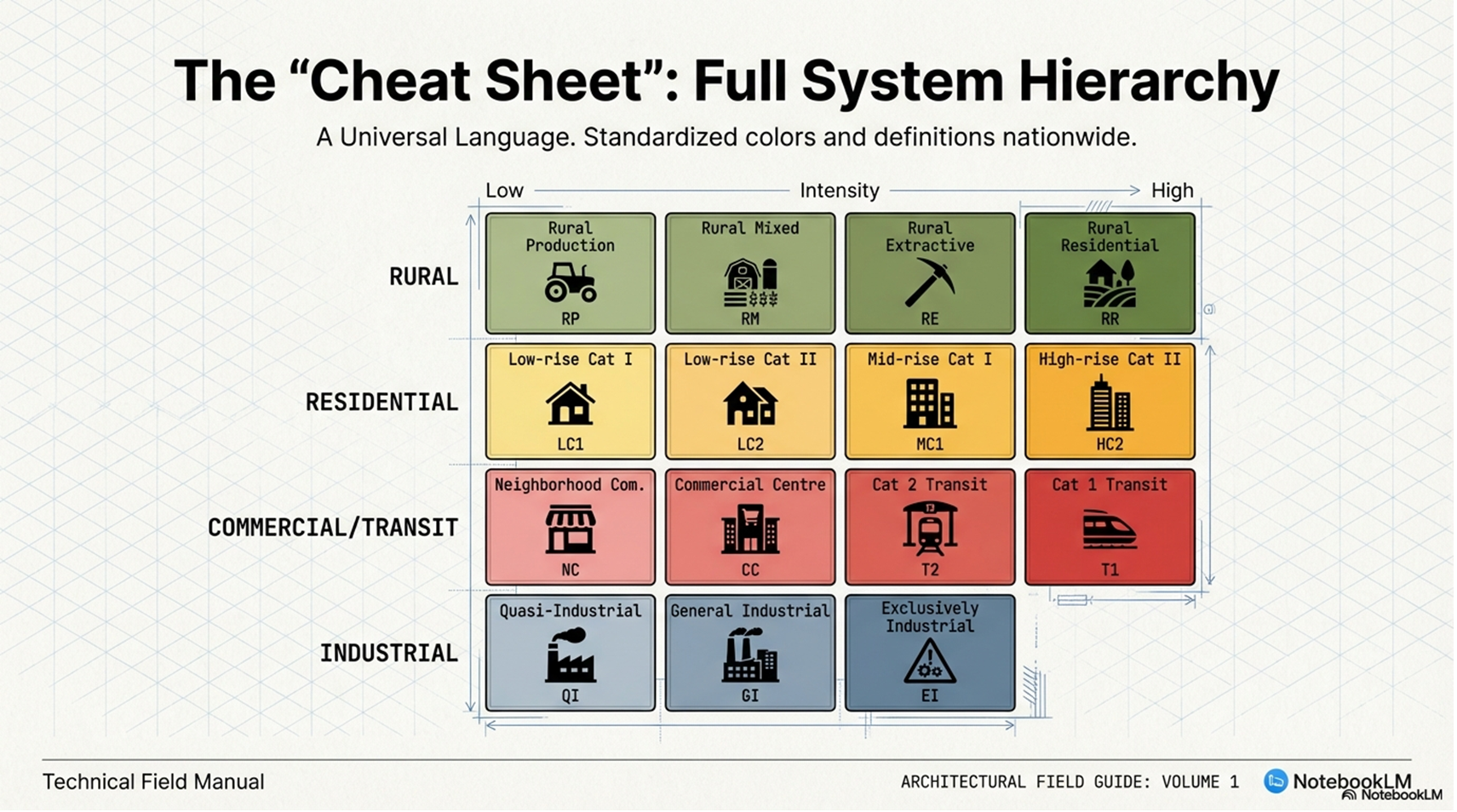
Now the Standardised Zones are not out until December from Ministry for the Environment | Manatū mō te Taiao and that is problematic. In that absence I drew up my own to allow a full comprehensive submission on what should be but is not a full Planning Bill currently before the Select Committee.
My SZs would sit in Schedule 2 that consequently Part 3 (Combined Plans) must adhere too, and would be implemented in Part 4 (Consents) while enforced in Part 5 (enforcement). You can see how it all mashes together, yet cannot with such a key instrument missing.
My proposed standardised zones (a table version can be seen from page 168 of my main submission)
In the end I have done my civic duty and virtue. Now it is up to the Select Committee and their Report back to the House with any recommendations.
Document dump
Below is a range of documents I generated as supplementary material for my presentation if I needed to draw on further examples. Two are on the submission and the Standardised Zones themselves. The rest on life under my proposed submission, including even a tourism campaign on our urban and rural sectors.

 Talking Southern Auckland