I would say yes – at some levels Yes insofar at the main Council level, and that of the Council Control Organisations. Our Local Boards seem to or are … Continue reading Does Auckland Live in a Technocracy Rather Than A Democracy?
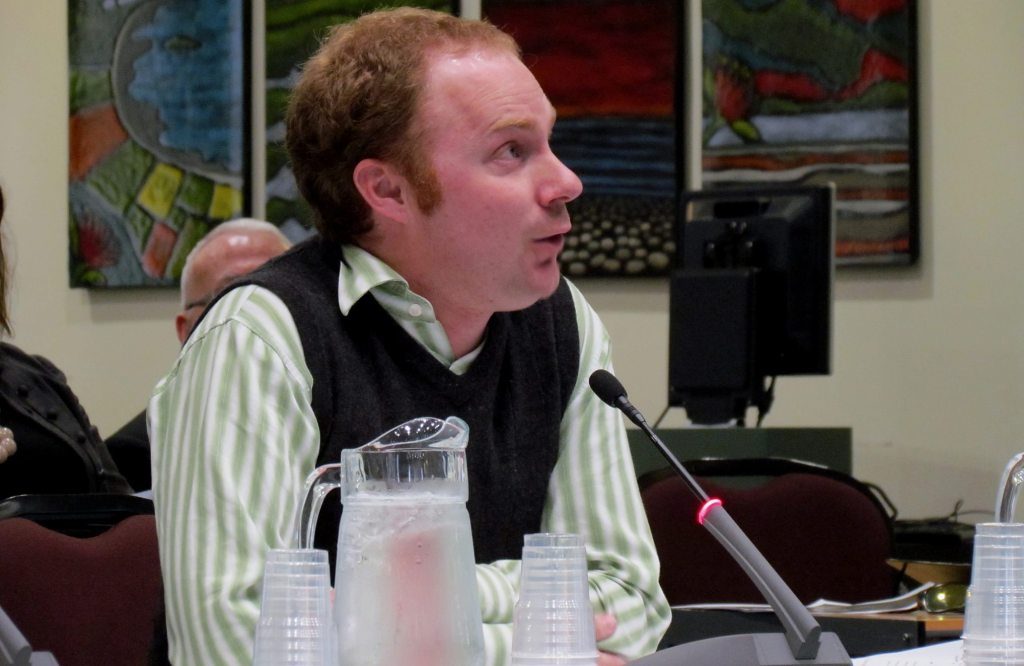
I would say yes – at some levels Yes insofar at the main Council level, and that of the Council Control Organisations. Our Local Boards seem to or are … Continue reading Does Auckland Live in a Technocracy Rather Than A Democracy?
Food for thought being in opposition.
Stick to dogmatic guns and fail entirely?
Or
Go pragmatic and go with it to get some concessions that gives political capital for later on?Democracy at its more ugly side.

This week, the Foreign Affairs, Defence and Trade Committee reported back on the Countering Terrorist Fighters Legislation Bill. The Government had been seeking, among other things, the ability of the SIS to undertake 48 hour warrantless surveillance, and for the Government to revoke passports for three years.
Quite why these measures were required were never addressed. After all, our terror threat level may have raised, but it remains on ‘low’. MPs such as Jamie-Lee Ross muttered darkly of tales of terror disclosed by the SIS: if we meek citizens only knew what the MPs knew, we would quake in our boots and immediately provide ringing endorsements of the Government’s planned changes. Of course, we mere citizens weren’t allowed to know. The SIS’s briefing was conducted in secret, open only to MPs, on the grounds of protecting national security.
The SIS’s briefing may have persuaded Mr Ross, but the opposition…
View original post 454 more words
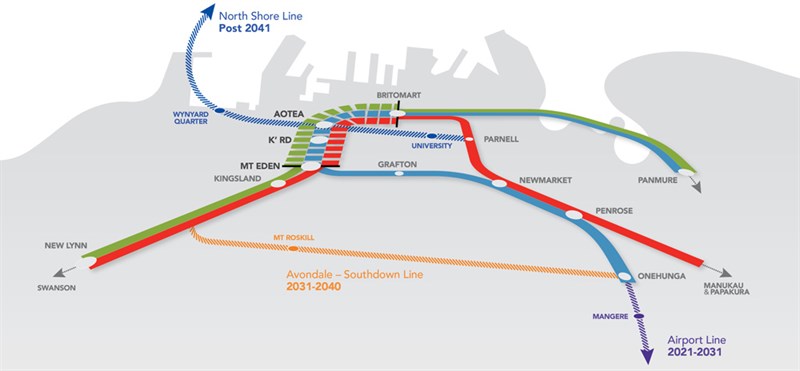
How it benefits Auckland I posted this in Facebook earlier this morning on how the City Rail Link benefits Auckland. It was in reaction to a Rant/Rave piece … Continue reading A Simple But Not Exhaustive Explanation of the City Rail Link
And so the Public Transport Users Association has put out their first project presser:
A group of local residents and would-be train users are meeting at the Huapai train station this Thursday, but they might be waiting a long time for a train. Despite proposed growth of thousands of new homes in Huapai and Riverhead, an existing railway line to the heart of the growth area, and existing stations and diesel rolling stock, Auckland Transport are not planning for trains.
A new group hopes to change that. The Public Transport Users Association is a voluntary organisation, newly established to give current and future public transport users a voice. They are launching their first campaign this week, to retain and extend rail services from Swanson to Waitakere and Huapai.
Chairperson of the new group, and former Chair of Auckland’s Regional Transport Committee, Christine Rose, who is a local bus and train user, says Waitakere and Kumeu communities must be the only communities in the region facing a worse public transport future, with the withdrawal of train services to Waitakere, and the cancellation of long-held plans for hourly rail services to Huapai.
“The Northwestern motorway is severely congested and can’t keep up with growth in our area. Auckland Transport have no plans for a decent, dedicated, congestion free bus way to the Northwest. But we do have a significant underutilised asset in the rail, stations and rolling stock, that could provide a viable alternative for existing and future commuters”.
The Public Transport Users Association is launching the WestRail campaign at 4 on 4 December, but have already been encouraged by locals in support of rail services to the area. Further engagement with the community will follow. The group are also engaging with locals at the Waitakere station from 7-9 on Thursday morning, talking to commuters and encouraging awareness about the feasibility and need for rail services retained and extended in our area.
Further Information
—-ends—-
Not the best project I can think of here with our limited funding towards Auckland Transport as is.
The problems:
Conclusion?
Not a good start for the PTUA……
As expected although one had to try (see: Council Fails South Auckland – Again) the Auckland Development Committee has adopted the Otara-Papatoetoe Area Plan into operation this afternoon.
While disappointing as the Area Plan is now nothing but platitudes backed up with very little funding for most of the projects listed in the ‘5-year’ project lists any how.
I will evaluate the situation in a podcast tomorrow as well as other happenings that came of the Committee today including this:
One thing I will say though, if I do ever serve as an elected representative in the Auckland Council Governing Body technocracies is something I despise and that Area Plan would be fully reviewed and rebuilt – properly!….
From Auckland Council
Auckland Council has made four key appointments to the boards of Waterfront Auckland, Regional Facilities Auckland and Watercare Services Ltd.
Richard Leggat and Dr Susan Macken have been appointed to Waterfront Auckland following the retirement of Adrienne Young-Cooper and Kerry Stotter. Andrew Collow will join the Regional Facilities Auckland board on 1 December, following the retirement of Peter Stubbs. David Thomas joined the Watercare board on 1 November following the retirement of Susan Huria.
The appointments have been confirmed by the council’s CCO Governance and Monitoring Committee, responsible for all board appointments to substantive council-controlled organisations.
Committee chair Deputy Mayor Penny Hulse said all the new board members had the experience and skills relevant to the work they will be required to undertake.
“Andrew, Susan, David and Richard have the expertise and experience to make significant contributions to the boards they sit on and to the city itself.”
“David has a depth of senior level experience within large industry organisations and his knowledge of health and safety requirements will be most valuable to Watercare.”
Waterfront Auckland Chair Sir Bob Harvey says: “Richard is a strategic thinker, is well respected and is very good at building effective relationships. Susan has a depth of commercial expertise and experience particularly relating to higher level finance and risk matters and a good understanding of working in the public sector.
Regional Facilities Auckland Chair Sir Don McKinnon says: “Andrew will bring perspective and relevant background to the table. He has been described as the ‘go to’ person for infrastructure and that is particularly relevant to RFA at this time”.
Watercare Chair David Clarke says: “David brings leadership and Maori cultural values, adding depth to the Watercare board.”
—ends—

In reply to a claim From Auckland Council, and Quotable Value: No basis for ‘wildly wrong’ valuation claims – Council & QV Auckland Council and Quotable Value say … Continue reading Council And QV Replies to Claims About Auckland Valuations
From Auckland Council:
Auckland Council has awarded $634,000 in grants through its Environmental Initiatives Fund (EIF) to 133 community projects which enhance Auckland’s natural habitat and historic heritage.
The fund supports local residents’ initiatives from the enhancement and conservation of important environmental and heritage sites to community-led projects.
The recommendations were approved by the Environment, Climate Change and Natural Heritage Committee today.
Councillor Wayne Walker, chair of the committee, says it is important that the council helps the community to care for Auckland’s natural environment and heritage resources.
“The Environmental Initiatives Fund is a really good way to help the community play an active role in looking after our environment,” he says.
“The way it is set up means we can fund a number of different projects that make a real difference to preserving our wonderful natural environment.
“From water storage tanks to coastal restoration programmes, there are a wide range of projects the council is supporting through this fund.
“We are passionate about ensuring our natural habitats are well-maintained and cared for. It’s fantastic to know that we have an active community who want to look after it and I am delighted that we have been able to support that work through this fund.”
Some of the 133 funded projects include:
Recommended grants range from $200 to $15,000. The average grant is $4,729.
—ends—-

Area Plan Watered Down to Platitudes in Regards to Manukau City Centre Today the Auckland Development Committee will be looking at the adoption of the final version of the … Continue reading Council Fails South Auckland – Again
From Auckland Council:
A number of kindergartens and schools across Auckland will be recognised at the annual Enviroschools celebration this Friday for their outstanding commitment to sustainability.
The event takes place at Royal Road School in Massey on Friday 5 December, where 26 Enviroschools will receive Bronze, Silver or Green-Gold certificates of achievement.
Deputy Mayor Penny Hulse will present the Enviroschools certificates at the ceremony along with Councillors Wayne Walker and Linda Cooper as well as representatives from local boards.
Ms Hulse says: “Enviroschools teaches such important life skills – it shows our children they can become the environmental leaders of the future by taking action and making a real difference in their community.”
The Enviroschools programme allows children to apply their ideas and energy to real-life situations. They, as well as their schools and families, are encouraged to think and act sustainably by participating in a range of fun and useful projects, including community gardens, native tree planting and stream clean-ups.
The programme lets children introduce initiatives to improve their own kindergartens and schools, while also helping their wider community. Initiatives include recycling to reduce waste going to landfill, saving water by installing water tanks, and increasing biodiversity by planting native gardens.
There are currently 966 Enviroschools in New Zealand, which includes early childhood centres, primary, intermediate and secondary schools. In Auckland there are 181 Enviroschools, with more starting their sustainability journey every year.
The celebration will be attended by the students, teacher and parent representatives from each school, and representatives from Auckland Council. The Enviroschools programme is facilitated in the Auckland region by Auckland Council in conjunction with the national Enviroschools Foundation.
To find out more visit aucklandcouncil.govt.nz/educationforsustainability or enviroschools.org.nz
Green-Gold
Elm Park School, Forrest Hill School, Western Springs College
Silver
Avondale Kindergarten, Chelsea Kindergarten, Colwill Kindergarten, Early Discoveries Centre, Freemans Bay Kindergarten, Glenfield Kindergarten
Milford Kindergarten, Pt Chevalier Kindergarten, Takapuna Kindergarten
Waiheke Kindergarten, Dawson Primary, Pakuranga Heights School, St Leo’s Catholic School, St Thomas’s School, Taupaki School
Bronze
Ararimu School, Arohanui Special School, Howick Intermediate School, Milford School, St Francis Catholic School, Vauxhall School, Waiheke Primary School
Green-Gold review
Grey Lynn Kindergarten
Award Definitions
Bronze Enviroschools have been on the Enviroschools journey for up to two years. Students have started work on getting to know their environment and are exploring options and finding ways to take action for a sustainable future. There are some students and staff actively involved, and everyone else in the Enviroschool is aware.
Silver Enviroschools have been on the Enviroschools journey for at least four years and involves students, teachers, boards of trustees, parents and community members. In a Silver Enviroschool you can expect to see sustainable practices and projects that have grown in strength, variety, depth and number since formally becoming part of the programme. Students are fully involved in making decisions about sustainable actions and can show what change has happened because of their learning and action.
Green-Gold is the highest level of achievement in the Enviroschools journey and takes at least five years. Environmental sustainability is part of decision-making within the community and Maori perspectives are embraced to enrich the journey of the Enviroschool. Students have a strong sense of connection to the environment and lead much of the on-going action. They understand how they can effect change for a sustainable world and can measure the difference made by previous initiatives. Green-Gold Enviroschools are involved with their community and honour the diversity of the people within it.
Green Gold Review – Enviroschools will continue to holistically reflect on their journey at least every three years using the Green-Gold descriptive paragraph and will decide if there is still a comfortable fit with that paragraph. During this review they will explore how understanding and practices have deepened and broadened.
—–ends—-
Well done to those recognised
 Talking Southern Auckland