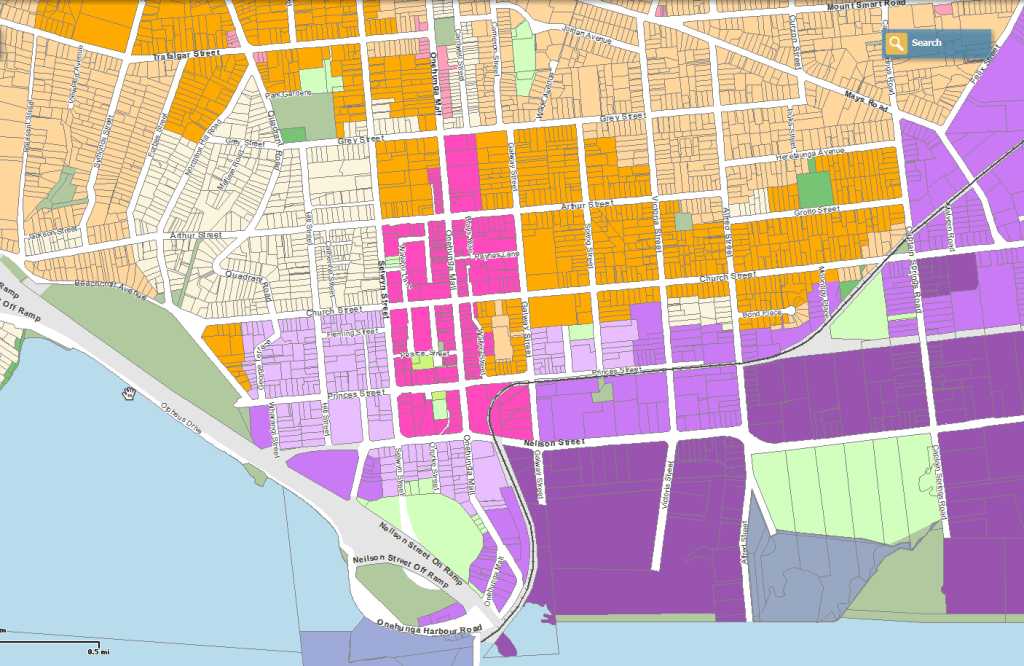
What to Expect from September 30 This post looks at the preparations and what to expect when the Unitary Plan is released for Formal Notification on September 30. I … Continue reading The Unitary Plan – What to Expect from September 30
What to Expect from September 30 This post looks at the preparations and what to expect when the Unitary Plan is released for Formal Notification on September 30. I … Continue reading The Unitary Plan – What to Expect from September 30
I attended the media briefing in regards to the Unitary Plan and The Auckland Design Manual which come out Monday – September 30th.
At the moment I am writing up my blog post from the briefing will have it up either tomorrow or Saturday morning.
As a teaser you can check the covers to some documents I received from the briefing today.
Talking Auckland: Blog of TotaRim Consultancy Limited
TotaRim Consultancy
Bringing Well Managed Progress to Auckland and The Unitary Plan
Auckland: 2013 – YOUR CITY, YOUR CALL
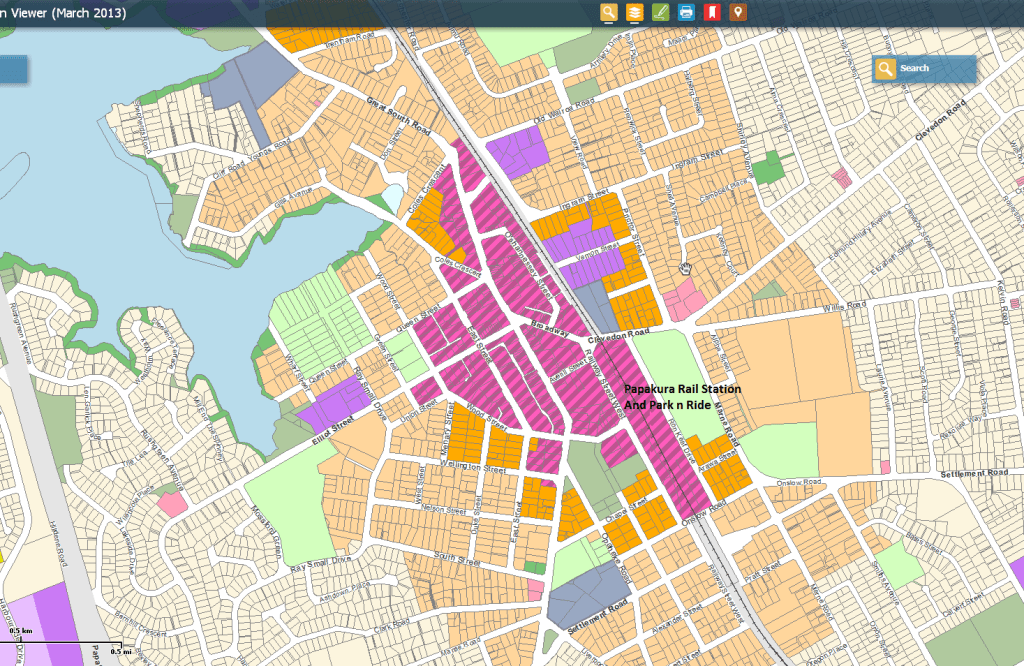
Preparing for the Formal Notification of The Unitary Plan Tomorrow afternoon myself and other media will get to have an introduction at both the revised Unitary Plan that will … Continue reading Getting Ready for September 30
Who Scored What on 5 Key Matters Generation Zero have released their much-anticipated score cards on key issues to selected mayoral and ward candidates for Auckland and other larger … Continue reading Generation Zero have Released their Local Election Score Cards
I caught this article in the NZ Herald yesterday on my so-called favourite second topic: Auckland Transport. Actually two articles caught my attention and I seriously wonder if I am having a case of De-ja-vu here in regards to Auckland‘s Transport.
The two articles of notice were these ones, both from Mathew Dearnaley:
Starting with “Public transport decline threat to future funding,” this is what had to be said:
From the NZ Herald
Public transport decline threat to future funding
Auckland’s public transport patronage continues to languish.
Trip numbers over the past 12 months ended 3.3 per cent lower than for the previous year.
Patronage to August 31 amounted to 69.2 million passenger trips, down from the previous annual figure of 71.5 million, according to a report to Auckland Transport’s board yesterday.
Trains accounted for the largest proportional loss, down 7.5 per cent to 10.1 million trips, despite the added contribution of the new Manukau line.
Even so, rail is starting to show a slight recovery, after its annual patronage drop from almost 11 million trips.
It notched up just over a million trips last month, 1.7 per cent higher than in August last year, despite one fewer business day.
But much more is needed, making a promised new fares strategy all the more pressing.
The Government requires Auckland Transport to have almost doubled its annual patronage to 20 million trips by 2020 before it will accelerate its 50 per cent funding for the city’s $2.86 billion underground rail project.One encouraging statistic is an improvement in punctuality. Close to 89 per cent of trains arrived at their final destinations in August within five minutes of scheduled times, up from a 12-month average of 86.2 per cent.
…
Just a quick note; going back over the Prime Minister’s speech in regards to that 20 million figure it was also stated that if AT could show around 8% growth in rail patronage year in year out then the Government would look at starting the CRL around 2018.
To the main matter though what is seriously going on and why does this issue keep popping up.
Regular and historic readers of Talking Auckland would have read here at the blog of the ups and downs we have had with Auckland Transport. At the same time there has been copious amounts of (and not solely from the blog either): public flaying, constructive criticism, submissions, feedback, presentations to committees, lobbying and even meetings to try to offer what assistance once can give to help get our public transport systems (especially rail) back on track.
The results? Two fold:
Still from the NZ Herald piece:
Trains accounted for the largest proportional loss, down 7.5 per cent to 10.1 million trips, despite the added contribution of the new Manukau line.
Even so, rail is starting to show a slight recovery, after its annual patronage drop from almost 11 million trips.
…
Even there the recovery is at risk of stalling again.
So what to do folks because I am now seriously lost after nearly two years of trying. Anything that would get patronage realistically back up gets shunned while anything that would be a detriment to patronage happens (otherwise patronage would not have slipped as far as it has).
$3.3b by the time the project gets started and there is a risk of a further blow out – owing to history some of our civic projects. This was noted in the Herald article “Rail delays threaten big blowout.”
I am sure I have said the Rail Fallacy would occur with the City Rail Link using comparisons from other projects overseas – and I could still end up being correct despite earlier ridicule on the matter. The Rail Fallacy Commentary previously mentioned on Talking Auckland can be found here: https://voakl.net/tag/rail-fallacy/
Do I want the Rail Fallacy to occur with the City Rail Link though? HECK NO! But pragmatism and harsh reality I must also bear in mind – kind of like risk management. The Rail Fallacy acknowledgement in part was me running a crude risk management exercise across multiple levels on the CRL. At least this way I knew/know the risks and can adapt for it accordingly where required.
Put it this way, at least if (political) reality bites and The Rail Fallacy does happen I was certainly most prepared – unlike others. I would also say this was good business sense in play too.
In the end though unless Auckland Transport pulls finger I am going to struggle to see how the CRL will not start until 2020. Oh and for those like ATB who might put their faith in the EMU’s. Having flash new trains will provide some kick but not the silver bullet needed to bring the CRL forward to 2018. No amount of new rolling stock will counter: getting stuck behind the increasing amount of freight trains with out the third line fully complete, fare products not lined up properly and missing simple links such as the Manukau Rail South Link to attract more actual patronage. So again AT needs to pull finger and get the right things done – no excuses.
Final remark
Trains accounted for the largest proportional loss, down 7.5 per cent to 10.1 million trips, despite the added contribution of the new Manukau line.
Hmmm – waiting for that South Link that will feed real numbers in the Manukau Line and station… Lets try and not keep the wards of Manurewa/Papakura and Franklin waiting much longer please AT. There is a pent up demand waiting for a direct service from Pukekohe/Papakura to Manukau via the South Link and some modelling I ran estimates that 20 minute, 7 day a week services using that link would mean patronage levels rivalling our Ellersile and Glen Innes Stations. So lets try and get this built in the upcoming Christmas Block of Lines – okay – please.
Must be election time in Auckland. Why? Apart from the fact in front of my keyboard I have my voting papers (for: Mayor, Ward Councillors, Local Board and District Health Board – and which make some depressing reading (the pamphlet of candidate choice is not that inspiring)), the Isthmus is still going on about their berms in front of their properties being mowed.
This stems from a decision on the 2012-2022 Long Term Plan deliberations (the LTP is now operative/in effect) that to save $3.2m from the Council budget, the former Auckland City Council area residents will no longer have their berms mowed by a Council contractor. The Isthmus like: Franklin, Papakura, Manukau, Waitakere, North Shore and Rodney will now have to mow the berm that is in front of their properties.
The rest of the City is wondering what is the Isthmus moaning about when for years if not decades everyone else just mowed their berms when they mowed their lawns. The most common reason I hear from the Isthmus is that the $3.2m of a service cut was not passed on in rates savings. Rather than parts of the Isthmus have been stung with a string of some of the highest rate rises in all of Auckland over the last three years.
At the end of the day we can keep going around in circles and most likely tell the Isthmus to harden up and join the rest of us in wider Auckland.
Or we could seek a solution. Councillor Casey and candidate Mark Donnelly both mooted an idea, one that I also submitted on to my submission to the 2012-2022 Long Term Plan. The Solution?
Basically if a Local Board wanted to pay a contractor of their choice to mow their areas’ berms rather than have the residents do so then they are free to choose. However, the cost would come out of the Local Board’s budget. This means the Local Board would have to decide how to raise the money for this service. The most obvious one would be a targeted rate to pay for the service.
But that way the Local Boards could choose whether they wanted the berms in front of houses mowed by a contractor.
While this does not address wider issues such as the 10-10-10 rate rise and loss of earlier berm mowing on the Isthmus it is a remedy to allow Local Boards decide local decisions.
All these plans and all the consultation that goes with it (although some would do Death by Consultation in the name sake “The People…”) would make most people go nuts. In saying that from September 30 we enter the three-year process of formal notification and hearing with The Unitary Plan.
If you want to get changes put into the Unitary Plan then be prepared to write and send in your formal submission between September 30 and February 24th, 2014. After that we have independent commissioners appointed by the Government who will conduct Hearings through to and inclusive of 2016. Again this is how you get your changes that you would like to see in the Unitary Plan, NOT by giving it back to Councillors to go waste time and money re-litigating until the cows come home before they finally send it back out to notification.
In the meantime this from Auckland Council:
Thank you to those who provided feedback on the draft Unitary Plan. Auckland Council’s Governing Body has approved the proposed Auckland Unitary Plan for notification and a formal submissions phase, which starts on the date of notification, 30 September. The proposed plan will then be available online at www.aucklandcouncil.govt.nz/unitaryplan as well as in hard copy format in libraries for those who don’t have access to the internet.
The plan includes amendments to the maps, policies and rules based on the feedback of over 21,000 Aucklanders and the decisions made by Auckland Councillors on what changes would be included.
The formal submissions phase, which includes further submissions and a hearings process will take place over approximately three years.
For more information on the unitary plan email unitaryplan@aucklandcouncil.govt.nz with any questions.
The Hauraki Gulf, known by many as Tikapa Moana and by others as Te Moananui ā Toi, is a national taonga (treasure). Over the next two years we’ll be creating a marine spatial plan, called Sea Change, to safeguard this treasure.
Ultimately, it’s about securing a healthy, productive and sustainable resource shared by all. The project is led by a partnership between mana whenua (local Māori who have customary authority over the area), and central and local government. Interest groups and users of the gulf, including recreational fishing and boating, environmental and community, aquaculture, fishing, shipping and tourism will have an opportunity to participate.
Sea Change will follow world best practice. This includes using an online decision support tool called SeaSketch. It will give everyone with an interest in this national taonga the opportunity to contribute towards creating a desired vision for it, including recommending:
A Stakeholder Working Group will take a lead role in developing the marine spatial plan and commence its selection process in October 2013. The group will consider all points of view by compiling and providing information, reviewing evidence, and analysing reports. The public will be able to have their say during 2014.
The non-statutory plan developed through this process will be used to modify district, regional and coastal plans and any relevant policies, rules and regulations.
Find out more at www.seachange.org.nz
Please pass this on to other people you think will be interested in council issues. Find out more on how you can have your say at www.aucklandcouncil.govt.nz/haveyoursay
In the meantime, if you have any queries, please don’t hesitate to get in touch by emailing us at consultation@aucklandcouncil.govt.nz
That last bit being rather relevant especially after somewhat of a mixed bag for me over the last three years in advocating for a #BetterAuckland.
October 4 I will have the blog reformatted and set up for the formal notification phase of the Unitary Plan as Talking Auckland will once again run its leading independent commentary on Auckland issues.
Talking Auckland: Blog of TotaRim Consultancy Limited
TotaRim Consultancy
Bringing Well Managed Progress to Auckland and The Unitary Plan
Auckland: 2013 – YOUR CITY, YOUR CALL
Note: This is the abridged version of my earlier commentary on this matter.
——————-
It seems Te Papa North (Manukau) has stirred up some criticism towards fellow Aucklanders by fellow Aucklanders. One of the most recent and harshest criticisms came from The Listener’s piece: “Editorial: the right location for Te Papa North“ (12/9/2013)
The reasons the person gave in that editorial piece were “interesting” to say the least. In reply I will outline why Manukau is the right location for such a museum.
Starting with the direct and indirect benefits of the facility being in Manukau; these economic and social benefits have to outpace the monetary costs of the facility. This in my opinion can be easily done.
DIRECT BENEFITS
INDIRECT BENEFITS
Of course those benefits do trickle across the wider city as well.
As for Te Papa North being inaccessible in Manukau rather than Wynyard Quarter, that is a load of rubbish. By 2018/9 when the Museum would be due to open you would have the following options:
With the City Rail Link near completion (by the time Te Papa North opens), the new EMU trains moving at usually 10 minute frequencies, and with some luck the Congestion Free Network under construction it would take you approximately:
PRIVATE TRANSPORT
For those inclined to take the car Te Papa Manukau is very easily accessible by both State Highways One and Twenty (including using the Western Ring Route). Travel Times are approximate owing to differing levels of congestion – but apart from Papakura to Manukau, just use the public transport times and minus it by a third if going by car.
Thus accessibility is not a problem except for maybe those who live on the North Shore (who are relatively disconnected to the bulk of Auckland anyhow). So the transport card won’t fly with me.
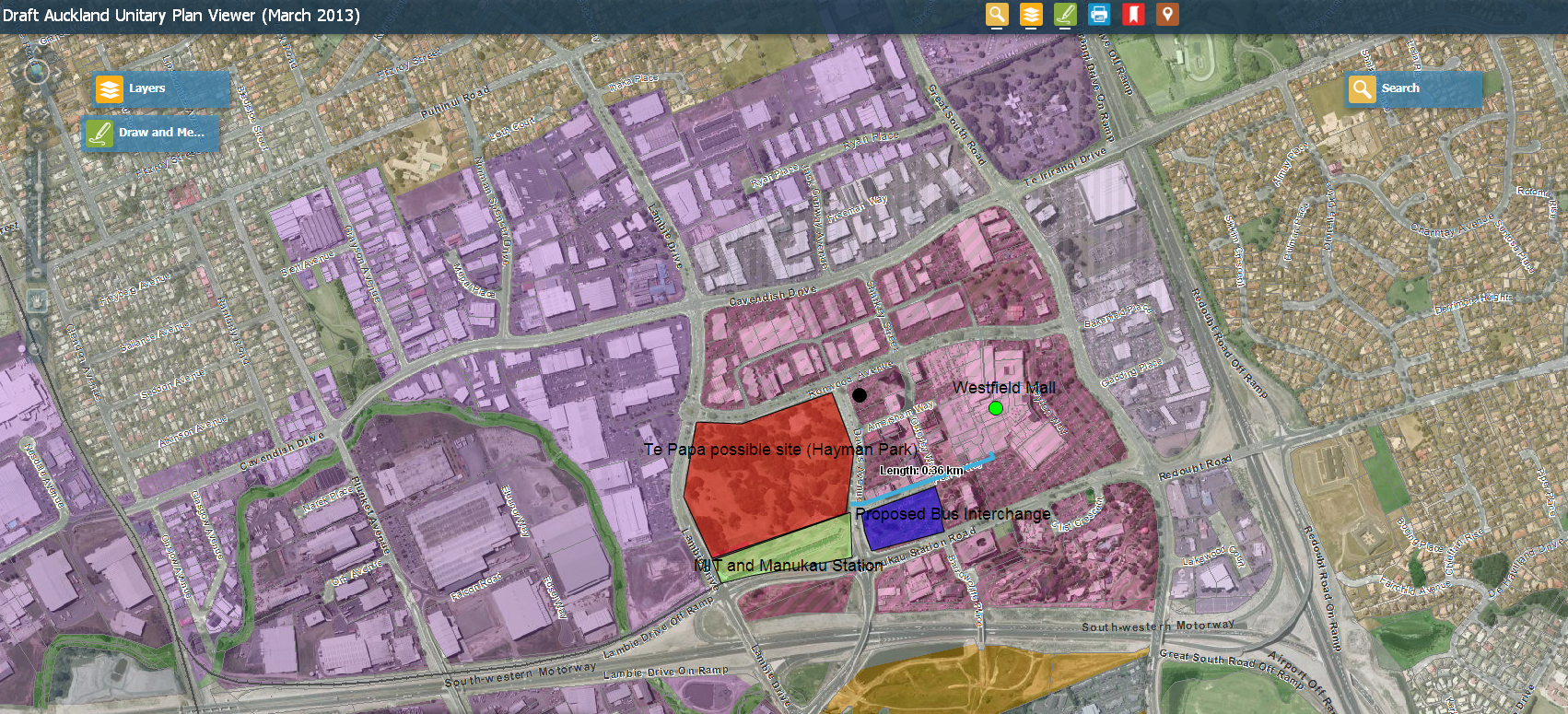
As for Wynyard Quarter being close to such places as “Shops and eateries, farmers’ markets and recreation such as cycling and skating naturally flourish, that has already occurred in Auckland’s once-controversial Viaduct Basin.”
Well Manukau has shops (the mall you can’t usually find a park in the weekend), the Otara Market on Saturdays (the biggest in Auckland if not New Zealand), places to cycle and participate in recreational activities, Rainbows End, even the Botanical Gardens where you can enjoy long walks and a bite to eat at the cafe . Manukau might not be the Ritz here but it is still enjoyable
With urban renewal also coming to the Manukau (Super) Metropolitan Centre the place is only get better.
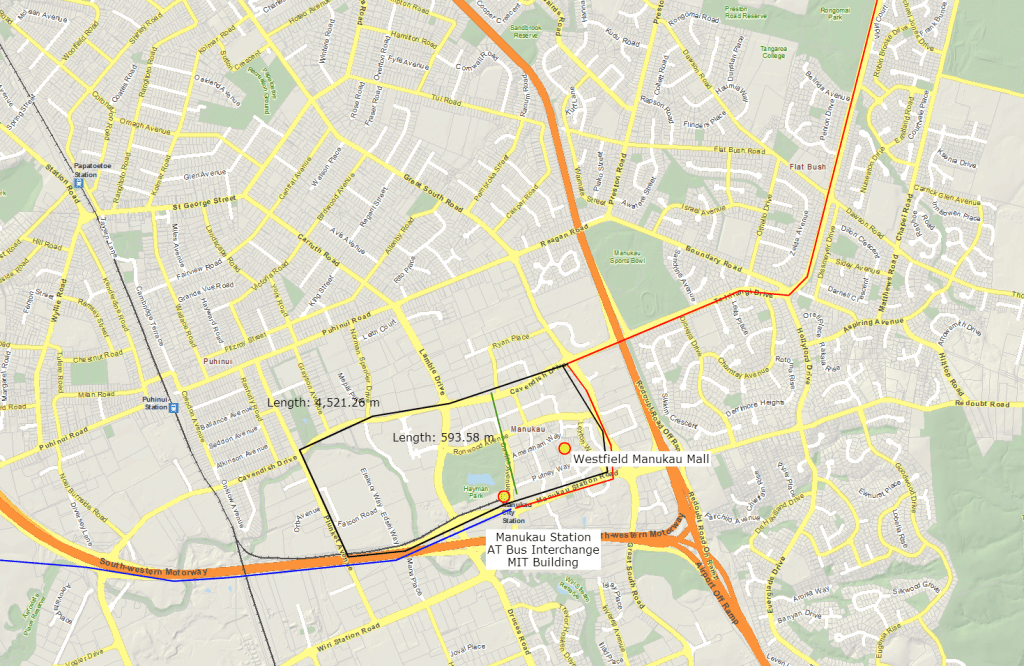
Constructive Criticism of The Southern Initiative I was out West yesterday while the Auckland Plan Committee met today in Town Hall (for the final time of this Council Term). What … Continue reading The Southern Initiative – Why it Needs Geographers
It has been three years since I left and graduated from the University of Auckland as a Geography and Political Studies graduate. Who knew three years later I would be going through the Uni library database again to find academic material.
Well trawling through the database gathering materials on The Geography of Tourism is what I have been doing.
Coming up on Talking Auckland: ‘The Geography of Tourism – Free Independent Travellers‘
Why (using academic research) Te Papa North in Manukau WILL work compared to placing it in Wynyard Quarter. How do Free Independent Travellers “work” when visiting a foreign city. And how the joint initiative between; Te Papa, Auckland Museum and the Art Gallery not only benefits Southern Auckland but wider Auckland and the northern Waikato.
This will take about two weeks to write up as I will be writing it pretty close to academic level – something I have not done in while. However, I will keep you posted of findings and progress as it happens.
 Talking Southern Auckland