With Southern Motorway to be upgraded does Mill Road seriously need to be 4 lanes? In light of the Budget announcement last week which mentioned the acceleration of … Continue reading Does Mill Road Now Need to be Upgraded
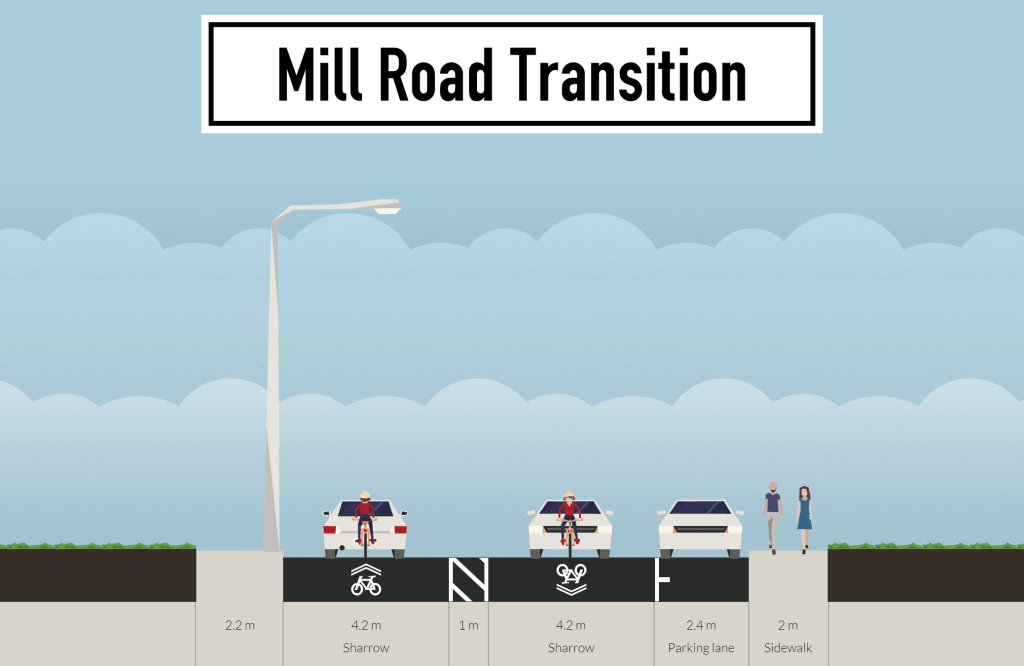
With Southern Motorway to be upgraded does Mill Road seriously need to be 4 lanes? In light of the Budget announcement last week which mentioned the acceleration of … Continue reading Does Mill Road Now Need to be Upgraded
Interesting analysis here from Pete George
Right now Labour are doing absolutely nothing to attract my vote and I deem myself a well informed voter. Thus currently all things measured (good against the bad) I am likely to swing behind National this round.
However, what annoys me to great extent is the Opposition. We need an Opposition as our democratic system requires it. But when we have what I perceive as a piss weak opposition then I am concerns as it is not good for our democratic institutions
David Cunliffe has a number of political challenges. He inherited entrenched Labour problems that included a lack of obvious direction and authenticity. He seems to have embraced these flaws.
Cunliffe has evolved as leader but not for the better. He began with a favourable poll surge but has been waning and struggling since then. He keeps changing persona and it’s difficult to see the real Cunliffe. We got a glimpse in “At Home With The leader” on Campbell Live last week but he soon reverted to an overtrained poli-parrot persona.
His current approach is to recite talking points. These often include dubious repeated claims like ‘speculators don’t pay tax’ and corny lines like
In his budget speech Cunliffe accused the Government of “smoke and mirrors”. He should look in his own mirror.
This is obviously a “fudge-it Budget”.
Six Budgets and still no vision. As Michael Cullen would say, the…
View original post 1,099 more words
Something to ponder over while the Budget Committee grinds down over Stadia
Slight drop in rankings from March but still holding in top 50. Blog activity to ramp up at the end of the month when the Unitary Plan submissions resume

Image Credit: Dear Kitty: Some blog.
There are now almost 300 blogs on the list, although I am weeding out those which are no longer active or have removed public access to sitemeters. (Let me know if I weed out yours by mistake, or get your stats wrong).
Every month I get queries from people wanting their own blog included. I encourage and am happy to respond to queries but have prepared a list of frequently asked questions (FAQs) people can check out. Have a look at NZ Blog Rankings FAQ. This is particularly helpful to those wondering how to set up sitemeters.
Please note, the system is automatic and relies on blogs having sitemeters which allow public access to the stats.
Here are the rankings of New Zealand blogs with publicly available statistics for April 2014. Ranking is by visit numbers. I have listed the blogs in the table below…
View original post 1,756 more words
An important point first:
A reminder as the Electric Trains are officially launched today that since 2003 to March 2014 the rail patronage has increased 423% or 38% average year on year.
Quite an achievement — feeling excited.
And we should be excited especially after reading this history piece from Transport Blog if it was not for Raymond: How rail was saved in Auckland
Thus I have to sets of big thank you’s I would like to extend in this post.
The first massive thank you is to Raymond Siddalls who back in the early 1990’s was tasked of scrapping our heavy rail network in Auckland. This from the Transport Blog piece on how Auckland’s rail network was changed:
At the time Auckland had also seen numerous grand plans for new public transport networks but none ever saw the political support needed to actually implement them. At the time the latest idea was convert the western line to light rail using a tram train from Henderson then send it via a tunnel under K Rd before running down the surface of Queen St. The problem was the idea couldn’t get political support. The City Council didn’t want trams on Queen St and the regional council saw it as competition to the Yellow Bus Company which they owned 90% of. That left Auckland with its near derelict trains and not much hope for the future.
It’s now the early 90′s and enter Raymond Siddalls. With a year to go before the regional council took over the contracting of services he was in charge running the suburban fleet. His bosses had also tasked him with shutting the Auckland network down. With an aging fleet, falling patronage and little political support (both locally or nationally) no one thought it could be made to work. After looking at the operations Raymond was surprised to find that with with a restructure he was be able to cut down the costs and actually have the company start making a profit on the gross contracts it held.
The critical time came in 1991 when a decision needed to be made on how to move forward. New legislation controlling how public transport services would operate was coming into effect and basically changed everything. No longer could PT be treated as a social service and the focus was on making PT stand up commercially. The legislation also didn’t allow for any distinction between rail and bus services which meant bus companies could tender for rail routes. Note: this legislation is still in effect today and has had a significant negative effect on the planning and provision of PT for over two decades. The new PTOM legislation should address most (but not all) of the issues it caused.
With the network actually making a profit the operation was kept going and the operating company tendered for the 120 services a day that they were already running (today there are something like 365 services per day). One problem though was each service had to take on the full cost of running the network. They subsequently were able to re-tender for the services as a combined timetable which allowed the costs to be shared across all services.
The councils started to get on board and the company was awarded the contract in the South for three years while in the west it was for four years. They were then able to successfully argue that with a 4 year contract on the entire network there was a chance to look at new rolling stock which would boost and the councils agreed to this. The contract was due to start in June 1992.
Around this time it just so happened that one staff member was about to go to Perth to attend a wedding. Perth was just about to finish electrifying their rail network and so the staff member was asked to drop in to find out what they were planning to do with their unneeded DMU’s (Diesel Multiple Units – the ones that don’t have a locomotive).
It turns out there were no plans for them and so subsequently Raymond flew over to inspect and value the trains. He made a call that there were no other buyers interested in them and so put in an offer for them at scrap value. All up he was aiming for 20 trains and his hunch about no other buyers being interested paid off, managing to secure 19 of them.
…
Source: http://transportblog.co.nz/2014/04/22/how-rail-was-saved-in-auckland/
Those DMU’s being our ADL and ADK fleet which is slowly being replaced by the new Electric Trains (the SA set will be as well).
So a massive thank you to Raymond for his vision and saving the rail network which fast forward from 1991 to 2014 will be carrying electric passenger trains (starting tomorrow on the Onehunga Line).
I would also like to extend my thanks to Councillor Christine Fletcher. Chris Fletcher was mayor of the old Auckland City Council at the time the Britomart project was about to fall over (a grandiose project back then was proposed). Long story short Mayor Fletcher cut through all the crap and was able to through her leadership deliver what we now enjoy as Britomart Station. Cruel irony would have it in 2003 that her successor John Banks would be the one to open Britomart Station. The completion of Britomart would be what drove the large increase in patronage to the 11 million mark we see today.
And so we come to tomorrow with the first set of electric trains starting revenue service on the Onehunga Line with the 5:46am service being the first service.
Next up for the big projects is arguably the City Rail Link and getting Pukekohe electrified.

8,900 counted so far I sent a question away to Auckland Council on how many submissions for the Proposed Auckland Unitary Plan (PAUP) as news around the PAUP has … Continue reading 8,900 Submissions to the Unitary Plan
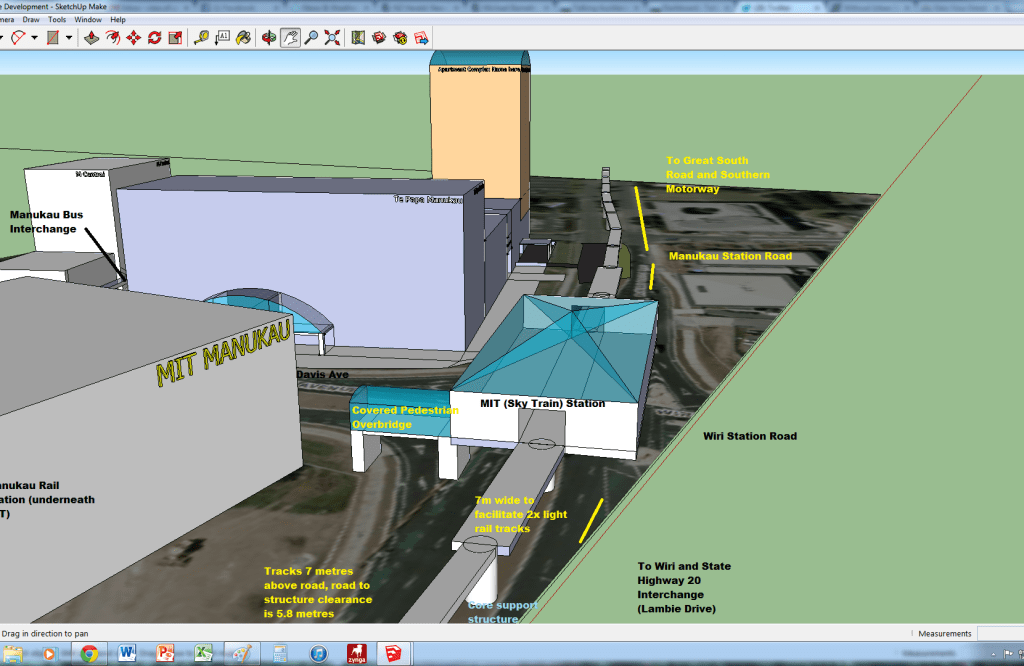
Rising to Brent Toderian’s Challenge One the 28th of March I saw this Tweet and subsequent challenge from Brent Toderian who is currently in New Zealand: I'm encouraging #Auckland to … Continue reading A Green and Walkable Manukau – Intro
To me: Why is Labour tanking? Time to take a dabble into our central elections which take place on September 20th of this year. By now most of … Continue reading Elections 2014 – Labour Narrative
Priorities in the Council Spend As we approach consultation for the 2015 Long Term Plan (the master council budget document) (which will be early next year so we can … Continue reading Budgets and Core Services

The Road Corridors down here are SO WIDE After the initial play around with the Street Mix (Playing Around with Street Mix) earlier today I decided to “draw-up” some more … Continue reading More Manukau Street Mix Attempts


